



Gasgoo Munich- Hydrogen stands as a cornerstone of the clean energy system—a vital lever for cultivating "new quality productive forces" and hitting the "dual carbon" goals. In March 2026, the Ministry of Industry and Information Technology (MIIT) and two other departments jointly issued a notice on piloting comprehensive hydrogen applications. The policy charts a clear path for scaling China's hydrogen industry: by 2030, city clusters must achieve diverse, large-scale hydrogen use, pushing the average terminal price below 25 yuan per kilogram—with a target of roughly 15 yuan in leading regions. The goal is to reach 100,000 fuel-cell vehicles nationwide.
By the end of 2025, cumulative sales of hydrogen fuel-cell vehicles in China neared 40,000 units. The country had built 574 hydrogen refueling stations with a combined capacity exceeding 360 tons per day, laying a solid foundation for industrial scale. Yet, significant hurdles remain: limited application scenarios, insufficient green hydrogen supply, bottlenecks in storage and transport, and immature business models. Market demand has yet to fully unleash.
The new pilot policy from the three departments is explicitly application-driven. It aims to solve development bottlenecks by "boosting R&D through use, cutting costs through use, and building ecosystems through use," positioning hydrogen as a fresh engine for economic growth.
Diverse Scenarios Build Ecosystems: City Cluster Pilots Clear Industry Bottlenecks
The notice defines a core strategy: building a "1 + N + X" comprehensive hydrogen ecosystem. This stands for one general fuel-cell vehicle scenario, N industrial applications, and X innovative scenarios. The approach aims to break the current limitations of hydrogen use from the demand side, driving large-scale deployment in transportation and industry.
Fuel-cell vehicles serve as the general core scenario and the main battlefield for hydrogen transport. The focus is on medium and heavy-duty trucks, long-haul logistics vehicles, and cold-chain transport. These commercial vehicles demand high range, payload, and fast refueling—needs that hydrogen fuel cells, with their quick refueling, long range, and zero emissions, meet precisely. This complements pure electric vehicles, rounding out China's new-energy vehicle landscape.
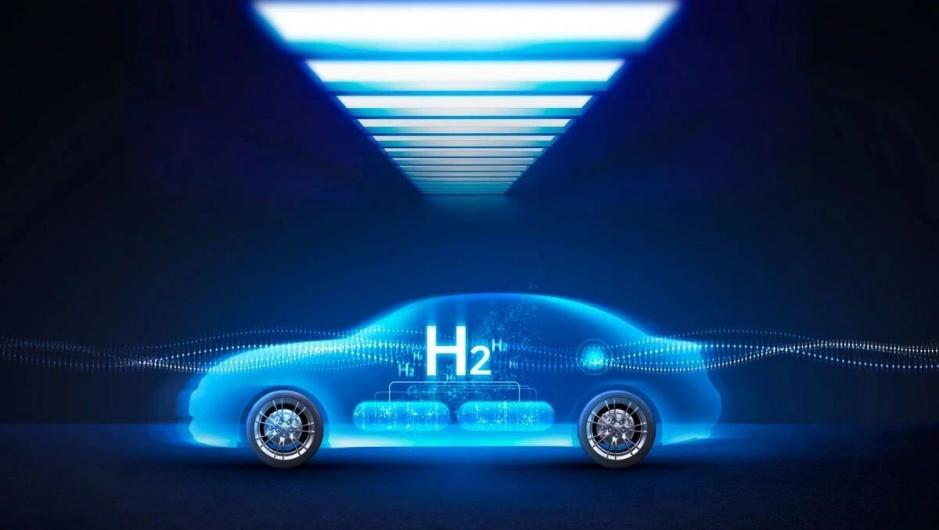
Image source: SHPT
Industry is positioned as a critical breakthrough for scaling hydrogen. Pilot priorities include green ammonia and methanol, hydrogen-based chemical feedstock substitution, hydrogen metallurgy, and hydrogen-blended combustion. Industrial use offers massive scale and stable demand, enabling rapid cost reductions across the hydrogen supply chain. Already, a batch of 10,000-ton green hydrogen and 100,000-ton green ammonia projects have gone into production, laying an early foundation for industrial application.
Furthermore, the notice encourages pilot regions to explore "X" innovative scenarios—such as shipping, aviation, and rail transit—to unlock new frontiers. This pushes hydrogen application from "isolated breakthroughs" toward "multi-point expansion and comprehensive empowerment."
To prevent low-level redundant construction, the three departments require pilot applications to be led by city clusters. Each cluster must proceed based on local resources and industrial foundations, adhering to the principle of "suitability for hydrogen where conditions allow."
This setup addresses the uneven distribution of hydrogen resources and the reality that no single city can build a complete supply chain alone. Through regional coordination, city clusters can break down barriers in production, storage, transport, and use. For instance, the wind- and solar-rich Northwest and North can focus on green hydrogen production; the industrial strongholds of the East and South can target hydrogen metallurgy and chemical substitution; while transport hubs can drive the large-scale adoption of fuel-cell vehicles—creating a pattern of clear division and complementary advantages.
Central fiscal support will adopt a "reward-for-performance" approach. Reward standards are tiered based on terminal product application or hydrogen usage scale. Each city cluster pilot lasts four years, with a maximum reward cap of 1.6 billion yuan. This precise financial incentive is designed to motivate clusters to focus on scaling up application, ensuring public funds target the most critical links in the supply chain.
Policy and Tech Drive in Tandem, Opening New Opportunities for Cost Reduction and Efficiency
Scaling the industry requires lower costs, supported by technical breakthroughs. The pilot policy leverages both policy guidance and technological innovation to drive cost reduction and efficiency across the entire chain, accelerating the shift from "policy-driven" to "market-driven" growth.
The 2030 price target—dropping the average terminal price below 25 yuan per kilogram, and to roughly 15 yuan in leading regions—serves as the key lever to unlock demand. Achieving this hinges on cost optimization through large-scale application and breakthroughs in key technical equipment.
China's hydrogen supply chain has taken shape. The localization rate for core fuel-cell components has risen sharply, and the comprehensive cost of fuel-cell systems has fallen significantly, providing a solid technical foundation for lower hydrogen prices.
The pilot will further drive R&D across production, storage, transport, and use. In production, higher efficiency and lower costs for electrolyzers will cut the price of green hydrogen, displacing grey and blue variants. In storage and transport, breakthroughs in liquid hydrogen and solid-state storage will resolve high-cost bottlenecks and boost cross-regional transport capabilities. In refueling, network expansion and equipment upgrades will improve efficiency and cut costs, optimizing the supporting infrastructure.
Sustained policy efforts are also creating a favorable institutional environment. The notice encourages pilot cities to roll out supporting measures—especially R&D funding and traffic convenience policies for fuel-cell vehicles. These policies will boost consumption, and as application scales up, it will drive economies of scale in upstream production, storage, and transport, creating a virtuous cycle of "expanded application, lower costs, and unleashed demand."
The pilot work will also spur innovation in business models. Currently, China's hydrogen industry lacks mature models, with unclear profitability across the chain. Through city cluster pilots, regions will explore suitable approaches based on local assets—such as integrated "production-storage-refueling-application" models, hybrid systems combining hydrogen with wind or solar, or synergies between hydrogen and heavy industry.
The synergy between central "reward-for-performance" funding and local policies will attract social capital, diversifying funding sources. This will help forge diverse, sustainable business models, giving the hydrogen industry genuine market competitiveness.


