



What major events shaped China's new energy vehicle market this week?
AITO Reaches One-Million-Unit Milestone
On January 13, the one-millionth AITO vehicle rolled off the assembly line. Zhang Xinghai, chairman of Seres Group, said on site that reaching the first million took five years, but the company aims to hit the next million in just two.
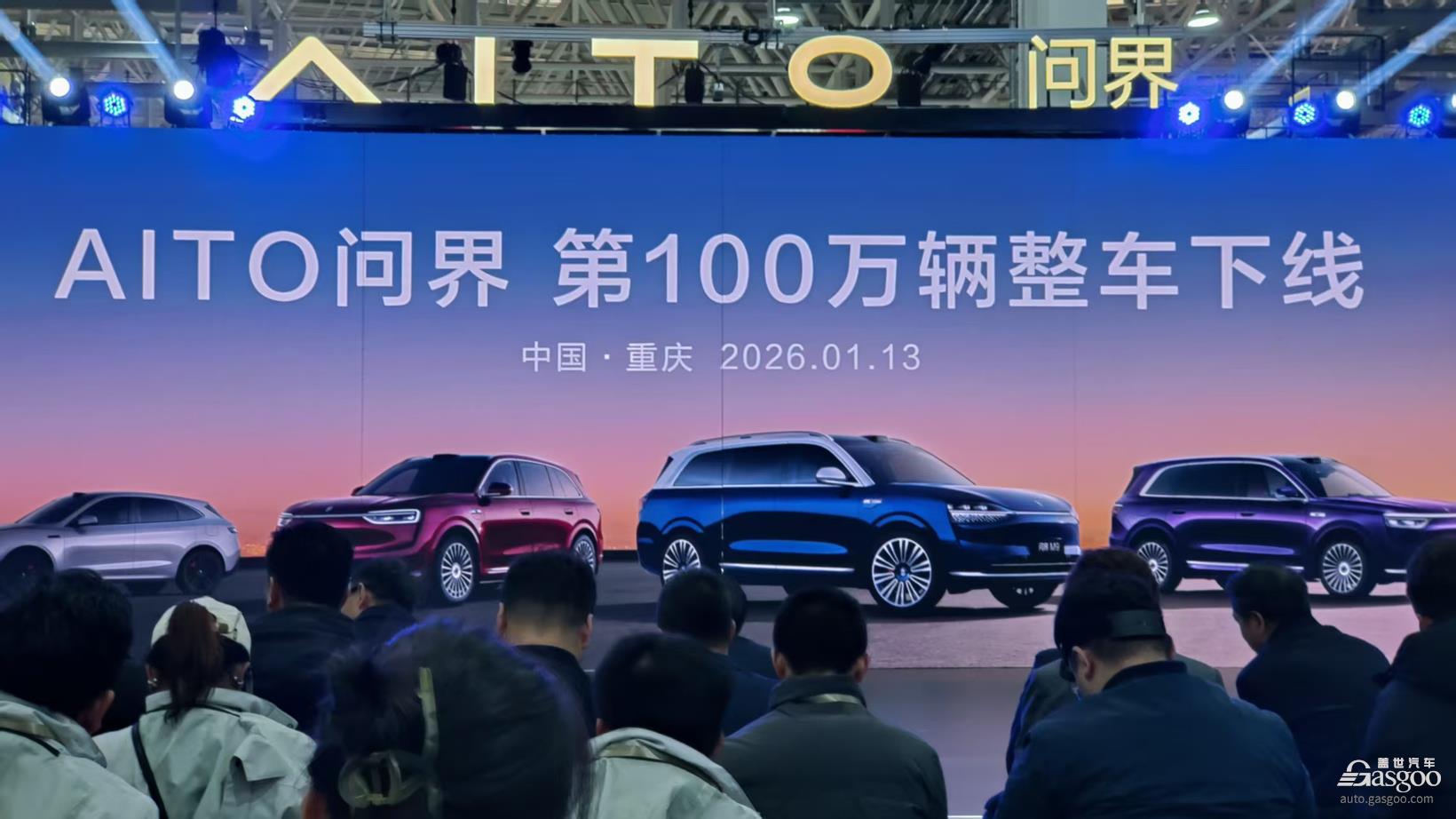
Tracing its trajectory, AITO has been on a fast track since launching in December 2021. Its first model, the AITO M5, hit the market in March 2022. Powered by Huawei's DriveONE electric drive platform and HarmonyOS cockpit, it set an industry record by delivering 10,000 units in just 87 days, with monthly sales surpassing 5,000 units by May.
By September of that year, monthly deliveries had topped 10,000 units. By year-end, its service network spanned 171 cities, laying a solid foundation for future growth.
2023 marked a pivotal year for upgrades. The entire lineup migrated to HarmonyOS 3, and the AITO M9 made its debut before launching at year's end. A joint sales and service task force was also established to streamline collaboration mechanisms.
Explosive growth followed in 2024. AITO claimed the top spot on the monthly sales chart for startups in January with 32,900 units sold. The new M7 delivered over 30,000 units in a single month, while the M9 secured a place among the high-end market leaders. AITO continued to lead the sales rankings throughout the year.
In 2025, AITO deepened its ecosystem collaboration, working with Huawei and others to build the HarmonyOS Mobility ecosystem with unified technical and service standards. December deliveries surged past 57,000 units—a new monthly high—bringing the full-year total beyond 420,000 units.
Gasgoo Take: From the first delivery to the million-unit mark, AITO pulled off a luxury-brand turnaround in just five years.
Three Ministries Build Battery Recycling System
On January 16, 2026, the Ministry of Industry and Information Technology (MIIT), alongside the Ministry of Ecology and Environment and the State Administration for Market Regulation, held a press conference to detail the "Interim Measures for the Management of Recycling and Comprehensive Utilization of Used Power Batteries for New Energy Vehicles." The regulations aim to address the impending wave of large-scale battery retirements by building a standardized, safe, and efficient recycling system.
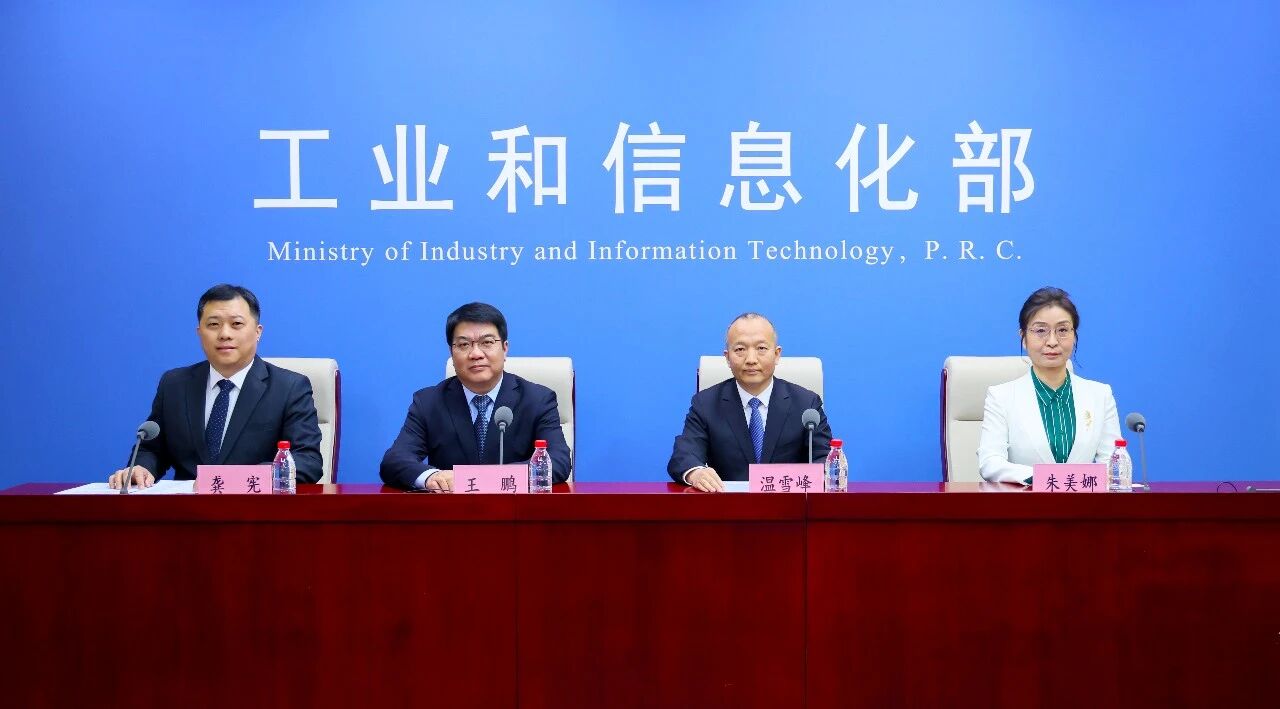
Image Source: MIIT WeChat
With China's NEV industry developing rapidly, production and sales both exceeded 16 million units in 2025, accounting for 47.9% of new car sales. Battery retirements are climbing accordingly, with annual volume projected to surpass 1 million tons by 2030. Used batteries present both resource value and environmental risks, making their proper disposal a critical link in sustainable development.
The core of the new "Management Measures" is establishing a "full-channel, full-chain, full-lifecycle" management model. The rules introduce a "vehicle-battery integrated scrapping" system (excluding battery swap modes), requiring that scrapped vehicles must retain their batteries. It also clarifies responsibilities across production, sales, recycling, and utilization—specifically reinforcing the "fallback" recycling liability of battery and automakers.
A key institutional innovation is the "digital ID" system for power batteries. Using unique codes to link information across the battery's entire lifecycle, the system enables full informational traceability and monitoring.
The document also adjusts key terminology, dropping the term "cascade utilization." It emphasizes that any reprocessed battery products must meet quality standards for their target application, and strictly prohibits using used power batteries in areas barred by regulation, such as electric bicycles.
Under the division of labor, the MIIT will lead the construction of a national traceability information platform. The Ministry of Ecology and Environment will continue cracking down on illegal dismantling and strengthening environmental oversight. The State Administration for Market Regulation is responsible for refining the standard system, having released nearly 30 national standards and establishing a relevant standardization technical committee.
Gasgoo Take: The introduction of these rules marks a new stage of legalization and standardization in the recycling and utilization of EV power batteries.
5.5 Billion RMB CATL Chang'an Battery Base Settles in Sichuan-Chongqing Gaozhu New Area
On January 14, 2026, CATL Chang'an Power Battery Co., Ltd. signed an agreement with the management committee of the Sichuan-Chongqing Gaozhu New Area to invest 5.5 billion yuan in a 25 GWh power battery production base.
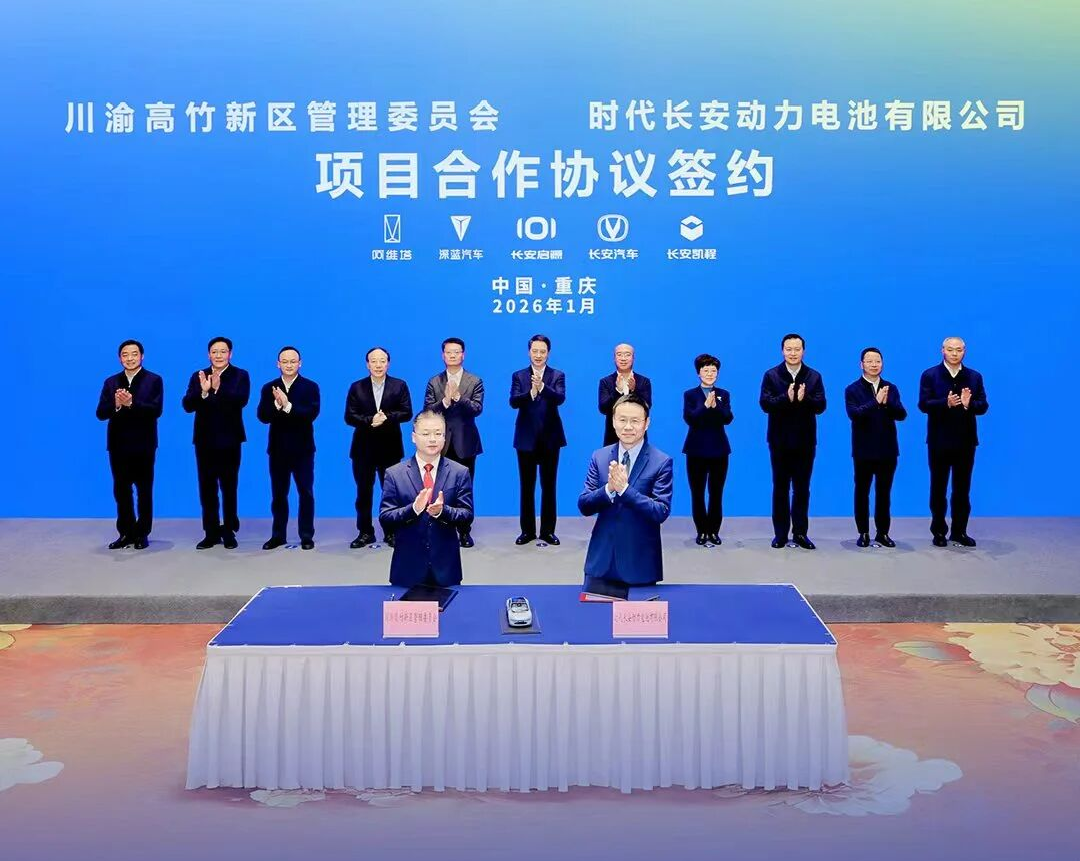
Image Source: Deepal
The project is invested in by CATL Chang'an, a joint venture between CATL and Changan Automobile. Located in the Beibei section of the Gaozhu New Area, it covers about 1,000 mu and will build a 25 GWh base. Positioned as a "technologically advanced NEV power battery supporting base," it will incorporate CATL's latest generation of battery processes, which are both leading and iteration-compatible. Once completed, the base will primarily supply Deepal and other new energy brands under Changan.
Site leveling is complete. Construction is set to begin in the first quarter of this year, with production starting in the second half of 2027 and full capacity reached within three years. At full capacity, the project is expected to generate an annual output value of about 10 billion yuan, 3 billion yuan in comprehensive tax revenue, and create roughly 2,500 jobs.
Gasgoo Take: This move not only deepens Changan Automobile's vertical integration capabilities in the new energy sector but also stands as a key benchmark for the coordinated development of the NEV industry in the Chengdu-Chongqing region.
Seres Pays Huawei 20 Billion Yuan in Procurement Fees
According to a recent prospectus from Seres Group, the company paid 20 billion yuan to Huawei in procurement costs in the first half of 2025. Converted against AITO sales volume, that means roughly 136,000 yuan flows to Huawei's technology and supply system for every AITO vehicle sold.
This fee covers smart vehicle solutions, key components, and related technical licensing and services provided by Huawei, directly reflecting the depth and breadth of their partnership.
The massive procurement bill is a snapshot of how the commercial relationship has deepened since the strategic partnership began in 2021.
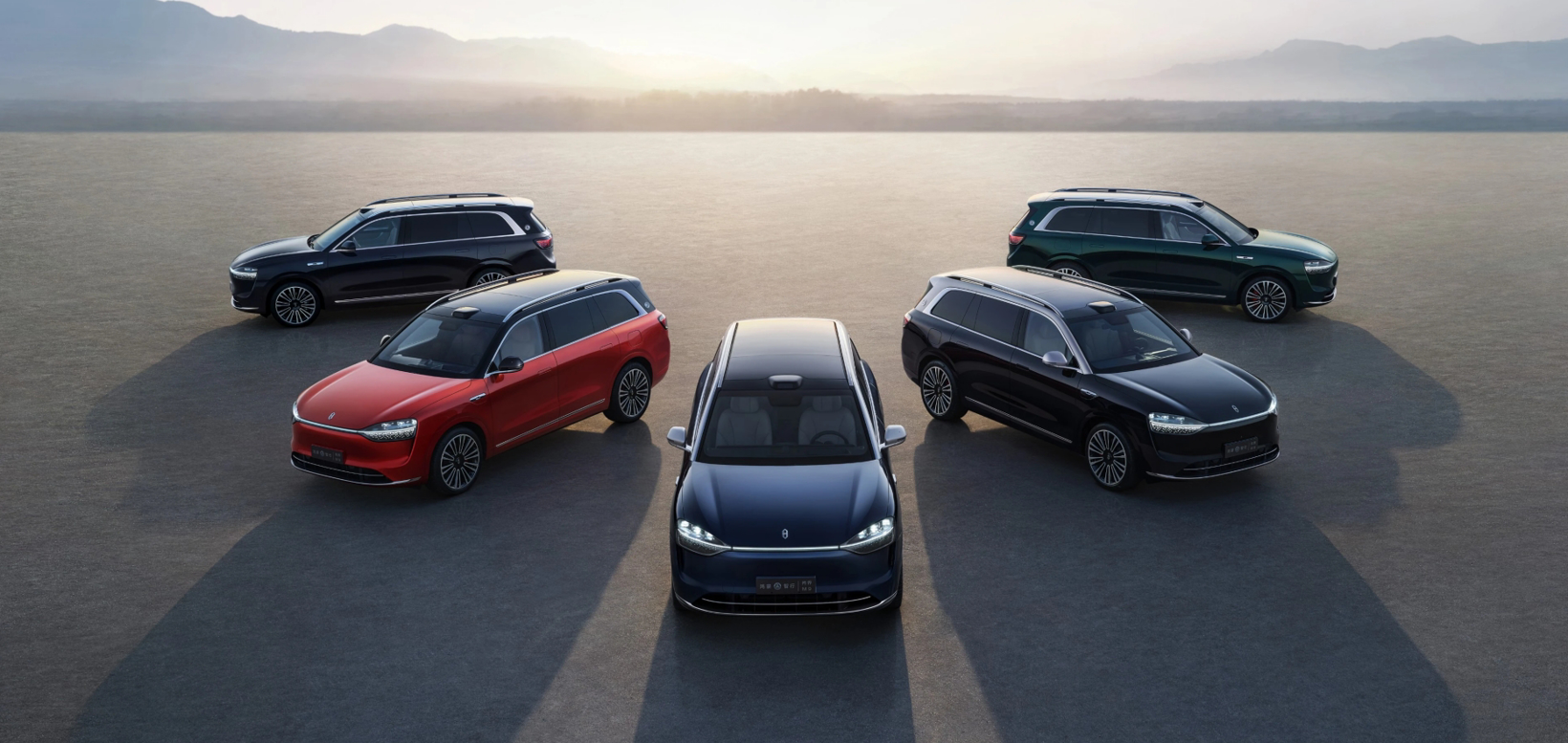
Image Source: AITO
Public data shows Seres paid Huawei a cumulative total of over 75 billion yuan from 2022 through the first half of 2025. At the time, Seres was in a critical transition phase, while Huawei sought applications for its smart vehicle technologies. They quickly joined forces to pioneer the "Huawei Selection" model. By integrating Huawei's capabilities in smart cockpits, autonomous driving, and retail channels, Seres successfully built the AITO lineup and achieved a brand breakthrough.
The AITO brand hit the one-million-delivery milestone in just 46 months, setting a new industry record. That market success has directly driven the surge in procurement costs.
Seres management has repeatedly addressed this tight partnership and high cost structure. Chairman Zhang Xinghai publicly defined the collaboration as an "innovative business model of cross-border integration," crediting Huawei's technological empowerment and brand support as the keys to AITO's success. He emphasized that despite the high fees, the cooperation delivered a leap in product competitiveness and rapid market expansion.
To maintain greater autonomy within the partnership, Seres has taken balancing steps—including fully acquiring the "AITO" trademark and investing in the joint sales and service company—to strengthen its own brand assets and terminal operational capabilities.
Gasgoo Take: As its sales base expands, optimizing the cost structure of its partnership with Huawei and sustainably improving profitability will be a critical challenge for Seres in its next stage of development.
SVOLT Unveils World's Largest PHEV-dedicated Battery Pack
On January 13, SVOLT announced the "Fortress 2.0" at its 6th Battery Day—the world's largest plug-in hybrid battery pack with a capacity of 80 kWh, setting a new industry record. The product is slated for mass production in March 2026, initially targeting D-segment PHEV models, and has already secured design wins from multiple automakers.
Driven by stricter emission regulations and rising consumer demands, this battery—set for production in March—is both a differentiator for SVOLT and a sign that the PHEV battery sector is entering a new phase of competition centered on "large capacity, high safety, and fast charging."
The "Fortress 2.0" features a highly integrated system-level design, boosting volume utilization and energy density by 6%. The cells use ultra-fast charging graphite technology to support 6C peak charging, capable of replenishing 10% to 80% in 10 minutes—giving D-segment PHEV sedans over 400 km of pure electric range. The pack boasts a cycle life exceeding 5,000 cycles and is compatible with 800V high-voltage platforms for sustained high-power output.
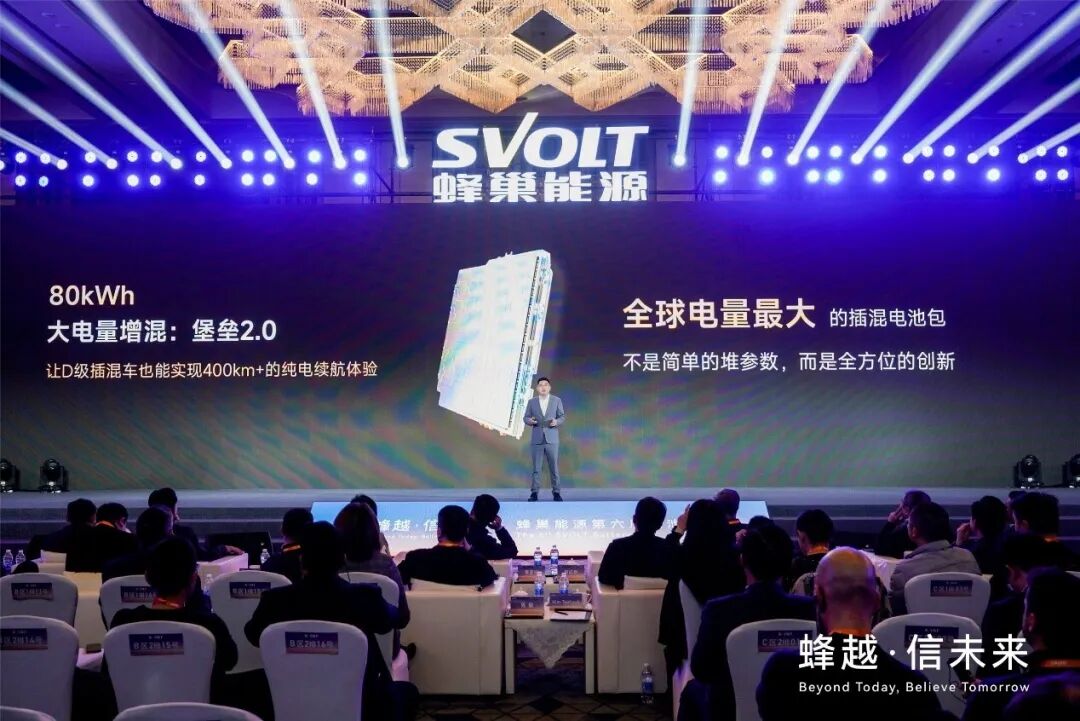
Image Source: SVOLT
SVOLT Chairman Yang Hongxin noted that the rapid rise of large five- and six-seater family and off-road scenarios creates rigid demand for "large capacity, high safety, and fast charging." The "Fortress 2.0" uses CTP (cell-to-pack) technology to reduce structural components and adopts a modular architecture to flexibly cover the 60–80 kWh range, helping automakers shorten development cycles and lower platform costs.
The same day, the company also released the "Short Blade 2.0" series, using ion oscillation charging technology to boost charging speed by 20% at the same cost. The first generation supports 6C charging (10 minutes for 80%); the second generation targets 12C (8 minutes for 80%) and is currently in the pre-research phase.
Gasgoo Take: As carbon emission regulations tighten globally and consumer demand for both long commutes and outdoor camping rises, "large-capacity PHEVs" are poised to become the fastest-growing segment from 2026 to 2028.


