



Gasgoo Munich- On February 11, EVE Energy marked a milestone in Jingmen, Hubei, with a ceremony celebrating the move-in to the "Zero District" of its Jingmen Institute and the official opening of the Longquan Laboratory. Developed in partnership with universities and industry players, the facility spans a planned 252 mu and is being rolled out in two phases — the first of which is now fully up and running.
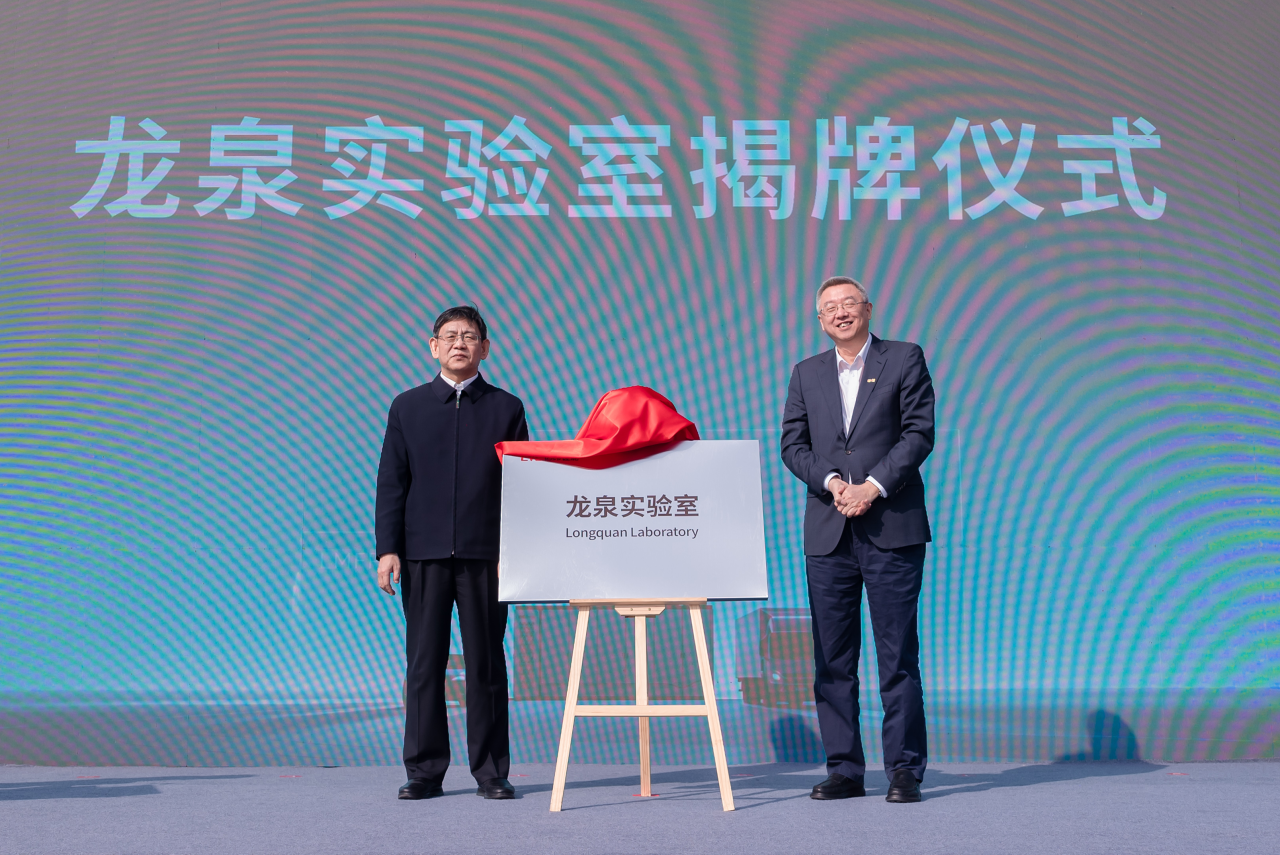
Image Source: EVE Energy
Positioned to drive basic research and crack key technical challenges in power and energy storage batteries, the Longquan Laboratory is prioritizing frontier R&D and engineering verification for LFP, prismatic cells, LMFP, and large-format storage batteries. The facility is armed with over 100 precision analysis instruments, enabling multi-scale characterization from macro to micro, 2D to 3D, and surface to bulk. Beyond analysis, it has established a digital pilot platform covering the entire lifecycle of power and storage batteries. This platform supports the trial production of multiple prismatic cell models, allowing for systematic verification of process feasibility and product stability — a move designed to fast-track the transition from lab breakthroughs to industrial mass production.
At the unveiling, Dr. Liu Jincheng, Chairman of EVE Energy, pledged to keep pouring resources into R&D, vowing to build the Jingmen Institute into a "global leader and world No. 1" facility. Jingmen Mayor Chen Jiawei, for his part, announced that the city will roll out targeted incentives covering talent recruitment, R&D spending, university-industry collaboration, and technology transfer — all aimed at integrating the laboratory into the regional innovation ecosystem.
Dr. Yuan Dingding, Dean of both the Jingmen Institute and the Energy Storage Battery Institute, elaborated on the lab's integrated approach to R&D, verification, and commercialization. The objective is clear: elevate LFP and prismatic battery technologies to world-class standards, while securing global leadership in LMFP and large-format storage batteries. Sustainability is also central to the lab's operations. Under a "zero-carbon" initiative, the Phase 1 rooftop photovoltaic system generates 2.06 million kWh annually — enough to power the facility's R&D and residential buildings for a full year. Inside, amenities such as dining halls, gyms, and recreational spaces are designed to foster work-life balance, helping to attract and retain top-tier talent.
The launch of the Longquan Laboratory signals that EVE Energy has closed the loop on its R&D strategy, spanning everything from basic research to pilot verification. Looking ahead, the platform is set to serve Hubei province's broader new energy industrial cluster, providing the technical backbone needed to scale up low-carbon energy technologies.


