



Ferrari is arguably the automaker most obsessed with race-bred performance, long a fixture in F1 and a constant presence in the World Endurance Championship (WEC) and other global series. In motorsport, gains as small as a tenth — even a hundredth — of a second can decide the outcome. According to overseas reports, the Italian carmaker has filed a patent titled "predictive control system for aerodynamic appendages in a road vehicle," a move that could give its future road cars a notable lap-time edge.
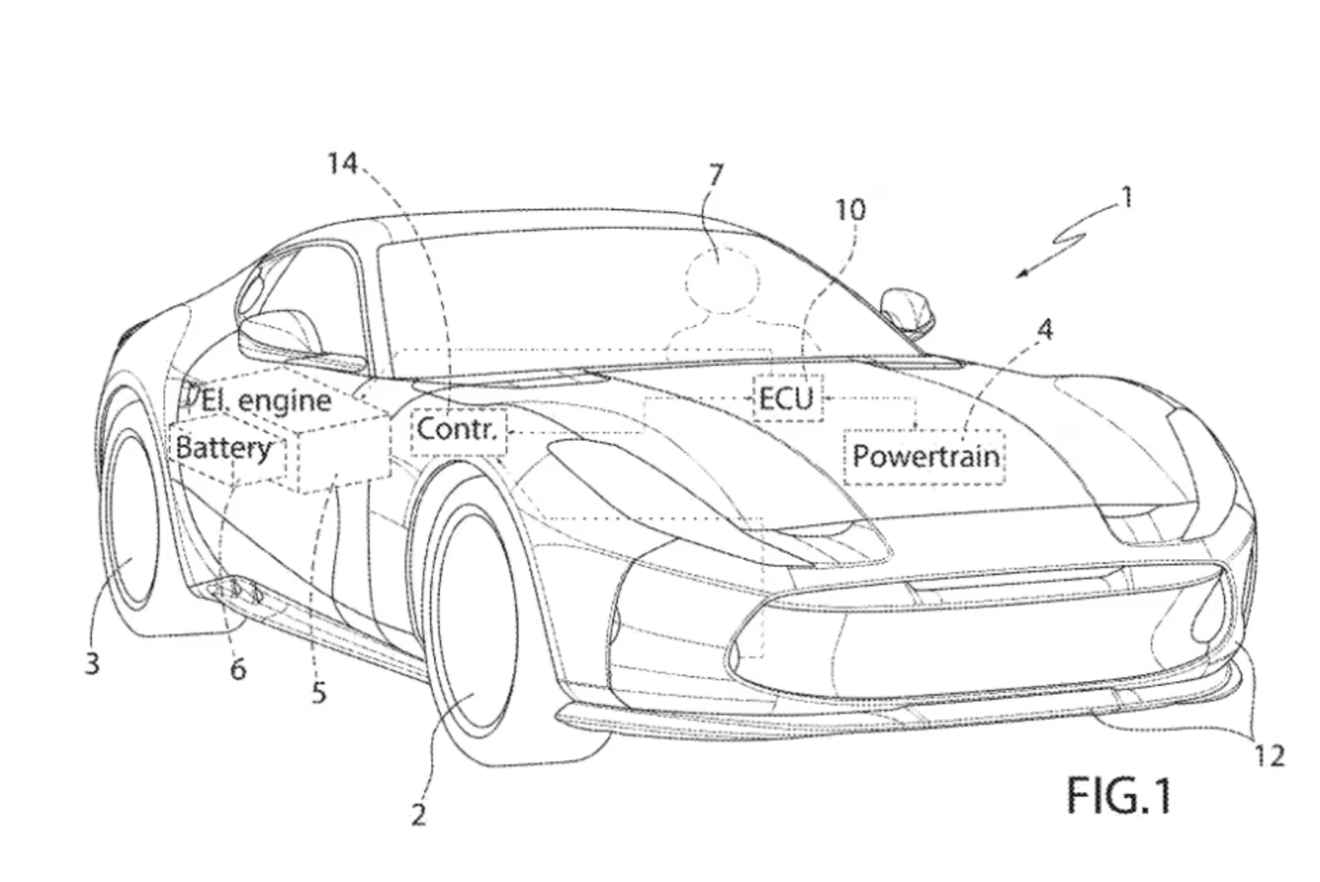
Ferrari patent (image source: United States Patent and Trademark Office)
As described in the filing, the system uses predictive algorithms to estimate aerodynamic load demand and expected driving conditions. Ferrari submitted the application to the United States Patent and Trademark Office (USPTO) in June 2025, and the agency published it that December.
From reactive to predictive
Active aerodynamics in high-performance road cars is nothing new; the Porsche 911 GT3 RS is widely regarded as a benchmark. What sets Ferrari’s patent apart is not the hardware, but the control logic behind it. Rather than merely reacting to driver inputs, the system anticipates when and how to deploy aerodynamic elements based on the vehicle’s projected operating state.
In conventional setups, pressing the brake triggers a high-drag configuration to boost stability and deceleration. Components also adjust with throttle input and steering angle, activating preset aerodynamic maps. In short, most systems still respond passively to real-time inputs, while Ferrari’s patent outlines a method with predictive capability.
Rethinking familiar aerodynamic tools
The patent does not specify exactly which components are controlled, though an adjustable rear wing is the most common example. In a low-drag mode, the wing can assume a more streamlined profile to cut aerodynamic resistance and lift top speed — akin to the drag reduction system (DRS) used in F1. Under braking, it can switch to a high-drag position to increase rear-axle downforce and tire grip, helping maintain stability and reduce the risk of sliding in high-speed corners.
While the notion of anticipating aero adjustments is compelling, the application itself doesn’t guarantee the technology will reach production. Should Ferrari choose to develop and adopt the system, it could emerge as a track-focused feature in future road cars, working in concert with existing advances such as the active aerodynamics in the SF90 Stradale and the lightweight engineering widely used across the "Speciale" line.


