



Gasgoo Munich- With official details on interior specs trickling out, the fifth-generation Wuling Hongguang MINIEV has grabbed the spotlight in the micro-EV market.
Slated for an official launch at the end of March, this new model is far more than a routine annual refresh—it represents a deep evolution, inside and out.
Since bursting onto the scene in 2020 to define an era, the Hongguang MINIEV has racked up over 1.9 million sales, cementing its status as a phenomenon in the history of China's auto industry.
As the micro-EV sector shifts from blue ocean to red, policy incentives fade, and consumer demands grow pickier, the arrival of the fifth generation isn't just about outdoing itself. It carries a mission for this "legendary" car to keep leading the charge in the era of the "Commuter 2.0."
Highlights of the Fifth Generation
The most striking change in the fifth-generation Wuling Hongguang MINIEV is how it shatters the stereotype of micro cars as "basic runabouts." Instead, it performs a kind of spatial magic, delivering refinement within a compact footprint.
Visually, the new model adopts a "Sweet Cube" design language that perfectly blends retro charm with playful whimsy. Buyers can choose from three new pearlescent finishes: Fresh Green, Fluffy White, and Cute Grey.
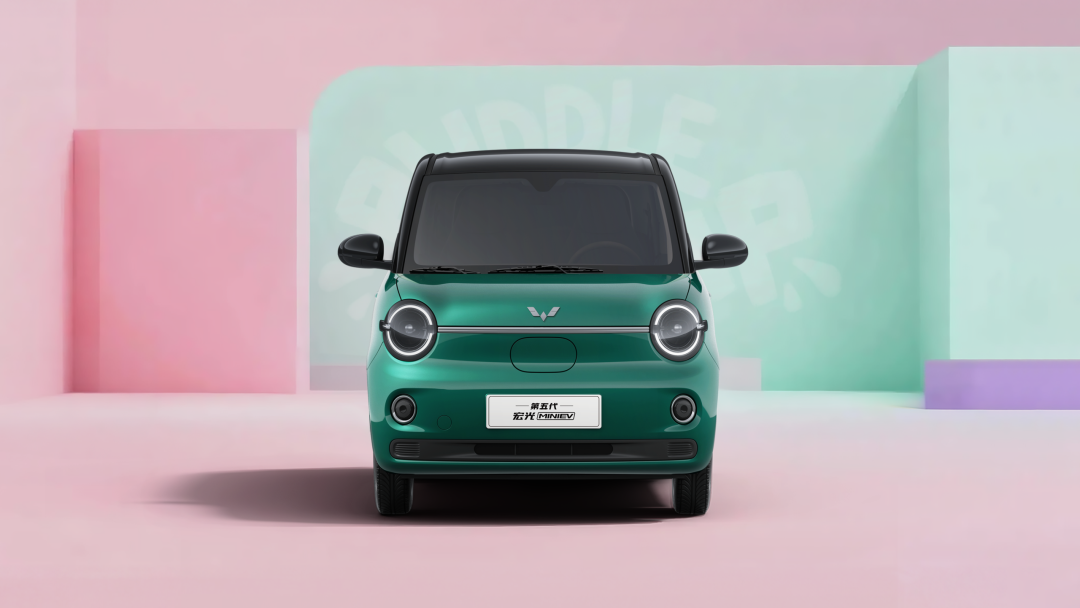
Image Source: SAIC-GM-Wuling
Up front, "Round Star Ring" LED headlights are connected by a chrome strip, paired with an oval charging port cover below. The result is a fascia that feels both retro and modern.
In terms of dimensions, the fifth generation offers both two-door and four-door variants. The highly anticipated four-door version measures 3,268 mm long, 1,520 mm wide, and 1,575 mm high, with a wheelbase of 2,190 mm. Slight increases in length and width over the previous model give it a more planted stance and set the stage for an interior overhaul.
Interior and configuration upgrades take center stage for this generation.
The newly revealed "Brown-White Plaid" seats, paired with a "Caramel Cream" color scheme, shed the cabin of any cheap plastic feel. Instead, it adds a touch of homey warmth and retro flair.
The dashboard follows a "Surround Fun Aesthetic" philosophy, headlined by a 10.1-inch smart scenario screen. Running a playful new UI, it supports modes for napping and camping, transforming the infotainment system from a cold control panel into an interactive companion.
The addition of column-mounted gear selectors not only improves driving convenience but also frees up space on the console for storage. In total, there are 20 storage compartments throughout the vehicle; with the rear seats folded, trunk capacity expands to 838 liters.
Details like power rear windows and front seat backrests that recline up to 164 degrees are also noteworthy improvements.
Powertrain and range figures are steady and pragmatic. The new model continues to use a rear-mounted motor with a maximum output of 30 kW, paired with battery packs of 16.2 kWh and 25.1 kWh. CLTC range comes in at 205 km and 301 km, respectively.
While the specs may look familiar on paper, 30 kW is more than sufficient to handle this compact car with ease in city traffic.
Crucially, the entire lineup now supports fast charging, replenishing the battery from 30% to 80% in just 35 minutes. That significantly extends the car's range, making weekend camping trips in the suburbs a viable option.
Five Generations and the Millions in Sales
Since the original model debuted in 2020, the Wuling Hongguang MINIEV has quickly cracked open the long-dormant A00-segment market, leveraging its unique advantages: it looks good, drives easy, parks anywhere, and costs little to run.
It didn't just create a new category; it lowered the entry barrier for electric vehicles to around 30,000 RMB, transforming EVs from toys for the few into tools for the many.
Looking back over these five years, the evolution of the Hongguang MINIEV mirrors the history of China's micro-EV market. From the first-generation model built for basic commuting, to the fashion-forward Macaron edition, the individualistic GAMEBOY version, and now the fifth-generation four-door model focused on quality and scenario-based experiences, it has evolved rapidly in response to user feedback.
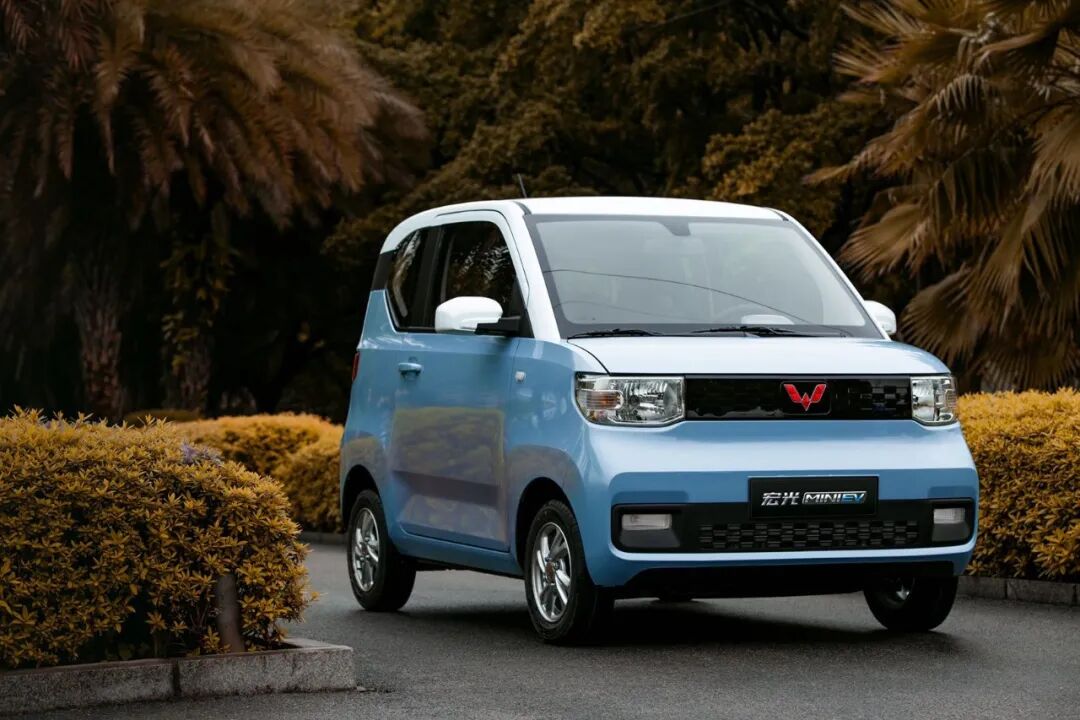
Image Source: SAIC-GM-Wuling
The figure of over 1.9 million cumulative sales carries multiple layers of significance. First, it is a victory of economies of scale. Massive volume has allowed Wuling to build a highly competitive supply chain. Through its self-developed Tianyu architecture and the "1-2-5" project, the company has achieved self-supply of core components and extreme cost control, creating a defensive moat that latecomers will find hard to replicate. This virtuous cycle of "scale-cost-quality" ensures it can continuously improve product strength while keeping prices affordable.
Yet, the car's significance extends far beyond commercial success; it has quietly evolved into a social phenomenon and a cultural icon.
From a social perspective, the Wuling Hongguang MINIEV genuinely addresses the pain points of urban short-distance travel. In congested cities, its sub-3-meter length and 4.2-meter turning radius make parking and commuting a breeze. It serves as the first car for young people, the "second car" for families ferrying kids or buying groceries, and even a practical tool for food delivery riders and community police.
Data from the China Passenger Car Association (CPCA) suggests that the sales surge of the Hongguang MINIEV is not a sign of "consumption downgrading," but rather of consumption stratification and rationality. Many middle-class families choose it as a supplement to their high-end vehicles, precisely meeting travel needs across different scenarios.
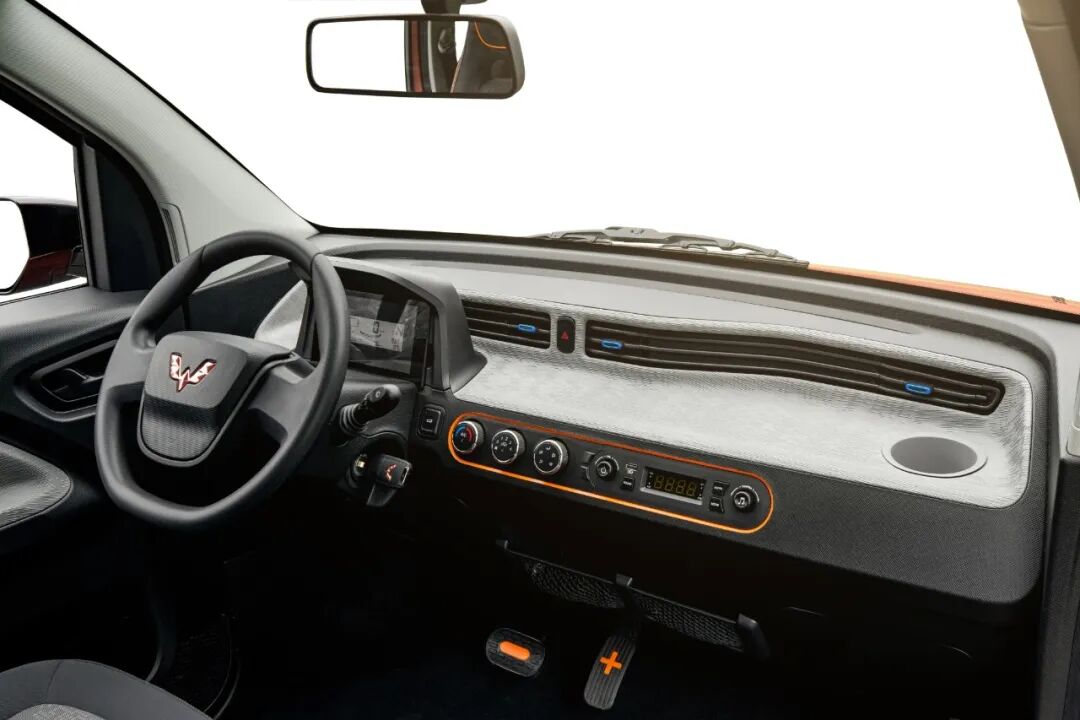
First-generation Wuling Hongguang MINIEV interior; Image Source: SAIC-GM-Wuling
Culturally, the Wuling Hongguang MINIEV has successfully transformed the automobile from a mere tool of transport into an emotional vessel and a social symbol. Its massive market presence and highly malleable boxy shape have spawned a unique culture of customization and creativity.
Statistics show a high proportion of owners personalize their vehicles, making the car an extension of their self-expression. Wuling has seized this trend by collaborating with youthful IPs like KFC, Hema Fresh, and Capybara, reinforcing the car's trendy attributes. This ensures the little car provides emotional value beyond just mobility.
Of course, while acknowledging its achievements, one must also recognize the shifting market landscape. With the phasing out of national subsidies, the emergence of competitors like the Changan Lumin and Geely Panda Mini, and rising consumer expectations for quality, the Wuling Hongguang MINIEV faces unprecedented pressure.
The sales volatility seen in early 2026 is less about the car "losing its steam" and more an inevitable adjustment as the market shifts from growth to stock competition. It is a new challenge posed by the trend of consumption upgrading.
Conclusion
From the "disruptor" of the first generation to today's "leader," the evolution of the Wuling Hongguang MINIEV reflects the shift in China's auto market: from pursuing value for money, to quality for money, and finally to seeking emotional experiences.
Whether the fifth generation can extend its legacy on the foundation of 1.9 million sales remains to be tested by the market. But one thing is certain: it remains firmly on the track of "building what the people need." Only this time, what the people need is a more refined, smarter, and better companion for daily life.


