



Gasgoo Munich- "In the past two years, the high-performance computing unit we completed took just 18 months from receiving the customer's business award to final mass production. But now, 18 months is no longer the target—it has become our baseline," said Chen Yuan, CTO of Aumovi Group China, in the press room at the 2026 Beijing Auto Show.
As Chinese automakers compress new model launch cycles to 12 to 18 months, and local suppliers iterate solutions on a monthly basis, the systemic capabilities that foreign Tier 1 suppliers once prided themselves on—rigorous development processes and layered approval mechanisms—have suddenly shifted from moats to speed bumps.
In the traditional foreign Tier 1 system, 18 months was once "unimaginable." Now, it is merely a passing grade. Chen Yuan put it bluntly: "To survive in China, we must be results-oriented, not just process-oriented."
When China Speed Forces the Global System to Adapt
Chen Yuan joined Aumovi in January. Previously, he spent 14 years at Continental and six years as CTO and Asia General Manager at JLY (Junlian Zhixing). He has witnessed the heaviest side of foreign corporate systems and lived through the most cutthroat pace of local enterprises.
"My first key mandate since joining Aumovi is to accelerate our R&D speed." He said this just after wrapping up a round of project discussions with partners Pateo and Horizon Robotics.
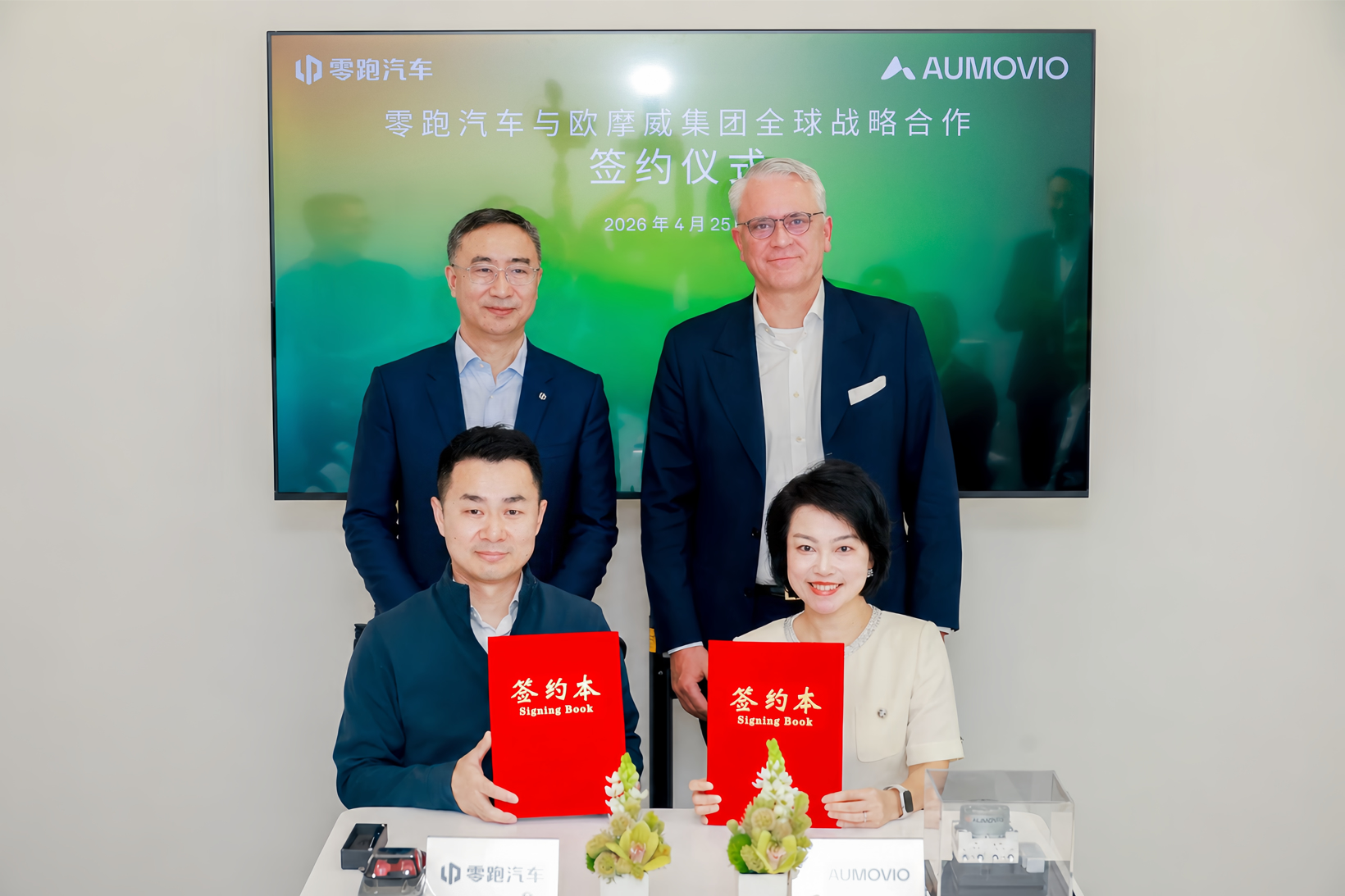
Image Source: Aumovi
Where does that speed come from? Chen Yuan's answer: Bring decision-making back to China.
Historically, Aumovi's R&D in China was vertically managed by German headquarters. Innovation budgets awaited HQ approval; introducing new suppliers meant navigating HQ quality audits; headcount changes had to climb the corporate ladder. This mechanism works in a stable market, but in China's hyper-competitive arena—where hundreds vie for the lead—every waiting moment risks falling a step behind the competition.
Changes have come thick and fast over the past year. Chen Yuan reeled off a list:
R&D authority has been delegated; the China team is managed locally, with autonomy over headcount adjustments;
Innovation budgets are now fixed allocations, with local teams deciding where to invest—whether in AI, 48-volt systems, or remote control networks;
Decision-making for supplier onboarding has shifted to the China Management Committee, cutting the process from a year to under three months;
The localization rate for back-end assembly equipment suppliers has hit 70%.
These may sound like "internal management adjustments," but for a global Tier 1 that went independent less than a year ago, each item involves a reallocation of power structures. "Previously, we had to explain risks to higher management; now, the China Management Committee can make the final call," Chen Yuan said.
Behind this lies a subtle shift in logic: historically, foreign R&D in China focused on adapting global products for the local market. Now, Aumovi wants its China team to lead development from scratch—using China's speed to drive global progress.
"Aumovi has extensive global technology accumulation and significant investment in forward-looking R&D. Our task now is to actively bring more of that funding and budget to China. Our second mission is to use our speed to drive the global development of the automotive industry."
This is not just rhetoric. Products led by the China team—next-generation zone controllers, in-vehicle camera solutions, rotating roof screens, and distributed electronic pedal brake-by-wire systems—are all "Made in China, for the World." The brake-by-wire system, for instance, will see its mass production debut in China shortly.
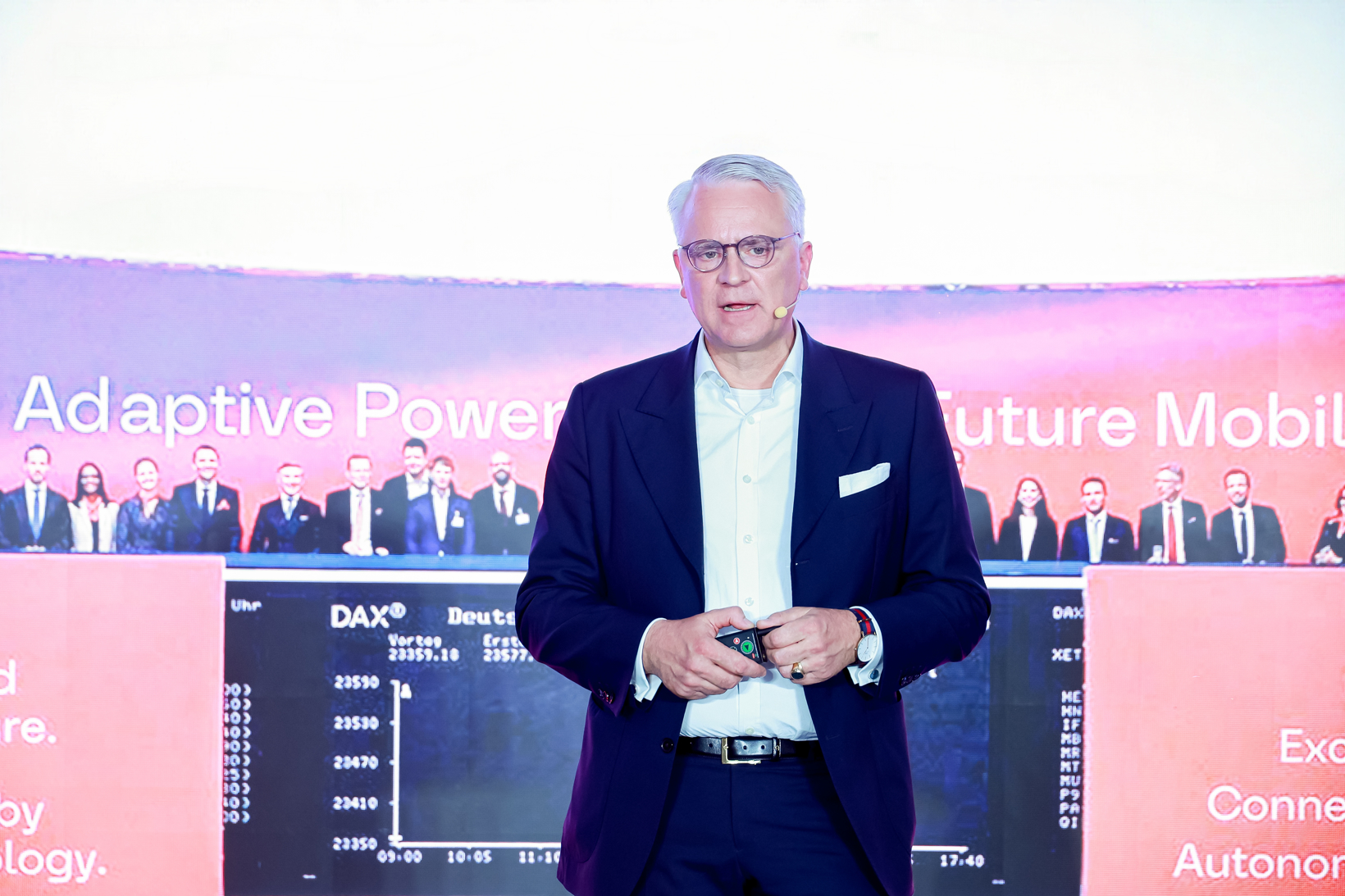
Feng Hefei, Chairman of the Board and CEO of Aumovi Group; Image Source: Aumovi
Aumovi Group's global CEO, Feng Hefei, confirmed this direction at the press conference. He stated that the company has established the Aumovi China Management Committee to "truly create conditions for the success of the local management team through systems, processes, and authorization mechanisms—giving them the ability to operate independently, make decisions quickly locally, and act on the spot."
For a German enterprise with over 150 years of history, this level of delegation is rare.
The Hardest Part of the "Results-Oriented" Battle is Changing Mindsets
Authorization alone isn't enough to boost speed. During a group interview, Chen Yuan touched on a deep pain point in the transformation of foreign Tier 1s: "To survive in China, we must be results-oriented, not just process-oriented. This is the hardest part for German companies."
The strength of the German supply chain system lies in its process-driven approach. From requirements analysis to system design, from DV (Design Verification) to PV (Product Verification), every step demands strict protocols and deliverables. This system was once the "gold standard" of the global auto industry. But when OEMs compress model cycles from four or five years to two or three—or even down to 12 to 18 months for some startups—following the V-model development process step-by-step means being obsolete by the time you reach mass production.
When pressed further on whether there are systematic approaches to R&D management beyond simply piling on resources, adding headcount, or delegating authority, Chen Yuan offered a nuanced answer.
The first layer is "adaptation." "Whatever we do, we first determine if there's something existing and ready-to-use that we can adopt. If it already exists elsewhere, my first principle is to use it, rather than creating it from scratch." As a global enterprise, Aumovi has many capabilities in Germany, Eastern Europe, or North America that the China team can directly reuse.
The second layer involves strategic "capability distribution." "We look at the overall landscape. If a capability already exists abroad, we choose not to rebuild it, but instead to focus on differentiated capabilities. Once differentiation is defined, we concentrate on building that specific strength to empower other regions globally."
This marks a sharp departure from the past, where the China region was merely a "capability receiver." Now, it is becoming a "capability exporter," developing differentiation in areas where other regions lack it, and then feeding that value back into the global system.
The third layer is the deep integration of AI. Chen Yuan revealed that within the automotive development V-model process—spanning requirements analysis, use case generation, and test script generation—Aumovi has built its own knowledge graph. "Currently, AI handles half of this work. My goal is to raise that ratio further, eliminating the need for repetitive documentation."
Processes often slow things down because of repetitive steps. When AI takes over this work, engineers can focus on high-value tasks like architecture design, algorithm optimization, and system integration. The process hasn’t been eliminated, but its speed has been drastically compressed.
"Efficiency peaks when you focus on a single task and enter a state of flow. If you try to do everything, your efficiency inevitably drops."
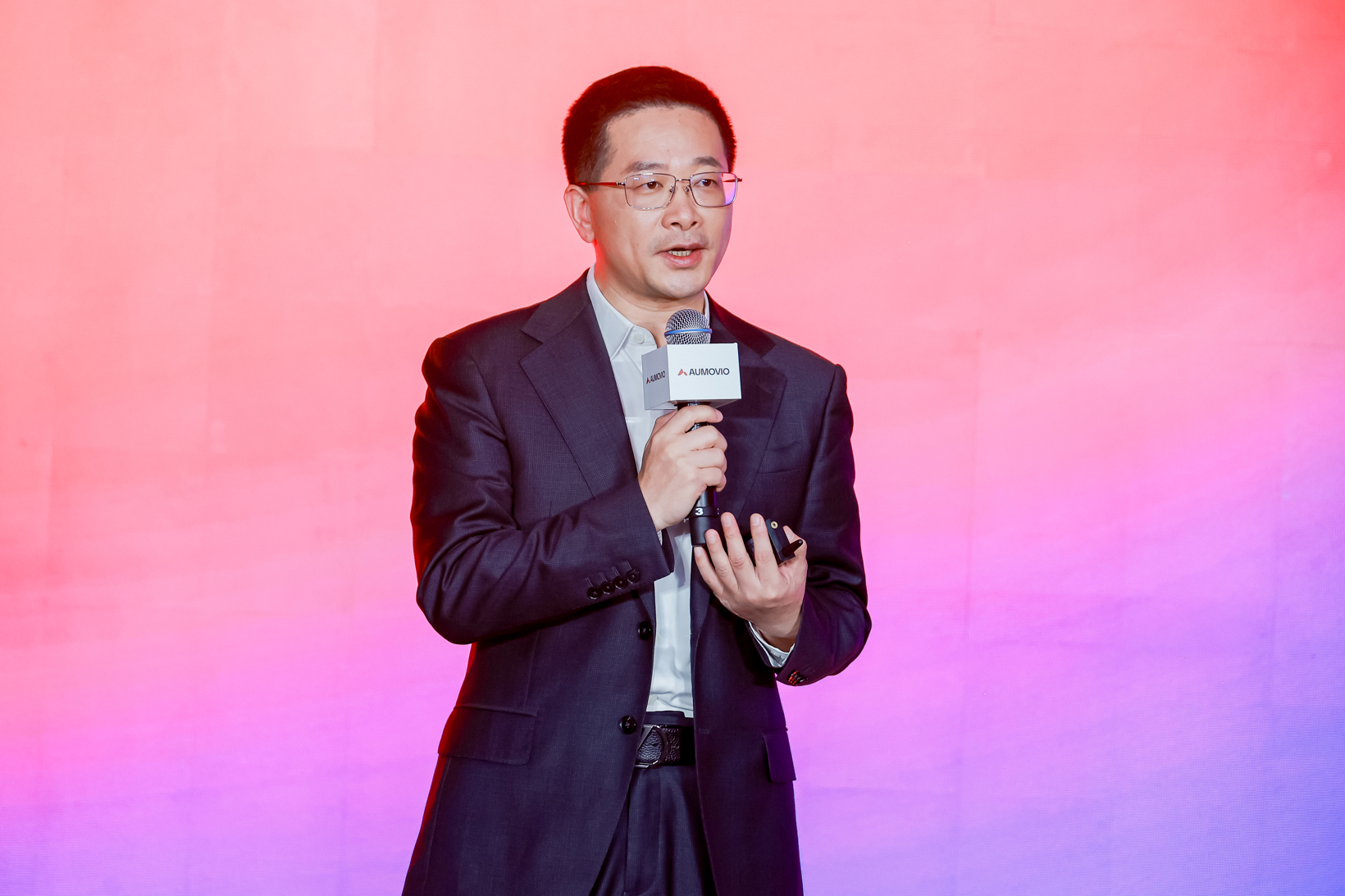
Chen Yuan, CTO of Aumovi Group China and Head of Architecture & Connectivity Solutions Business Unit China; Image Source: Aumovi
Yet, even the most advanced methodologies rely on people for execution. When asked about the biggest challenge since joining Aumovi, Chen Yuan was surprisingly candid: "Talent is the most important driver. The core power lies in people, not the system. Because systems are designed by people, and so are processes."
He noted that management has repeatedly emphasized "China Speed, China Innovation, China Vitality." "But getting this mindset to penetrate deep into the bone marrow takes continued effort. Changing the perception of people in the broader ecosystem—from disbelief to belief, from skepticism to support—is crucial."
The "people in the broader environment" include not just the China team, but colleagues at global headquarters and in other regions. The real challenge for foreign Tier 1s accelerating in China isn't getting the Chinese team to move faster—it’s getting the global system to recognize and support that pace and logic.
"The best thing about large enterprises is their diversity," Chen Yuan argued. "I need them to recognize and support us, then let us run with it. That way, we can deliver value to them, and they can deliver value to us. This kind of two-way exchange and empowerment is, in my view, a very positive thing."
From "Solo Combat" to "Team Battle": The Underlying Logic of Ecosystem Cooperation Has Changed
Speed is up, but being fast is one thing; winning is another.
At the Beijing Auto Show, Aumovi unveiled two major partnerships in quick succession: a global strategic cooperation with Leapmotor and a strategic agreement with Pateo. Combined with its previous joint venture with Horizon Robotics—Zhijia Dalu—and its deep ties with ING in the digital key sector, the outline of Aumovi's ecosystem in China is taking shape.
Leapmotor represents a "customer co-creation" model. The partnership dates back to Leapmotor's early days in 2015. Over the last decade, collaboration evolved from the S01 featuring MK100 electronic braking technology to the C series adopting next-generation brake-by-wire last year. This new global strategic agreement now extends that cooperation to Europe—the first stop in Leapmotor's global expansion.
Cao Li, Executive Director and Senior Vice President of Leapmotor, shared a detail at the conference: During winter testing at the end of the year before last, Zhu Jiangming brought his entire management team to Heihe. In temperatures tens of degrees below zero, they monitored the integration of the brake-by-wire system on the C series. "Conditions were brutal, but thanks to the efforts of both teams, the models equipped with the new brake-by-wire products sold exceptionally well last year."
Chen Yuan defines this relationship as "Tier 0.5"—not a traditional buyer-seller dynamic, nor a complete replacement of in-house development, but a deep integration. "The customer's needs are our needs. This allows us to work with the OEM from day one to design the next-generation platform and technology."
Pateo and Horizon Robotics represent a "technology complementarity" model. Chen Yuan used eight characters to describe his partnership logic: "Once chosen, together for life." He values Pateo's expertise in AI cockpits, Horizon Robotics' capabilities in chips and autonomous driving algorithms, and ING's integration with mobile ecosystems. "We only do what we are best at. In areas where we aren't strong, we rely on German headquarters or our partners to fill the gap. This approach stacks strength upon strength to build a bigger bucket."
When asked if relying increasingly on external partners dilutes the Tier 1's own identity, Chen Yuan offered a measured response: "Aumovi's positioning has always been clear: we are a Tier 1, and our role is to serve the OEMs."
In his view, the auto industry sees a new technological wave every decade—from autonomous driving to AI, from chips to software-defined vehicles. Yet, regardless of the shift, "the core trend remains consistent: how to make smart mobility better, and the user experience smoother and more natural."
"Aumovi has always played the role of bringing the most mature and advanced technology into vehicles as efficiently as possible. We leverage the strengths of various enterprises to help us build the best possible product."
This is a reaffirmation of Aumovi's role: not to be a "do-it-all" super Tier 1, but to be an integrator and definer that "integrates the right technology into the right product at the right time."
Regarding the synergy between chassis and autonomous driving, Chen Yuan offered a concrete example: Aumovi's China team is leading the development of a "smart chassis." "The smart chassis is no longer just a traditional mechanical chassis; it is an actuation and perception platform deeply coupled with autonomous driving. Autonomous driving requires rapid judgment based on tire steering, resistance, and road conditions, with control instructions fed back to the chassis in milliseconds." This capability can be delivered as a whole package or deployed modularly, aiming to help automakers achieve intelligent dynamic control faster.
"Deliverable as a whole, yet deployable in modules"—this bears the hallmark of "China Speed." If customers are handed a black box that cannot be modified or iterated, it is nearly impossible to move in today’s Chinese market. Openness, flexibility, and configurability are the prerequisites for keeping up the pace.
Closing Remarks:
At the press conference, Feng Hefei offered a poignant observation: "We fully agree with our global automotive customers and supplier partners: the China market is a gym. Only by succeeding here can we succeed globally."
Here, you find the fiercest competition, the shortest feedback loops, the pickiest users, and the most daring competitors. For any foreign Tier 1, staying in this gym means choosing a state of constant tension. But once "fit," you can take the muscle built here to fight battles worldwide.
"Once we establish our first platform in China, we can start pushing it overseas, attacking the broader market with our speed and solutions," said Chen Yuan. Leapmotor's Cao Li added that when Leapmotor localizes abroad, Aumovi's experience in global R&D, manufacturing, and local regulations presents a key opportunity for deep cooperation. Pateo founder Ying Yilun was even more direct: the collaboration between Pateo and Aumovi perfectly fuses "China Speed, China Experience, China Innovation" with "global regulatory requirements and the diverse needs of global OEMs."
The past was "European R&D, Chinese adaptation," with technology flowing from West to East. Now, China is becoming a source of core automotive technologies, and the flow is reversing from East to West. For foreign Tier 1s in China, the task is no longer simply executing global mandates, but absorbing nutrients, evolving, and using China's speed and solutions to serve global customers.
This is not an easy process. As Chen Yuan said at the close of the interview: "The R&D process is always full of challenges. As we forge ahead together, looking forward, we believe our path will become steadier and steadier."


