



Gasgoo Munich- On January 16, GAC Group announced that its Trumpchi brand has officially been spun off into a Business Unit (BU), marking the start of independent operations. This follows the integration of Hyper and Aion into a single BU and the independence of the Qijing brand, representing another critical step in GAC's "Panyu Action" reform.
The newly formed Trumpchi BU will integrate resources across the entire value chain — from R&D and manufacturing to sales — aiming to accelerate decision-making and market responsiveness through unified operations. Its core mission is to rejuvenate the brand, with a target to move upmarket by 2026 via three strategic pillars: technology upgrades, product reshaping, and deepening the customer experience.
As the veteran of GAC's proprietary brands, Trumpchi's pivot signals more than just a deepening of internal restructuring; it marks a fight for survival as the group navigates a once-in-a-century industry upheaval.
Business Restructuring: Turning the Elephant
Looking back, the Chinese auto industry has weathered unprecedented turbulence. The penetration rate of new energy vehicles (NEVs) is steadily approaching 50%, and while the smoke of the price war has yet to clear, the battle has deepened into intelligence and ecosystem services.
As "multi-brand, cluster-based" operations become the industry norm, GAC launched a sweeping BU reform for its proprietary brands in 2025. Back then, the merger of Hyper and Aion was viewed as a strategic consolidation in the NEV war. The independence of Trumpchi BU, however, looks more like a revolution aimed at transforming its internal combustion engine base and accelerating its hybrid transition.
GAC's decision to spin off Trumpchi and others into independent BUs stems from a recognition that the fundamental logic of automotive competition is shifting. According to forecasts by Gasgoo Institute and other authoritative bodies, China's auto market has moved from growth to saturation—or even contraction—meaning "high volume, low growth" is the new normal.

Image Source: GAC Group
With NEV technology cycles shortening to 12 months or less, the traditional "Group-Division-Subsidiary" hierarchy is showing its age. Lengthy decision chains, internal friction in resource coordination, and slow reactions to market feedback have left traditional automakers on the back foot against agile startups and new rivals.
For GAC, the BU model is about decentralizing power across the "R&D-Production-Sales" spectrum. By granting Trumpchi greater operational autonomy, the BU becomes a business entity with significant decision-making authority. This approach drastically shortens the loop from product definition and R&D to market launch, fundamentally boosting the company's agility.
The merger of the Hyper and Aion BUs provided a blueprint for this approach. By consolidating mid-to-high-end NEV resources, GAC stabilized its footing in the mainstream market while cutting down on redundant R&D spending.
Yet, the Trumpchi BU faces an even steeper climb. Its core mandate is "brand rejuvenation" — specifically, how to transition its legacy advantages in fuel and hybrid vehicles into the smart electric era without losing its existing base.
Technology, Product, Experience: Keys to Victory and Challenges Ahead
In the Trumpchi BU's roadmap, "technology upgrades, product reshaping, and experience deepening" are defined as the core pillars. These three strategies form the foundation of "Reinventing Trumpchi," yet executing them will be fraught with challenges.
Regarding technology upgrades, Trumpchi's push for "top-tier ecological technology with a human touch" points directly toward the high-stakes battlefield of intelligence.
In today's industry context, the "three electrics" (battery, motor, control) are merely the entry fee. Smart cockpits, advanced driver-assistance systems (ADAS), and internet-of-vehicles (IoV) ecosystems are what define brand premium. Trumpchi faces a critical choice: how to quickly shore up its software capabilities while relying on GAC's proprietary "Xingling Architecture"?
This is especially pressing as the Qijing brand and Trumpchi Xiangwang initiate partnerships with external players like Huawei Qiankun. The question for Trumpchi is how to strike a balance between maintaining independent R&D and embracing an open ecosystem.
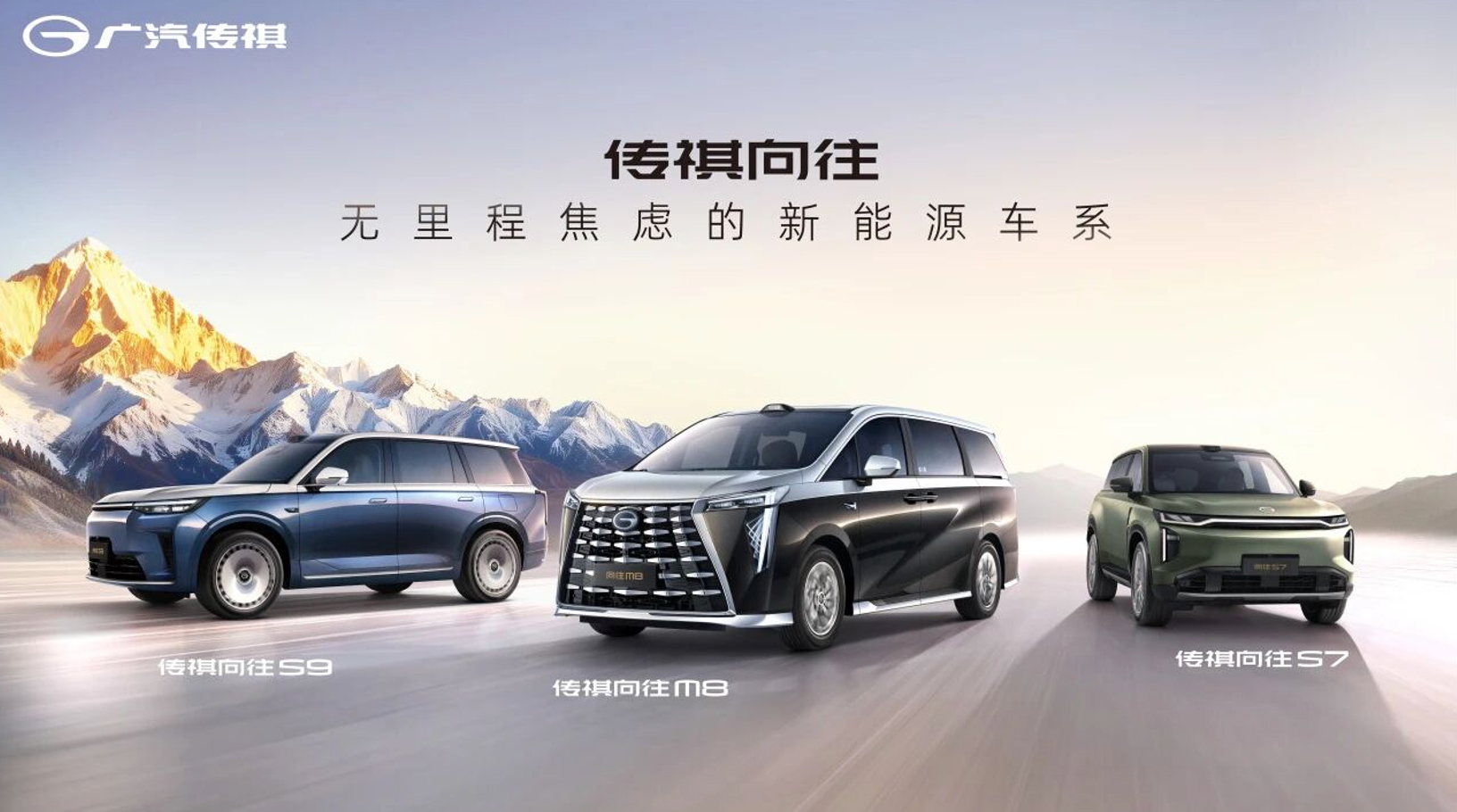
Image Source: GAC Trumpchi
Next comes product reshaping. The M8 and M6 MPV series form Trumpchi's defensive moat. However, latecomers are encroaching on the MPV market. The Trumpchi BU's future hinges on whether it can defend its MPV share while using a dual-track strategy of hybrids and pure electrics to regain competitiveness in the SUV and sedan segments.
The explosive growth of extended-range technology (EREV) in 2025 offers a new window of opportunity. Yet, capturing the tech-hungry next generation of users without diluting the brand's "quality and dignity" DNA remains a formidable test.
Finally, there is the deepening of experience. This is the area requiring the most drastic overhaul. While the traditional dealer network served Trumpchi well in the past, the current model feels heavy and inefficient in the era of direct-to-consumer engagement and digital operations.
Analysts suggest that shifting toward a hybrid of direct sales and agency models will inevitably clash with existing dealer interests. Whether Trumpchi can build a user community and service loop comparable to those of the new forces—while managing a smooth transition—will directly dictate loyalty to the "New Trumpchi."
Overall, the independent operation of the Trumpchi BU is GAC's attempt to break out and survive the industry's upheaval through organizational fission. The journey to "Reinvent Trumpchi" serves as a microcosm of Chinese state-owned automakers standing at a crossroads, searching for a path forward.
Whether the Trumpchi BU can carve a path through the thicket of technological barriers and price wars using its integrated operations remains to be seen.


