



Gasgoo Munich- With joint ventures across the board feeling the squeeze, GAC Honda's 2025 sales report makes for grim reading: sales volume slid 25.22% year-on-year.
Even as mainstream sentiment turns against joint ventures, GAC Group is still betting on the partnership. In its latest 2026 strategic plan, the struggling joint venture remains a critical piece in GAC Group's bid to stabilize its joint ventures.
As GAC Group sets its sights on a return to the 2-million-unit annual mark, how much ammunition does GAC Honda—one of its two joint-venture pillars—really have left?
Sales Crisis: GAC Honda's 2025
Following the Lunar New Year, GAC Group convened its 2026 high-quality development conference at its Panyu headquarters. At a gathering internally dubbed 'a battle from day one,' Party Secretary and Chairman Feng Xingya set the core operational target for the year: bring automobile production and sales back to the 2-million-unit level, achieve positive growth in local output value, and sustain improvements in operational efficiency.
The reality beneath that target is stark: GAC Group's cumulative sales for 2025 stood at 1.72 million units, a 14.06% decline from the previous year. To deliver roughly 16% growth and reclaim the 2-million threshold within a year, the pressure is undeniable.
Breaking down the performance across business segments, GAC Honda's position warrants particular attention. As one of the group's two joint-venture pillars, GAC Honda sold 351,900 units in 2025—a 25.22% year-on-year plunge. Although December sales hit 50,984 units, up 23.3% month-on-month and hinting at a thaw, full-year performance remains far from historical highs.
Yet, according to GAC Group's production and sales data, February 2026 sales slumped to 9,220 units—a 68.93% year-on-year drop.
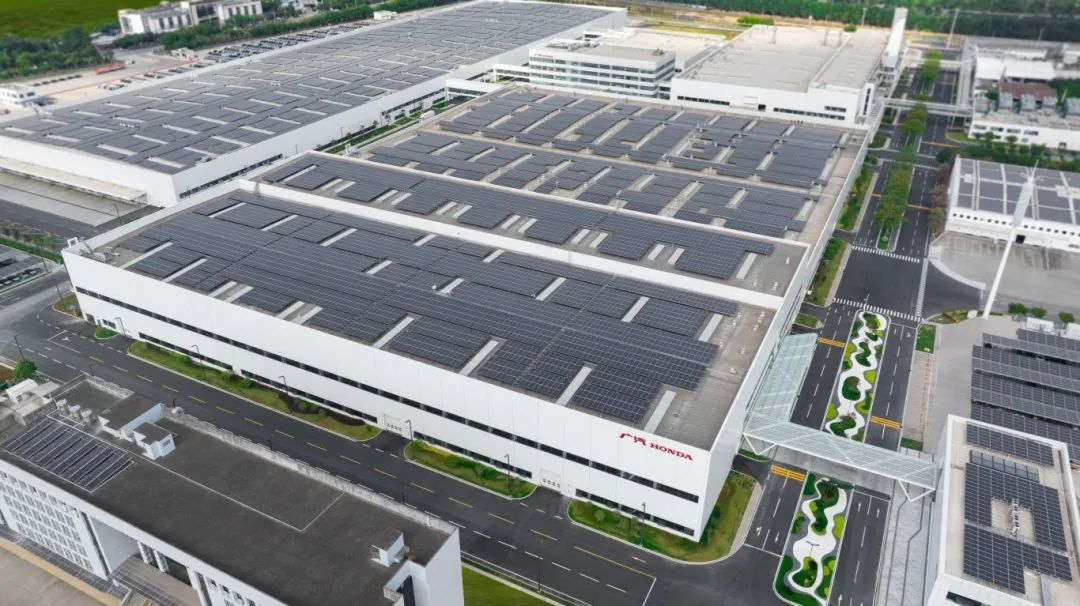
Image Source: Honda China
GAC Honda's dilemma appears on the surface as anxiety over the loss of its 'hero cars,' but at a deeper level, it reflects a strategic absence in new-energy deployment. The root cause lies in an over-focus on the internal combustion engine track; when market logic shifted, the collapse of its foundation combined with a lag in transition to create a fatal vicious cycle.
A deeper challenge stems from the industry upheaval. Data from the China Association of Automobile Manufacturers shows that between 2020 and 2025, the market share of Japanese-brand passenger vehicles fell from 24.1% to 9.7%. Over the same period, sales of traditional energy vehicles dropped from roughly 95% to about 52% of the total. Yet GAC Honda's reliance on internal combustion engine sales has remained above 95% for the past three years—meaning its core product line is almost entirely misaligned with the market's fastest-growing segment.
GAC Honda is not sitting idle amid these structural challenges. Over the past two years, the automaker has pushed forward with the intensive integration and structural optimization of production lines, concentrating resources on products that better align with national policy and the Chinese market. According to its mid-to-long-term product plan, the launch of multiple new-energy models should usher GAC Honda into a new upward cycle. Under its five-year development roadmap, operational conditions are expected to gradually improve starting in 2027.
Recently, GAC Honda acquired a 50% stake in Dongfeng Honda Engine Co. for 1.17 billion yuan. Upon completion, Dongfeng Honda Engine will become a wholly-owned subsidiary of GAC Honda. This integration facilitates unified engine operations and precise control over costs and quality—a strategic move by GAC Group to 'solidify the foundation' of its joint ventures.
GAC's Confidence: Why the Bullish Bet?
At a time when the industry largely remains on the fence about joint ventures, GAC Group has offered its own assessment: there are no signs of impairment in its long-term equity investment in GAC Honda.
Not long ago, in a response to a regulatory inquiry from the Shanghai Stock Exchange regarding its performance forecast, GAC Group based this judgment on two key pillars:
First, the market landscape is entering a 'new steady state.' GAC Group believes the Chinese auto market has shifted from disruptive growth to a new stage of 'local dominance with differentiated foreign coexistence.' As the growth rate of electric vehicles slows and total internal combustion engine volume remains stable, the market is transitioning from 'disruption' to 'diversified coexistence.' S&P Global predicts that the market share of joint venture brands will stabilize in the 25%–30% range over the next five years, with internal combustion vehicles—particularly hybrids—retaining a stable market space.
This implies that joint ventures have won a 'time window' for transformation. On one hand, they can rely on their technical heritage in internal combustion and hybrid vehicles to shore up their foundation; on the other, they are rapidly closing the gap in intelligence and electrification through deep localized R&D and partnerships with Chinese technology firms.
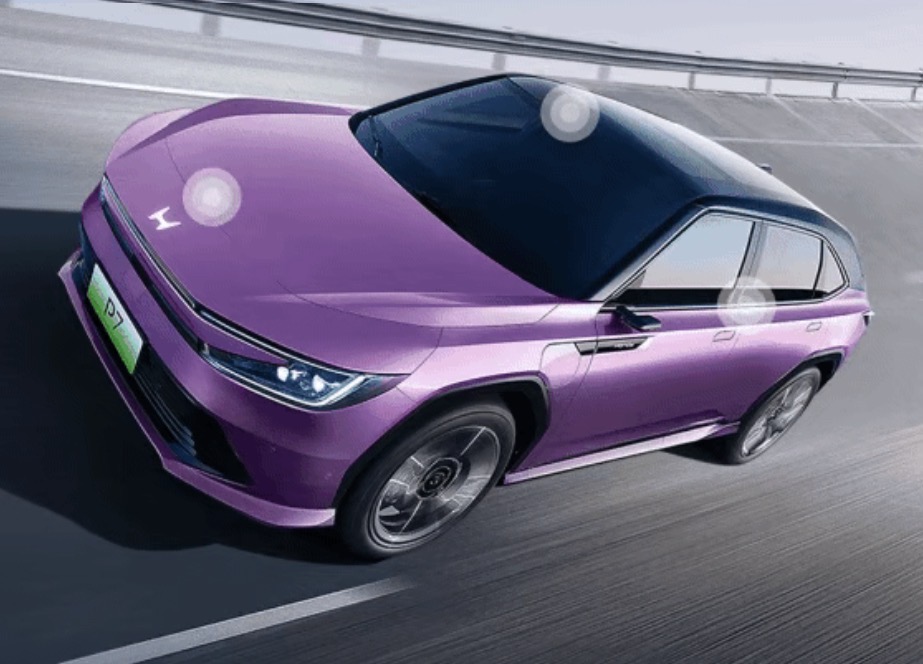
Image Source: GAC Honda
Second, operational resilience is evident. After stripping out the impact of strategic short-term adjustments—such as impairment charges on certain production lines and long-term assets—GAC Honda has maintained positive operating profits over the past three years. Its core business, namely the internal combustion engine base and sales of select hybrid models, remains profitable.
In other words, the non-cash impairments resulting from capacity restructuring and asset optimization are 'temporary' rather than 'trend-based' adjustments. Amid a complex cycle defined by price wars and the growing pains of transition, this may be the most significant underlying strength of a legacy joint venture.
GAC Honda's start to the year is far from optimistic, and the annual target remains a distant goal. Will organizational reform boost efficiency? Can new-energy products truly gain traction? Will the five-year plan be delivered on schedule? For now, there are no answers.
But at least one thing is clear: on GAC Group's strategic chessboard of 'stabilizing joint ventures, strengthening proprietary brands, and expanding the ecosystem,' GAC Honda remains the piece that must be held steady. And rebuilding trust is never achieved through statements alone—it is verified through products, sales volume, and time.


