



Gasgoo Munich- What were the major headlines in the global auto industry this week?
Honda Motor forecasts first-ever loss since going public
Citing foreign media reports, Honda announced on March 12 that it is scrapping three electric vehicle models originally planned for the North American market. The decision, driven by a strategic overhaul of its EV approach, is expected to generate total costs and losses of 2.5 trillion yen (approximately $15.7 billion).
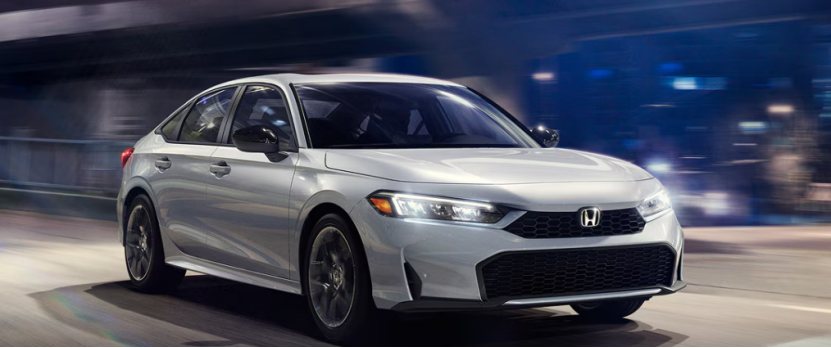
Image Source: Honda
For the fiscal year ending March 2026, Honda now projects a net loss of between 420 billion and 690 billion yen — a sharp reversal from its previous forecast of a 300 billion yen profit. Notably, this would mark the automaker's first annual net loss since it went public in 1957.
Following a statement revealing that "automotive profitability is declining," Honda called an emergency press conference. The company attributed the financial downturn largely to a shift in U.S. policy affecting internal combustion engine and hybrid vehicles. At the same time, Honda conceded that over-allocating resources to electric vehicle development had eroded its product competitiveness in Asian markets.
Citing the slowdown in North America, Honda said it will reallocate resources and streamline its model lineup to bolster its hybrid offerings. The automaker also plans to step up investment in India, which remains a growth market for its automotive and motorcycle divisions.
Gasgoo Take: Honda's massive write-downs from its strategic pivot toward electrification—and the resulting forecast of a first-ever annual loss—underscore the steep challenges legacy automakers face in balancing the transition to EVs with maintaining profitability.
NIO doubles down on Optics Valley; WeNeng launches 9.8 billion yuan battery infrastructure project
According to a report from "China Optics Valley," Wuhan WeNeng Battery Asset Co. signed an official agreement with the Wuhan East Lake High-tech Development Zone on March 12. The deal brings a 9.8 billion yuan battery infrastructure project to the area.
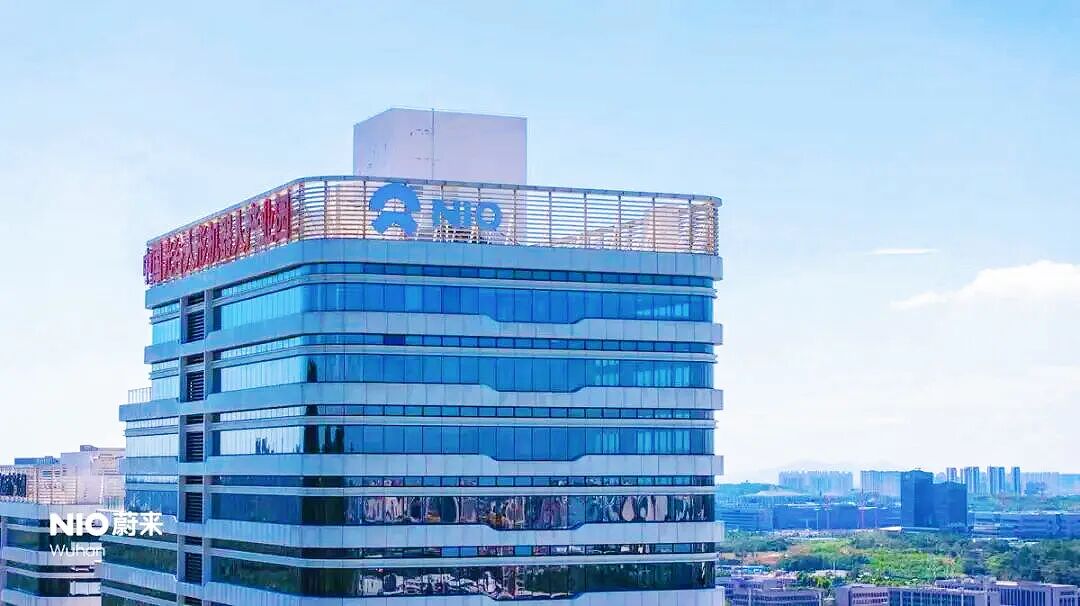
Image Source: Optics Valley Media Convergence Center
WeNeng was established in 2020 as a joint venture in Optics Valley by NIO, CATL, and other partners. It is the world's first battery asset management company based on a "battery separation" model and has since become a leader in China's sector.
This new infrastructure project will focus on advancing battery asset management, application technologies, and other industrialization efforts, while also serving NIO’s BaaS users. BaaS, or Battery as a Service, allows customers to purchase a vehicle without the battery pack, instead renting batteries of varying capacities for a monthly fee. This approach supports a flexible energy ecosystem featuring charging, battery swapping, and upgrades.
Beyond this new agreement, NIO has already established the first and second phases of its NIO Energy headquarters in Optics Valley. To date, the company has built 3,753 battery swap stations and over 28,000 charging piles across China.
Gasgoo Take: WeNeng's 9.8 billion yuan project landing in Optics Valley solidifies the battery separation model and is poised to enhance NIO’s energy service ecosystem and asset management capabilities.
Rohm, Toshiba reportedly consider integrating power semiconductor businesses
Japanese semiconductor giants Rohm and Toshiba are in talks to integrate their power semiconductor operations, according to sources familiar with the matter.
Image Source: Toshiba
While the framework for the integration has yet to be finalized, possible options include establishing a joint venture to house both companies' power semiconductor businesses.
Earlier, the Nikkei reported that Denso, a Toyota Group supplier, had proposed acquiring Rohm. Moving forward with an integration involving Toshiba could be seen as Rohm’s strategy to boost corporate value and counter Denso’s acquisition bid.
Estimates suggest Denso would need roughly 1.3 trillion yen ($8.2 billion) to acquire Rohm as a wholly-owned subsidiary. However, bringing Toshiba’s related business into the deal would significantly increase both the time and capital required for Denso to complete any acquisition.
Power semiconductors are electronic components used to control voltage and current, such as regulating power output voltage or converting between direct and alternating current.
Rohm holds an edge in silicon carbide (SiC) automotive power semiconductors, a technology known for higher energy efficiency. Toshiba, meanwhile, specializes in mainstream silicon-based power semiconductors and boasts a broad customer base that includes the power industry.
Data from U.S. research firm Omdia shows Toshiba held a 2.6% share of the global power semiconductor market in 2024, while Rohm held 2.5%. By comparison, industry leader Infineon Technologies of Germany commanded a 17.4% share. At the same time, Chinese companies are steadily expanding their market presence by leveraging cost advantages.
Gasgoo Take: Rohm and Toshiba’s talks on integrating their power semiconductor operations aim to leverage complementary technologies for global competition—and to gain leverage against potential external takeovers.
ZF EMB production line project to land in Wuhan Economic & Technological Development Zone
The Wuhan Economic & Technological Development Zone announced on March 11 that ZF's EMB production line project will be established in the district.
Image Source: ZF
As a long-term partner of the zone, ZF has maintained a presence in Wuhan since 2011, repeatedly increasing its investment to deepen local operations.
In October 2025, ZF Automotive Systems' new plant in Wuhan officially launched, further expanding the company's local production capacity. The facility has increased output for electronic parking brakes (EPB).
This system enables parking braking via electronic control, offering significant safety and convenience advantages over traditional mechanical handbrakes. Since ZF pioneered the technology globally in 1999 by integrating the motor and caliper, EPB systems have been produced locally in China since 2007. Now in their sixth generation, they are considered a landmark achievement in intelligent mechanical systems.
At the time, ZF revealed plans to introduce a next-generation electromechanical brake (EMB) production line at the new plant. A critical component of brake-by-wire systems, this advanced technology combines electric and mechanical braking to deliver more efficient, precise, and responsive braking performance.
Gasgoo Take: ZF’s decision to locate its EMB production line in Wuhan doubles down on core brake-by-wire technology, aligning with the growing demand for upgraded chassis actuation in intelligent driving.
CATL earns nearly 200 million yuan daily in 2025
On March 9, CATL released its 2025 annual report. The figures show revenue of 423.7 billion yuan for the year, a 17.04% increase, while net profit attributable to shareholders jumped 42.28% to 72.2 billion yuan. With a net profit margin of 17%, the company generated nearly 200 million yuan in profit every day.

Image Source: CATL Annual Report
Regarding dividends, CATL’s 2025 distribution plan proposes a cash payout of 69.57 yuan for every 10 shares (inclusive of tax). The company has distributed cash dividends equal to 50% of its net profit for three consecutive years; once this year’s payout is complete, total dividends will approach 100 billion yuan.
Additionally, net cash flow from operating activities reached 133.2 billion yuan, up 37.35% year-on-year.
On the research front, CATL invested 22.1 billion yuan in 2025, representing a continuously rising share of revenue. Over the past decade, cumulative R&D spending has exceeded 90 billion yuan, providing a solid foundation for technological leadership and sustained product innovation.
In 2025, CATL further solidified its leading global position. The company sold 661 GWh of lithium batteries over the year, a 39% annual increase. According to SNE Research, its market share for global power battery usage rose 1.2 percentage points to 39.2%, securing the top spot globally for the ninth consecutive year. Its share in overseas markets jumped to 30%. To date, its power batteries have been installed in over 24 million vehicles worldwide.
CATL also delivered a strong performance in the rapidly growing energy storage sector. SNE Research data indicates the company held a 30.4% share of global energy storage battery shipments in 2025, ranking first worldwide for five consecutive years, with approximately 2,300 cumulative projects globally.
To meet robust global demand, CATL continues to expand its delivery capabilities. By 2025, the company boasted the world’s largest production capacity at 772 GWh, with another 321 GWh under construction at year-end. Construction on its Hungary plant and Indonesia battery industrial chain projects is proceeding steadily.
Gasgoo Take: CATL’s 2025 results show high profitability and market share, driven by a dual engine of power batteries and energy storage, further cementing its status as the global leader.
JCET Automotive Electronics’ Lingang factory officially enters production
According to the Shanghai International Group’s official account on March 10, JCET Automotive Electronics (Shanghai) Co., Ltd.—partially invested by the group—held a grand production launch ceremony in the Lingang Special Area. The event marks the official operation of China’s first professional chip packaging and testing facility dedicated to automotive electronics and robotics applications.
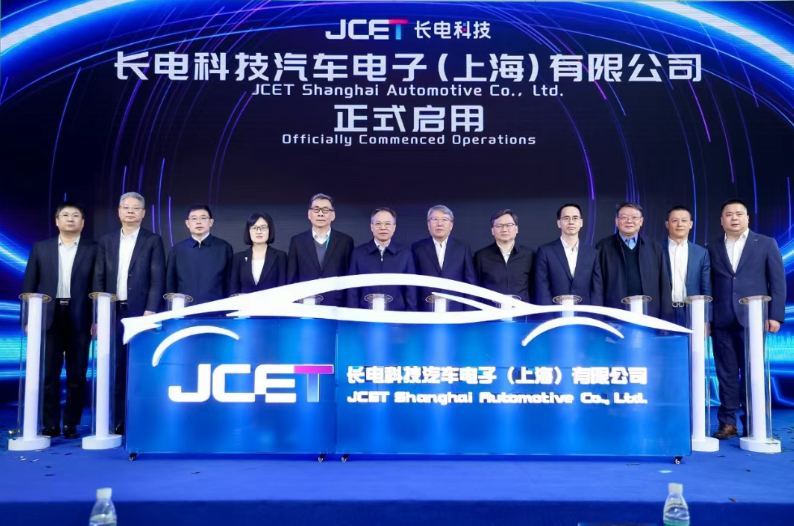
Image Source: Shanghai International Group Official Account
The JCET Automotive Electronics project was established in the Lingang Special Area as a specialized automotive chip packaging and testing company, led by Jiangsu Changjiang Electronics Technology Co., Ltd. (JCET).
Previously, on December 31, 2025, JCET announced that its automotive-grade chip packaging and testing factory, JCET Automotive Electronics (Shanghai), had achieved equipment "power-on" as scheduled.
Positioned as an intelligent factory focused on automotive-grade chip packaging and testing, the facility is located in the Lingang Special Area and covers an area of 210 mu. The first phase includes 50,000 square meters of clean room space.
According to JCET, the project broke ground in August 2023. Following two years of intense construction and system commissioning—including the completion of the main structure, equipment installation, and successful process certification—the facility has now entered operation. Catering to the manufacturing needs of finished automotive-grade chips, the plant offers one-stop packaging and testing services, supporting customers through the entire process from product introduction and certification to mass production ramp-up.
Notably, the factory is equipped with industry-leading automated production lines, achieving full coverage of smart manufacturing and lean management. It has developed a globally leading integrated process for key automotive-grade chip packaging and testing steps. The facility also incorporates AI-assisted defect detection and a big data traceability system, creating a closed-loop quality and operations management framework that is traceable, analyzable, and optimizable.
Gasgoo Take: The launch of JCET Automotive Electronics’ Lingang factory fills a critical gap in automotive-grade chip packaging and testing capacity, aiding the move toward a self-reliant and upgraded automotive semiconductor supply chain.


