



Gasgoo Munich- What moved the needle in the global auto industry this week?
China Seeks Feedback on Mandatory L2 Driving Assist Rules: Hands-Off, Eyes-Off to Be Banned
On April 16, the Ministry of Industry and Information Technology released a draft of the mandatory national standard "Safety Requirements for Intelligent Connected Vehicle Combined Driving Assistance Systems," opening it for public comment until April 22 with a proposed effective date of January 1, 2027. As China's first mandatory L2 standard, it was jointly drafted by Huawei, Xiaomi, BYD, and Tesla, filling a critical gap in the industry's safety baseline. The standard categorizes L2 combined driving assist into three types: basic single-lane, basic multi-lane, and navigational combined driving assistance systems, clarifying functional boundaries, capability thresholds, and safety requirements.
Gasoo Takeaway: The L2 standard sets a safety floor, ending the "wild west" era of driver assistance.
GAC Group Restructures Again, Launches New Smart Cockpit Product Line
On April 12, reports emerged that GAC Group has reshuffled its organizational structure to establish a new smart cockpit product line, led by Zhu Taiping. This move marks a critical step in GAC's "Panyu Action" reform, tasked with comprehensively elevating the cockpit experience.
That evening at the 2026 GAC Tech Day, Zhu Taiping revealed a deep strategic partnership with Qianwen. He noted that by leveraging the QWEN 3 large model, GAC's voice assistant can understand natural language, handle requests, and maintain conversation—crucially, it also integrates a full ecosystem covering dining, accommodation, travel, and entertainment. "Core Alibaba services like Amap, Flash Buy, Fliggy, and Taobao will seamlessly connect to your cockpit."
Gasoo Takeaway: Structure yields to experience. By coupling deeply with AI, the smart cockpit battle is shifting from stacking features to integrating ecosystems.
Report: Chery Plans to Expand Auto Production in Europe
Recently, Chery Automobile held launch events for its Omoda and Jaecoo brands in France. Lionel French Keogh, Chery's chief commercial officer for France, told Reuters on the sidelines of the event: "The company is looking for additional capacity in Europe."
Chery Chairman Yin Tongyue told reporters that the company prefers leveraging existing capacity rather than spending heavily to build new assembly plants from scratch. "These processes take time and investment, but the core is establishing the right local partnerships," Yin said. "I very much hope to have new news to share with everyone in the coming months."
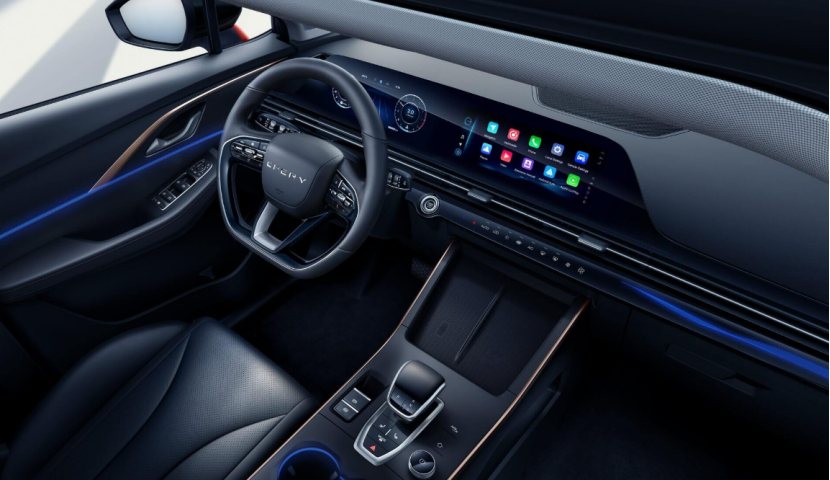
Image Source: Chery
Yin declined to specify which automakers Chery is negotiating with, nor how many countries are under consideration for production sites, but he explicitly stated that France is on the list of potential locations.
Similar to rival BYD, Chery has seen rapid sales growth since entering the European market in 2023. Data from consultancy Dataforce shows Chery's European sales reached 120,147 units in 2025—more than six times the 17,035 units sold in 2024.
Numerous Chinese automakers have already entered the European market, with even more planning to land on the continent.
As China's largest auto exporter, Chery has acquired a former Nissan assembly plant in Barcelona through a joint venture with Spain's Ebro Group. The target is for the factory to reach an annual capacity of 200,000 units by 2029.
However, Chery executives say this capacity remains insufficient to meet market demand, navigate the EU's tariff policies on Chinese electric vehicles, or satisfy European requirements for local manufacturing content.
France is one of the last major European markets where Chery has launched the Jaecoo and Omoda models. Executives stated that the company will introduce Chery-branded models in France in the fourth quarter of this year and may launch a small pure electric SUV before the year ends. Chery also recently announced plans to introduce the Lepas brand in Europe.
Gasoo Takeaway: Using local capacity to hedge trade risks, Chinese automakers are leveling up from "selling cars" to "making cars" abroad. The battle for localization in Europe has begun.
ECARX Officially Takes Over Full Flyme OS Operations
Recently, ECARX announced that, in accordance with Geely Holding Group's "Taizhou Declaration" and "One Geely" strategic deployment, it has officially begun taking over all core assets and business of the Flyme OS from Xingji Meizu Group to drive the deep integration of smart mobility and cross-terminal ecosystems.
Image Source: ECARX
The integration is comprehensive: all intellectual property of the Flyme OS brand, all operating Flyme Auto businesses, customer contracts, and R&D teams are being brought under ECARX for unified management. Ecarx stated it will rely on its smart cockpit software and hardware platforms and global delivery capabilities to accelerate the adaptation of operating systems to in-vehicle scenarios, improving synergy and product iteration speed. The integration will proceed by business priority, clarifying boundaries of responsibility, properly placing employees, and ensuring a smooth transition.
Gasoo Takeaway: A key step in integrating Geely's internal OS resources. Ecosystem synergy is moving from slogan to substance, but the chemistry of cross-terminal fusion still needs time to prove itself.
Desay SV Launches Hong Kong IPO, Pursuing "A+H" Listing to Accelerate Globalization
Recently, Desay SV officially submitted an application to the Hong Kong Stock Exchange for a main board listing, launching its Hong Kong IPO process. Morgan Stanley and Huatai International are acting as joint sponsors. Already listed on the Shenzhen Stock Exchange since 2017, the company is now seeking a dual "A+H" listing, primarily to expand its global market reach and accelerate its international layout.
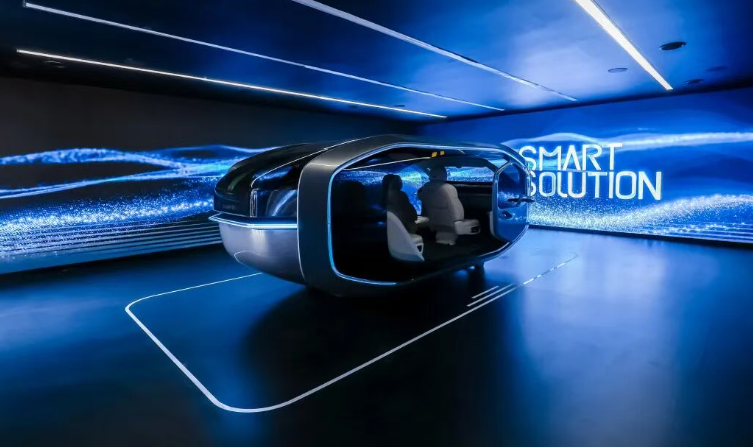
Image Source: Desay SV
Financial data shows revenue grew from 21.9 billion yuan to 32.6 billion yuan between 2023 and 2025, while net profit rose from 1.54 billion yuan to 2.47 billion yuan. Operationally, the company focuses on three core sectors: smart cockpits, smart driving, and connected services. It holds the top market share domestically and globally in smart cockpit and smart driving domain controllers, serving over 80 OEMs—a significant industry lead.
Gasoo Takeaway: Desay SV sprints for a Hong Kong listing. The "A+H" structure aims to unlock access to broader global markets.
Tesla China President: Shanghai Gigafactory Capable of Producing Humanoid Robots
On April 14, Tesla in the U.S. revealed that its Shanghai factory possesses the capacity to manufacture humanoid robots. The facility has been producing pure electric vehicles since 2019 and began manufacturing large-scale batteries in 2025.
Wang Hao, Tesla's president for China, stated at a press conference that day that as the company enters the robotics era, the Shanghai Gigafactory—like other factories—plays a vital role as a production base and has the capacity to make significant contributions to products like robots.
Tesla's China division noted there are currently no concrete plans to mass-produce robots at the Shanghai Gigafactory. However, reports from some Chinese securities firms indicate the company aims to build an annual production capacity of 100,000 units by the end of 2026.
Gasoo Takeaway: This move lays the groundwork for a "second growth curve," deeply tying it to the advantages of Chinese manufacturing.


