From January to November, China's passenger-car exports broadly showed a pattern of "NEVs in the lead, incumbents out front, growth splitting, and old versus new forces in play." In Europe, SAIC Motor Passenger Vehicle held the top spot, while upstarts such as Leapmotor delivered several-fold gains. In Southeast Asia, BYD led decisively, with its NEV lineup nearly doubling on the back of technology and channel advantages; most automakers expanded in tandem, though a few saw notable pullbacks.
North America revealed a sharp divide between the NEV cohort and traditional players: BYD, with growth above 160%, set the pace, while Changan Automobile and others broke through at speed. In Latin America, BYD and Chery kept the lead, with Great Wall Motor and Jiangling Motors—among others—posting gains above 60% and acting as growth engines. In the Middle East, leaders stayed on top but growth polarized; Chery held No.1 yet declined year on year, while BYD, Great Wall Motor and Soueast Motor doubled on the strength of their NEV push. Rising overseas penetration for Chinese brands reflects a contest of product strength, supply-chain resilience and local operating depth, as regional competition moves into a more refined, differentiated phase.
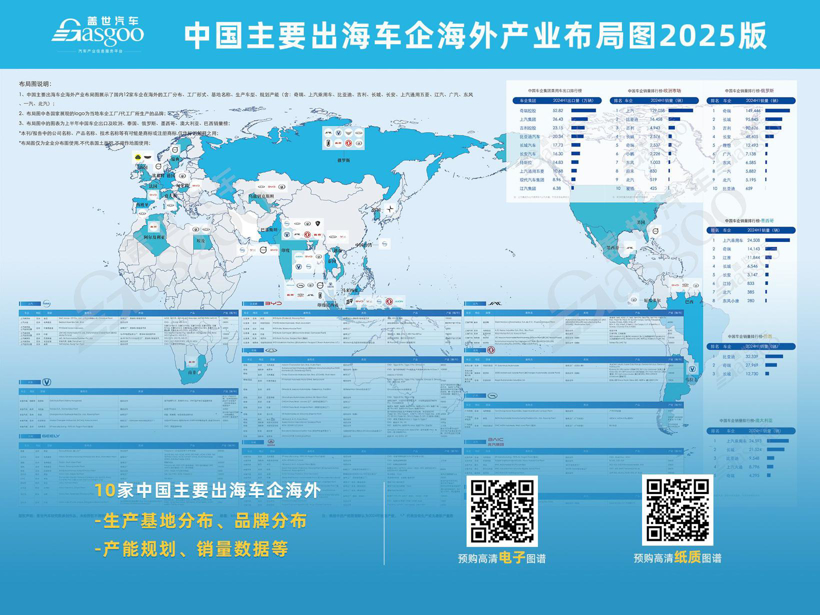
Top 10 Chinese passenger-car exporters to Europe
No.1 SAIC Motor Passenger Vehicle. January–November exports to Europe: 264,679 units, up 12.2% year on year.
No.2 BYD Auto. January–November exports to Europe: 249,664 units, up 219.7% year on year.
No.3 Chery Automobile. January–November exports to Europe: 145,795 units, up 149.6% year on year.
No.4 Tesla. January–November exports to Europe: 98,728 units, down 30.2% year on year.
No.5 Geely Auto. January–November exports to Europe: 55,156 units, down 46.4% year on year.
No.6 Spotlight Automotive. January–November exports to Europe: 44,068 units, up 7.9% year on year.
No.7 Leapmotor. January–November exports to Europe: 28,807 units, up 756.8% year on year.
No.8 Volkswagen Anhui. January–November exports to Europe: 26,933 units, up 21.6% year on year.
No.9 Volvo Cars. January–November exports to Europe: 22,109 units, down 5.7% year on year.
No.10 EJET. January–November exports to Europe: 19,874 units, down 27.7% year on year.
Europe kept its pattern of high concentration at the top and sharply diverging growth. Among the leaders, SAIC Motor Passenger Vehicle stayed No.1 with more than 264,000 units and 12.2% year-on-year growth; BYD followed with 249,000 units, its 219.7% surge narrowing the gap; Chery ranked third on 145,000 units, with 149.6% growth underscoring its deepened footprint and stronger product competitiveness in the region.
New forces stood out even more: Leapmotor exported about 28,800 units, soaring 756.8% year on year to become a benchmark among upstart independents in Europe; Volkswagen Anhui (up 21.6%) and Spotlight Automotive (up 7.9%), tapping established layouts, both posted steady gains.
At the same time, divergence intensified: Tesla shipped 98,700 units to Europe, down 30.2% year on year; Geely Auto sent 55,000 units, a 46.4% decline; Volvo Cars and EJET fell 5.7% and 27.7%, respectively. These swings likely reflect a mix of factors: fiercer competition as Chinese brands flood in, faster electrification among European incumbents, and product-cycle shifts at the companies themselves.
Overall, Chinese brands are steadily increasing their penetration in Europe. The "leaders holding firm + new forces breaking through" dynamic is lifting export scale, even as a wide spread in growth rates signals rising competitive heat. Product strength, supply-chain resilience and local operating depth will be critical to winning in Europe.
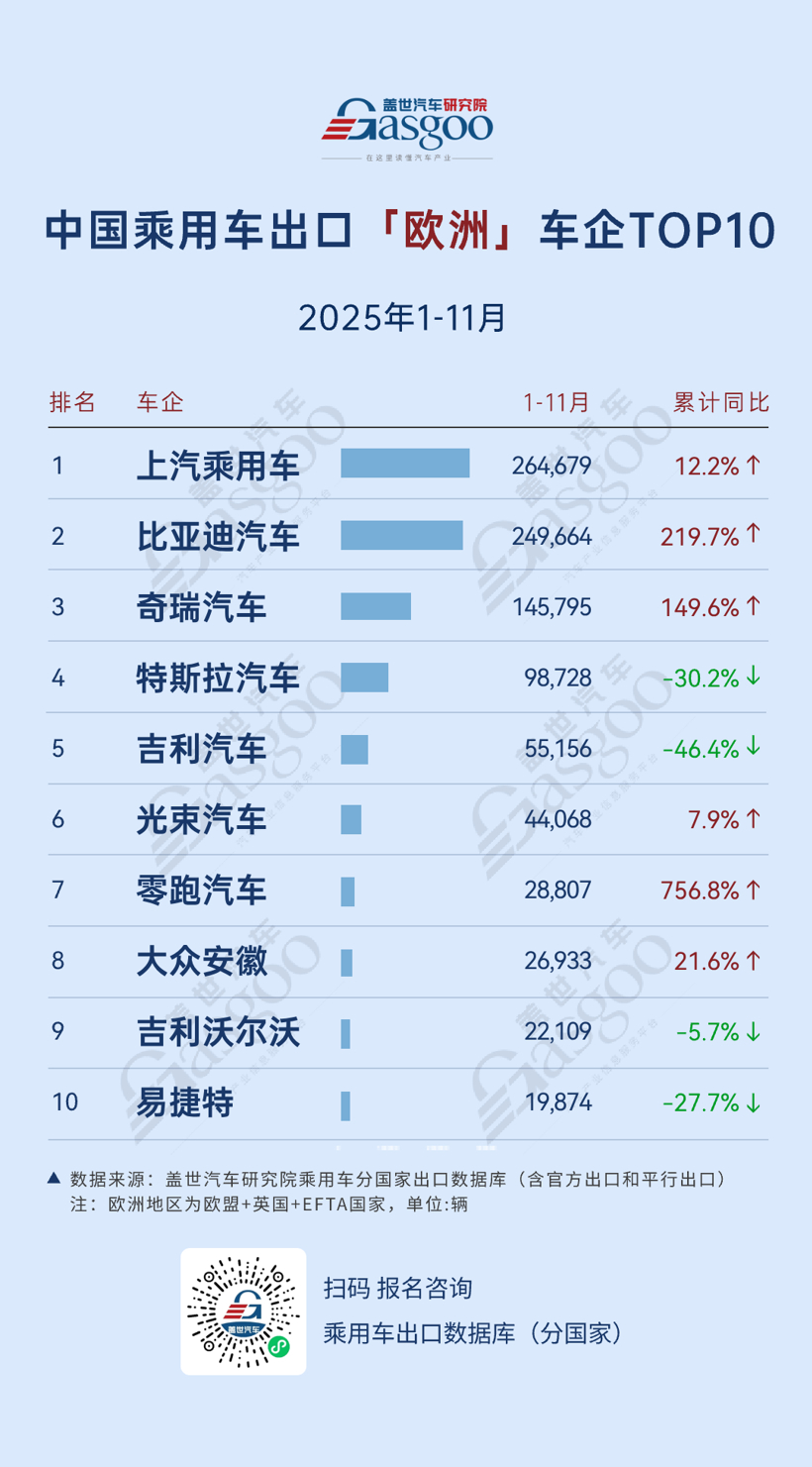
Top 10 Chinese passenger-car exporters to Southeast Asia
No.1 BYD Auto. January–November exports to Southeast Asia: 143,705 units, up 193.5% year on year.
No.2 Chery Automobile. January–November exports to Southeast Asia: 83,029 units, up 147.3% year on year.
No.3 Geely Auto. January–November exports to Southeast Asia: 65,830 units, up 28.9% year on year.
No.4 Changan Automobile. January–November exports to Southeast Asia: 31,336 units, up 59.1% year on year.
No.5 Great Wall Motor. January–November exports to Southeast Asia: 20,093 units, up 51.1% year on year.
No.6 Tesla. January–November exports to Southeast Asia: 18,756 units, up 37.8% year on year.
No.7 Jiangsu Yueda Kia. January–November exports to Southeast Asia: 15,274 units, down 12.2% year on year.
No.8 Jiangling Motors. January–November exports to Southeast Asia: 14,871 units, up 10.9% year on year.
No.9 SAIC Motor Passenger Vehicle. January–November exports to Southeast Asia: 13,685 units, down 46.0% year on year.
No.10 SAIC-GM-Wuling. January–November exports to Southeast Asia: 12,672 units, down 41.9% year on year.
Southeast Asia kept a strong growth clip through January–November, with "leaders setting the pace, most expanding, a few slipping" still the theme. BYD led on 143,705 units, its 193.5% jump nearly doubling, highlighting the tech moat and local channel depth behind its NEV lineup. Chery ranked second at 83,029 units, up 147.3%, underscoring how well its products fit regional demand. Geely followed with 65,830 units, maintaining a steady 28.9% rise. Changan Automobile, Great Wall Motor, Tesla and Jiangling Motors also posted positive growth, with Changan up 59.1% and Great Wall up 51.1% — clear signs of strong expansion momentum.
Notably, a handful of companies slipped: Jiangsu Yueda Kia fell 12.2% year on year, while SAIC Motor Passenger Vehicle and SAIC-GM-Wuling saw sharper declines of 46.0% and 41.9%, respectively.
In aggregate, Chinese brands are deepening their presence in Southeast Asia, with NEVs still the core engine of export growth. Leaders, armed with core technology and mature channels, are cementing their positions. Meanwhile, the drop-offs hint the market is shifting from "scale expansion" to "refined operations," where precise product fit and deeper localization will be decisive.
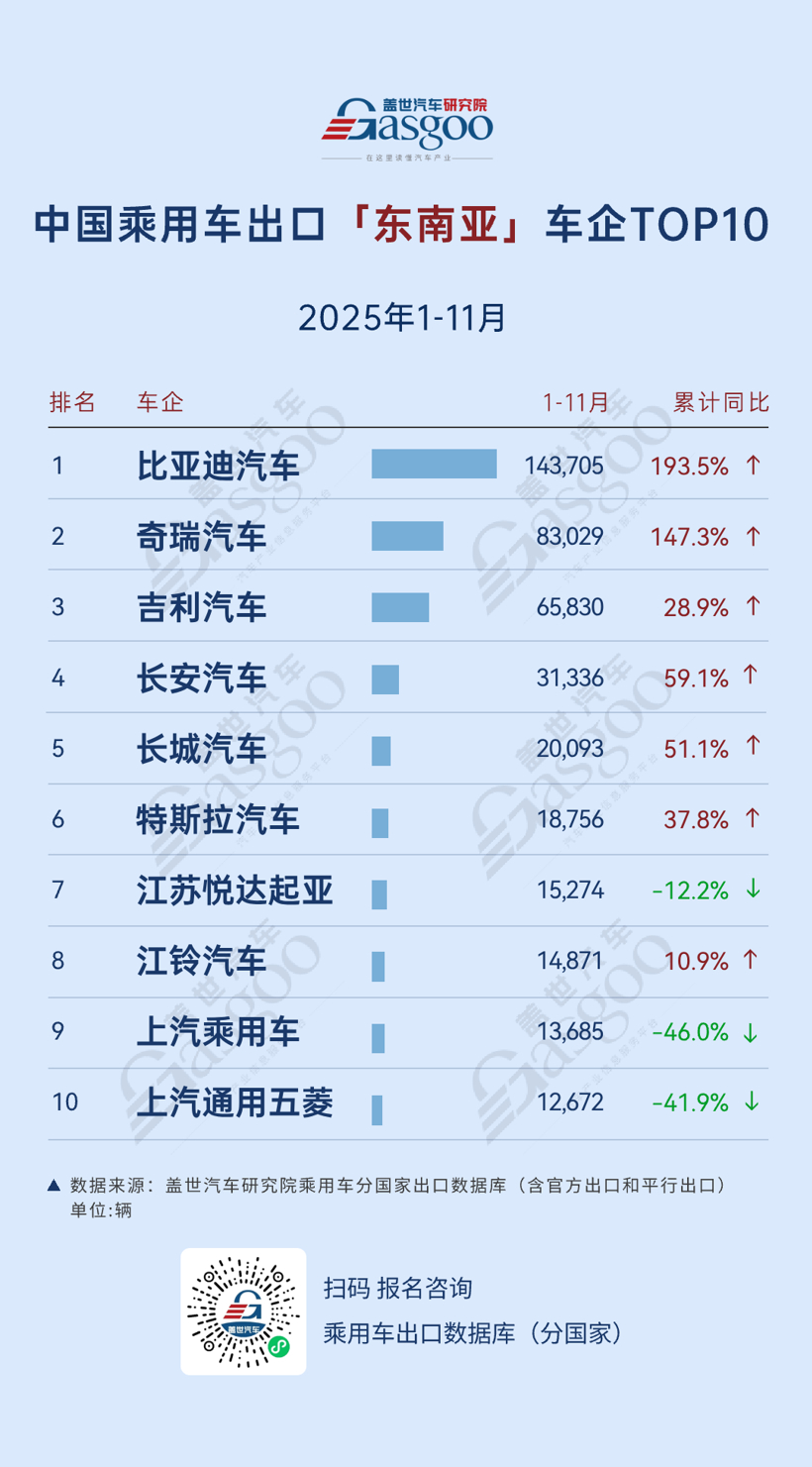
Top 10 Chinese passenger-car exporters to North America
No.1 BYD Auto. January–November 2025 exports to North America: 116,198 units, up 160.7% year on year.
No.2 SAIC-GM-Wuling. January–November 2025 exports to North America: 99,013 units, up 12.3% year on year.
No.3 Geely Auto. January–November 2025 exports to North America: 42,679 units, up 87.6% year on year.
No.4 SAIC Motor Passenger Vehicle. January–November 2025 exports to North America: 40,320 units, down 25.0% year on year.
No.5 Chery Automobile. January–November 2025 exports to North America: 34,458 units, up 25.3% year on year.
No.6 SAIC-GM. January–November 2025 exports to North America: 33,569 units, down 44.9% year on year.
No.7 Changan Ford. January–November 2025 exports to North America: 33,228 units, down 22.8% year on year.
No.8 Jiangsu Yueda Kia. January–November 2025 exports to North America: 31,121 units, up 13.4% year on year.
No.9 Changan Automobile. January–November 2025 exports to North America: 19,543 units, up 152.6% year on year.
No.10 GAC Trumpchi. January–November 2025 exports to North America: 13,959 units, up 16.9% year on year.
In January–November, North America showed "NEV leaders out front, traditional players adjusting and volatile." BYD topped the list with 116,198 units and 160.7% year-on-year growth. SAIC-GM-Wuling ranked second on 99,013 units, up 12.3%, extending steady gains. Geely placed third with 42,679 units, its 87.6% rise signaling strong momentum, while Changan Automobile broke out with a 152.6% surge. Chery and Jiangsu Yueda Kia also posted various degrees of positive growth.
Meanwhile, several traditional players saw pronounced swings: SAIC Motor Passenger Vehicle shipped 40,320 units, down 25.0% year on year; SAIC-GM’s 33,569 units represented a 44.9% slide; Changan Ford contracted 22.8%. These results suggest weaker alignment between their product mix and current consumption trends in North America.
Broadly, Chinese automakers’ push into North America is at a turning point: NEV leaders are cracking the market, while traditional forces recalibrate. Technical edge in NEVs and surgical execution in regional operations will be central to reshaping the export landscape ahead.
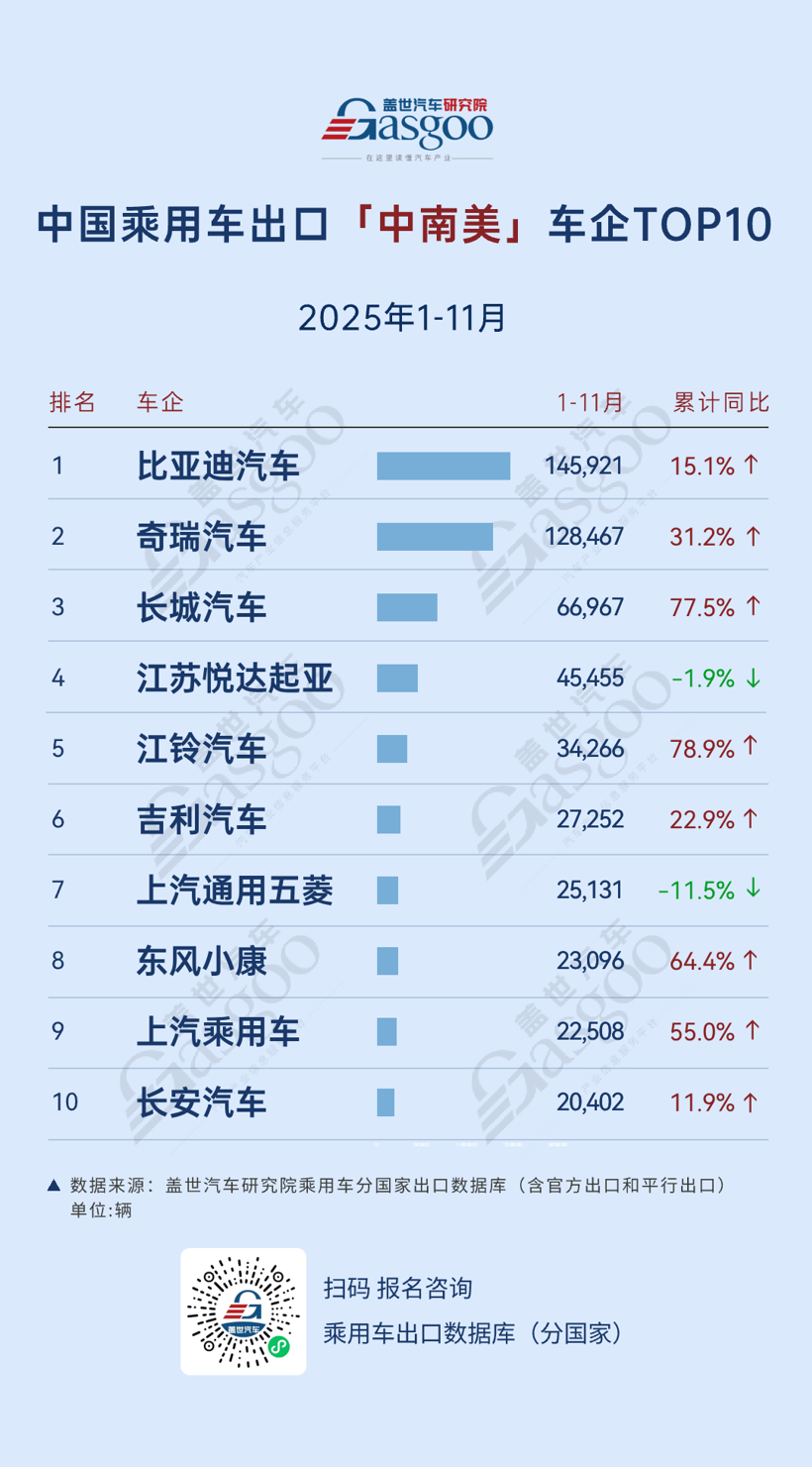
Top 10 Chinese passenger-car exporters to Latin America
No.1 BYD Auto. January–November exports to Latin America: 145,921 units, up 15.1% year on year.
No.2 Chery Automobile. January–November exports to Latin America: 128,467 units, up 31.2% year on year.
No.3 Great Wall Motor. January–November exports to Latin America: 66,967 units, up 77.5% year on year.
No.4 Jiangsu Yueda Kia. January–November exports to Latin America: 45,455 units, down 1.9% year on year.
No.5 Jiangling Motors. January–November exports to Latin America: 34,266 units, up 78.9% year on year.
No.6 Geely Auto. January–November exports to Latin America: 27,252 units, up 22.9% year on year.
No.7 SAIC-GM-Wuling. January–November exports to Latin America: 25,131 units, down 11.5% year on year.
No.8 DFSK. January–November exports to Latin America: 23,096 units, up 64.4% year on year.
No.9 SAIC Motor Passenger Vehicle. January–November exports to Latin America: 22,508 units, up 55.0% year on year.
No.10 Changan Automobile. January–November exports to Latin America: 20,402 units, up 11.9% year on year.
Latin America showed "leaders entrenched, growth rates splitting; many brands hot, a few cooling." BYD stayed on top with 145,921 units, its 15.1% rise reflecting the sustained pull of its NEV matrix and brand clout. Chery followed on 128,467 units, up 31.2%, narrowing the gap thanks to value-focused models that fit local demand and deeper channel cultivation.
Several automakers became engines of regional growth: Great Wall Motor, Jiangling Motors and DFSK all rose more than 60% year on year, with Jiangling’s 78.9% gain especially striking — a sign its dual-use (commercial-passenger) lineup fits demand closely. SAIC Motor Passenger Vehicle also penetrated steadily, rising 55.0%, while Changan Automobile held positive momentum with an 11.9% increase. Some faced headwinds: Jiangsu Yueda Kia slipped 1.9%, and SAIC-GM-Wuling fell 11.5%, pointing to a need to refine regional strategy and product structures.
Overall, competition in Latin America has entered a "precision layout" phase. Automakers will need sharper product differentiation, deeper local operations and a faster cadence of tech iteration. Those aligning with energy trends and consumer preferences will be best placed for sustainable breakthroughs.
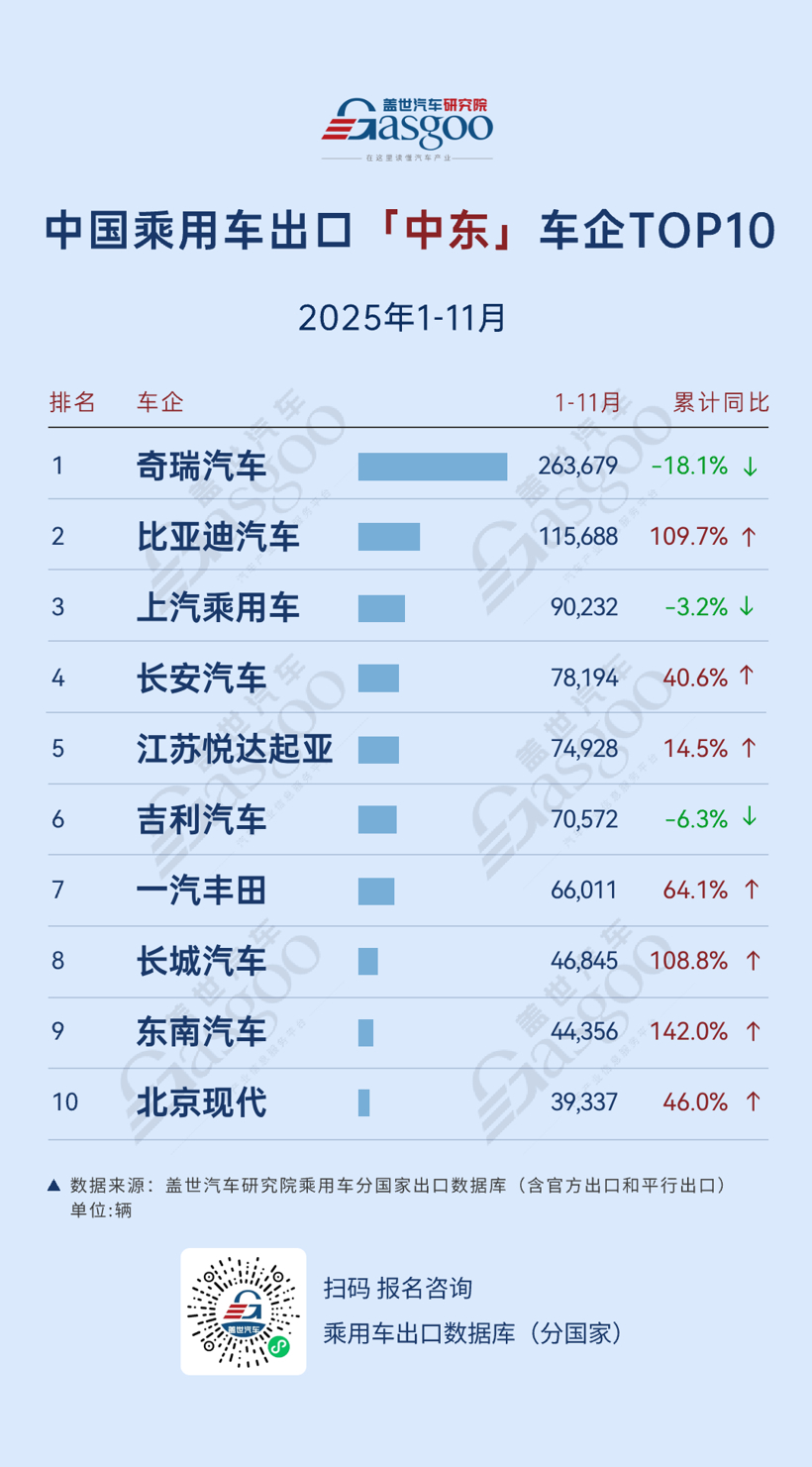
Top 10 Chinese passenger-car exporters to the Middle East
No.1 Chery Automobile. January–November 2025 exports to the Middle East: 263,679 units, down 18.1% year on year.
No.2 BYD Auto. January–November 2025 exports to the Middle East: 115,688 units, up 109.7% year on year.
No.3 SAIC Motor Passenger Vehicle. January–November 2025 exports to the Middle East: 90,232 units, down 3.2% year on year.
No.4 Changan Automobile. January–November 2025 exports to the Middle East: 78,194 units, up 40.6% year on year.
No.5 Jiangsu Yueda Kia. January–November 2025 exports to the Middle East: 74,928 units, up 14.5% year on year.
No.6 Geely Auto. January–November 2025 exports to the Middle East: 70,572 units, down 6.3% year on year.
No.7 FAW Toyota. January–November 2025 exports to the Middle East: 66,011 units, up 64.1% year on year.
No.8 Great Wall Motor. January–November 2025 exports to the Middle East: 46,845 units, up 108.8% year on year.
No.9 Soueast Motor. January–November 2025 exports to the Middle East: 44,356 units, up 142.0% year on year.
No.10 Beijing Hyundai. January–November 2025 exports to the Middle East: 39,337 units, up 46.0% year on year.
Through January–November, the Middle East kept a "leaders out front, growth highly polarized" profile. Chery led with 263,679 units, but dropped 18.1% year on year amid a high base and faster rival deployments. BYD followed with 115,688 units, up 109.7%; its NEV lineup’s fit with the region’s energy transition and consumption upgrade is powering the leap, narrowing the gap with No.1.
Some brands hit turbulence: SAIC Motor Passenger Vehicle dipped 3.2% year on year, and Geely fell 6.3% — signs that product mix or strategy may need faster iteration to match shifting demand. In contrast, several posted strong growth: Changan Automobile (40.6%), Jiangsu Yueda Kia (14.5%), FAW Toyota (64.1%) and Beijing Hyundai (46.0%) expanded steadily; Soueast Motor and Great Wall Motor more than doubled, emerging as key growth drivers.
Overall, the Middle East has become a core strategic battleground for China’s passenger-car exports. The cadence of NEV rollout and product differentiation are critical levers for growth. Incumbent leaders must adapt faster to regional needs, while high-growth players should strengthen local channels and product edge to build a durable base for expansion.
Data source: Gasgoo Auto Research Institute — China Passenger-Car Export Database (by country)
—END—
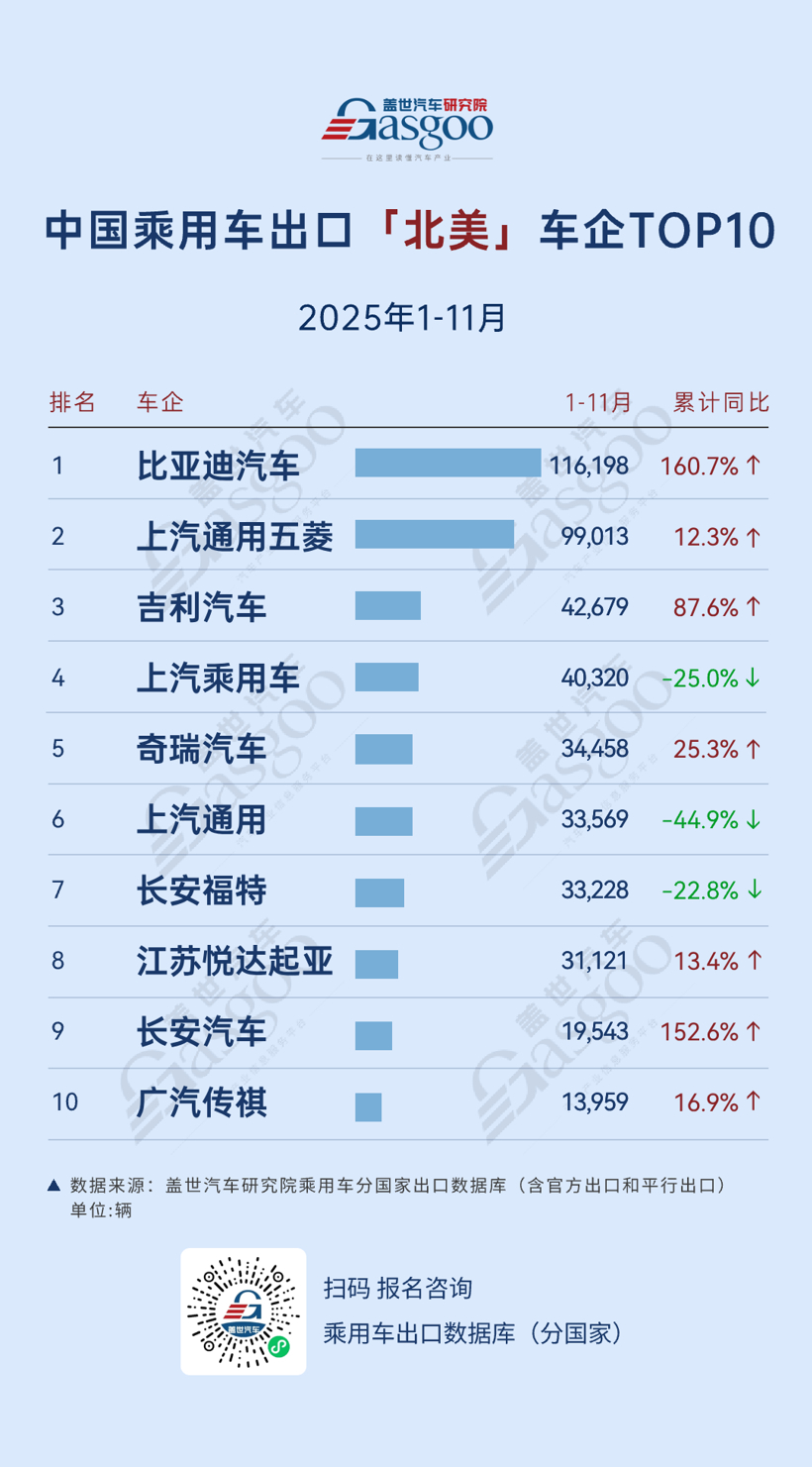
"2025 Overseas Industrial Footprint Map of Major Chinese Automakers" recommended — scan to purchase the high-definition poster!