



Shanghai (Gasgoo)- On June 4, Sixents Technology ("Sixents"), a subsidiary of NavInfo, signed a strategic cooperation agreement with ZSIBOT (also dubbed "Zhishen Technology"), a Chinese company in the embodied intelligence field, according to a post on NavInfo's WeChat account.
The two parties will collaborate on upgrading the full technology chain—perception, decision-making, and execution—of embodied agents, with the goal of accelerating commercialization in key use cases such as industrial inspection, emergency response, and household services.
Photo credit: NavInfo
Leveraging its proprietary technologies and mass production capabilities in high-precision positioning, Sixents has already made inroads into the embodied AI space with a unique technical motion solution.
ZSIBOT, meanwhile, specializes in end-to-end services spanning product design, development, and deployment in the embodied intelligence field. Its portfolio includes specialized robots, general-purpose humanoid robots, heavy-duty bipedal robots, mid-size quadrupeds, and compact robotic dogs—many of which are already in delivery and operation.
According to official sources, Sixents has tailored an integrated high-precision positioning solution for ZSIBOT, combining hardware, software, and services. This solution enables three major advancements in robot performance:
Enhanced spatial awareness:
Equipped with a highly integrated pose module and a distributed, cable-free deployment design, the system delivers millimeter-level spatial cognition. It allows precise joint and torso localization to within centimeters and provides real-time feedback on posture, speed, and acceleration. This enables robots to perform complex movements with improved balance and fluidity.
Full-environment adaptability:
By fusing multi-source sensor data with AI algorithms, the system empowers robots with seamless indoor-outdoor transitions and robust obstacle avoidance in dense and dynamic environments. It can even navigate unstructured terrains autonomously, planning optimal paths with agility and precision.
Scenario-based intelligent upgrades:
With advanced digital twin technology, the system reconstructs physical environments based on positioning data, enabling robots to "learn" from these simulations. This foresight-driven decision-making capability helps robots perform complex tasks more effectively.
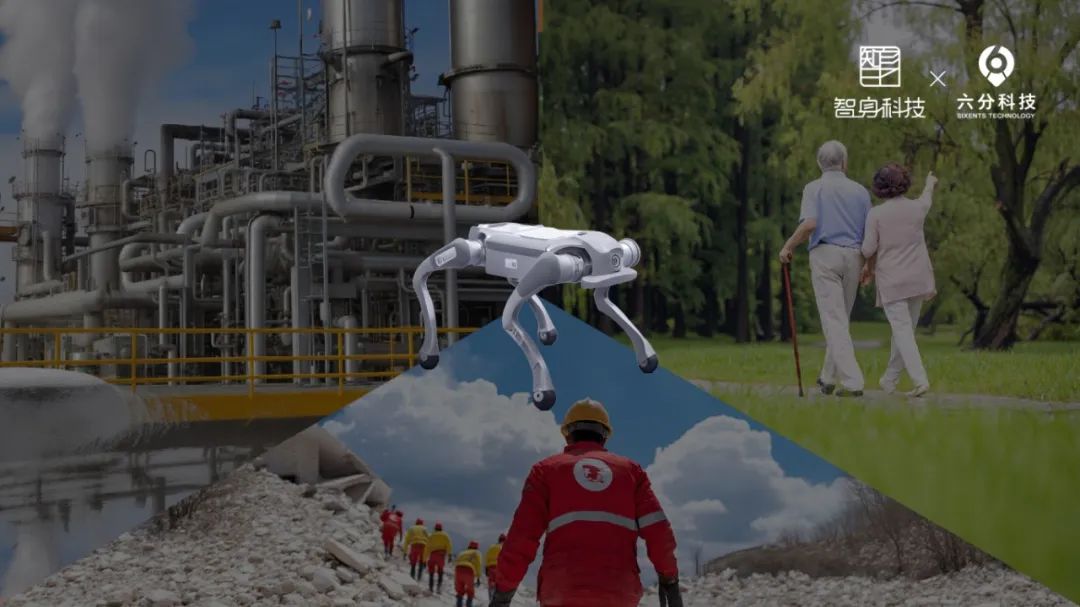
Photo credit: NavInfo
ZSIBOT's robots equipped with Sixents' positioning modules are already in use across benchmark applications. For instance, in chemical plants, robots can autonomously patrol along pre-set routes and align precisely with equipment for millimeter-level inspection, improving fault detection accuracy by 40%. In the consumer market, household service robots show strong promise. Exoskeleton robots, for example, can help the elderly climb stairs smoothly using dynamic center-of-gravity compensation algorithms, tripling load-handling efficiency.


![[Gasgoo Express] Dongfeng Motor and Huawei hold executive talks; Chery adjusts executive positions; NIO ES9 deliveries exceed 30,000 units](https://gascloud.gasgoo.com/production/2026/09/3934a7dd-d101-417a-914e-be391d88ba0a-1790272060.png)
