Gasgoo Munich- Gasgoo reported on April 17 that Xiaomi CEO Lei Jun kicked off a livestream showcasing the new Xiaomi SU7 on a Beijing-Shanghai endurance challenge.
During the broadcast, a viewer asked whether Xiaomi planned to launch a model priced under 100,000 yuan. Lei Jun's answer was blunt: "Not for the next few years." The reason, he explained, is that delivering true intelligence in electric vehicles drives up costs, making it nearly impossible to stay within that 100,000 yuan limit.
As the smart-tech wave sweeps through the auto industry, the tension between "low prices" and "intelligence" is being thrust into the spotlight.
Staying Above 100,000 Yuan: The Hard Constraints of Smart Tech Costs
Lei Jun is not alone in this assessment.
Just days ago, XPENG CEO He Xiaopeng likewise declared he would "not touch cars under 100,000 yuan," arguing that while this segment has volume, "we believe the value is too small."
The alignment between these two EV leaders points to a fundamental industry paradox: the core competitive edge of smart electric vehicles lies in the intelligent experience, which demands sustained, heavy investment in R&D.
The underlying logic is dictated by rigid cost constraints.
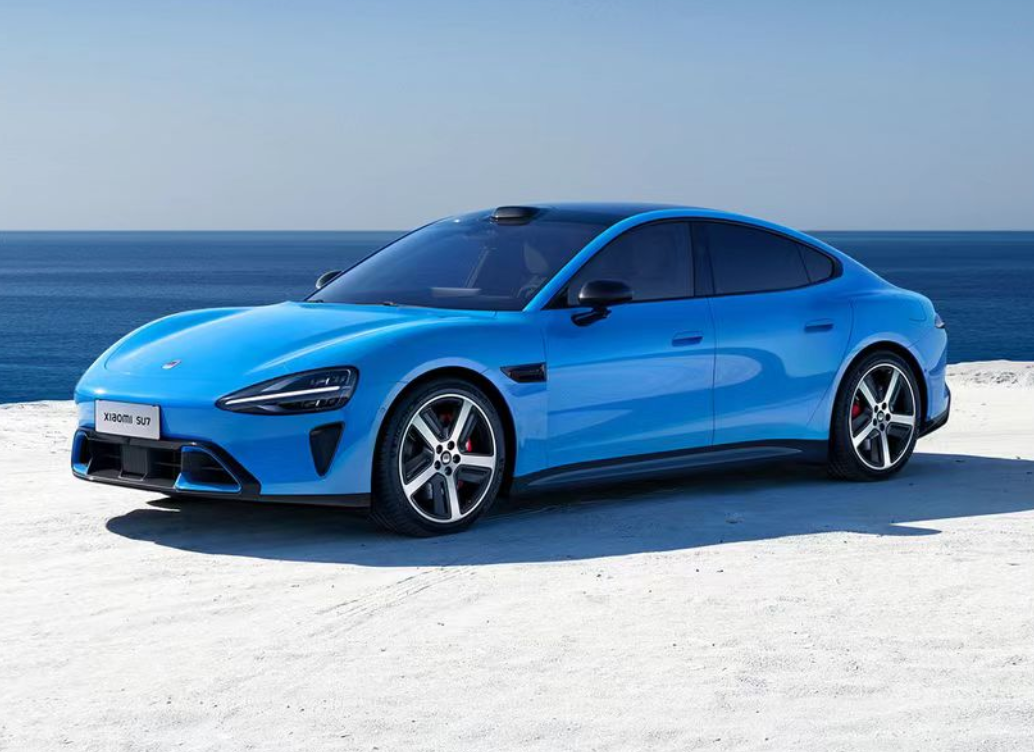
Image source: Xiaomi EV
Industry estimates suggest that for electric vehicles priced under 100,000 yuan, hardware costs alone consume roughly 70,000 yuan. The remaining 30,000 yuan must cover the entire chain of expenses—R&D, marketing, distribution, and after-sales service—leaving almost no room for sustainable profit. Gross margins in this price band typically hover between just 5% and 8%.
For startups, however, the competitive edge rests precisely on smart cockpits and advanced driver-assistance systems—technologies that require R&D spending running into the tens of billions. Amortizing these massive costs over budget-priced vehicles is difficult; a single set of intelligent driving hardware still costs over 1,000 yuan, while consumer willingness to pay for such features remains low, making cost recovery nearly impossible.
By contrast, the best-sellers dominating the sub-100,000 yuan market are mostly products of traditional automakers or their sub-brands. These players leverage group procurement and platform-based development to control costs, positioning their offerings as "affordable, not cheap"—a strategy that does not rely on high margins to fund a continuous R&D cycle.
Given their cost structures and profit models, it is structurally difficult for startups to enter this price bracket in the short term.
A Modest 4,000 Yuan Hike: A Pricing Philosophy Rooted in the User
If the decision to avoid the sub-100,000 yuan market reflects Xiaomi's clear-eyed recognition of its cost floor, the pricing strategy for the new SU7 reveals another side of Lei Jun's thinking: a focus on the customer.
Last month, the new SU7 officially launched with a starting price of 219,900 yuan for the Standard version, 249,900 yuan for the Pro, and 303,900 yuan for the Max—a 4,000 yuan increase across the entire lineup compared to the original SU7.
Lei Jun acknowledged in an interview that the Standard version alone received over a hundred upgrades, driving up material costs by nearly 20,000 yuan. "It was an agonizing decision internally when it came to pricing," he admitted.
The decision to cap the increase at 4,000 yuan was driven primarily by the phase-out of purchase tax incentives. Starting January 1, 2026, the exemption for new energy vehicles is adjusted from a full waiver to a half exemption, with the maximum tax relief per vehicle dropping from 30,000 yuan to 15,000 yuan. Lei Jun made his stance clear: "We didn't want new owners to feel that buying a new-generation SU7 would blow their budget."
This logic—absorbing rising costs with only a modest price adjustment—reflects the unique stage Xiaomi EV currently occupies.
The balance between profitability and pricing restraint is now being tested by market pressures.
Xiaomi has set a full-year delivery target of 550,000 vehicles for 2026. In the first quarter of this year, cumulative deliveries reached roughly 80,000 units. To hit that annual goal, the company will need to sell an average of more than 52,000 cars per month over the remaining nine months.
Whether the new SU7 can sustain that momentum remains an open question.
At the same time, the price war in 2026 is fiercer than ever, with discount incentives hitting a seven-year high. This across-the-board competition poses a severe challenge to every automaker's pricing strategy.
Lei Jun's two declarations—ruling out sub-100,000 yuan cars and limiting the price hike to 4,000 yuan—may appear to be simple pricing decisions. On a deeper level, however, they outline the strategic challenges Xiaomi faces in the era of intelligent vehicles.
On one hand, intelligence is a high-barrier, high-investment game, and the low-end market cannot commercially sustain continuous technological iteration. On the other, in an increasingly overheated market, user trust and consumer expectations are variables far harder to quantify than technical specifications.
Finding a sustainable balance between rigid cost structures and customer-centric thinking will be the critical test as Xiaomi EV moves from a "phenomenal entry" to "sustainable operations."