



Gasgoo Munich- On January 16, global automotive supplier Valeo announced it had secured another significant order for its battery cooling plates from a leading Chinese NEV startup. The project is slated for mass production in 2026. This win underscores Valeo's technological leadership in thermal management for new-energy vehicles and signals strong recognition of its product capabilities from top-tier domestic automakers.
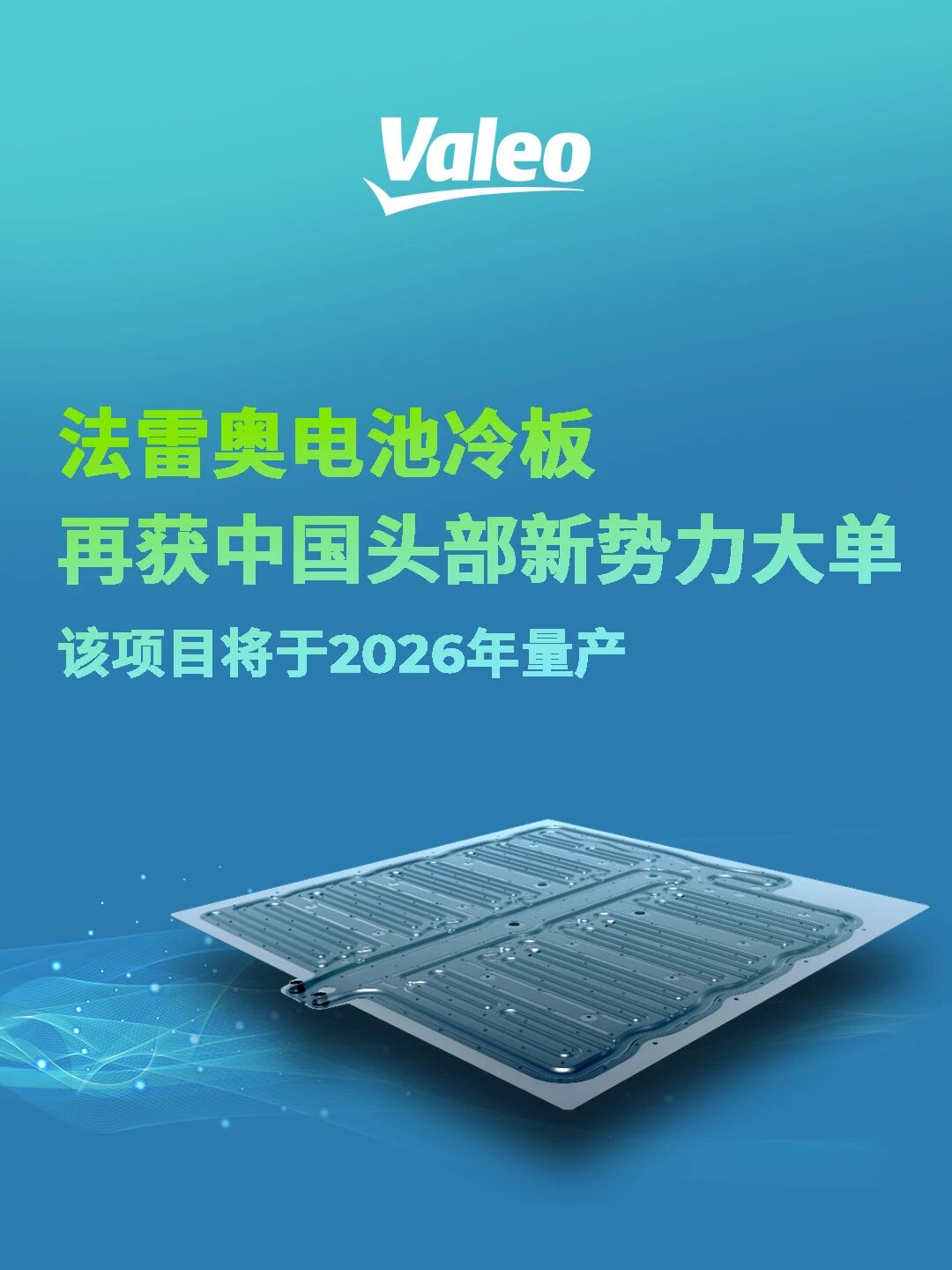
Image Source: Valeo
A critical component in any new-energy thermal management system, the battery cooling plate functions as a heat exchanger that sits flush against the battery. By circulating coolant through internal channels, it precisely regulates operating temperature—ensuring system safety and extending battery life.
Technically, Valeo's battery cooling plates stand out for four core strengths:
· High-Efficiency Heat Transfer: Featuring optimized flow channels and turbulence structures, the design maximizes contact area with the battery to enable rapid heat dissipation;
· Precise Temperature Control: Powered by CFD simulation and AI tools, the system ensures even coolant distribution, significantly minimizing temperature differentials;
· Lightweight Design: Combining laser welding with high-strength aluminum alloy cuts weight by 10% without compromising structural integrity or energy efficiency;
· Enhanced Durability: Validated through a comprehensive development process, the plates proactively mitigate potential risks. They offer superior corrosion resistance and robustness, capable of withstanding complex operating conditions.
Beyond raw performance, Valeo positions its cooling plates as a versatile, all-in-one solution tailored to diverse automaker needs. The technology covers every scenario—air, liquid, direct, and immersion cooling—adapting to various technical roadmaps. On the manufacturing front, Valeo offers mature options like brazing, laser welding, and induction welding to align with client production schedules. In direct cooling specifically, the combination of advanced tools and physical calibration shortens development cycles while accommodating mainstream cell formats like prismatic and cylindrical types. Sustainability is woven throughout: new materials and processes cut production-related CO₂ emissions by 50%, helping automakers meet low-carbon targets across the vehicle lifecycle.


