



Gasgoo Munich- Gasgoo reported on February 2 that WuBa Intelligent and BMTON have officially inked a strategic partnership agreement. This alliance unites two state-backed technology heavyweights—China's leader in spatial intelligence and a standout in the robotics sector—joining forces to drive autonomous control within the robotics ecosystem and accelerate digital transformation across the industry.
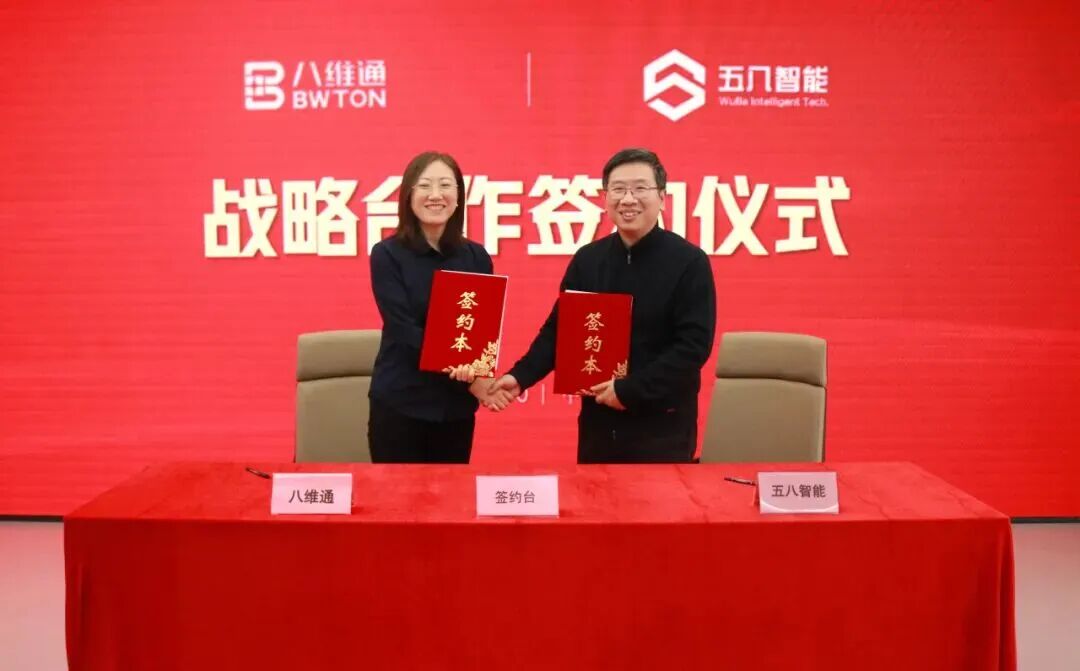
Image Credit: BMTON
WuBa Intelligent, a high-tech robotics subsidiary of China North Industries Group (Norinco Group), holds a leading position in the "macro-security" and "macro-industry" sectors. The company has repeatedly undertaken national-level robotics R&D missions, with its products featured in numerous state-recommended directories. Additionally, it operates a domestic pilot platform for embodied AI robotics.
BMTON, a national "Little Giant" enterprise under CRRC, is anchored by spatial intelligence technology. With operations covering over 100 cities and more than 3,000 deployed digital projects, the firm is dedicated to delivering intelligent decision-making and digital services across a wide range of industries.
The two companies will deepen their collaboration around the "Robot + AI + Industry Scenario" framework. Plans include establishing a joint laboratory for spatial intelligence, focusing on the "perception-decision-action" loop of embodied AI, and building a comprehensive testing system. They will also jointly promote the creation of a pilot industry alliance. The partnership aims to tackle challenges such as intelligent robotic control in complex environments, multimodal perception, and autonomous decision-making—creating systemic application benchmarks in public security, emergency response, electric power, and water conservancy.
This collaboration represents not only a deepening of the "Embodied AI + Spatial Intelligence" strategy but also a critical step in complementary technology development and ecosystem building. Moving forward, the two firms will accelerate breakthroughs in core technologies and their large-scale deployment, providing a model for industry standardization and systematic upgrades while facilitating the deep integration of the digital and real economies.


