



Gasgoo Munich- Here are the major developments in embodied intelligence and driver assistance this week:
10 Million Units: Hesai and DREAME Ecosystem Sign Another Exclusive Supply Deal
Hesai Technology deepened its strategic partnership with DREAME Technology on March 19, signing a new exclusive designation agreement. Hesai will exclusively supply a total of 10 million JT-series LiDAR units for robotic lawnmowers under the DREAME and MOVA brands.
As the global "courtyard economy" booms, smart robotic lawnmowers are emerging as the next phenomenon in robotics, following the rise of robot vacuums. Market analysis suggests the global robotic lawnmower market will reach $30 billion by 2026. Such vast potential is drawing a flood of competitors.
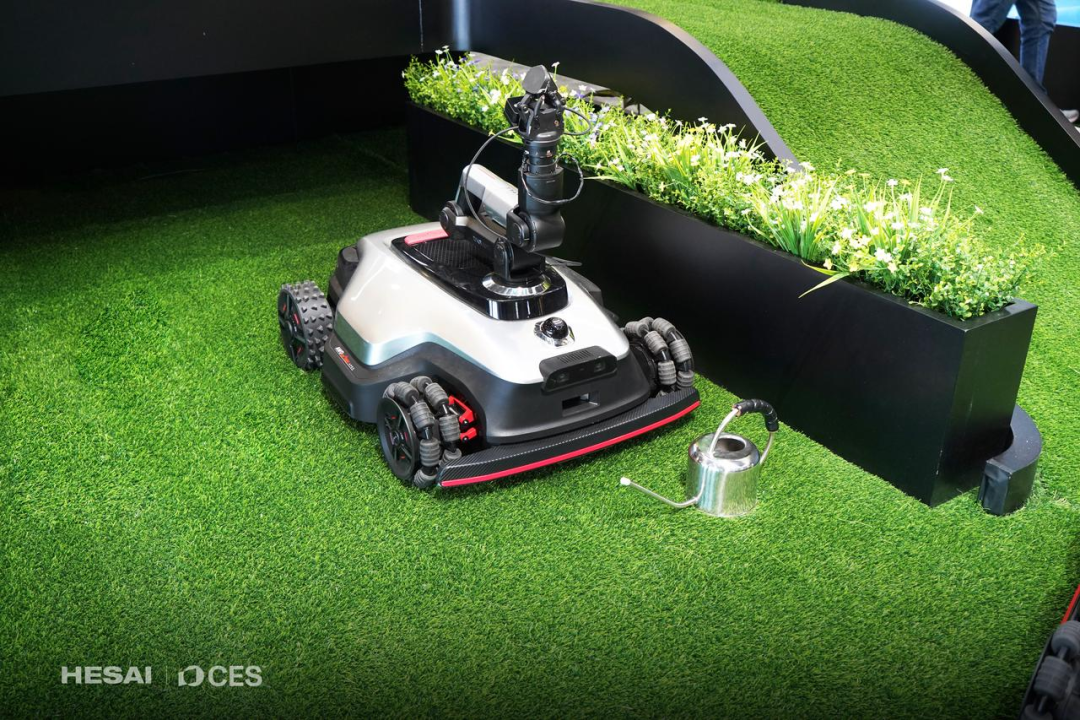
DREAME's LiDAR-equipped robotic lawnmower APEX. Image source: Hesai Technology
At the recent AWE 2026 expo, DREAME showcased its first embodied intelligent robotic lawnmower, the APEX. Equipped with an extendable mechanical arm, the robot can autonomously sweep leaves, collect and dump trash, and organize toys and tools. Beyond that, it serves as a multi-scenario courtyard assistant—handling automatic watering and fruit picking—and can even interact with pets and children on the lawn.
DREAME also introduced its upgraded OmniSense™ 3.0 ultra-perception system. By fusing Hesai's 360° 3D LiDAR with dual 1080P HDR cameras, the system identifies and automatically avoids more than 300 common obstacles.
Meanwhile, MOVA unveiled two new series at CES 2026: NAVAX AWD and LiDAX Ultra. The NAVAX AWD targets large lawns over 1.25 acres, positioning itself as an all-terrain, off-road capable mower. The LiDAX Ultra is designed for small to medium lawns (0.25–0.5 acres), offering high cost-effectiveness with comparable sensing capabilities for home and commercial use.
Hesai and DREAME officially signed a strategic cooperation agreement back in 2025, securing a designation for 300,000 JT-series LiDAR units.
Unveiled at CES 2025, Hesai's JT-series 3D LiDAR features a miniature form factor for discreet, easy installation. It provides zero-blind-spot 3D perception for robotic lawnmowers, detecting objects even at close range. With a 360° ultra-wide field of view and single-frame coverage exceeding 10,000 square meters, the JT series enables precise positioning, navigation, and obstacle avoidance.
Since its launch a year ago, cumulative deliveries of the JT series have surpassed 200,000 units, according to data released by Hesai early this year.
Xiao Zhi Takeaway: This eight-figure order for LiDAR units confirms that the smart robotic lawnmower market is shifting from a "blue ocean" to large-scale explosion. It also underscores the strategic value of high-precision 3D sensing as a core hardware gateway for courtyard scenarios.
Bank of America: Humanoid Robots Could Outnumber Cars by 2060
A Bank of America report predicts the global population of humanoid robots could reach a staggering 3 billion by 2060—far surpassing the 1.5 billion cars currently on the road worldwide, according to foreign media reports.
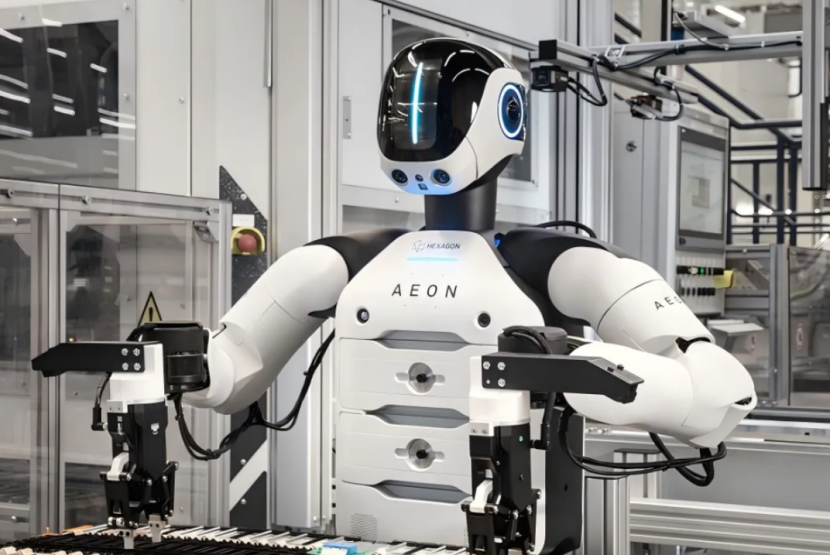
Image source: DH-Robotics
The report notes that in 2027, humanoid robot applications will concentrate in three key sectors: warehousing and logistics (33%), the automotive industry (24%), and manufacturing (15%), with the remaining 12% spread across retail, services, and other fields.
This trend is already taking shape. Companies like Tesla, Xiaomi, and BMW have integrated humanoid robots into their operations—using them to take over assembly lines is the most direct sign of this innovation.
Investment in the humanoid robot sector is estimated to have surged from $700 million in 2018 to $4.3 billion in 2025. Shipments are expected to jump from 90,000 units in 2026 to 1.2 million in 2030, representing a compound annual growth rate of 86%—far outpacing the early electric vehicle market.
Despite the excitement, high costs remain a significant barrier. In 2025, the raw material cost for a humanoid robot in China is approximately $35,000, while in Western countries, it ranges from $90,000 to $100,000. Costs in China are not expected to drop below $17,000 until 2030. Families hoping for a household robot might want to start saving now.
Xiao Zhi Takeaway: The prediction that humanoid robots will surpass car ownership highlights immense market potential, but high costs remain the critical hurdle to overcome before mass adoption.
Zhongding's First Humanoid Robot Rolls Off the Production Line
On March 16, Zhongding Sealing Co., Ltd. announced that the first full-size humanoid robot from Hefei Dingli Kexing Intelligent Robotics Co., Ltd. has officially rolled off the production line.
Dingli Kexing is a joint venture established by Zhongding, LimX Dynamics, and Hefei Flexible Kexing. This milestone marks a "zero-to-one" breakthrough for Zhongding in the complete machine production of humanoid robots, successfully bridging the full chain of capabilities: core component manufacturing, precision assembly, and whole-machine integration.
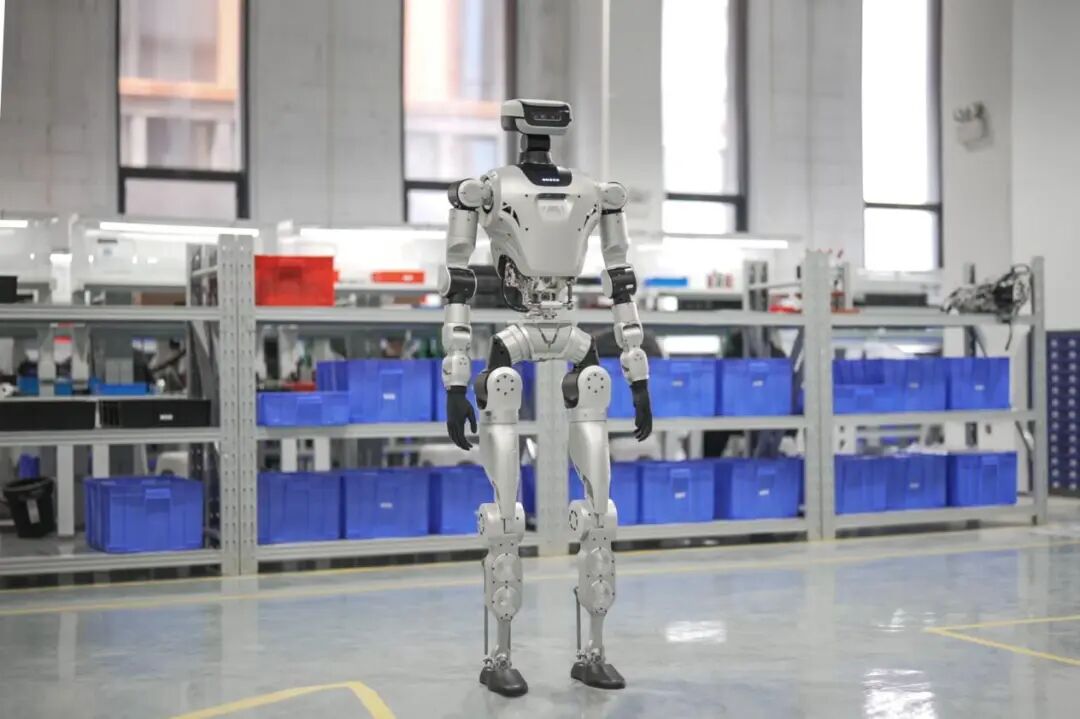
Image source: Zhongding
Focusing on the robot body and core components, Zhongding is advancing an R&D and manufacturing center project with a total investment of approximately 1.2 billion yuan. The humanoid robot project is designed for an annual capacity of 3,000 units, with an estimated output value of nearly 200 million yuan by 2026.
As a "chain leader" in the industry, Zhongding leverages its deep roots in auto parts and precision manufacturing. Since entering the robotics sector in 2025 through its subsidiary Anhui Ruisibo, the company has established deep strategic partnerships with top domestic brands like LimX Dynamics, Chery Robotics, Zhenjiang Robotics, Fourier Intelligence, and Efirt, forming a preliminary ecosystem for robot bodies and core components.
In November 2025, Zhongding signed a strategic agreement with Fourier. The two will collaborate across multiple dimensions, focusing on core component assemblies such as harmonic reducers, planetary reducers, force sensors, lightweight skeletal structures, and coreless motors, building long-term cooperation mechanisms in product development, processes, and quality management.
Zhongding has already secured mass production orders from multiple companies for core components including harmonic reducers, force sensors, and lightweight skeletons.
Xiao Zhi Takeaway: The rollout of Zhongding's first humanoid robot signals a successful integration of capabilities from core components to whole-machine assembly, marking a substantive breakthrough for an auto parts supplier evolving into a robotics "chain leader."
DiDi Autonomous Driving and GAC AION's Jointly Developed Model Secures Beijing Road Test License
On March 15, it was announced that the new generation Robotaxi R2, jointly developed by DiDi Autonomous Driving and GAC AION, officially obtained a road test license for intelligent connected vehicles in Beijing. Following its receipt of a test license in Guangzhou this January, this L4 autonomous model will now conduct road tests simultaneously in Beijing and Guangzhou, further validating its capabilities in complex urban environments.
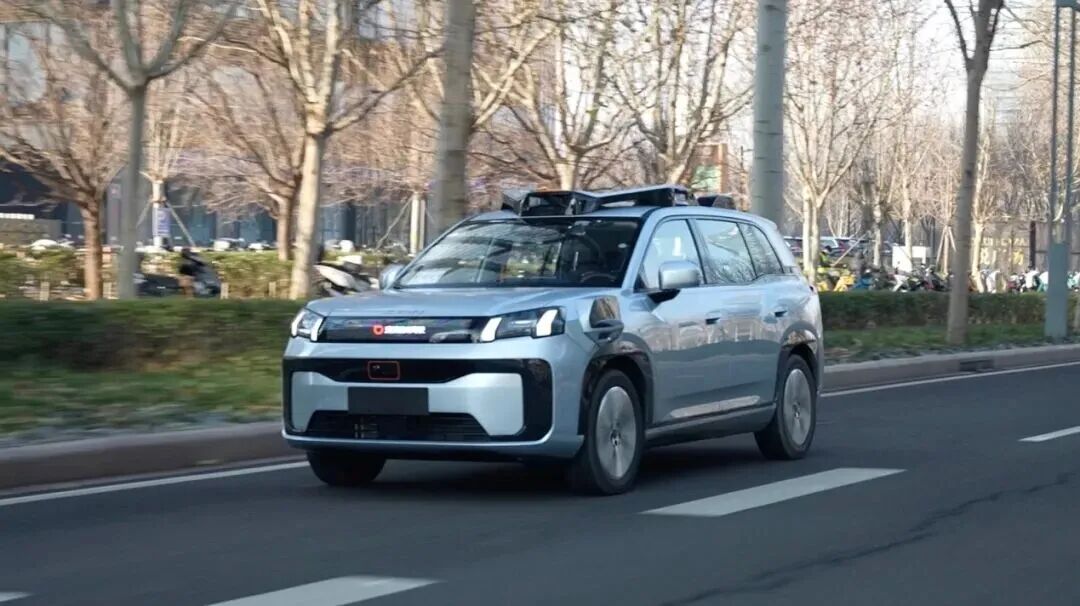
Image source: GAC
Delivered in January 2026, the R2 is a key outcome of deep collaboration between the two parties. The vehicle integrates DiDi's L4 full-stack software and hardware with GAC AION's intelligent manufacturing advantages. Designed with global adaptability and exclusive features for unmanned driving, it achieves significant cost reductions while enhancing system reliability, alongside comprehensive upgrades to cabin experience and autonomous performance.
DiDi's XC90 model is already conducting fully unmanned passenger tests in selected areas of Beijing and Guangzhou, maintaining a safe and stable operational record. With the R2 entering Beijing testing, the company aims to refine its autonomous technology and expand application scenarios, supported by the smart maintenance system at Beijing Huijugang.
Notably, DiDi Autonomous Driving completed a 2 billion yuan D-round financing in October 2025. With this capital backing, DiDi plans to increase R&D investment in AI, steadily advancing the commercialization of autonomous driving through responsible innovation.
Xiao Zhi Takeaway: The Robotaxi R2 securing dual-city licenses in Beijing and Guangzhou demonstrates that the "technology + manufacturing + capital" ecosystem is accelerating the large-scale deployment and commercialization of L4 autonomous driving in complex urban settings.
ARIDGE Secures Nearly $200 Million in New Equity Financing
ARIDGE announced the completion of a new equity financing round totaling nearly $200 million. Participating investors included prominent firms like GL Ventures, Sequoia China, Gaorong Ventures, and Fortune Capital. GL Ventures and Sequoia China doubled down following their Series A investment, reflecting strong confidence from the capital markets in ARIDGE's future.
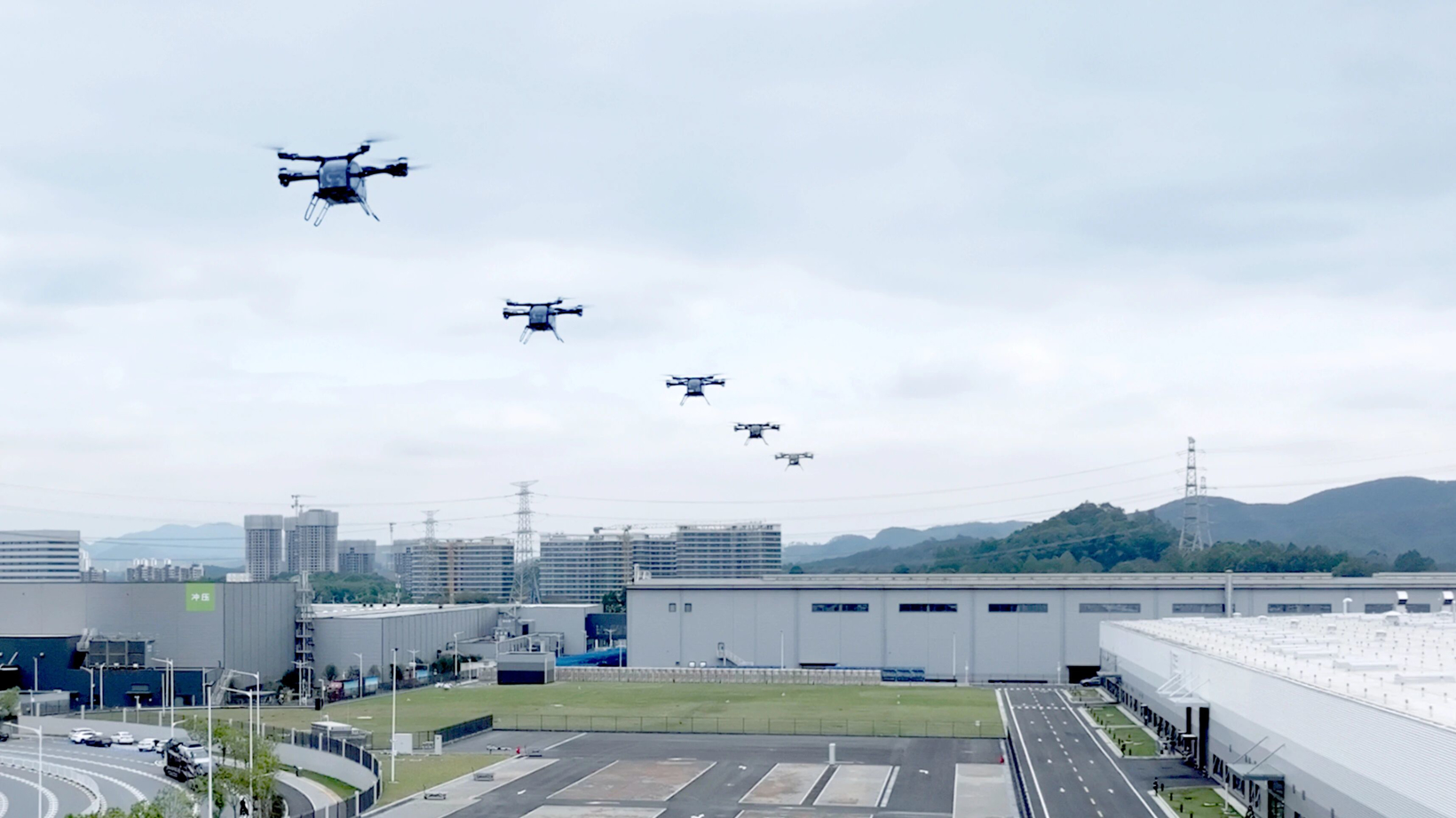
Image source: ARIDGE
With this round, ARIDGE's cumulative equity financing has reached approximately $1 billion, making it the largest-funded enterprise in Asia's manned low-altitude flight sector.
As a key player in the low-altitude economy, ARIDGE is making smooth progress across its businesses, with production capacity already taking shape. Its mass-production factory—the world's first to use modern assembly lines for aircraft manufacturing—was completed and entered trial production in September 2025. By introducing automotive assembly line methods to aviation, the facility ensures high-quality, large-scale delivery for its core product, the "Land Aircraft Carrier," and future aircraft.
On March 5 this year, the "Land Aircraft Carrier" completed batch trial production and rolled off the line at ARIDGE's flying car factory, alongside multi-aircraft test flights. Simultaneously, the Guangzhou Haixinsha All-Space Intelligent Experience Center (Haixinsha Tech Island), co-built by ARIDGE, Guangzhou City Investment Group, and the CEPREI, launched joint exploration of low-altitude flight scenarios. This achieved a critical leap from "production line" to "real-world flight," officially inaugurating the "Guangzhou Model" for the low-altitude economy. Five "Land Aircraft Carrier" units were produced and participated in test flights, validating ARIDGE's scalable manufacturing capabilities and marking the transition from R&D to commercial mass production.
Xiao Zhi Takeaway: The launch of ARIDGE's mass-production factory and successful multi-aircraft test flights signal that flying cars are moving from R&D validation to the critical stage of commercial mass production.


