



In Europe, no country represents the auto industry itself quite like Germany.
It is home not only to global brands like BMW, Mercedes-Benz, Volkswagen, and Porsche, but also to world-class suppliers like Bosch, ZF, and Continental. It boasts a complete industrial system built around R&D, manufacturing, validation, quality, standards, and brand perception. For Chinese companies, entering Germany has never been about accessing a single national market—it is about stepping into the heart of the European automotive industry.
Germany is one of Europe’s most important automotive markets and industrial strongholds.
In 2025, new car registrations in Germany totaled roughly 2.89 million units, with passenger vehicle production reaching about 4.15 million. Vehicles and parts accounted for approximately 17% of the country's total exports. Germany also possesses one of the deepest manufacturing foundations in Europe, with the auto sector directly employing more than 770,000 people and sustaining a vast network of upstream and downstream jobs.
Yet the German market's significance lies not in sales volume alone, but in what it represents: the most mature, systematic, and meaningful value system in the European auto industry. It is the industry's stronghold. Here, Chinese automakers face not just a few rival brands, but an entire ecosystem of long-verified industrial standards, consumer trust, and brand perception. Selling cars in Germany and being truly accepted there are two very different things.
This Germany-focused edition of Xiaoying Says explores a core question: Why is Germany the most critical stop for Chinese cars entering Europe? Why can Europe not do without China, yet remain so difficult to penetrate? And what hurdles must Chinese companies clear, and what capabilities must they build, to truly break in?
I. Why Germany: The Master Switch of the European Auto Industry
As a mature major market and a regulatory high ground, Europe is a strategic zone Chinese automakers cannot bypass in their global expansion. And Germany is the core of that strategic zone that demands serious understanding.
Germany’s weight stems first from its status as a major European market.
As of 2025, Germany’s population stands at roughly 83.6 million, making it one of Europe’s largest nations by population. Annual new car sales consistently hover between 2.8 million and 2.9 million units. In 2025, passenger car registrations reached about 2.89 million, up 1.4% year-on-year, cementing its status as one of Europe’s largest single markets. With a parc of roughly 49.34 million vehicles—or about 590 per 1,000 people—Germany is a highly mature, fiercely competitive, and deeply stable automotive society. Because of this, shifts in the German market often reflect the true temperature of European consumption and industrial change more accurately than many other countries.
Germany is the industrial hub of the European auto industry.
Volkswagen, BMW, and Mercedes-Benz form the backbone of the German OEM industry. Tier 1 suppliers like Bosch, ZF, and Continental underpin a comprehensive capability network spanning components, electronics, and system integration. Today, electrification platforms like Volkswagen’s MEB integrate capabilities from suppliers such as Bosch, ZF, and battery makers into a unified architecture. This reflects not isolated technological breakthroughs, but the profound depth of collaboration between German OEMs and their supply chain.
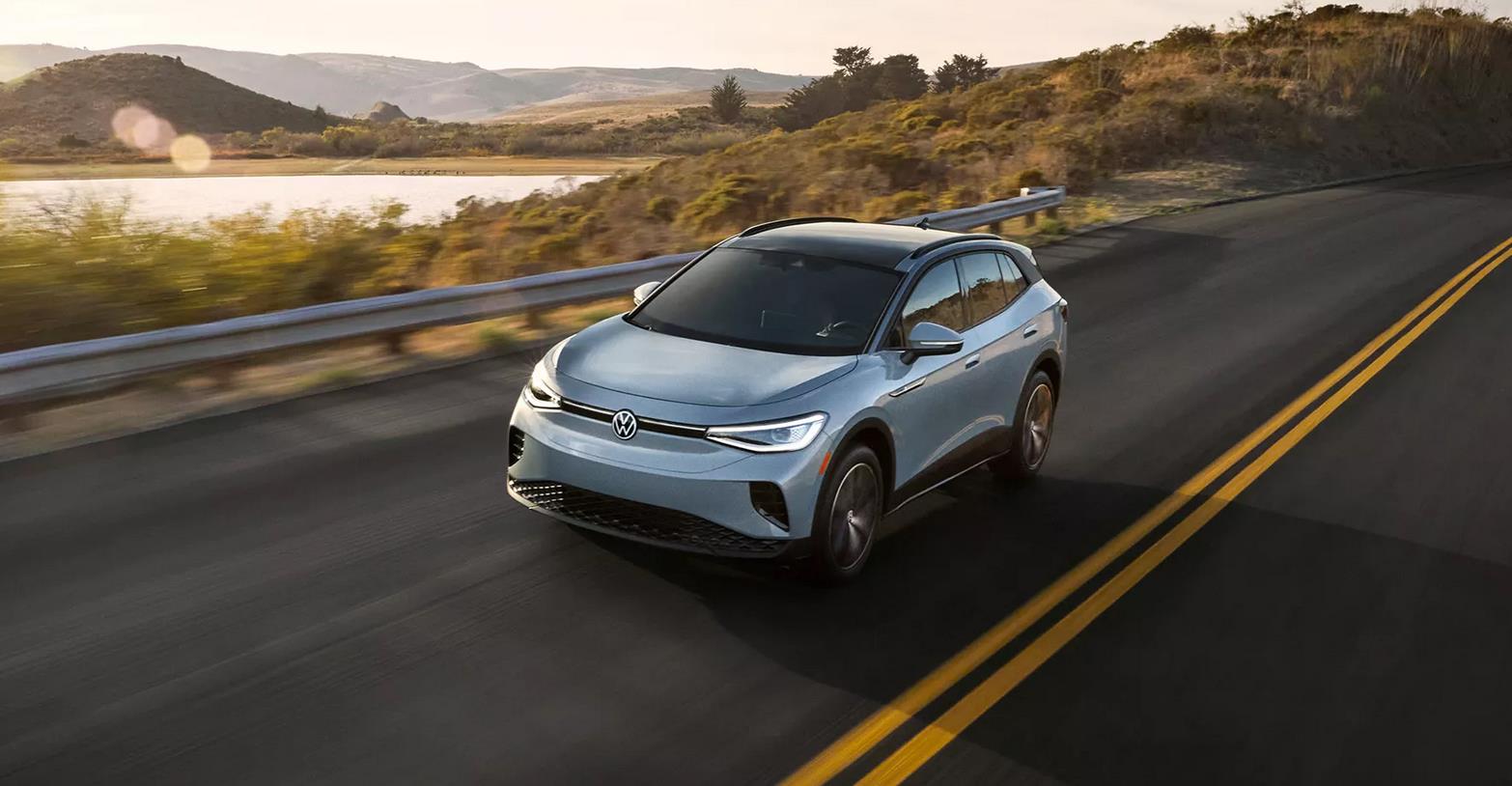
Image Source: Volkswagen
This means Germany is not a market defined only by brands, but one where brand, manufacturing, R&D, supply chain, and standard-setting capabilities are deeply layered. Whoever gains a foothold here secures more than just a sales territory; in a sense, they earn the qualification to enter the core of the European industrial system. It is the ultimate endorsement high ground for Chinese cars entering Europe.
II. German Consumers Buy Long-Term Trust, Not Just Cars
Unlike Chinese consumers, who are open to new technologies and brands, German consumers are not a group easily swayed by short-term marketing campaigns. For many Chinese brands, product strength, pricing power, and rich specifications can drive rapid breakthroughs in emerging markets. But in Germany, users have a deeper understanding of vehicles, more complex usage scenarios, and more stable brand judgment. To truly enter the German market, one must first understand how Germans buy cars, what they value, and why they make the choices they do.
1. First, look at powertrain structure: diversification is a key feature of the German market.
According to the German Federal Motor Transport Authority (KBA), roughly 2.89 million passenger cars were newly registered in 2025, a 1.4% year-on-year increase. In terms of powertrain, the market shows a clear pattern of coexistence: gasoline cars accounted for 27.2%, diesel for 13.8%, and hybrids for 39.5% (with PHEVs at 10.9%), while BEVs made up 19.1%. Clearly, German consumers weigh usage scenarios, costs, convenience, and brand trust to make rational purchasing decisions.
Image Source: German Association of the Automotive Industry (VDA)
2. Next, consider price structure: the German market is also distinctly stratified.
The 2025 German new car market remains a mature one centered on the mid-range, with polarization at both ends. Data from DAT shows the average transaction price for new cars bought by private consumers in 2025 was about 45,000 euros. Specifically, gasoline cars averaged around 33,000 euros, pure electrics about 47,000 euros, diesels about 50,000 euros, and plug-in hybrids about 65,000 euros.
Meanwhile, sales gravity remains concentrated in the mass-market and mid-to-high-end segments: SUVs accounted for 33.3% of new registrations in 2025, compact cars for 16.7%, and small cars for 11.8%. Volume leaders continue to be mainstream products like the Volkswagen Golf, T-Roc, and Tiguan.
In other words, Germany is neither a market driven solely by low-price vehicles nor one where only luxury brands can survive. It is a market with a large mid-range base, clear brand stratification, and mature value judgment.
3. German consumers are more rational and pragmatic in their focus.
In Germany, a car is first and foremost a long-term industrial durable good. This means users care less about flashy specs at a launch event and more about whether the vehicle will serve them stably, safely, and reliably for years to come. A brand's engineering reputation, mechanical quality, stability at high speeds, winter and long-haul performance, after-sales convenience, resale value, and insurance and maintenance costs—these factors together determine a car's true appeal. German consumers are not buying one-time "novelty"; they are buying a set of industrial credentials verified over time.
This is why German consumers typically place a higher premium on long-term reputation and user experience than those in many growth markets. For many, brands like Volkswagen, BMW, Mercedes-Benz, and Audi are not just transport providers; they are part of a long life experience. The first family car, the company fleet vehicle, the rental, the replacement—many transactions happen within existing brand ecosystems. For a new brand to break this inertia is not easy. You must prove not just that "I can build a car," but that "I can build a car that withstands the test of time in the German usage environment."
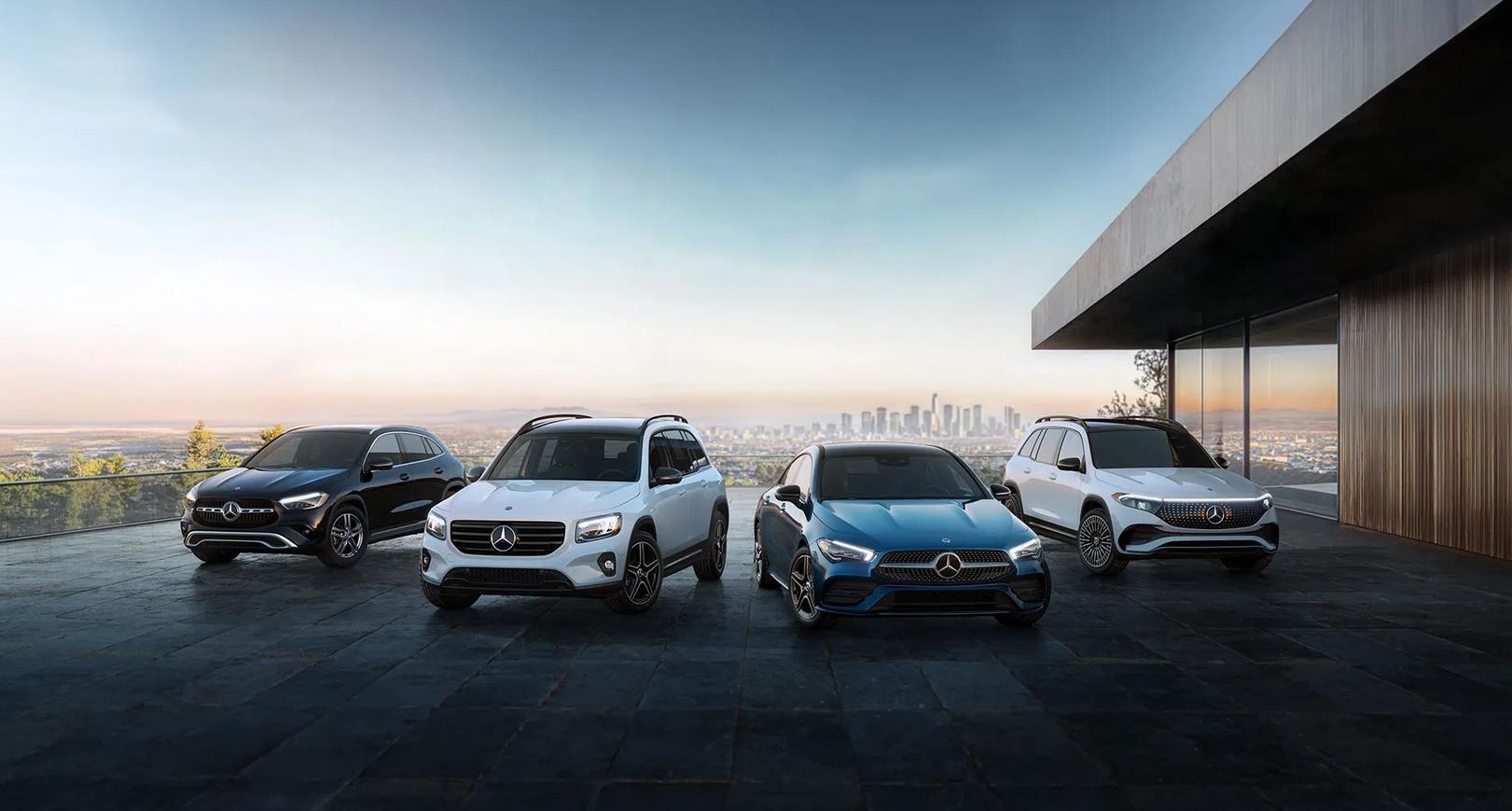
Image Source: Mercedes-Benz
4. The German market is gradually opening up.
It is true that there is acceptance for new technologies, new energy, and high-quality experiences—but this acceptance is built on rational judgment, not emotional pursuit. For instance, mid-to-high-end electric vehicles and luxury SUVs have carved out a relatively stable consumer space in Germany, showing that consumers are willing to pay for technology, brand, and experience. But the premise is that these technologies must translate into tangible, sustainable value, not remain empty slogans.
From this perspective, German consumers possess three characteristics that Chinese enterprises should take seriously.
First, purchasing decisions prioritize long-termism.
In early 2025, the average age of passenger cars in Germany reached 10.6 years, indicating a typical mature market with high ownership and long usage cycles. In such a society, users rarely switch brands simply because a competitor has a larger screen or more features. They care more about long-term reliability and total cost of ownership.
Second, value judgments rely on systemic trust.
It is not just about the product itself, but also brand history, channel stability, after-sales capability, parts supply, residual value performance, and social reputation.
Third, the understanding of cars emphasizes engineering attributes.
German consumers do not reject intelligence or electrification, but they often expect these new capabilities to be built upon solid manufacturing quality and usage stability, not to replace these foundational strengths.
This means Chinese brands cannot simply replicate strategies used at home or in other growth markets to establish a foothold in Germany. German users will not automatically assume you are "better" just because you are "newer," nor will they accept you as "high value" just because you have "high specifications." Moreover, because "Made-in-China" has not historically represented high-end quality in Europe, Chinese brands today must earn market and consumer trust step by step through product performance, engineering quality, service capability, and the accumulation of time.
III. In Germany, Selling Cars Is Just the Start—The Service System Is the Real Barrier
Understanding German consumers is the first hurdle to entering the market. But what truly determines whether an enterprise can stay is often the sales and service system. Germany is not a market defined solely by "front-end transactions"; it is a typical, complete automotive society. Here, selling a car is never a one-off deal but a complete chain covering selection, delivery, repair, insurance, used car circulation, residual value management, and long-term reputation accumulation. That is why the hardest part of the German market often lies not in product entry, but in system implementation.
1. Germany has long relied on a mature dealership and after-sales network.
In many fast-growing markets, new brands can quickly build awareness through product novelty, price advantages, or marketing buzz. But in Germany, brand credibility is largely established through sales networks + service systems + long-term fulfillment capabilities.
This is because German car consumption is not just about new cars; it is deeply connected to leasing, fleets, company vehicles, used cars, finance, and insurance. Whether a car can enter the broader market cycle depends not just on new car sales, but on whether it is recognized by the market for subsequent residual value management, service stability, and usage convenience. In other words, in Germany, sales is not "handing over a car," but handing over a long-term usage relationship.
This is why many Chinese brands, if they view Germany merely as a "European sales highland," often encounter real challenges upon landing. Because the real question is not whether cars can be shipped over, but whether these issues can be seriously considered and implemented:
Is your channel network stable enough?
Can your after-sales system cover major regions?
Can your repair and parts support build user confidence?
Is there a possibility for your products to be continuously accepted in the used car market?
Does your brand have the capacity to bear long-term service commitments?
If these questions are not resolved, even if front-end orders appear, it does not necessarily mean true entry into the German market.
2. New dealership network models are also taking shape.
The complexity of the German sales model also lies in the fact that it is itself evolving.
Traditional dealership models remain important, but digital sales, direct-sale showrooms, agency models, and online-offline integration are continuously developing. For new entrants, this means they cannot simply copy one model but must find an organizational approach that suits the German market while supporting long-term service capabilities.
From this angle, what Chinese brands face in Germany is not a "channel multiple-choice question," but a "system construction question." Brands can choose different paths: enter via local partners to leverage mature networks and lower initial barriers; try direct sales and digital reach to strengthen user experience and brand control; or adopt a hybrid model with brand touchpoints in key regions while relying on local cooperation elsewhere. But regardless of the path, all roads lead to the same destination: service capabilities must be solid.
Ultimately, the German market recognizes not an enterprise that claims it "can sell cars," but one that proves it "can service a car for the long term," making users believe you will always be there. Behind this statement lies both a question of sales model and one of brand rooting ability.
For Chinese companies, entering Germany is not achieved simply by "shipping goods, opening stores, and selling cars." Only when your product, channel, service, parts, repair, residual value, and reputation begin to form a closed loop will the German market truly open to you.
IV. Germany's True Moat Is Its Industrial System and Organizational Capability
The strength of the German automotive industry is rooted in a highly organized, long-term stable industrial system.
In the internal combustion engine (ICE) era, a car's competitiveness was essentially the result of long-term collaboration between OEMs, suppliers, engineering teams, validation systems, and manufacturing systems. The most outstanding feature of the German auto industry is that it pushed this collaborative capability to the extreme. OEMs handle platform definition, performance targets, and brand expression. Tier 1 suppliers participate deeply in braking, steering, chassis, and electronic control. Tier 2 and Tier 3 suppliers provide materials, processes, molds, equipment, and precision manufacturing support. Finally, strict verification processes converge these complex systems into a product that is mass-producible, deliverable, and usable for the long term.
This capability was particularly critical in the ICE era. Because competition in combustion vehicles is not a sprint, but a long-cycle, multi-link, high-complexity engineering race. Engine thermal efficiency, transmission matching logic, chassis tuning balance, vehicle durability verification, and manufacturing tolerance control—these capabilities cannot be quickly bridged with short-term investment. They rely on long-term accumulation, continuous iteration, and a stable talent system. The reason the German auto industry has stood at the top for so long is largely because it built advantages in these "slow variables": engineering discipline, process control, quality culture, and industrial collaboration.
This system brings not just manufacturing capability, but a deeper ability—turning experience into standards, and standards into industrial order. In other words, the competitiveness of the German auto industry is reflected not only in products but also in its ability to institutionalize supplier management, R&D processes, testing norms, quality requirements, and safety redundancy. This institutional capability allows German automakers and suppliers to maintain high consistency over long cycles, granting Germany a voice in the global auto industry that far exceeds its sales volume alone.
V. Germany's Challenge: How to Translate Old Industrial Advantages into New-Era Competitiveness?
Every coin has two sides.
As core competition shifts from engines, transmissions, and mechanical engineering to batteries, electric drives, electronic-electrical architecture, software, and user experience, Germany's original system has begun to gradually lose its effectiveness, presenting massive challenges. The capabilities it was best at no longer correspond to the most urgent topics of the new era; the mature organizational methods of the past are no longer suited to the faster pace of software iteration and electric vehicle cost competition.
This is Germany's true reality today: the problem is not that its industrial foundation is too thin, but that it is so thick that turning around is harder. It is not that Germany lacks the ability to do electrification and intelligence, but that it must first address a critical issue—how to adapt the industrial organizational capabilities built around ICE to the competitive logic of the electrification era; how to translate this old-era organizational advantage into new-era competitiveness.
VI. Chinese Companies Enter Germany Fighting for System Position, Not Just Market Share
The Chinese automotive-related companies truly entering Germany today include OEM brands like MG, BYD, XPENG, Leapmotor, NIO, and ZEEKR, as well as core supply chain enterprises like CATL, Preh, Momenta, and Horizon Robotics. In other words, Chinese companies are entering not just a consumer market, but simultaneously the German user base, sales channels, and the interior of the industrial chain. The competition faced is, of course, multi-layered and all-encompassing: OEMs are fighting for users, while the supply chain is fighting for qualification.
The first layer of competition is the direct clash in the OEM market.
MG is currently one of the most representative cases. In 2025, MG achieved 26,479 new car registrations in Germany, up 26.2% year-on-year, with its market share rising to 0.9%. It has about 180 sales and service partners. This shows Chinese brands are no longer just "making an appearance" in Germany but are entering the mainstream market through more complete sales and service networks. XPENG has taken a more prudent channel entry path: official disclosures state it initially covered 24 retail outlets upon entering Germany, with plans to expand to 120 by the end of 2026. Leapmotor is leveraging the Stellantis network to rapidly roll out European sales and service points, and will establish its first European innovation center in Munich in March 2026, moving R&D and design capabilities forward. ZEEKR, upon entering Germany, targeted both high-end individual users and corporate fleets and rental companies, actively proactively entering the critical B-end scenarios.
BYD is a typical example of a Chinese automaker accelerating its "catch-up" in Germany. In 2025, its annual new car registrations reached 23,360 units, a year-on-year increase of about 708%. At the same time, its sales and service network expanded rapidly from 26 points at the start of 2025 to 150. More importantly, BYD has begun introducing plug-in hybrid products alongside pure electrics to meet German market demand, signaling a shift in strategy from simple product launches to channel reinforcement and localized operations.
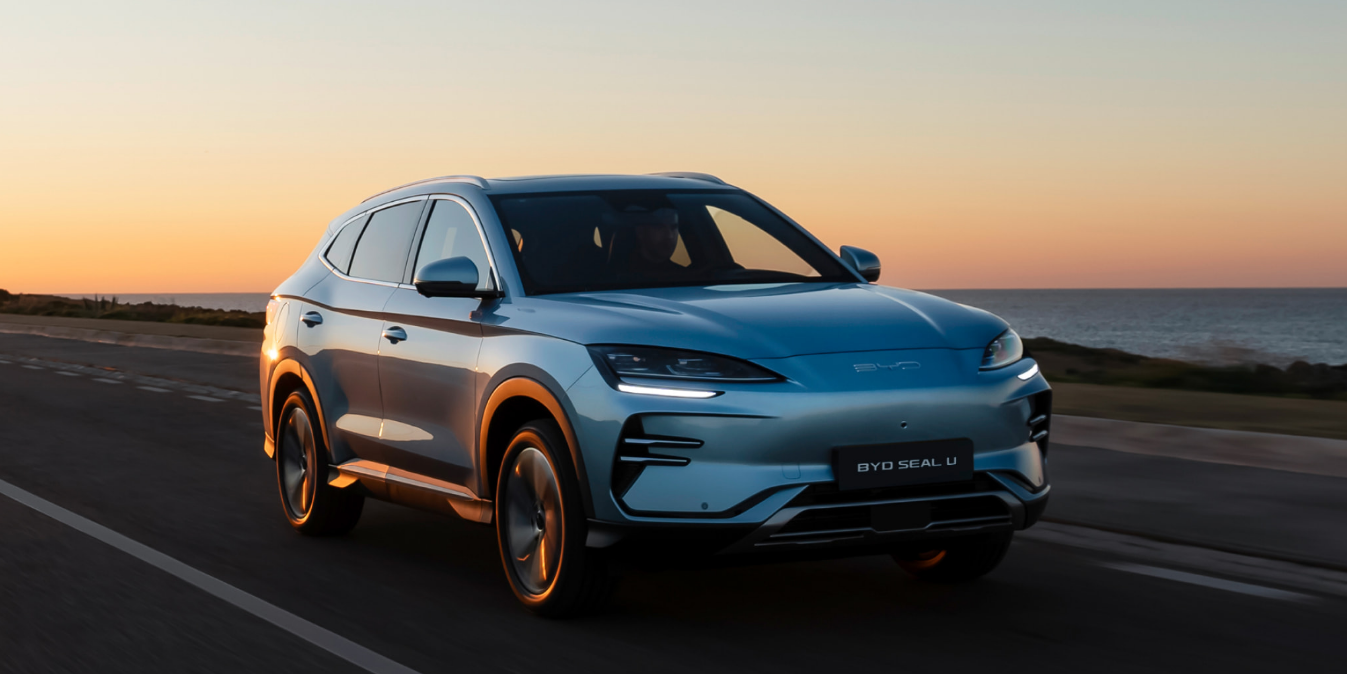
Image Source: BYD
The second layer of competition is the stratified competition within the supply chain ecosystem.
If OEMs are fighting for users and brand perception in Germany, supply chain companies are fighting more for qualification and position. This competition is not single-dimensional; it is clearly divided into two layers: one is entering the traditional German industrial system, and the other is entering the core of next-generation automotive capabilities.
The first category is competition at the traditional supply chain level.
This layer often starts earlier and goes deeper than the OEM level.
Joyson Electronics’ acquisition of Preh is a classic case. It didn't start from scratch as a supplier but acquired German local technical capabilities, customer relationships, and organizational foundations to further embed itself into the German industrial system. Tuopu Group represents another path: establishing technical support and logistics nodes in Germany to serve global client projects with BMW, Mercedes-Benz, Volkswagen, and Audi, gradually entering the German industrial collaboration network. For such companies, the real competition is no longer about price, but whether they can enter the development and validation systems of German OEMs and Tier 1 suppliers, upgrading from a parts supplier to a joint development partner.
The second category is competition at the intelligent electric supply chain level.
With the rapid rise of Chinese intelligent electric vehicles, supply chain capabilities have improved significantly, and Chinese companies are entering the core links of the next generation of German automotive capabilities.
CATL's Thuringia plant is the most typical example. It is not only CATL's first overseas battery factory but also signifies that Chinese power battery companies are entering the German industrial chain through local manufacturing, directly participating in the reconstruction of European electrification capabilities. Momenta represents the entry of intelligent driving capabilities: BMW has partnered with it to develop driver assistance systems, and Uber announced it will launch L4 autonomous vehicle tests in Munich with Momenta. Horizon Robotics is entering German OEM and Tier 1 systems with smart driving chips and platform capabilities, announcing the establishment of its European headquarters in Munich in 2025. From this perspective, Chinese supply chain companies in Germany are no longer facing a simple question of "who to replace," but how to find their long-term position in the dual reconstruction of the traditional industrial system and the new capability system.
VII. Truly Walk In, Become Part of the Future of German Industry
Germany is not a market where one can truly stand firm simply by "selling first and catching up later." For Chinese companies—whether OEMs or power battery, smart driving, electronic-electrical, and automotive electronics suppliers—entering requires not just single-point product strength, but a complete set of entry logic.
First, products and solutions must be truly adapted to the German market, not simply transplanting successful experiences from China.
For OEMs, this means deeper adaptation for German users' high-speed driving scenarios, winter range, chassis feel, build consistency, and long-term reliability. For supply chain companies, it means your products and technology must not just be "usable," but capable of entering the rigorous development and validation systems of German OEMs and Tier 1s. The German market accepts new technology, but the premise is that the technology must be proven to be mass-producible, verifiable, and capable of stable long-term operation.
Second, service and local response capabilities must be front-loaded.
This is the link many companies underestimate but which the German market values most. For OEMs, after the car is sold, repair, parts, after-sales, residual value, and brand reputation truly begin. For supply chain companies entering Germany, local engineering support, customer response, regulatory communication, and continuous delivery capabilities equally determine whether they can stay. MG's ability to sustain volume growth in Germany is largely due to its dealership and service network reaching a certain scale. XPENG choosing to enter via local channel networks is essentially reducing service landing risks.
Third, localization is not a bonus; it is the entry ticket.
In the past, many Chinese companies entered overseas markets with a trade export logic. But in Germany, truly significant entry is often accompanied by local teams, local R&D, local manufacturing, or local cooperation systems. Leapmotor establishing a European innovation center in Munich is not just about selling cars, but moving European R&D and engineering capabilities forward. CATL's Thuringia plant is another classic example, showing that for Chinese companies to enter Germany and Europe, it is not about moving capacity over, but about becoming part of the local industrial capability.

Leapmotor Europe Innovation Center, Image Source: Leapmotor
Fourth, clarify priorities and strategies for the entry path
Overall, OEMs are fighting for users, brand perception, and market position; supply chain companies are fighting for projects, platforms, and the qualification to enter mainstream development systems. Therefore, market entry strategies differ significantly.
OEMs follow a "market-first, system-second" approach. They typically need to solve issues like product adaptation, channel construction, brand perception, after-sales service, and B-end customer entry. ZEEKR entering Germany while targeting both high-end individual users and corporate fleets is an attempt to quickly connect more solid usage scenarios.
Supply chain companies are better suited to a "system-first, presence-second" approach. The Joyson/Preh case is typical: acquiring local German technology, customers, and organizational foundations to push for deeper cooperation. Companies like Momenta and Horizon Robotics represent another path—focusing first on embedding into the next-generation core capability chains of German OEMs and Tier 1s rather than building terminal presence.
Fifth, prove you are worth a long-term partnership before proving you are cheap.
This is the biggest difference between the German market and many growth markets. Here, price is never the only weapon, and often not the most critical one. What truly determines whether a Chinese company can walk in is its ability to convince the German market and industrial system that you have not just products, but also long-termism; not just delivery capability, but the ability to continuously optimize; and not just competitiveness, but partnership worthiness.
Therefore, the most effective path for Chinese companies entering Germany is often not a single-point breakthrough, but multi-point linkage:
OEMs open the user end with products and channels;
Battery and components companies enter the industrial chain with local manufacturing and project cooperation;
Smart driving and software companies enter the next-generation core with technical capabilities;
Then, through local teams, front-loaded R&D, service systems, and cooperation networks, gradually transform "entering the market" into "entering the system."
To truly walk in is not to sell products in Germany, but to make oneself part of the future of the German automotive industry.


