



Gasgoo Munich - XPENG is merging two of its primary intelligent units—the Autonomous Driving Center and the Smart Cockpit Center—into a new "General Intelligence Center."
The consolidated division will be led by Liu Xianming, the former head of autonomous driving, and will report directly to He Xiaopeng, XPENG's chairman and chief executive officer.
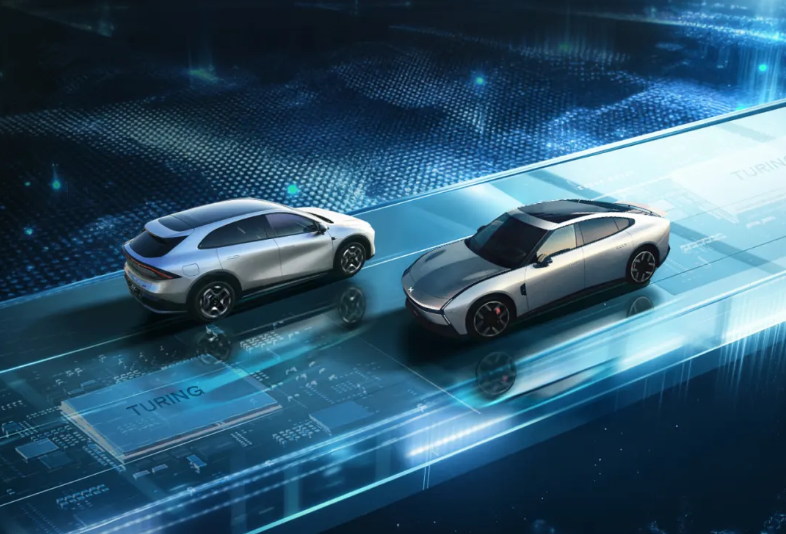
Image Credit: XPENG
Sources close to the company describe the General Intelligence Center as a new AI organization designed for both vehicles and robotics. It will establish secondary units focused on foundation models, infrastructure, platform delivery, and product quality.
The department's AI technology infrastructure is set to serve as the backbone for applications ranging from intelligent driving and cockpits to robotics.
On February 4, Gasgoo reached out to XPENG for comment on the report, and the company confirmed the move.
Notably, in January 2026, Chairman He Xiaopeng announced that a Robotaxi equipped with XPENG's second-generation VLA (Vision-Language-Action) large model is set to begin public road testing. He also forecast that 2026 will mark the "true first year of autonomous driving" in both China and the United States.
He introduced XPENG's second-generation VLA as the world's first mass-produced model of the physical world. Its core innovation disrupts traditional architecture by enabling end-to-end generation from visual signals directly to action commands, bypassing the intermediate step of language translation.
Trained on vast amounts of real-world driving footage and boasting 72 billion parameters, the system aims to understand the physical world much like a human does. This solution is designed to achieve L4 autonomous driving across all scenarios.
Compared to industry standards, XPENG's second-generation VLA emphasizes mass-production capability and superior scenario generalization. It is designed to operate without geographic restrictions, covering complex environments including narrow roads and industrial parks.
The rollout is scheduled for the first quarter of 2026 for users of the Ultra model. In a broader push into smart mobility, XPENG plans to launch three mass-produced Robotaxi models and begin trial operations in 2026.
Additionally, XPENG updated progress on other products under its "Physical AI" strategy. The new generation IRON humanoid robot is slated for mass production by late 2026. Meanwhile, the AeroHT flying car has entered the final countdown to production.
By leveraging the second-generation VLA as a unified intelligence base, XPENG is extending its core autonomous driving capabilities into frontier fields like robotics and flying cars. The company aims to build a multi-dimensional technology ecosystem for future mobility.


