



As the autonomous-driving industry enters a crucial mass-production phase, partnerships across the supply chain are increasingly turning into tighter capital links.
On January 8, MINIEYE said cornerstone investor Horizon Together Holding Ltd. bought a total of 688,200 H-shares on the open market. Filings show Horizon Together is a wholly owned subsidiary of Horizon Robotics.
The purchase lands around the first anniversary of MINIEYE's listing. Back in December 2024, when MINIEYE went public on HKEX, Horizon Robotics joined as a cornerstone investor.
Against a weak Hong Kong market and swinging valuations in smart-driving names, Horizon Robotics, via its investment vehicle, put real money to work to lift its stake — a sign of confidence in MINIEYE's fundamentals and of how tightly the two leaders are aligned on technology and commercialization.
An intertwined partnership
The tie-up between Horizon Robotics and MINIEYE blends co-developing technology, co-growing business and shared equity.
MINIEYE is a key mass-production partner in Horizon Robotics' ecosystem. Their binding shows most clearly in MINIEYE's iPilot series of intelligent driving domain controllers. From the early Journey 2 and Journey 3, to the higher-performance Journey 5, and now the latest Journey 6 lineup, MINIEYE's product cadence has tracked Horizon's chip roadmap.
This model lets MINIEYE tailor products precisely to each chip's strengths, while helping Horizon Robotics speed real-world deployment and expand market penetration. With tight "chip + domain controller" integration, MINIEYE can move first — completing engineering work and starting deliveries on designated programs as Horizon rolls out new compute platforms.
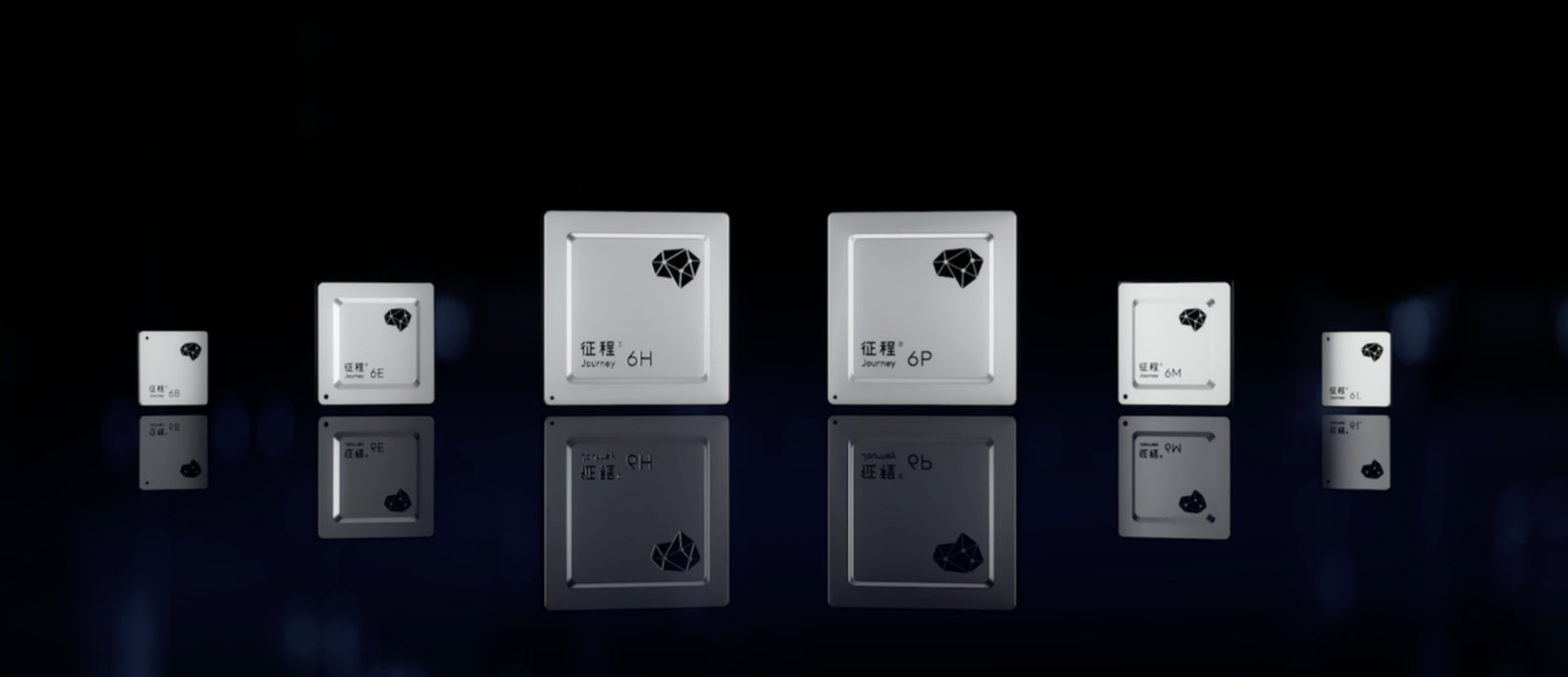
Image source: Horizon Robotics
For example, MINIEYE's iPilot 4 domain controller uses Horizon's Journey 6M chip. Delivering 128 TOPS of compute, it supports highway NOA (Navigation on Autopilot), city NOA, memory driving and memory parking — features used frequently by drivers.
As of 2025, MINIEYE's domain controllers built on Horizon's Journey series have entered large-scale production across passenger and commercial vehicles, covering more than 40 mainstream OEMs at home and abroad.
In November 2025, MINIEYE won nominations for two core models at a leading domestic brand, supplying its iPilot 4 Plus based on Journey 6M, with mass deliveries slated to roll out through 2026. For automakers, the proven "base chip + mature Tier 1" combo sharply cuts technical risk and development time.
Beyond operations, Horizon's equity support anchors the partnership. During MINIEYE's IPO, Horizon Robotics joined industry players including Chery Automobile and PATEO CONNECT+ — underscoring how industrial capital values coordination across the smart-driving supply chain.
Horizon's latest purchase follows MINIEYE's own steps: a 200 million yuan buyback program, an extended lock-up for major shareholders, and multiple personal increases by Chairman Liu Guoqing. The added stake is more than financial — it strengthens Horizon's participation in MINIEYE's governance via capital.
In a capital-intensive, long-cycle industry like autonomous driving, such a "shared fate" community of interest helps both sides keep strategic focus through market swings and avoid sacrificing long-term R&D to short-term gains.
Betting on driverless logistics
Horizon's announcement highlighted a joint push into L4 driverless logistics vehicles — extending the partnership beyond L2/L2+ passenger-car assistance into the commercial L4 "deep water."
Driverless logistics is widely seen as one of the fastest routes to a commercial closed loop in autonomous driving, propelled by three core forces:
First, a labor gap and rising costs. As parcel delivery and on-demand services surge, last-mile staffing has become a growing constraint. Driverless logistics vehicles can run 24/7, sharply cutting per-order labor costs.
Second, technology maturity and a price inflection. By 2025, with continued declines in lidar and compute-platform costs, unit economics for driverless logistics vehicles are reaching a threshold the market can accept.
Third, policy tailwinds. Many Chinese cities have opened road access for autonomous delivery vehicles and issued standards. At the 2025 Horizon Robotics Tech Ecosystem Conference, MINIEYE — uniquely showcasing both L2 and L4 collaboration results — underscored its depth in driverless logistics.
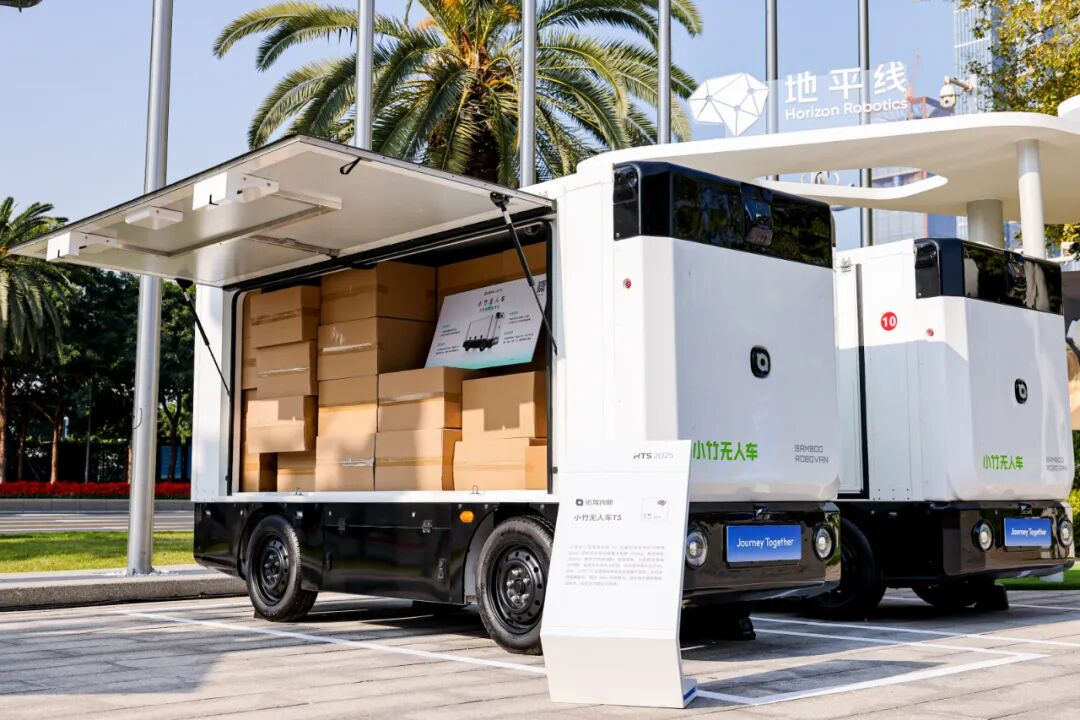
Image source: MINIEYE
MINIEYE moved early into driverless logistics and now operates a two-pronged business: smart mobility plus smart logistics.
Product lineup: MINIEYE has launched the "Xiaozhu" series of driverless logistics vehicles, including Xiaozhu T5 and T8. From the outset, these models were tightly adapted to Horizon's compute platforms. Horizon's Journey chips deliver robust perception processing, enabling autonomous operation across complex urban roads and closed campuses, day and night.
Commercial progress: In November 2025, MINIEYE secured a new 500-unit order for the Xiaozhu T5, with an initial batch of 100 set for delivery in January 2026. In parallel, it deepened cooperation with Hunan Xiangjiang Intelligent and others, winning an additional 100 driverless logistics vehicles to advance deployments in Hunan and beyond.
For Horizon Robotics, backing MINIEYE's push in driverless logistics effectively widens the boundary of its chips' applications. From passenger cars to logistics vehicles, reusing the same underlying architecture spreads R&D costs — while broader data feedback further refines algorithm generalization.


