



Gasgoo Munich- Harmony lntelligent Mobility Alliance (HIMA) launched a saturation attack on the intelligent EV market during Huawei's spring product showcase in Changsha on March 23. The alliance rolled out nearly ten new models across six lineups. These ranged from the Shangjie Z7 duo, opening pre-orders at 229,800 yuan, to the AITO M6 targeting the new SUV market from 269,800 yuan. They also included the refreshed Stelato S9 family and Luxeed 7 series, alongside the debut of the flagship MPV Luxeed V9.
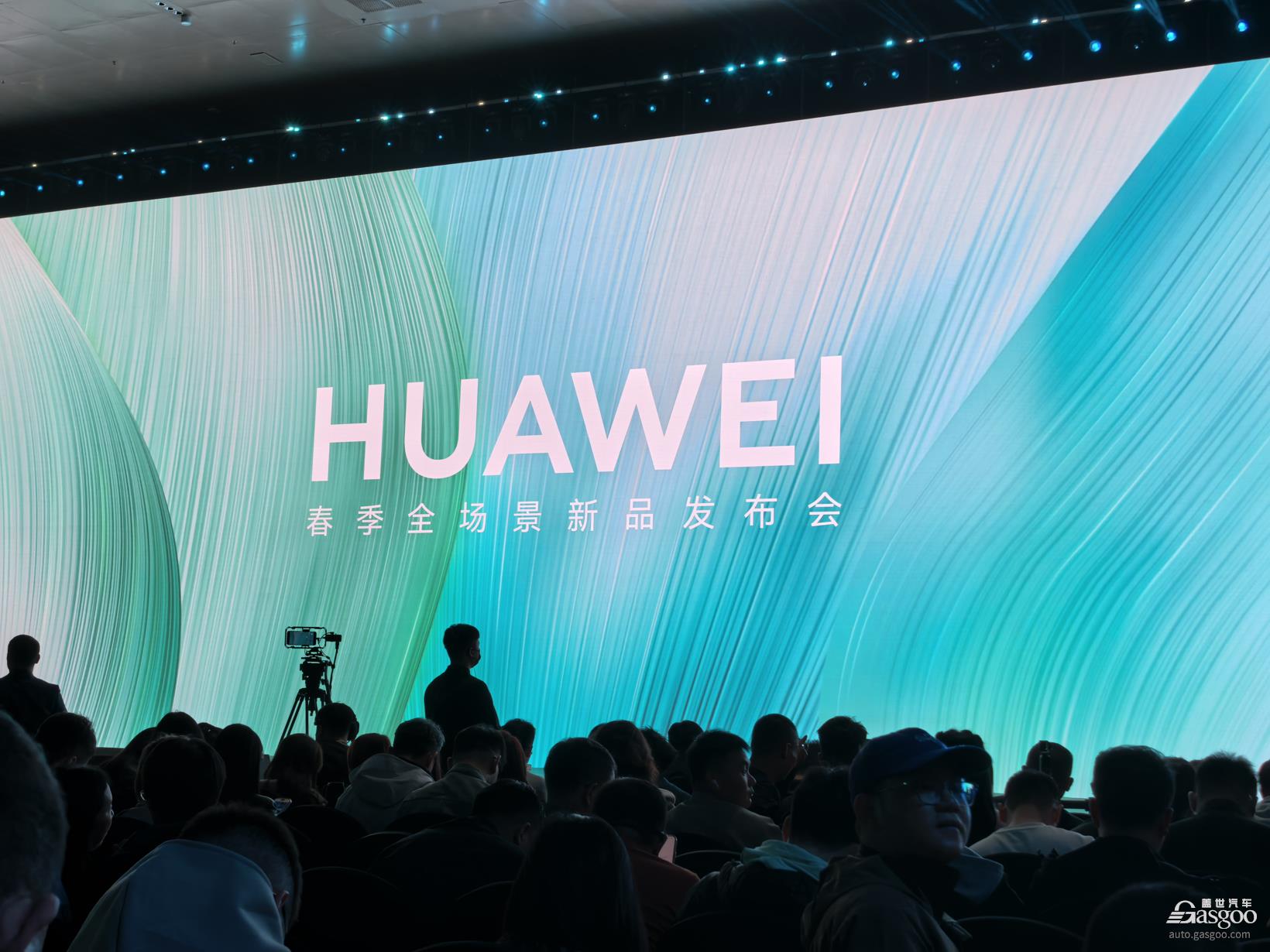
Image Source: Gasgoo
This was no simple product refresh. It marked a systematic reconstruction of HIMA's technology architecture, product matrix, and market strategy. This move came after the alliance scaled from zero to 1.3 million deliveries.
As the industry debates the software-defined vehicle, HIMA has provided a provisional answer. The alliance centers on a standardized, reusable underlying technology platform. By leveraging differentiated combinations across brands and models, HIMA aims for full-dimensional coverage. This ranges from high-end flagships to the mainstream market, effectively shifting intelligent driving from a premium option to a standard feature.
The 896-Line LiDAR Democratization Trend
Amid the flurry of new products, the most significant development was not a spec breakthrough. It was a clear strategic signal. HIMA is converting top-tier driver-assistance hardware from a high-end exclusive into a standard feature across its entire lineup.
Whether it is the Shangjie Z7, the AITO M6, or the refreshed Luxeed 7 series and Stelato lineup, the 896-line dual-beam image-grade LiDAR is standard on all.
This strategic shift is driven by more than simple cost calculations. It reflects HIMA's deep insight into the true nature of the intelligent driving competition.
In the early stages of intelligent EV development, high-end sensors like LiDAR were viewed as core product markers. Automakers bundled them with high-priced models to build a premium image.
Consumer perception of intelligent driving is shifting from a novelty to a daily necessity. The limitations of that strategy have emerged. Drivers are no longer content with advanced driver-assistance systems only in top-tier trims. They demand consistent safety and convenience across a broader price spectrum.
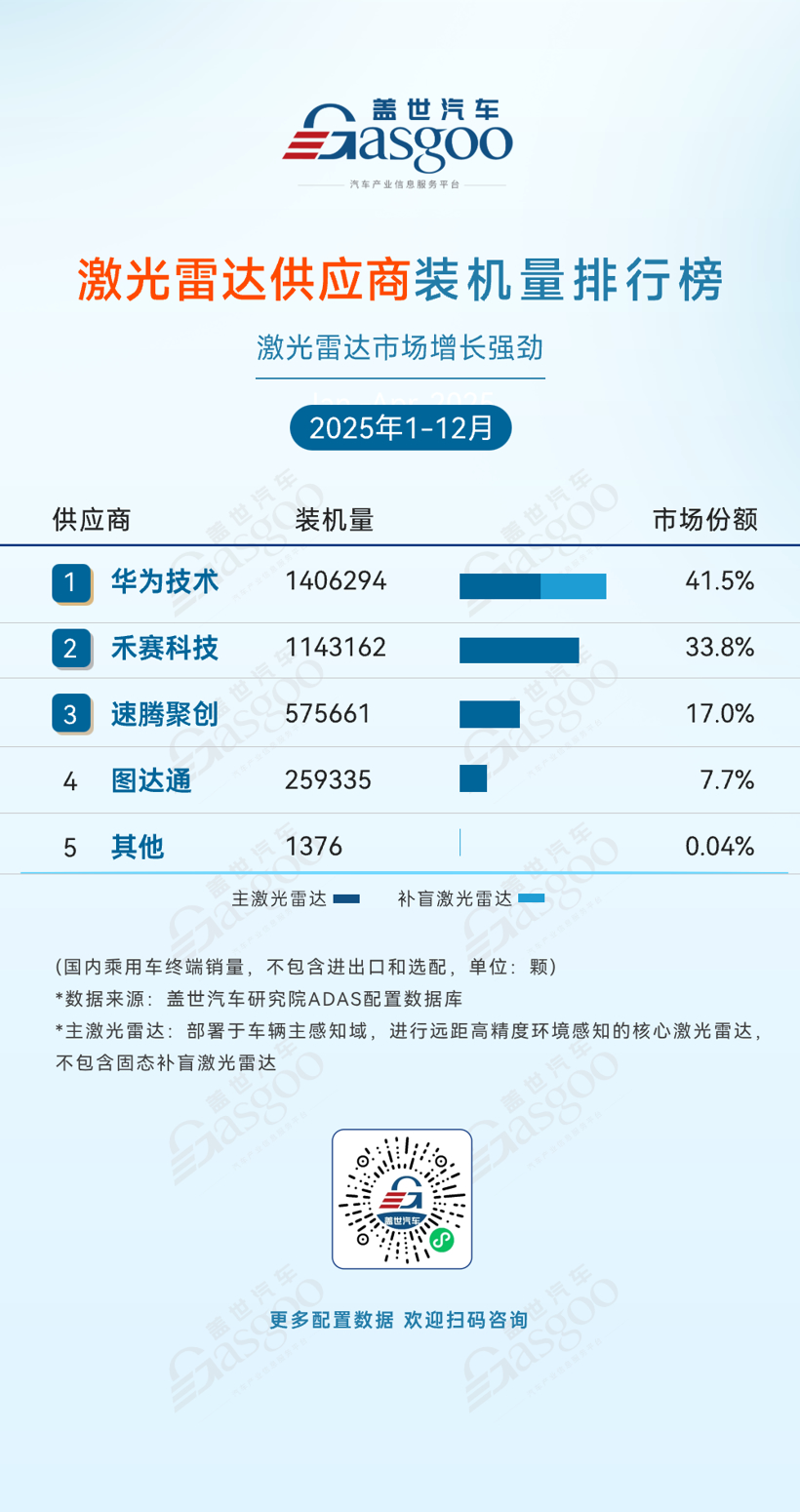
Data from the Gasgoo Research Institute reveals that in 2025, China's LiDAR market was dominated by a concentrated group of local leaders. This confirms the sector's robust growth. Huawei Technologies secured the top spot with a 41.5% share and 1,406,294 units installed. It became the core choice for high-end driving solutions at numerous automakers due to advantages in perception precision, cost control, and reliability.
HIMA's move to standardize higher-specification LiDAR across a large volume is a precise response to shifting demands among intelligent vehicle users.
The 896-line dual-beam image-grade LiDAR represents the pinnacle of mass-production automotive radar. Its dual-beam architecture integrates telephoto and wide-angle imaging. This delivers a qualitative leap in detecting low obstacles, irregular objects, and hazards in pitch-black conditions. By equipping the entry-level Shangjie Z7 with this hardware, HIMA is sending an unambiguous signal. The safety baseline for intelligent driving should not be compromised by price.
This strategy is underpinned by HIMA's understanding of economies of scale. By March 2026, cumulative deliveries exceeded 1.3 million units. The alliance hit the 1 million mark in just 43 months, a record for new automotive brands.
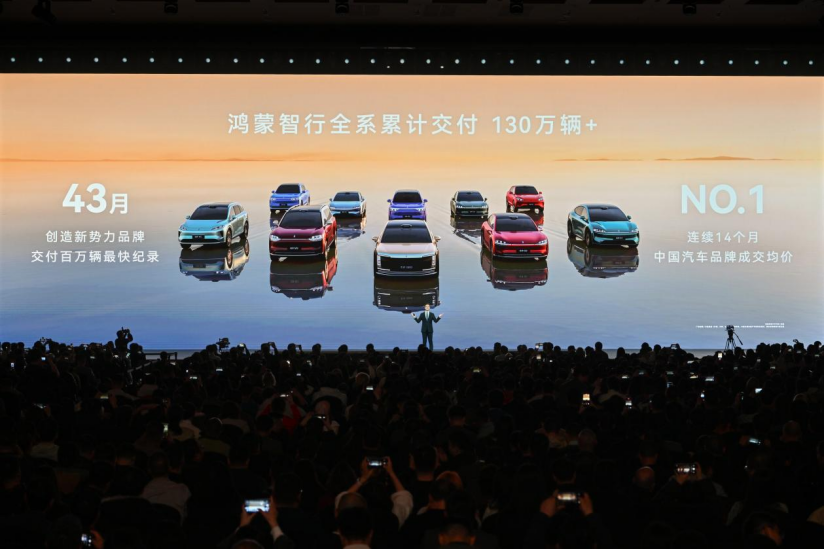
Image Source: HIMA
Such massive delivery volume has optimized supply chain costs. Crucially, it provided real-world road data to train intelligent driving algorithms. Hardware costs are falling due to scale, and algorithmic capabilities are rising with data. Making top-tier sensors standard across the lineup is no longer a burden. It is a value anchor. This approach reinforces user perception of HIMA's safety attributes. It also lays a unified hardware foundation for future software upgrades.
From Singular Breakthroughs to Systematic Competition
The most striking feature of HIMA's launch was the comprehensive rollout and precise positioning of its product matrix.
From Shangjie, AITO, and Stelato to Luxeed, all four brands made moves simultaneously. They covered a vast price range from 229,800 yuan to over 400,000 yuan. They spanned diverse body styles, including coupes, shooting brakes, SUVs, and MPVs.
This systematic product layout signals that HIMA has moved beyond singular breakthroughs. It has entered a new era of systematic competition.
The Shangjie Z7 and Z7T duo target emerging tech coupe and shooting brake niches. Starting at 229,800 yuan and 239,800 yuan, they feature standard 896-line LiDAR, the Huawei Xuanji platform, and an 800V high-voltage architecture. This offers a compelling value proposition. Notably, the lineup combines a hatchback coupe's stance with a shooting brake variant. This caters to diverse cargo needs. The "one chassis, two styles" strategy reduces market entry costs and expands the target audience. Official figures show that the Shangjie Z7 garnered over 18,000 pre-orders in three hours.
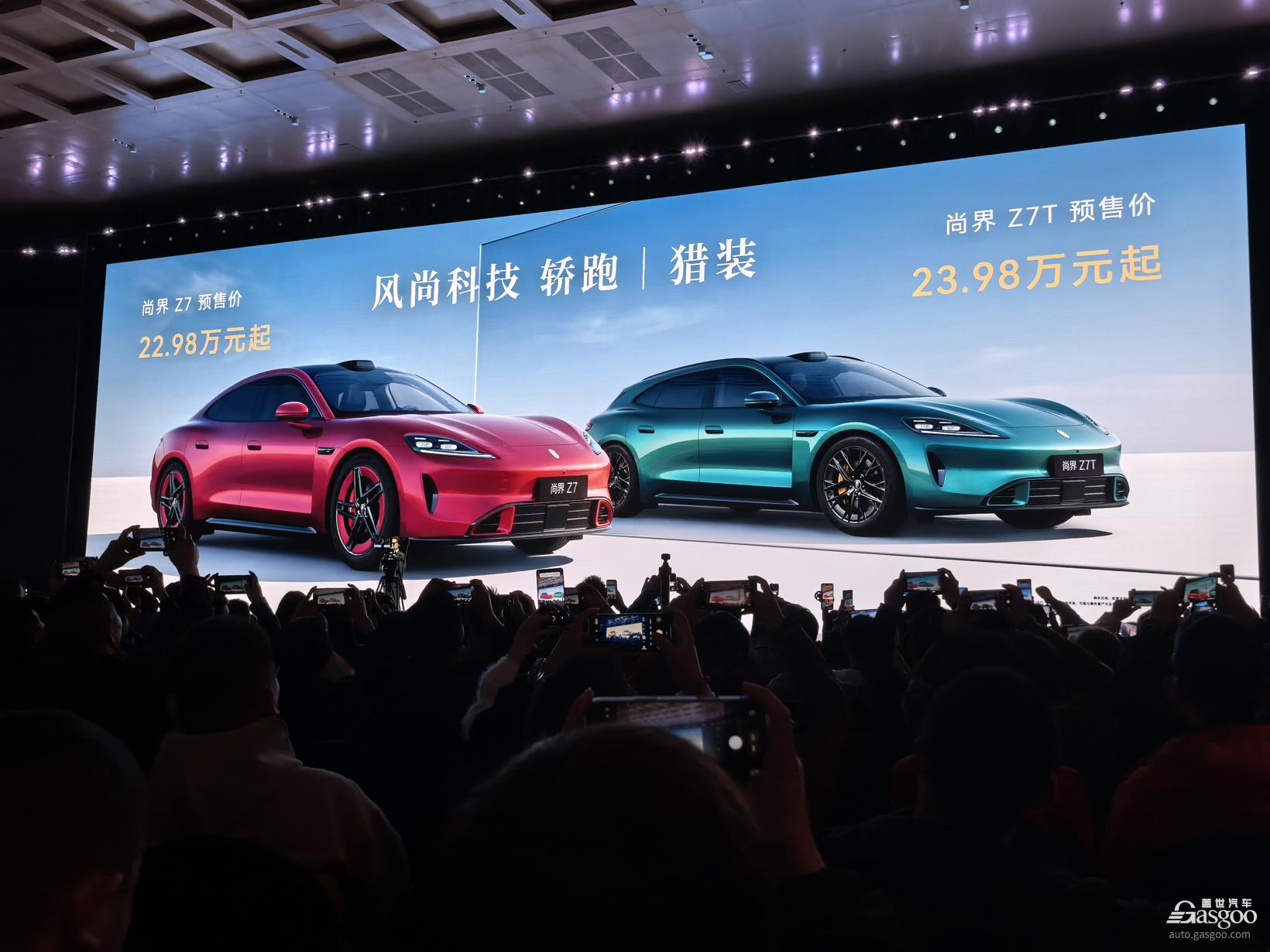
Image Source: Gasgoo
The presale of the AITO M6 demonstrates HIMA's insight into young families. As a new SUV priced from 269,800 yuan, it offers the space of a large SUV. It features a 4,960mm length and 2,950mm wheelbase. Innovative features include dual zero-gravity seats and a versatile co-pilot "inspiration window." These features capture modern consumers' dual needs: self-expression and family utility.
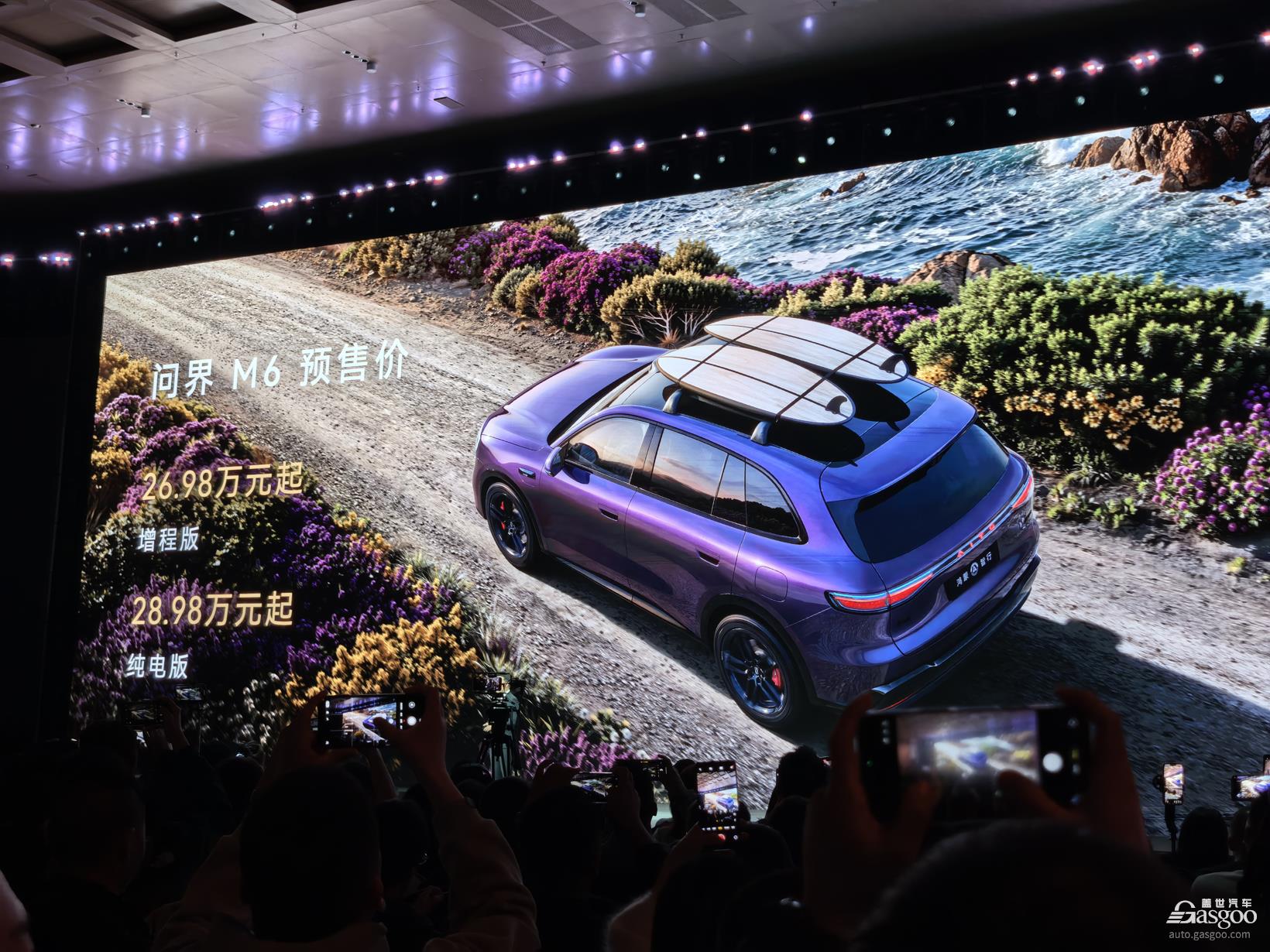
Image Source: Gasgoo
With the M6, the AITO brand is establishing a clearer tiered lineup alongside the premium M7, M8, and M9. This allows AITO to build a comprehensive structure in the core 250,000 to 400,000 yuan SUV market.
The refreshed Stelato S9 and S9T highlight HIMA's deepening presence in the high-end market. New exterior colors, such as Star Rose Pink and Moon Velvet White, feature a Nebula Red interior and exclusive wheels. This demonstrates an understanding of personalized aesthetics. Crucially, the Stelato family has integrated the 896-line LiDAR. This reinforces the brand philosophy that "safety is the ultimate luxury."
Stelato secured the sales title for new energy sedans priced above 300,000 yuan for five consecutive months. This proves that Stelato has established itself in the premium segment. The refresh serves to consolidate that market position.
The refreshed Luxeed 7 series and the Luxeed V9 debut reveal HIMA's strategic intent for younger markets. The Luxeed R7 and new S7 feature Dark Night Purple and Vitality Orange. They include a Black Tea Orange interior and the HarmonyOS ALPS healthy cabin. This accentuates a youthful positioning. Meanwhile, the Luxeed V9, HIMA's first flagship MPV, features the Xuanji platform, rear-wheel steering, and second-row rotating seats. This demonstrates a grasp of intelligent upgrades in the MPV sector. As a product line spanning coupes, SUVs, and MPVs takes shape, its ability to capture users will expand.
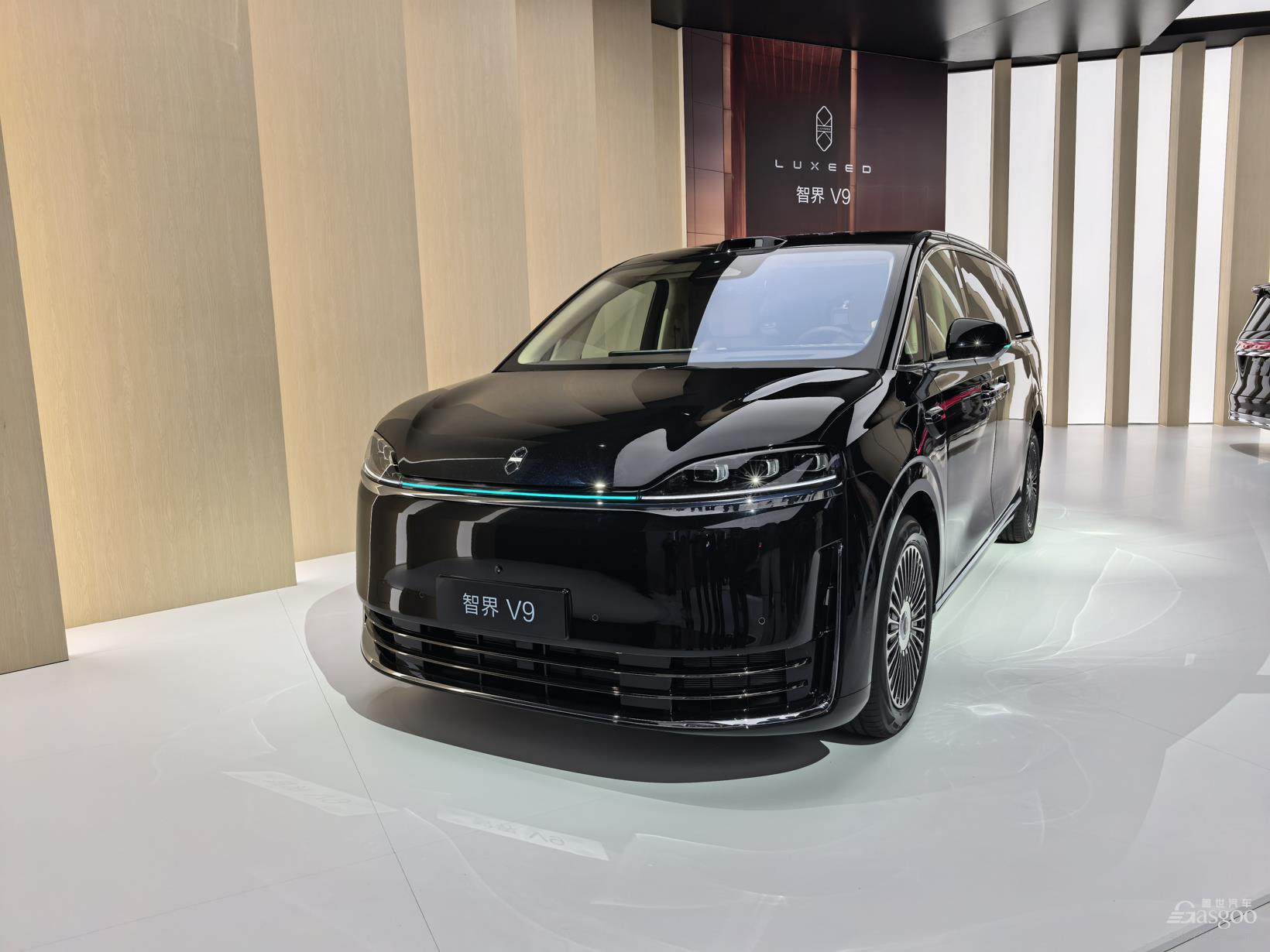
Image Source: Gasgoo
The strategic significance of this multi-brand, multi-model systematic layout extends beyond a battle for market share.
In the intelligent EV industry, success with a single model is rarely sustainable. A systematic product matrix creates brand synergy. It mitigates the risk of relying on a single product and optimizes R&D costs through shared technology platforms. HIMA's brands differ in design language and target audience. However, they share core modular technologies like Huawei's driver-assistance systems, smart cockpits, and electric powertrains. This "brand differentiation with technological commonality" ensures market competitiveness. It also maximizes the benefits of scale and technology reuse.
Redefining Luxury and the Shifts in Consumer Psychology
A profound trend is emerging across HIMA's new products. Intelligent EV competition is moving past feature stacking and entering a cycle of value reconstruction. The definition of luxury is shifting. It is moving from traditional elements like materials and craftsmanship to values tied to daily user experience. These include safety, intelligence, and health.
HIMA's philosophy that "safety is the ultimate luxury" was reinforced at the launch. As of March 22, active safety systems in HIMA vehicles had avoided over 3.7 million potential collisions. This is backed by the real-world verification of Huawei's Qiankun ADS system.
With 896-line LiDAR standard across multiple models, safety is tangible. The Shangjie Z7 utilizes a body structure comprising 91% high-strength steel and aluminum. This includes 14 sections of 2,000 MPa submarine-grade hot-formed steel. Safety is no longer an abstract concept. It has transformed into tangible, quantifiable product value.
This pursuit of safety is reshaping benchmarks for luxury cars. In the internal combustion era, luxury meant leather, wood trim, and large engines. In the intelligent EV era, consumers realize that true luxury lies in protecting the family. It provides peace of mind in complex road conditions. By making high-end safety features standard on entry-level models, HIMA is signaling a message. Safety should not be an appendage to a price tag, but a fundamental virtue of every vehicle.
The evolution of the healthy cockpit reflects the logic of this value reconstruction. The Shangjie Z7 and Z7T debut the HarmonyOS ALPS 2.0 healthy cabin. It combines MOFs materials with water-ion air conditioning to achieve air freshness and hydration. This is a precise response to user health anxiety. In the post-pandemic era, attention to air quality and antibacterial functions remains high. By elevating the healthy cabin to a standard feature, HIMA is capturing this shift in user psychology.
HIMA's focus on "emotional value" design is transforming the smart cockpit. The Shangjie Z7's follow-up screen supports automatic rotation and intelligent greetings. It responds to voice commands like "Xiaoyi." This merges technology with emotional interaction. The AITO M6's "versatile co-pilot" allows users to display personalized items. This turns the interior into a trendy showcase. The focus is shifting from maximizing function to satisfying emotional needs and personal expression.
This value reconstruction is driven by a generational shift in the EV user base. Gen Z and millennials are becoming the dominant force in auto consumption. They value technological attributes over brand heritage. They prioritize experience over status symbols. They are willing to pay for safety and health rather than opulence. By maximizing value in driver assistance and emotional interaction, HIMA is building resonance with this new generation.
The Luxeed V9 release extends this value reconstruction into the MPV market. As a flagship MPV, it features rear-wheel steering and the Xuanji platform. It also offers luxury configurations like second-row rotating seats. This approach integrates intelligent technology with ride comfort. It redefines the value standard for MPVs. It transforms them from business tools into mobile smart spaces for family outings and travel.
The significance of HIMA's launch lies in its refusal to battle for share in existing markets. It is redefining the meaning of luxury and reconstructing user value perceptions. This opens up new growth spaces for intelligent EVs. As safety and emotional interaction become core elements of competition, the logic of industry competition may be rewritten.
In Summary
From 1.3 million cumulative deliveries to a dense debut of nearly ten new models, HIMA is demonstrating capability. Its reconstruction of the value logic behind intelligent EVs is noteworthy. "Safety is the ultimate luxury" is evolving from a slogan into underlying logic. Top-tier driving hardware is shifting from a premium option to a standard feature. HIMA is establishing a new competitive benchmark for the industry.
Future competition will escalate from single-technology comparisons to systematic battles. These involve technology, products, channels, and services. Through this spring launch, HIMA has displayed its layout for this competition. It proved that driver assistance and smart cockpits need not be confined to high-priced products. The purpose of technology is to allow more people to enjoy a safe and convenient travel experience.
Viewed from this angle, HIMA's "Spring Offensive" is a comprehensive product rollout. It is also a battle to define the standards of value in intelligent EVs.


