



Gasgoo Munich- On March 26, FAW Hongqi partnered with Alibaba Cloud to announce that the Qwen intelligent agent is now integrated into the Hongqi smart cockpit, debuting first on the Hongqi HS6 PHEV. This marks the first time a general-purpose AI assistant has landed in a vehicle scenario in its complete form.
How does this deployment of AI differ from the past? When a vehicle can not only understand "navigate to the airport" but also autonomously plan complex itineraries—like "go to Peking University first, find a roast duck restaurant along the way for lunch, and arrive at Terminal 3 by 5 pm"—where exactly does the fusion of automotive and AI stand? What does this reveal about the evolutionary direction of generative AI? And what shocks will it deliver to the automotive sector?
The Fusion of AI and Automotive
Over the past two years, generative AI has rapidly iterated from "large language models" to "multimodal models," and finally to "intelligent agents." If 2023 was the year of the "Hundred Models War" and 2024 saw the explosion of multimodal capabilities, then since the start of 2025, the focus of industry competition has shifted from "model parameter size" to "whether the model can autonomously understand, plan, and execute complex tasks."
Merely generating text or an image is no longer the core metric for AI capability. The real value lies in whether AI can complete the full closed loop like a human: "I want to do something — break down the steps — call the tools — deliver the result."
Qwen's development path clearly reflects this trend. In recent months, Qwen has successively rolled out capabilities for food delivery, movie tickets, flight and hotel bookings, and ride-hailing, gradually building a system for "AI task execution." Its entry into the automotive scenario is a natural extension of these capabilities into more complex physical environments.
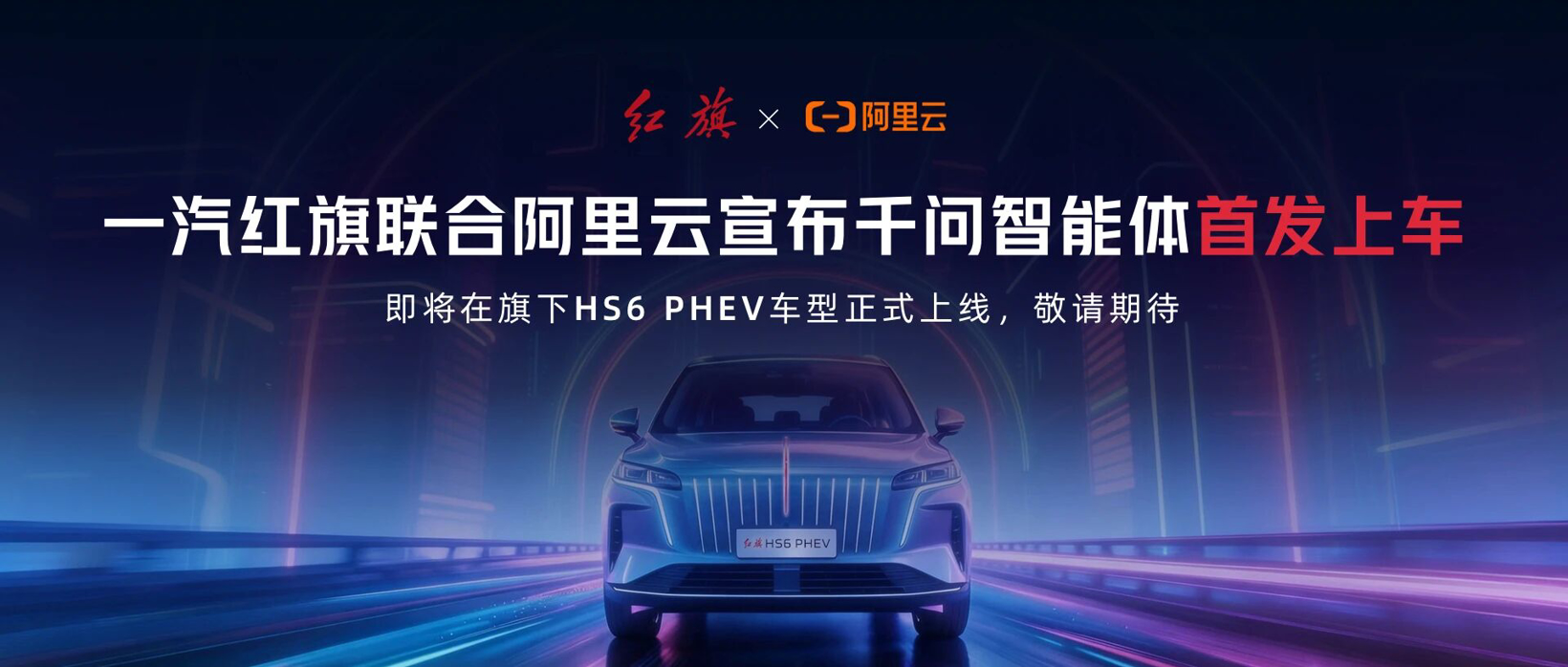
Image Source: Alibaba Cloud
Unlike mobile phones, the automotive scenario demands far more from AI. While driving, users have limited hands and focused attention, making them rely far more heavily on voice interaction than with other terminals. Yet travel itself is highly complex and requires continuous decision-making; a single trip can involve navigation, time management, dining choices, and ticket booking simultaneously—placing higher demands on the AI's understanding and execution capabilities.
The key technological path to achieving this breakthrough lies in "cloud multi-agent collaboration" and "edge-cloud collaborative execution." Take the Hongqi Lingxi cockpit as an example: Qwen acts as the cloud decision hub, capable of deeply understanding complex natural semantics, precisely deconstructing user intent, and planning task chains.
Once a user issues a command with multiple constraints, Qwen invokes the Amap Agent in the cloud as a specialized execution tool. Relying on Amap's real-time geographic data, spatiotemporal computing engine, and deep POI content, it fuses multi-dimensional information and optimizes decisions to generate intelligent recommendations tailored to the time and space, which are then presented visually on the vehicle end.
Underpinning the efficient operation of this complex system is also a breakthrough in underlying computing power. The news report notes that the Lingxi cockpit has achieved a computing power upgrade based on the T-Head AI chip. The deep collaborative optimization between T-Head's self-developed AI chip and the Qwen model balances high-throughput inference with optimal energy efficiency, enabling the smart cockpit to achieve millisecond-level response.
Without such underlying computing power support, the experience loop of cloud multi-agent collaboration and real-time edge-cloud interaction would be impossible. It can be said that behind the AI assistant's entry into the vehicle lies the combined technological maturity of three layers: model capability, agent architecture, and underlying computing power.
Has the Car Become a Mobile Intelligent Agent?
The full integration of the AI assistant is delivering a multi-dimensional shock to the automotive industry. It will reshape the face of this century-old industry across product definition, competitive landscapes, business models, and even technological ethics.
First, the core value of the smart cockpit is shifting from "hardware stacking" to "service capability." In recent years, competition focused on screen count, size, resolution, and cockpit chip computing power. But as hardware gradually homogenizes, consumers find it harder to perceive substantive differences between models. The deep integration of AI assistants makes software and service experience the new decisive differentiator.
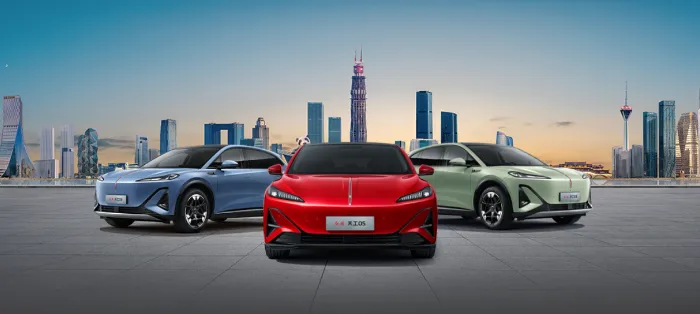
Image Source: FAW Hongqi
Second, the cooperation model between automakers and tech companies is deepening. The partnership between Hongqi and Alibaba Cloud showcases a typical path: automakers provide the vehicle platform, cockpit hardware, and manufacturing capabilities, while tech companies output large models, cloud services, and ecosystem resources.
The two sides achieved deep collaboration in the "Lingxi cockpit": Qwen handles intent understanding and task planning, the Amap Agent manages travel execution, and the T-Head chip provides the computing foundation. Later, Alibaba ecosystem services like Taobao Instant Shopping, Damai, and Fliggy will also be integrated.
This strong alliance of "vehicle manufacturing + AI capability" is becoming a mainstream trend. In the future, the automobile may become the next critical "AI ecosystem entry point" following the smartphone.
Whoever can integrate local life, mobility, and payment services into the car earlier and more smoothly will seize the advantage in the next stage of market competition.
Third, the interior space is becoming a new scenario for service delivery. With Qwen integrating capabilities like instant retail, ticket booking, and travel services, the car is evolving from a pure transport tool into a "service delivery terminal." This means the commercial potential of the interior space is being activated, positioning the car as another high-frequency payment and lifestyle service platform following the smartphone.
Of course, this round of transformation brings new challenges. First are stability and safety issues arising from system complexity. Cloud multi-agent collaboration and cross-end execution place extremely high demands on system reliability—any failure in a single link could affect user experience or even driving safety.
Second is the issue of liability definition: when an AI agent completes decisions involving money and time on behalf of the user, questions of responsibility remain unclear if booking errors or route planning mistakes occur.
Furthermore, the importance of technological autonomy and controllability is becoming prominent. The collaboration between the T-Head chip and the Qwen model demonstrates a possible path for building an autonomous, controllable technology stack. In the critical field of smart vehicles, achieving full-link autonomy from underlying computing power to upper-layer applications is both a reflection of industrial competitiveness and a guarantee of security.
In summary, the official entry of the AI assistant into the vehicle marks a new stage in automotive intelligence: moving from "function stacking" to "capability fusion." It is no longer simply installing larger screens or more powerful chips, but enabling the car to possess capabilities for understanding, planning, and execution.
For the automotive industry, this is both an opportunity and a challenge: product value is being redefined, competitive barriers are being redrawn, and user expectations are being reshaped. Companies that can complete this capability reconstruction first will have the chance to seize the early lead in the automotive market of the next decade.


