



Gasgoo Munich- On the evening of February 10, 2026, Xiaomi Group founder Lei Jun went live on Little New Year from inside the company’s electric vehicle factory. The agenda covered a range of topics: an introduction to Xiaomi EV’s customization services, the conclusion of first-generation SU7 production, and Spring Festival service perks. Crucially, it also offered a systematic look at the core upgrades coming to the next-generation SU7.
First-Gen SU7 Rolls Off the Line: The Arrival of a "New Era Driver's Car"
Lei Jun confirmed during the stream that the final first-generation SU7 had rolled off the assembly line and was awaiting delivery. That brings the curtain down on a roughly two-year production run that began in March 2024. Cumulative deliveries of this debut model approached 370,000 units — a definitive milestone for Xiaomi EV’s first-generation product.
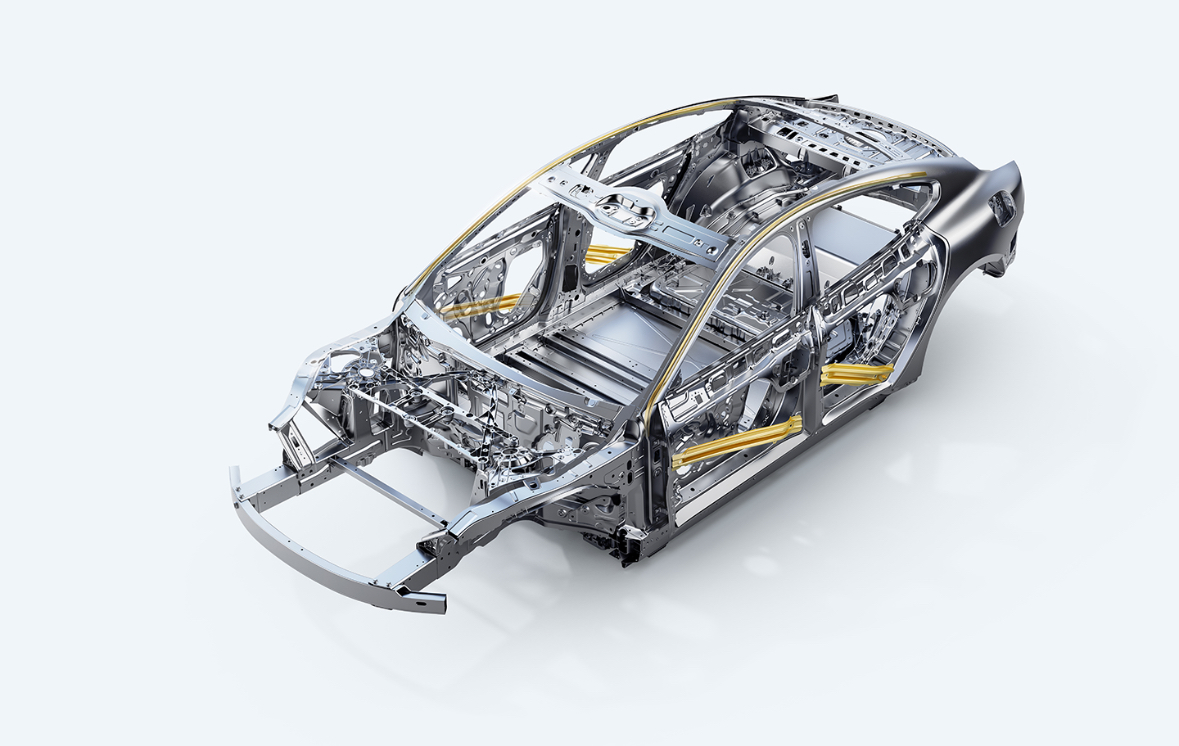
Image Source: Xiaomi EV
The new SU7 represents a comprehensive upgrade over its predecessor. On safety, Lei Jun emphasized that the entire lineup will come standard with a "built-in roll cage" structure crafted from 2,200 MPa ultra-high-strength steel and nine airbags. He highlighted a specific detail: the door handle design already meets national standards set to take effect in 2027. That seemingly technical point directly addresses widespread industry debate and consumer concerns about the reliability of hidden door handles in emergencies.
For intelligent driver assistance, the new SU7 will feature standard LiDAR, 4D millimeter-wave radar, and computing power reaching 700 TOPS, all running on Xiaomi’s self-developed Xiaomi HAD end-to-end system. Effectively, the hardware barrier for advanced driver assistance has been removed, making high-end capabilities a standard feature.
Upgrades extend across the board to the motor, battery pack, chassis suspension, and tire specifications. During the broadcast, Lei Jun played footage of the new model undergoing ice and snow testing in Hailar at temperatures as low as -39°C. This served as proof of the car’s "New Era Driver's Car" positioning, though he was careful to remind viewers not to attempt dangerous driving on public roads.
The livestream also focused on manufacturing and user service. Lei Jun took viewers on a "cloud tour" of the highly automated plant, showcasing numerous robotic work cells. He also announced the "2026 Spring Festival Travel Worry-Free Guarantee," promising high reimbursement for transport and accommodation if a vehicle breaks down due to random faults during the holiday. Beyond technical specs, the stream aimed to bolster public confidence in Xiaomi EV’s industrial manufacturing standards and long-term service capabilities.
Market, Profit, and Product Strategy Behind "Standard Across the Board"
Stripped of the specific context of the Chinese new energy vehicle market in early 2026, this livestream might look like a standard product and service rollout. Yet, viewed through the lens of fierce industry competition, it reveals deeper strategic currents.
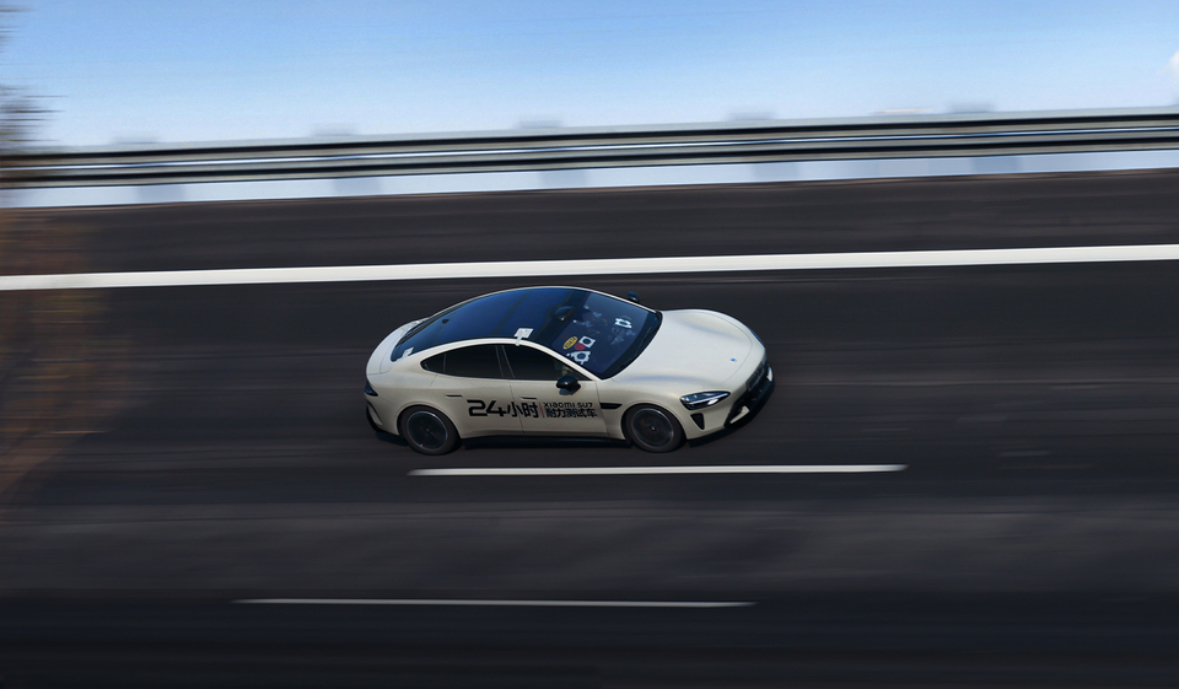
Image Source: Xiaomi EV
The first-generation SU7’s lifecycle — from launch to discontinuation — spanned roughly two years. That pace is markedly faster than the traditional internal combustion engine era, and even quicker than the mainstream cycles seen in the early days of the EV market. It reflects the accelerating iteration of industry technology, particularly in intelligent driver assistance and smart cockpits.
Since 2025, LiDAR, 4D millimeter-wave radar, and high-compute chips have migrated from "show-off specs" on luxury models to standard or near-standard features on mass-market vehicles. As competitors equip their lineups with next-generation intelligent hardware, the gap in the first-gen SU7’s driver-assist technology created potential market pressure. Consequently, the "standard across the board" strategy for the new SU7 is best seen as a proactive defensive measure.
Xiaomi EV leveraged massive initial traffic and Lei Jun’s personal brand to quickly establish itself. However, as sales volume topped hundreds of thousands and the user base broadened, the core of brand trust shifted from "disruptive storytelling" to "reliable experience." Over the past year, the broader sector — and Xiaomi itself — weathered several PR storms related to product quality details and marketing claims, steadily eroding consumer trust.
Against this backdrop, the high-profile "fault coverage" guarantee for the Spring Festival and the emphasis on details that meet future safety standards are clearly aimed at repairing and reinforcing that trust. The message to the market is clear: Xiaomi EV is prioritizing certainty and assurance throughout the entire ownership cycle.
Standardizing intelligent driving sensors and computing platforms across the lineup will undoubtedly drive up costs for the new SU7. Yet, the market environment in 2026 is unforgiving on profitability; the price war shows no sign of abating, leaving little room to pass costs onto consumers through significant price hikes. For Xiaomi EV, having achieved its first quarterly profit in the vehicle business, balancing aggressive configuration with healthy gross margins on the new SU7 will be a financial test. The automated factory showcased in the stream serves, in part, to support the narrative that costs are being controlled through extreme manufacturing efficiency.
Once the new SU7 hits the market, it will face the pressure of anchoring Xiaomi EV’s broader product matrix. The YU7 SUV, launched in 2025, has delivered a strong performance and become a sales pillar. The new SU7’s mission is not just to iterate on itself, but to re-establish a benchmark in the sedan market. Together with the YU7, it aims to form a powerful "sedan + SUV" dual-drive to support Xiaomi EV’s annual sales target of 550,000 units in 2026.
During the stream, Lei Jun explicitly framed the new model as a "driver's car," aiming to reinforce its unique positioning as a sport sedan and distinguish it from the more family-oriented YU7.
Conclusion
On Little New Year, February 10, 2026, Lei Jun’s livestream from the factory floor marked the official end of production for the first-generation SU7 and unveiled the capabilities of its successor. While the new SU7’s specifications have already drawn attention, the real test begins with mass production and delivery. Can it deliver a stable user experience under cost constraints? Can it establish a genuine advantage in the battle for intelligent driving supremacy? The answers to these questions cannot be delivered in a single livestream; they depend on Xiaomi EV’s long-term endurance across R&D, supply chain, manufacturing, and service.


