



GOVY Flying Car Manufacturing (Guangzhou) Co., Ltd. has officially been established, with Zhang Ning serving as legal representative and a registered capital of 30 million yuan.
According to Qichacha equity data, the new entity is wholly owned by Guangdong GOVY Technology Co., Ltd., a subsidiary of GAC Group. Its business scope encompasses core operations including auto parts manufacturing, sales of intelligent unmanned aerial vehicles, civil aircraft maintenance, and digital technology services.
GAC Group's move to establish a dedicated flying car manufacturing entity signals that its low-altitude economy strategy has moved into the industrialization phase.
The new entity's primary mission is to leverage GAC's mature new energy vehicle supply chain and technology reuse capabilities. It aims to transform previously developed eVTOL (electric vertical takeoff and landing) technology into mass-producible industrial products, while establishing a production system that meets both aviation airworthiness standards and automotive manufacturing efficiency.
This initiative is designed to integrate R&D, manufacturing, testing, and after-sales services through tangible operations, providing the hardware backbone for the emerging low-altitude mobility market.
Secures Billions in Orders
The immediate driver behind establishing GOVY Flying Car Manufacturing is the impending commercial delivery of its first mass-production model. Previous reports indicate that GAC GOVY's debut multi-rotor eVTOL, the GOVY AirCab, has secured more than 2,000 intended orders, with a total value exceeding 3.3 billion yuan.
To meet delivery demands, GOVY's Guangzhou plant began equipment installation and commissioning in late 2025. The facility features specialized workshops for final assembly, sub-assembly, composite manufacturing, and painting. It primarily supports pilot production and Production Certificate (PC) certification for the GOVY AirCab (GAC-A6). According to the plan, the first batch of airworthy models will roll off the production lines at this plant.
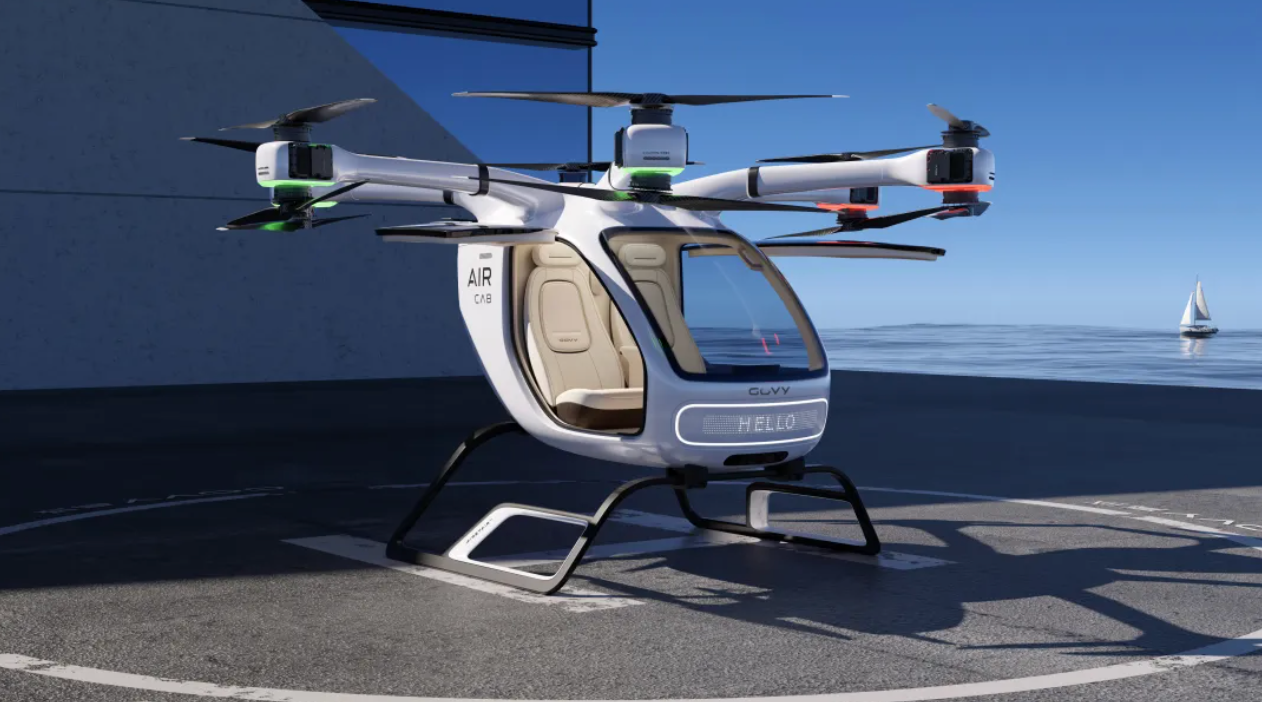
Image Credit: GAC GOVY
The technical specifications of the GOVY AirCab align closely with its market positioning:
Structure and Materials: It employs a six-axis, 12-rotor configuration, with an airframe constructed from over 90% aviation-grade carbon fiber composites—reducing weight by more than 30% compared to traditional materials.
Power Performance: Powered by a pure electric system, it supports 25-minute fast charging (15 minutes to replenish 50% to 100% of battery capacity), achieves a cruising speed of 120 km/h, and boasts a range of 30 km.
Intelligent Features: Equipped with an L4 autonomous driving system delivering over 500 TOPS of computing power. It features the RoboSense EM4, China's first aviation-grade digital LiDAR, which offers a detection range of 300 to 600 meters and can identify small drones from 200 meters away and high-voltage lines from 150 meters.
Battery Technology: Utilizes high-nickel/silicon system batteries supplied by CALB, boasting an energy density exceeding 300 Wh/kg. The company is also developing semi-solid large-format cylindrical batteries with an energy density of 350 Wh/kg.
Cost Control: The official guide price is set within 1.68 million yuan—below the industry-standard pricing range of 2 million to 3 million yuan.
Furthermore, GOVY has adopted a dual-track strategy encompassing both "multi-rotor" and "hybrid-wing" designs. Its self-developed hybrid-wing model, the GOVY AirJet, has obtained a special flight permit for civil unmanned aerial vehicles. Capable of vertical takeoff and landing with a cruising speed of 250 km/h and a range of 200 km, it is designed to address mid-to-long-distance intercity transportation needs.
Flying Cars: The New Hot Sector
GAC GOVY's manufacturing layout reflects the rapid growth of the flying car (eVTOL) sector as a core component of the low-altitude economy.
Predictions from the Civil Aviation Administration of China (CAAC) suggest the country's low-altitude economy market will reach 1.5 trillion yuan by 2025 and potentially surpass 3.5 trillion yuan by 2035. This trend is propelling flying cars from the R&D phase into early industrialization. Multiple automakers have entered the arena, displaying the following characteristics:
First, a capacity race between traditional automakers and new forces. Several automakers have designated flying cars as a forward-looking business. XPENG AeroHT's mass-production plant in Guangzhou's Huangpu District has officially begun trial production, with the first "Land Aircraft Carrier" rolling off the assembly line smoothly. The factory has a planned annual capacity of 10,000 units—starting with 5,000 units—making it the world's first mass-production facility with a 10,000-unit annual capacity.
XPENG AeroHT's "Land Aircraft Carrier" has already secured nearly 4,000 orders. Meanwhile, FAW Group has established a global headquarters for flying cars in Dapeng, Shenzhen. Its "Hongqi Tianjian 1" split-type flying car is scheduled for its maiden flight this year, boasting an airborne range exceeding 200 km.
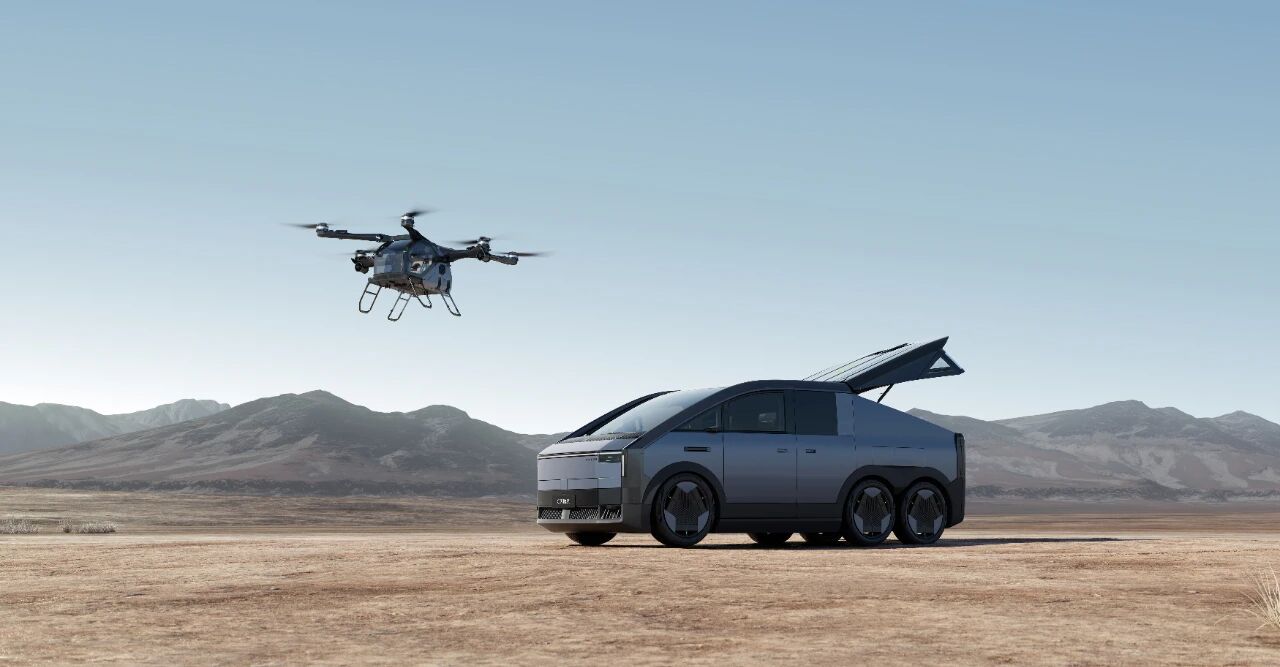
Image Credit: XPENG AeroHT
Second, deep cross-sector integration of the supply chain. The flying car industry demonstrates strong supply chain extensibility, with approximately 75% of its parts overlapping with the new energy vehicle supply chain.
Battery giants like CATL and Sunwoda are accelerating their layout in aviation-specific batteries. The former has launched its first-generation condensed matter battery, while the latter's mass-produced "Xinyunxiao 1.0" battery achieves an energy density of 320 Wh/kg. LiDAR suppliers such as RoboSense have also expanded their digital LiDAR applications from automotive-grade to aviation-grade. This supply chain reusability effectively reduces R&D costs and production cycles.
Third, concentrated investment in capital and patents. Data from Qichacha shows that as of February 2026, there are 547 domestic flying car-related enterprises, the majority of which are capital-intensive. Companies with a registered capital exceeding 50 million yuan account for 42.96%. Regarding patents, domestic filings have reached a cumulative 1,707 items, with over 70% of applications concentrated in the past five years—highlighting the intensity of technological innovation.
Fourth, progress in airworthiness certification and commercial operations. The industry has initiated the transition from testing to commercial operations.
Both the GOVY AirCab and XPENG AeroHT's "Land Aircraft Carrier" have entered the airworthiness certification phase for Type Certificates (TC) or Production Certificates (PC), with certification and delivery expected to be completed by the end of 2026. The year 2027 is poised to mark the inaugural year of low-altitude manned flight, with eVTOLs expected to achieve commercial operations first in tourism and urban shuttle scenarios.
Of course, flying cars still face challenges ranging from airworthiness standards and airspace management to operational systems. Compared to traditional automobiles, they demand higher safety standards and face more complex regulation; a lag in any single link could impact overall progress. Consequently, the current focus of industry competition has shifted beyond the technical specifications of the aircraft themselves to the comprehensive capabilities of enterprises in compliance, manufacturing, and ecosystem coordination.


