Gasgoo Munich- China's electric vertical take-off and landing (eVTOL) sector marked a milestone on February 5. AutoFlight's independently developed V5000 "SkyDragon" — the world's first 5-ton-class eVTOL — successfully completed a transition flight demonstration at the Bailian Lake low-altitude base.
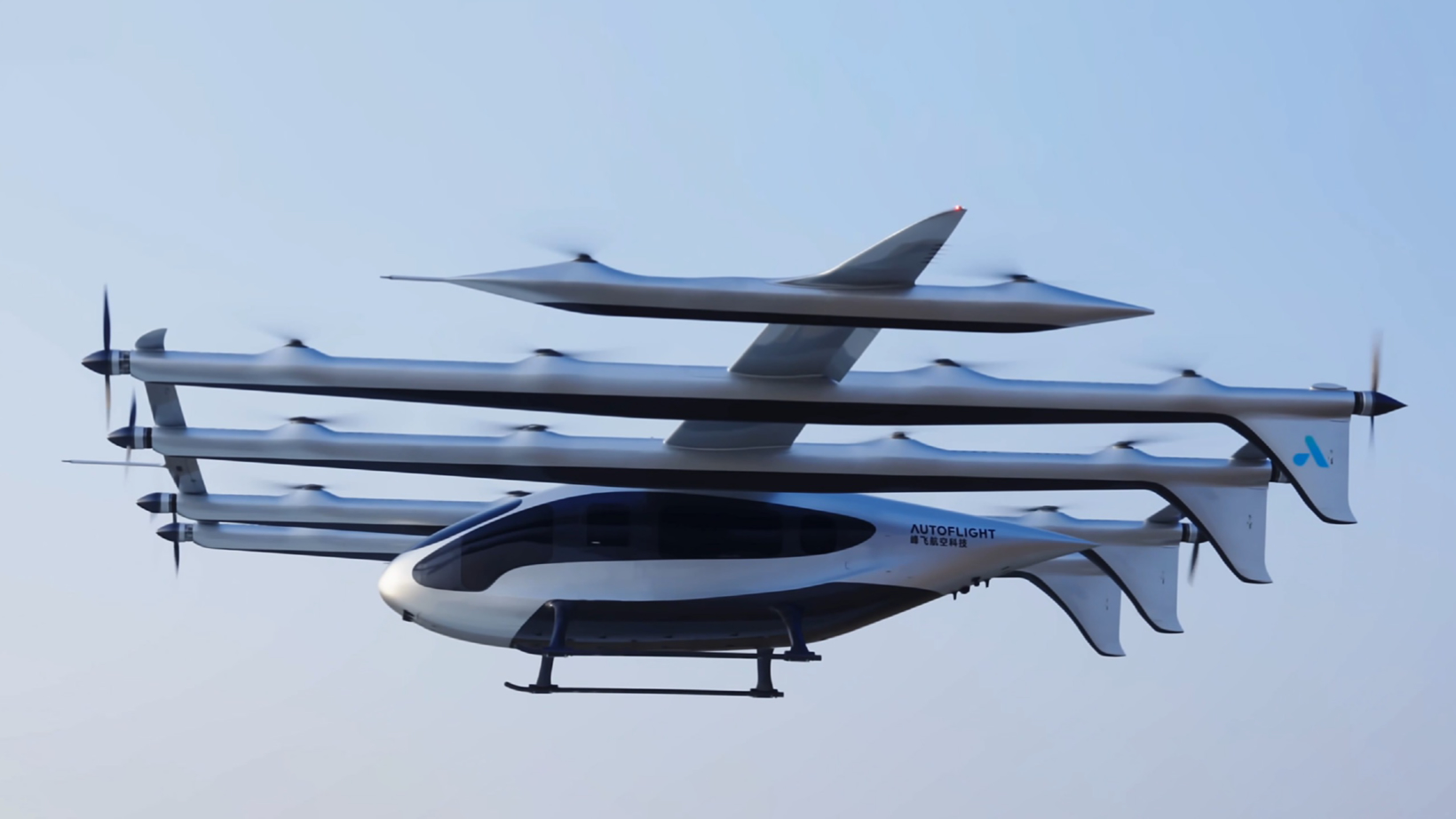
Image source: AutoFlight
The move positions China at the global forefront in scaling up and adding heft to low-altitude aircraft, promising to unlock commercial opportunities in intercity transport, heavy logistics, and other diverse scenarios.
World's First 5-Ton eVTOL, Ushering in the "Heavy-Lift" Era
As the eVTOL industry enters a critical phase of scaling and commercialization, payload capacity and range have become the core metrics for competitiveness. Currently, mainstream global eVTOLs have takeoff weights between 1.5 and 3 tons, carrying 4 to 6 passengers. AutoFlight's "SkyDragon" pushes that limit to 5 tons — a crucial step in the leap from "light" to "heavy" eVTOLs.
The aircraft offers pure electric and hybrid power options. The electric version boasts a maximum range of 250 km, while the hybrid variant extends that to 1,500 km. The passenger configuration carries 10 people, and the cargo version has ton-level capacity. This dual breakthrough in payload and range makes "1,000-kilometer intercity point-to-point direct travel" technically feasible.
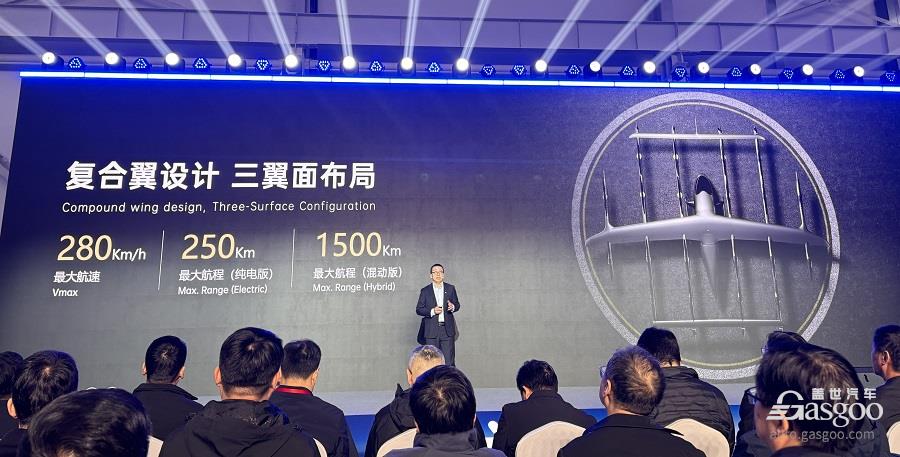
"SkyDragon" retains AutoFlight's signature composite-wing aerodynamic design, innovatively adding a tri-plane layout powered by up to 20 fifth-generation high-power lift motors. This setup not only optimizes efficiency between vertical takeoff and cruising but also achieves high-level power redundancy — ensuring safe flight or landing even with single or dual engine failure — setting a new safety benchmark for large eVTOLs.
During the demonstration, "SkyDragon" executed the full cycle: vertical takeoff, transition, fixed-wing cruise, reverse transition, and vertical landing. The flight validated the maturity of core technologies, including aerodynamic stability, high-power electric propulsion, and reliable flight control.
Expanding Application Scenarios, Driving the Scaling of the Low-Altitude Economy
The launch of a 5-ton platform means eVTOLs can carry more passengers or cargo, but more importantly, it significantly cuts "seat-kilometer/ton-kilometer" operating costs, boosting commercial economics. This will propel eVTOLs beyond Urban Air Mobility (UAM) into intercity business travel, heavy regional logistics, and large-scale emergency rescue.
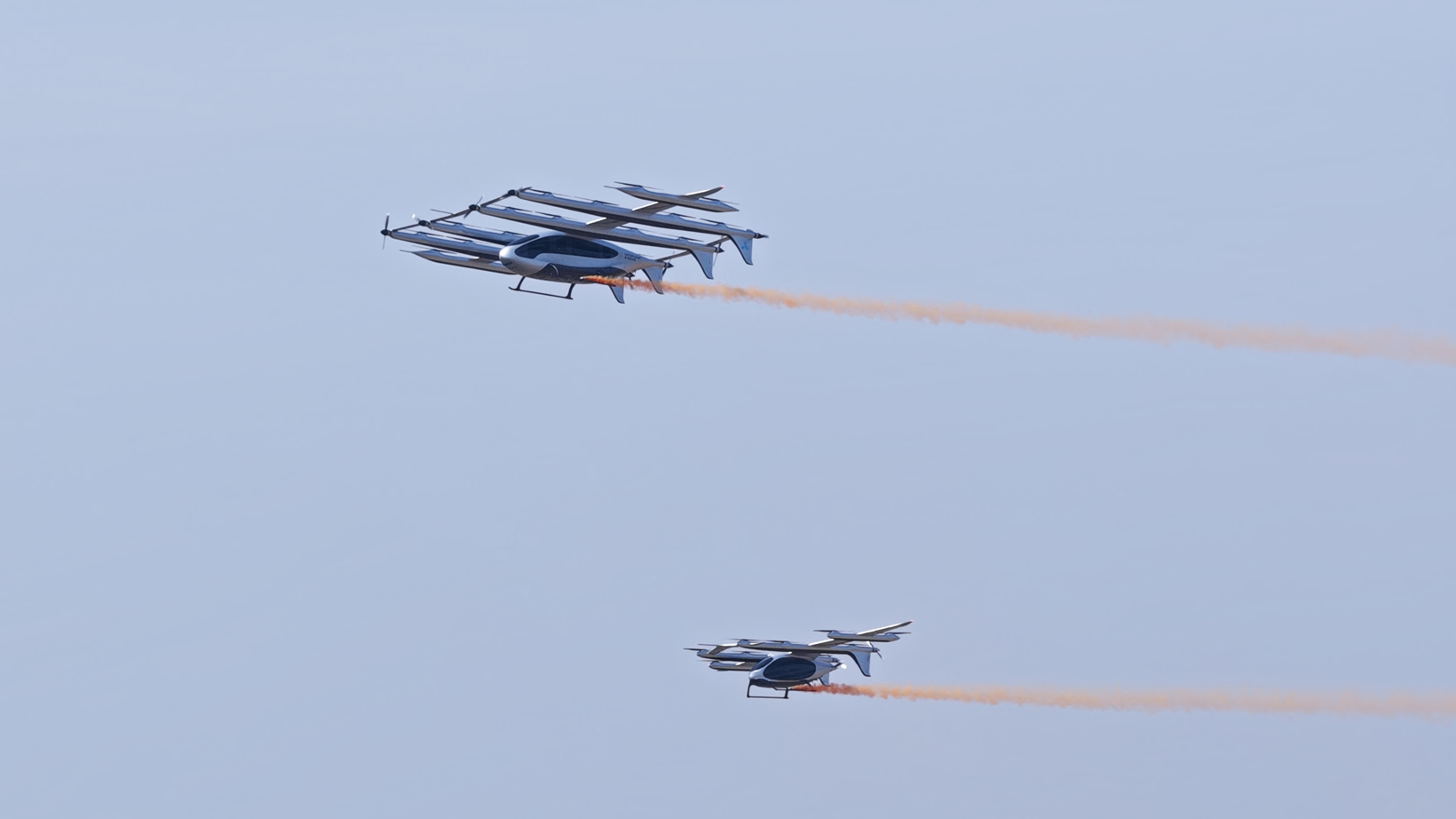
Image source: AutoFlight
AutoFlight also staged a formation flight with the V2000CG "CarryAll" unmanned cargo aircraft during the event, demonstrating its early capabilities in multi-aircraft coordinated operations and systematic low-altitude management.
From the industrial "Great White Shark" and the logistics drone "CarryAll" to the urban air mobility model "Prosperity" and now the 5-ton "SkyDragon," AutoFlight has built a product ecosystem spanning "small to large, cargo to people." The company is simultaneously advancing supporting infrastructure like zero-carbon seaports, constructing a closed-loop capability covering R&D, certification, smart manufacturing, and operational support.
In August 2024, CATL made a strategic investment in AutoFlight. The two parties will deepen cooperation on battery system R&D, energy management, and operational networks to jointly drive green, high-quality growth in the low-altitude and marine economies.
The successful transition flight of the V5000 "SkyDragon" is not just a major breakthrough for Chinese eVTOL technology; it offers a key reference for the "heavy-duty" development of global low-altitude transport. As technology iterates, certification progresses, and the operational ecosystem matures, eVTOLs are moving from concept to commercial reality, poised to reshape the landscape of mid-to-short-range transport in the near future.