



Gasgoo Munich- Wuhan Economic & Technological Development Zone (WEDZ) recently launched its 2026 investment drive with a batch signing ceremony. Eleven key projects — including DIT Industrial, Visteon-Shinry, and Bada Optical-Electrical — were signed on site, totaling 10.7 billion yuan. This move not only lays the groundwork for the zone's industrial development in the new year but also reflects how a major Chinese automotive hub is positioning itself amid global industry shifts.
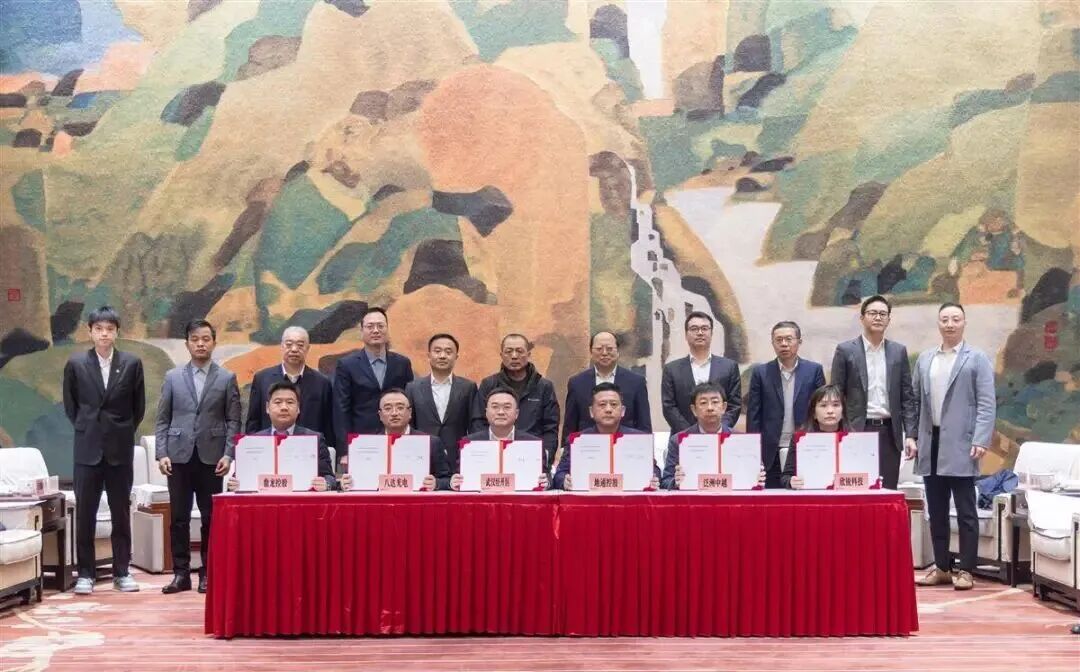
Image Source: Wuhan Release
From DIT Industrial's rapid 43-day production launch to the joint venture between Visteon and SHINRY, and the expansion moves by local players like Dinglong Holdings — a series of developments points to a core proposition: As the automotive industry undergoes a deep transformation toward electrification and intelligence, the logic of regional economic competition is undergoing a fundamental adjustment.
10 Billion Yuan in Deals: 11 Projects Build New Industry Pillars
This centralized signing marks a crucial starting point for WEDZ's 2026 industrial layout. The 11 key projects span intelligent connected and electric vehicles, auto parts, green low-carbon initiatives, new materials, and intelligent manufacturing. Balancing supply chain gaps, technological innovation, and existing asset optimization, the deals create a diversified industrial support structure.
As a backbone enterprise in China's passenger vehicle parts sector, DIT Industrial is establishing a parts production and R&D base in WEDZ. Focusing on core components for new energy vehicle (NEV) bodies and chassis, the project plans to build production plants, an R&D tower, and a testing center. It will introduce advanced production lines for metal hot forming, internal high pressure forming, and aluminum extrusion. Products will cover NEV body panels, chassis structural parts, and battery boxes, primarily supplying Geely Auto.
Adopting a "lease-first, build-later, phased production" model, the project took just 43 days from moving into the plant to delivering products — representing the fastest project launch on record for DIT Holdings. Currently, its welding process line has started production via the leased facility to secure existing orders. Land acquisition for 240 mu is set for the first quarter of 2026 to build a modern manufacturing base spanning approximately 190,000 square meters. Once fully operational, annual output is projected to reach 1.2 billion yuan, plugging the gap in WEDZ's supply chain for lightweight body and chassis modules.
Simultaneously landing in the zone, Bada Optical-Electrical's high-voltage connection system smart manufacturing base plans to acquire 100 mu of land for a comprehensive facility integrating offices, R&D, and production. Upon completion, it will have an annual capacity of 1.5 million sets of high-voltage connection systems and optoelectronic communication modules. Full production is targeted for 2030, with an estimated annual output of 2 billion yuan, further perfecting the regional supply chain for NEV high-voltage connection systems.
A highlight of the signing is the joint venture between Visteon and SHINRY, a leading domestic onboard power supplier. The two parties registered a foreign-invested company in WEDZ — Visteon-Shinry (Wuhan) Power Electronics — focusing on building an onboard power technology R&D center. By integrating their research resources, the venture will provide automotive electronics technology development services to global smart vehicle OEMs.
This move will enhance the region's ability to attract talent in the field of intelligent vehicle software and hardware, strengthen its participation in the global automotive electronics supply chain, and provide technical support for the upgrade of the local intelligent connected vehicle industry.
Local enterprise Dinglong Holdings is advancing its Second Academy and semiconductor new materials expansion project. Ren Jilin, deputy general manager of Dinglong Holdings, stated that the company was founded and developed in the development zone, or "Guigu." "This is not only an industrial highland but also an ideal environment for development," Ren said. "We will remain confident and continue to contribute to the transformation of 'China's Auto Valley' into 'World Auto Valley.'"
The Toagosei Wuhan Smart New Factory project plans to build a new production base and R&D center for automotive interior and exterior trim. Construction is slated to begin in the first half of 2026, with production starting by the end of 2027, helping to boost local auto parts capacity.
Additionally, companies like Midea Group and Kingfa are increasing their investments. Kingfa will focus on digital and smart innovation in production processes, introducing automated equipment to build a smart manufacturing project for polymer materials.
The landing of green low-carbon and advanced manufacturing projects enriches the dimensions of WEDZ's industrial layout. Guided by the "Dual Carbon" goals, the SUNGROW Hubei Operations Headquarters project focuses on zero-carbon park construction, green power supply, and energy storage. It aims to create a zero-carbon industrial cluster platform, generating output value and tax revenue while providing green energy solutions for regional enterprises and driving the green transformation of the manufacturing system.
Overall, the layout of these 11 projects demonstrates WEDZ's strategy of precise and supply chain investment. Covering front-end R&D, mid-end production, and back-end support, they form a synergistic development pattern poised to solidify the foundation for the region's industrial growth in 2026.
Deep Strategy: Industrial Transformation and Ecosystem Reconstruction Behind the Projects
This investment "strong start" is no accident; it is the result of WEDZ's long-term industrial planning. The landing of these 11 key projects carries the zone's strategic considerations: using the auto industry as a core to drive industrial transformation, perfect supply chains, and build an industrial ecosystem.
The automotive industry is the bedrock of WEDZ and a key pillar of Wuhan's industrial economy. As the core region for Hubei's auto industry, WEDZ has not rested on the laurels of traditional fuel vehicles. Instead, it has made industrial transition its core direction, pushing hard to shift the auto sector toward new energy and intelligent connectivity.
All signed projects align with this transition path. The DIT auto parts project focuses on NEV core components, the Visteon-Shinry JV targets onboard power technology, and the Bada Optical-Electrical project specializes in high-voltage connection systems and optoelectronic communication modules — each precisely matching the demands of the NEV and intelligent connected vehicle industries.
According to recent data from WEDZ, 2025 was a year of challenges, including a sharp decline in joint-venture fuel vehicle sales. Yet, the zone steadfastly stabilized growth, with its GDP showing an upward trend against the market. Total vehicle production climbed 17.2% year-on-year. Notably, NEV production surged 57.6%, with its share of total output reaching 55% — surpassing the national average for the first time and marking a structural shift from combustion to electrification. Today, one in every two cars produced in WEDZ is a new energy vehicle.
These new projects will undoubtedly consolidate this transformation, driving the regional auto industry to shift from traditional fuel vehicle leadership to a core driver of new energy and intelligent connectivity. This marks a change in development model from scale expansion to quality enhancement.
This aligns with the region's recent strategy of using auto industry transformation to drive the development of clusters in new energy, software, chips, and new materials, forming a trend of industrial linkage and upgrading.
Industrial competition has upgraded from single-company battles to supply chain and ecosystem rivalry. In recent years, WEDZ has focused on building a "Vehicle-Energy-Software-Chip-Material" ecosystem. By filling, extending, and strengthening chains, it aims to create spatially agglomerated, efficient clusters with synergistic upstream and downstream supply chains. The zone's parts-to-vehicle ratio has risen to 0.8:1, helping companies secure nearby support and "across-the-street" supply to reduce costs and boost efficiency.
WEDZ plans to implement a "Chain Chief + Chain Lord + Chain Innovation" mechanism to identify supply chain weaknesses and conduct targeted investment. The goal is to optimize a "two-hour supply chain circle" within a 50-kilometer radius, encouraging nearby sourcing and efficiency. The landing of these 11 projects is a practical application of this plan, set to further improve the regional auto parts ratio and perfect a pattern of "parallel oil and electric development, coordinated vehicle and parts growth." Covering upstream materials, core components, R&D, smart manufacturing, and green low-carbon sectors, the project layout forms a complete industrial closed loop. This reduces logistics costs and creates conditions for technological synergy, boosting the overall competitiveness of the industrial ecosystem.
The DIT project fills the gap in lightweight body and chassis modules; the Visteon-Shinry project strengthens the automotive electronics segment; Dinglong Holdings improves semiconductor material supply; and the Bada Optical-Electrical project solidifies high-voltage connection system support. These projects create complementary and synergistic effects within the supply chain, driving the formation of a closed-loop industrial ecosystem.
The rapid landing of projects and continuous corporate investment are closely tied to the region's business environment. "Visteon has invested in WEDZ multiple times," said Zhu Minhui, general manager of Visteon's Wuhan branch, in an interview with Gasgoo. "The industrial foundation here is strong, innovation resources are abundant, and the business environment is solid. It is truly a good place to put down roots."
He added that Visteon will use this project as an opportunity to actively integrate into WEDZ's broader development. The company plans to gradually build its Wuhan Technology Center into a research and service system covering both the Chinese and overseas markets, contributing to the acceleration of "China's Auto Valley" toward "World Auto Valley."
While focusing on the core automotive industry, WEDZ prioritizes diversified industrial layouts to avoid the risks of relying on a single sector. Projects like Sunshine New Energy, though outside the traditional auto sphere, synergize with the industry — for instance, zero-carbon parks providing green energy for auto production. This creates a pattern of "core industry leadership, emerging industry empowerment."
Reshaping the Landscape: New Logic of Regional Rivalry Amid Industrial Change
Under its "135" modern industrial system plan, WEDZ will prioritize the development of NEVs and intelligent connected vehicles as core industries, while cultivating leading sectors like smart homes and smart construction, and emerging industries like hydrogen energy and new materials. These signed projects further optimize the region's industrial structure and enhance its development resilience.
The 10 billion yuan signing in WEDZ is a microcosm of the reshaping of China's regional economic map. Against the backdrop of global auto industry transformation, industrial hubs like Wuhan, Shanghai, Shenzhen, and Hefei are all adjusting their competitive strategies. Regional rivalry is shifting from a comparison of traditional policies and costs to a comprehensive contest of industrial ecosystems, innovation capabilities, efficiency, and strategic depth.
Previously, regional investment often relied on tax rebates and land discounts to attract companies, creating a "Red Ocean" of competition. As factor costs rise and policies converge, this model's sustainability is declining. The focus of regional competition has now shifted to building industrial ecosystems, aiming to form differentiated competitive advantages through full-chain support.
The core of an industrial ecosystem is providing full-chain development support for enterprises, including upstream and downstream matching, R&D resources, talent reserves, and leadership from major firms. By introducing projects like DIT Industrial and Bada Optical-Electrical, WEDZ is leveraging its existing vehicle production capacity and "Vehicle-Energy-Software-Chip-Material" ecosystem. This ecological pull is more stable than single policy subsidies and has become a core competitive advantage for the region.
In the era of traditional manufacturing, regional investment focused on single-point breakthroughs with individual multi-billion-yuan projects. However, under the "New Four Modernizations" of automobiles, technical barriers have risen and the division of labor has refined. It is difficult for a single enterprise to develop independently; "winning via supply chains" has become the new logic of regional rivalry, making the precise layout of various supply chain links the key to competition.
This logic emphasizes precisely filling supply chain gaps. WEDZ introduced DIT Industrial to meet the lightweight chassis needs of OEMs like Geely, and Dinglong Holdings to improve semiconductor material supply, building a closed-loop supply chain through the "Chain Chief System." Nationally, Shanghai's ecosystem around Tesla, Hefei's layout around NIO, and Shenzhen's cluster integrating electronics and autos around BYD are all practices of "chain thinking." In the future, the core of regional competition will be the integrity and resilience of the supply chain. Regions with irreplaceable industrial closed loops will hold the advantage in the global division of labor.
In the era of the stock economy, market windows are narrowing and product iteration is accelerating. Time cost has become a key variable in regional competition; the ability to help enterprises quickly seize market opportunities directly affects a region's attractiveness to projects. The DIT project compressed its construction cycle through a flexible model, allowing the enterprise to respond rapidly to order demands. This efficiency advantage is becoming a core competitiveness for attracting high-end manufacturing investment, placing higher demands on the re-engineering of government service processes and resource integration capabilities.
The spatial dimension of regional rivalry is also expanding, no longer limited to local competition but integrating into the reconstruction of global supply chains. WEDZ's introduction of global suppliers like Visteon and Dinglong Holdings' expansion into international markets reflect the correlation between regional competitiveness and the depth of integration into the global value chain. Open cooperation has become a crucial direction for regional development.
The new logic of regional competition requires becoming both a core supply base for the domestic market and a global hub for technology R&D and exports. This demands regions possess an awareness of international rules, the ability to organize cross-border supply chains, and an open mindset to find their positioning within the global industrial division of labor.


