



"If you can't build 2 million cars a year, you won't make it!" said Professor Zhu Xichan of Tongji University, bluntly.
That line has all but become the industry's yardstick for judging how far an automaker can go.
By that measure, most Chinese players that have already crossed the bar are legacy giants.
BYD's new-energy vehicle sales reached 4.602 million in 2025, up 7.73%. SAIC Motor sold 4.507 million vehicles, a 12.32% gain; its NEV sales were 1.643 million, up 33.1%.
Geely Holding Group's 2025 sales hit 4.116 million, up 26%. Of that, NEVs accounted for 2.293 million, up 58%, taking NEV penetration to 56%. It's the first time Geely Holding's total has topped 4 million, marking five straight years of rapid growth.
Changan Automobile sold 2.913 million vehicles in 2025, up 8.54%, the highest in nine years. NEV sales broke the 1 million mark at 1.110 million, up 51.10% year on year.
Chery Group, for its part, sold 2.806 million vehicles in 2025, up 7.8%. Chery Automobile Co., Ltd. contributed 2.631 million units, an 8% increase.
By contrast, the early "new forces," which went all-in on pure electrification, are still circling around the 400,000 mark for annual sales.
Across 2025, NIO delivered 326,028 vehicles — a company record and up 46.9% year on year; XPENG delivered 429,445 vehicles, also a record, surging 126% from a year earlier; Li Auto delivered 406,000 vehicles, down 18.81%.
Set against the giants above, the 2025 tallies for NIO, XPENG and Li Auto look modest.
After years of upheaval, China's auto arena has moved past its wild-growth phase. WM Motor and HiPhi — once darlings — have faded, while newcomers like Xiaomi and Harmony Intelligent Mobility have muscled in. The contest has shifted to high-quality competition centered on profitability, intelligence and going global.
In this mix of "knockout rounds" and "upgrades," first-wave benchmarks NIO, XPENG and Li Auto are navigating the growing pains of divergent profitability and strategic pivots.
Some still doubt whether the trio can withstand intensifying competition from both incumbents and fresh entrants. Others believe their hard-won core capabilities will carry them through the cycle.
Can the leading legacy carmakers really "acquire" NIO, XPENG and Li Auto?
With 2026 underway, China's auto industry is already on the road toward 2030 — the next five-year push.
Gasgoo spoke with industry analysts about whether NIO, XPENG and Li Auto can punch through to the next five years.
Addressing the oft-repeated notion that "NIO, XPENG and Li Auto will eventually be bought by legacy automakers," one analyst was direct: "That view largely no longer holds. Early on, the logic was that the new forces were cash-constrained and unprofitable, while legacy players had capital, capacity and supply-chain clout. But today, NIO, XPENG and Li Auto have built initial self-funding capability, can adjust strategy more nimbly, and have carved out advantages in intelligent tech and user ecosystems that traditional automakers can't quickly copy."
Legacy groups do enjoy foundational strengths, the person added, but lag on the speed of electrification and intelligence — and on the finesse of user operations — where they, in fact, need to learn from NIO, XPENG and Li Auto.
"What's more likely ahead is deep collaboration — tech sharing and supply-chain coordination — rather than simple takeovers. Geely's take-private of ZEEKR shows traditional groups prefer to consolidate internal assets instead of paying up for mature external newcomers. After all, NIO, XPENG and Li Auto now have the core wherewithal to develop independently."
Indeed, on December 22, 2025, Geely Automobile Holdings said it had completed the privatization and merger of ZEEKR Intelligent Technology, making ZEEKR a wholly owned subsidiary.
The deal signals a new phase in Geely’s resource consolidation across NEVs.
Geely’s "integration" of ZEEKR isn’t an outlier — it’s the mainstream choice for legacy players going electric. From Dongfeng’s Voyah and SAIC’s IM Motors to Changan’s Avatr with Huawei and CATL, traditional automakers are tilting resources to in-house NEV brands rather than bidding for mature newcomers like NIO, XPENG and Li Auto.
Underneath that stance is a blend of cost, culture, technology and strategy — a considered judgment, not a coincidence.
The primary reason: acquisition prices versus returns are out of balance.
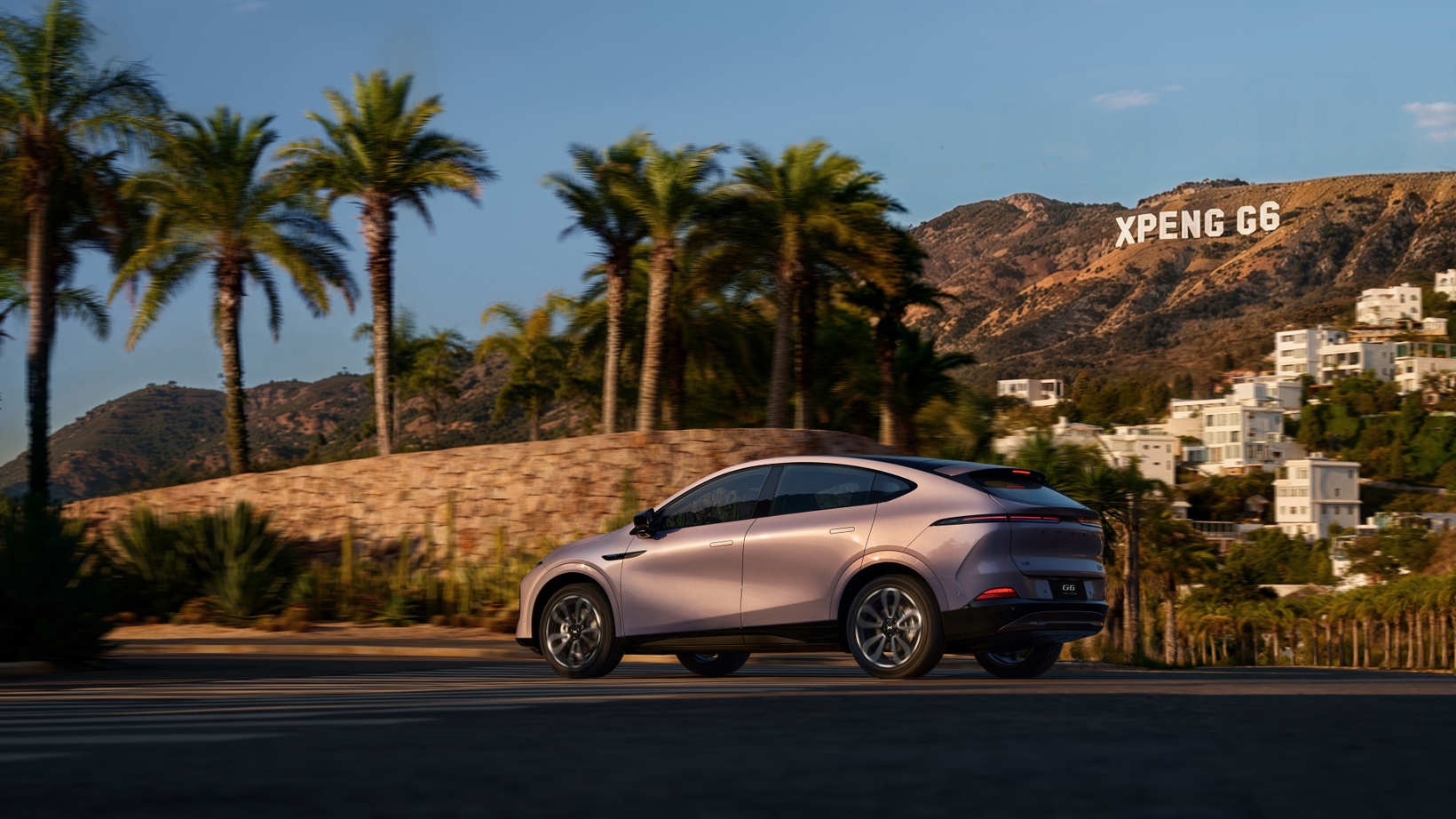
Image credit: XPENG Weibo
"After years of development, NIO, XPENG and Li Auto have moved past the early cash-crunch period and built credible profitability prospects and reserves — which pushes acquisition thresholds much higher," one analyst told Gasgoo.
NIO's Q3 2025 revenue was CNY 21.79 billion, up 16.7% year on year and 14.7% quarter on quarter — a record. Overall gross margin reached 13.9%, the highest in nearly three years, with vehicle margin at 14.7%, also a near three-year high. Cash reserves stood at CNY 36.7 billion, up by nearly 10 billion from the prior quarter, with positive operating and free cash flow.
According to Gasgoo's big data platform, NIO set a 2025 sales target of 440,000 vehicles — implying 100% growth — and aimed to achieve quarterly profitability in Q4. Its third plant is ramping on schedule to support 2025 capacity; the company continues systematic cost optimization; is co-building swap stations with CATL; and via three brands is developing a product matrix covering the 150,000–800,000 yuan price band.
Over the medium to long term, NIO plans to exceed 2 million units in 2030 sales, target a 5%–10% share of the global smart EV market, lift gross margin to 20% and net margin to 7%–8%, build a 10,000-station swap network and expand multi-brand coverage across all price points.
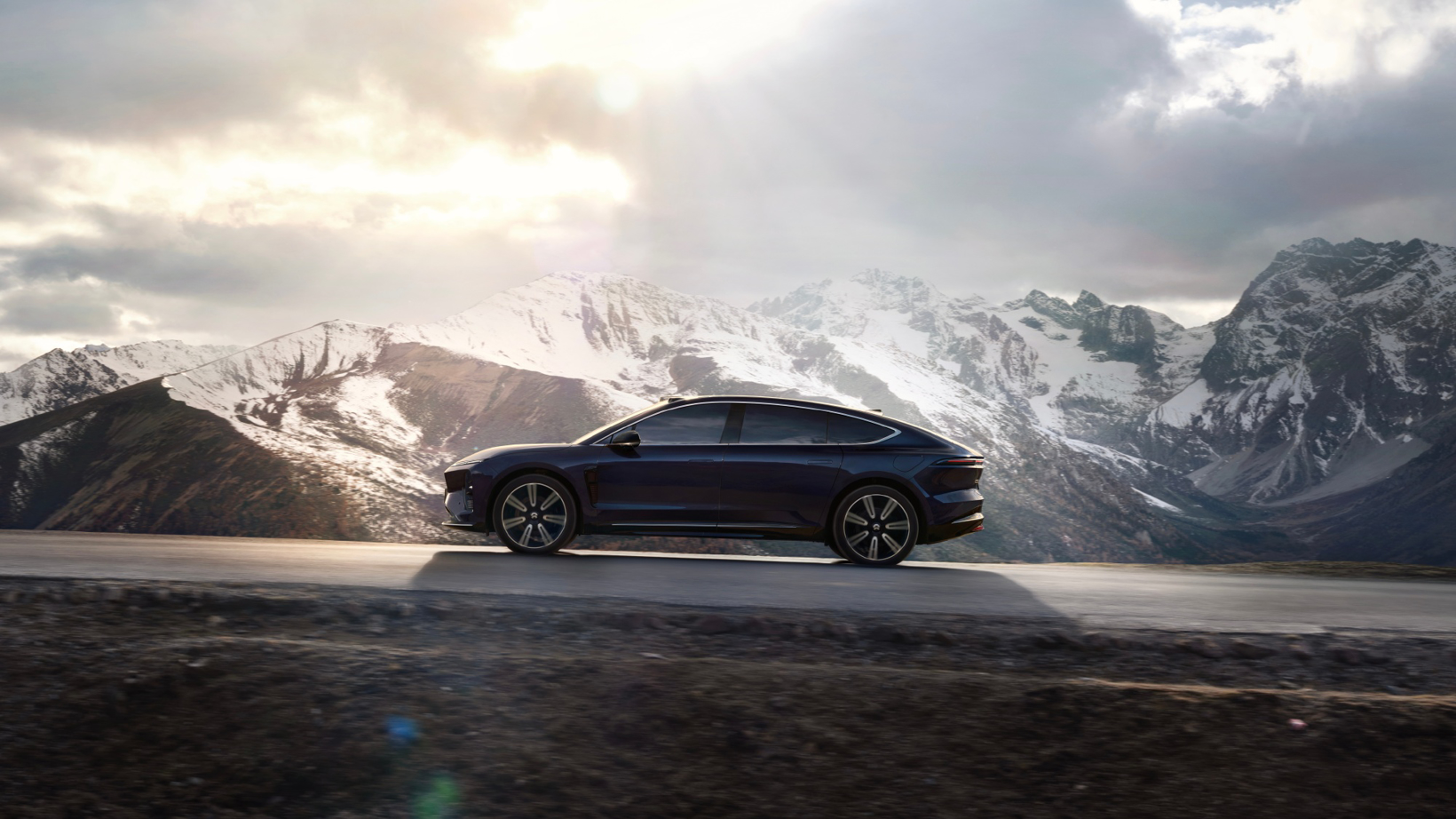
Image credit: NIO Weibo
XPENG's Q3 2025 revenue came in at 20.38 billion yuan, up 101.8% year on year and 11.5% quarter on quarter — a record high. Net loss narrowed to 380 million yuan, versus 1.81 billion a year earlier and 480 million in Q2.
Notably, XPENG's gross margin reached a record 20.1% in Q3, up 4.8 percentage points year on year — a step closer to profitability. The company had previously guided to a single-quarter profit in Q4 this year.
By end-Q3 2025, XPENG's cash, cash equivalents, restricted cash, short-term investments and time deposits totaled CNY 48.33 billion, about 760 million higher than end-June — a record cash level.
"With effective cost controls and growing revenue from technology R&D, our consolidated gross margin topped 20% for the first time in the third quarter," said Dr. Brian Gu, XPENG's Vice Chairman and Co-President.
Li Auto, despite the pains of transition, has not seen its core profitability fundamentally deteriorate.
Q3 2025 revenue was 27.4 billion yuan, down 36.2% from 42.9 billion in Q3 2024. Even so, revenue for the first three quarters reached 83.5 billion yuan — still leading among the new forces.
Net result for Q3 2025 was a loss of 624.4 million yuan, versus net profits of 2.8 billion in Q3 2024 and 1.1 billion in Q2 2025.
R&D expense was 3 billion yuan for the quarter, with full-year investment expected at 12 billion yuan, over 6 billion of which goes to AI. A voluntary recall at end-October 2025 of some 2024 Li MEGA vehicles and related costs temporarily dragged gross margin and produced a quarterly loss; excluding that impact, overall gross margin remained healthy at 20.4%.
Gasgoo’s data show Li Auto’s 2025 sales target at 640,000 units. Longer term, the company aims to be a global top-five NEV maker by 2030 and build an intelligent mobility ecosystem spanning life scenarios. Its lineup will center on three series: the L range (four range-extended SUVs), the MEGA — which now includes the MEGA Home trim — and the i series of pure EVs, forming a full portfolio of sedans, SUVs and MPVs.
For legacy carmakers, acquiring a mature company with self-funding capability would require a hefty premium — far costlier than nurturing an in-house brand.
Crucially, as the NEV market shifts from expansion to share capture, the risks rise from integration and capacity coordination after a deal. Internal consolidation, by contrast, can lean on existing supply chains, plants and R&D to keep costs in check. ZEEKR’s success reflects this: by relying on Geely’s SEA architecture and manufacturing system, ZEEKR avoided massive base-capability outlays and scaled up quickly.
Are NIO, XPENG and Li Auto "irreplaceable"?
So far, most of the above weighs the pros and cons from an acquirer’s vantage point.
But as the most speculated "targets," have NIO, XPENG and Li Auto — after a decade of bruising competition — built something the industry can’t replace?
That goes to their core competitiveness.
As the market shifts from chasing growth to a stock game, dynamically tuning strategy to the new reality has become essential for the trio to keep their edge.
Each of the three, drawing on its own DNA and read of customer pain points, has chosen a differentiated path — doubling down on strengths and shoring up weaknesses to navigate the upheaval.
NIO’s strategy centers on "narrowing the front, focusing on the core and covering more price bands." After earlier forays into energy services and smart hardware, NIO has been trimming non-core bets and concentrating resources on vehicle development, its swap network and a multi-brand rollout.
Its mid- and entry-tier sub-brands complement the high-end NIO marque across price bands — broadening reach while using scale to dilute R&D and supply-chain costs.
XPENG's iteration has focused on "filling out the lineup and syncing technologies." Seeing the appeal of range-extended EVs, XPENG moved beyond a pure-BEV bet to add range-extender models that meet more varied user needs.
That shift doesn’t abandon XPENG’s BEV strengths; rather, it builds a dual track of "BEV + range extender," allowing XNGP advanced driving features to reach a broader audience.
On the eve of the 2025 Guangzhou Auto Show, the XPENG X9 Super Range-Extended debuted: the 1602 Max is priced at 309,800 yuan and the 1602 Ultra at 329,800 yuan — marking a full swing into the dual-track strategy.
"We actually pushed range extension five times — and only the fifth worked," said He Xiaopeng.
Since its November 20, 2025 launch, the X9 Super Range-Extended has seen overwhelming demand. Orders in the first hour set a single-day record for the X9 line, with the north of China accounting for more than half; the 329,800-yuan 1602 Ultra high-spec trim made up roughly 80% of orders.
As industry watchers note, XPENG's strength is intelligent tech. Adding range extenders is about converting that tech lead into market traction.
More importantly, based on nearly a decade of R&D, XPENG has built an embodied AI system spanning chips, operating systems, foundation models and intelligent hardware. That foundation not only speeds up smart-driving iterations, but also underpins future businesses such as robotaxis and humanoid robots.
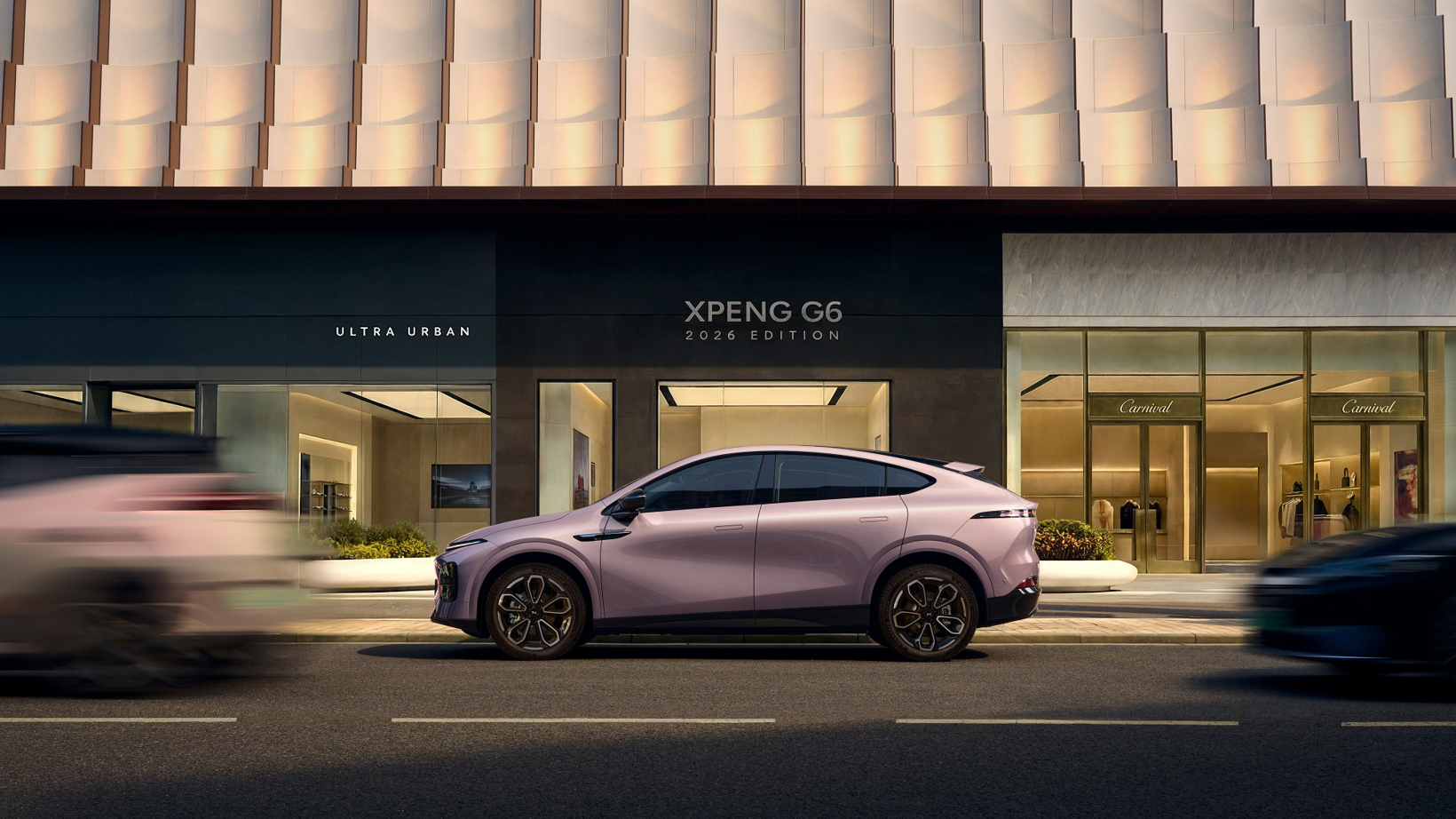
Image credit: XPENG Weibo
The advantage of full-stack in-house development is tight "data–algorithm–hardware" synergy — shortening tech cycles and sustaining a lead. Compared with suppliers’ solutions, XPENG can tune the driving experience more precisely to user needs, carving out differentiation.
NIO, meanwhile, is advancing battery-swap technology alongside in-house development of core components — creating distinctive refueling convenience and a cost edge. The capital-intensive swap network eases range anxiety and has built a formidable IP moat that peers can't quickly replicate. At the same time, deeper vertical integration, including self-developed chips, reduces supplier dependence and tightens cost control. Amid a price war, the differentiated swap experience helps support pricing power — and NIO’s overseas traction suggests the model can travel.
Li Auto is evolving from a "family-first" positioning to deeper bets on AI. The early focus on family use cases helped it break out fast, but also created product-concentration risk. Now, while consolidating its family-user base, Li Auto is pushing deeper into AI.

Image credit: Li Auto Weibo
Today, Li Auto is zeroing in on breakthroughs in pure EVs and on building an AI ecosystem — rapidly closing gaps. By weaving AI into core scenarios like in-cabin interaction and assisted driving, and refining algorithms with continuous user-data feedback, the company is following a "fix the shortboard, fortify the strengths" playbook — defending its base while gaining competitiveness in both pure electric and intelligence.
On whether the trio’s moats are irreplaceable, one analyst said: "NIO’s battery-swap tech, after years of iteration, now combines network scale with patent barriers. It takes not just heavy capital but long-term operational experience — it can’t be copied quickly. XPENG’s full-stack smart-driving system isn’t just tech; it’s a closed loop of 'data–algorithm–hardware' that takes time to build — hard for rivals to catch fast. Li Auto’s core edge lies in precise user insight. From its family focus to its deeper work in AI, it starts from real pain points. That soft power is the hardest to mimic."
Still, the person cautioned, "Irreplaceable doesn’t mean absolute. Tech cycles move fast. The three must keep investing in R&D and strengthening their moats, or today’s advantages will erode."
How do the "new forces" stay standing for another five years?
With WM Motor and HiPhi falling by the wayside, Xiaomi and Harmony Intelligent Mobility accelerating their push, and giants like BYD cementing share, the remaining "new forces" must break through three binds to last another five years: domestic price compression, rapid tech turnover and supply-chain volatility.
For leaders like NIO, XPENG and Li Auto, the answer lies in two moves: "outward" with globalization and "inward" with tighter control of the value chain. The former opens new growth; the latter hardens resilience. Together, they are the core supports to ride the cycle.
On "rooting inward," as the market shifts to stock competition with deeper price wars and homogeneity, industry voices laid out how the trio can forge sharper differentiation.
"Over the next five years, to avoid being squeezed out, NIO, XPENG and Li Auto need to sharpen differentiation in product definition, market positioning and user ecosystems. On product, move from 'meeting common needs' to 'deepening specific scenarios': Li Auto can extend family use cases into AI-enabled mobile living spaces; XPENG can focus on personalized mobility and smart interactions for younger users; NIO can reinforce high-end customization and its energy ecosystem. On positioning, avoid price wars by leaning on tech and service premiums — for example, XPENG anchoring a high-end label on smart driving, NIO enhancing the uniqueness of its energy services. On user ecosystems, upgrade from 'community operations' to 'value co-creation,' involving users deeply in product R&D and service design to form a symbiotic 'user–company' ecosystem. That kind of deep bond is a barrier harder for newcomers like Leapmotor and Xiaomi — or ecosystem players in Huawei’s orbit — to crack quickly."
On "breaking outward," with domestic NEV penetration above 50% and the price war now in a thin-margin grind, globalization has become a must-answer for every automaker.
NIO, XPENG and Li Auto have long recognized that going global isn’t just about selling products. They’re moving into ecosystem-building — globalizing technology, service and supply chains to create a second growth curve. Early results are already visible, giving them a head start for competition five years out.
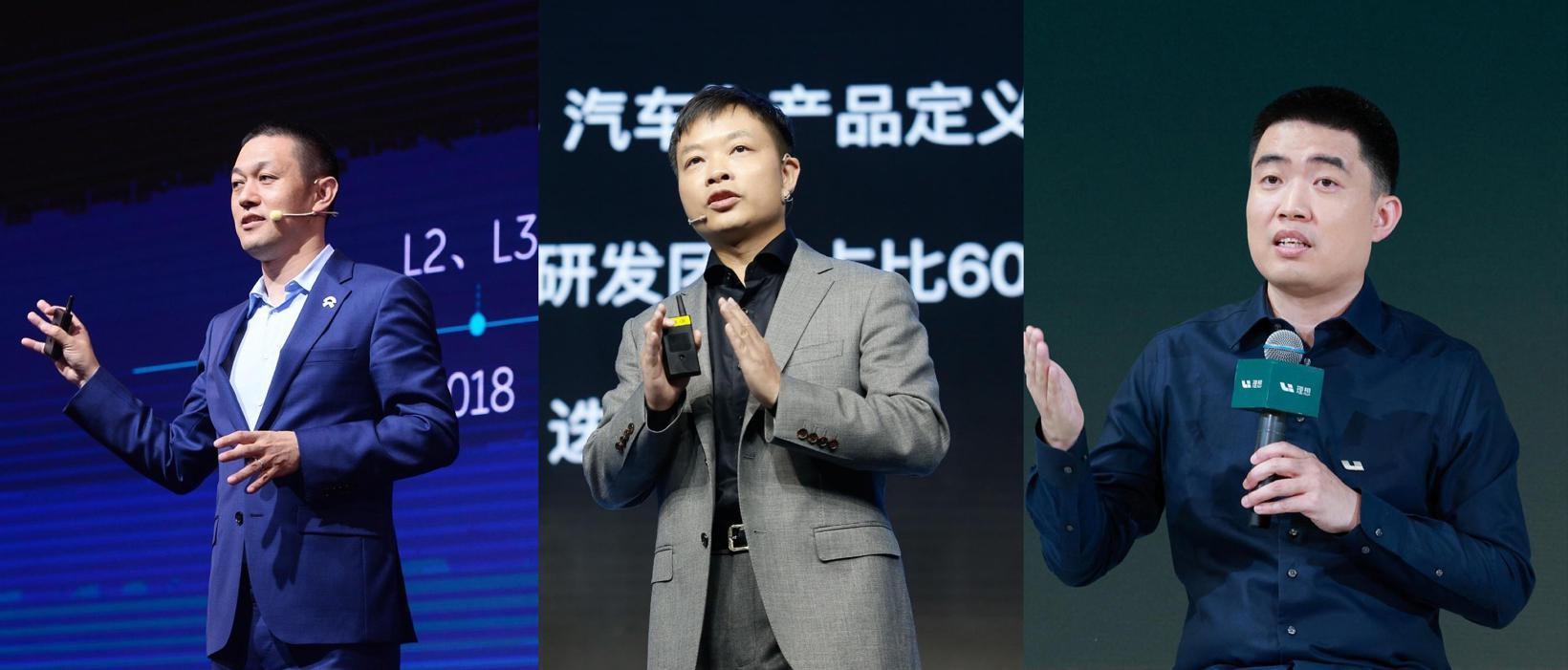
Image credit: NIO, XPENG and Li Auto Weibo; compiled by Gasgoo
For NIO, 2025 brought a pivotal reset of its overseas strategy.
William Li was candid in his postmortem. Early on in Europe, NIO copied its China playbook — direct sales and self-built service networks. In hindsight, he said, the company underestimated the cost of building local infrastructure and service capabilities. As more Chinese firms localize in mature markets like Europe and the U.S., this has become a shared lesson — and NIO’s trial-and-error now serves as a useful guide for the industry.
Since last year, NIO has been shifting toward local partners and leveraging their established networks for localization. The company has now set a clear overseas framework: stay the strategic course, but expand prudently with high-quality partners.
That move — from "asset-heavy" to "asset-light" partnerships — is a more pragmatic, sustainable path to internationalization. It cuts risk, speeds execution and marries NIO’s core strengths in product and technology with partners' local know-how, smoothing the way abroad.
After XPENG's 2026 Global Product Launch, He Xiaopeng told reporters that whether smart cars, robotaxis, robots or low-altitude flying vehicles, the company’s core product lines will go global. From 2026 to 2030, XPENG will push hard on globalization.
XPENG has already entered 60 countries and regions in 2025 and plans to reach more in 2026. "We will deepen local R&D and manufacturing, and bring more global models to both left-hand and right-hand drive markets," He said.
XPENG delivered 45,008 vehicles in overseas markets in 2025, up 96%, underscoring faster globalization. By end-December 2025, its sales and service network covered 60 countries and regions. The company also kicked off localized production in Malaysia — its third such base worldwide — taking its global strategy into a deeper execution phase.
Since October 2025, Li Auto has accelerated its overseas rollout, swiftly building channels and launching products in four key international markets. It has set up R&D centers in Germany and the U.S. to sharpen global adaptability; on the channel side, it’s laying out standardized overseas sales and service; and on product planning, models launching in 2026 were designed from the outset for global regulatory compliance.
"These markets mark an important step in our overseas journey. Beyond entering new geographies, we’re partnering locally to deliver a consistent user experience," said Wu Zuomin, head of Li Auto’s international business.
Li Auto is pursuing a multi-pronged go-global strategy — combining authorized dealers, general distributors and wholly owned subsidiaries — to flex with local conditions.
Channel build-out continues. In December 2025, the Baku retail center in Azerbaijan opened; that same month, retail centers in Almaty and the capital Astana opened in Kazakhstan — a rapid build across key nodes that shows strong execution.
Conclusion:
Competition will be fiercer in five years, but with solid survival fundamentals, hard-to-copy moats and forward-leaning plans, NIO, XPENG and Li Auto have every reason to remain on the field.
From the push for profitability and strategy resets to in-house tech and user ecosystems, from globalization to tighter grip on the value chain — each step signals a commitment to the long game.
Challenges will persist — from rapid tech turnover and new rivals to global uncertainties — demanding constant adjustment. But if they stick to long-termism and keep strengthening core advantages, NIO, XPENG and Li Auto won't just "still be here." They can claim meaningful ground in the global NEV race — as central pillars of China's smart EV industry.


