



Gasgoo Munich- With Level 3 and higher autonomous driving entering a critical commercialization phase, the demand for data transmission in vehicles is pushing traditional technologies to their physical limits. Liu Wu, a deputy to the National People's Congress and senior engineer at the National Key Laboratory of Optical Communication Technology and Network under China Information Communication Technologies Group Corporation (CICT), has urged the acceleration of in-vehicle optical communication industrialization at this year's Two Sessions. His proposal: bring "fiber to the car" to cure the "bandwidth anxiety" plaguing intelligent connected vehicles, while driving the deep integration of two trillion-yuan industries—photonics and automotive.
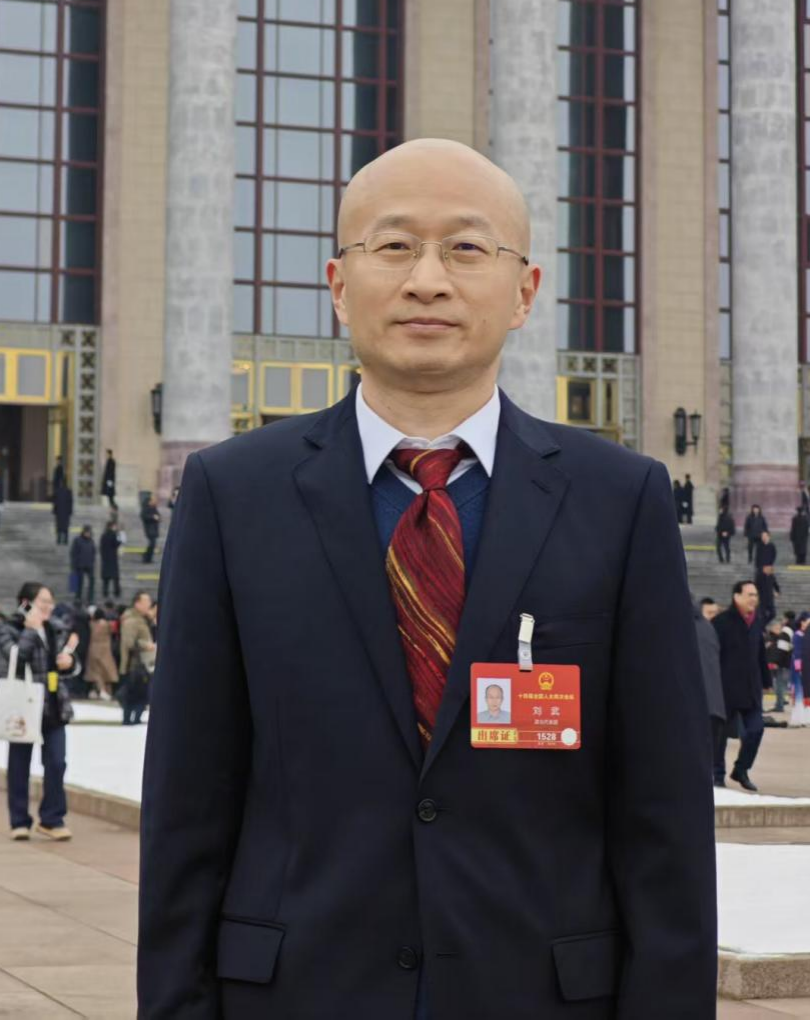
Image source: China Information Communication Technologies Group
Traditional copper wiring has hit a wall, Liu argues. Struggling with bandwidth constraints, weight issues, electromagnetic compatibility, and long-term reliability, it simply cannot support the massive real-time data interaction required by future intelligent connected vehicles. "Fiber-to-the-car," by contrast, offers high bandwidth, low latency, lightweight construction, and natural immunity to electromagnetic interference. These advantages make it a strategic technology poised to revolutionize the next generation of automotive electrical and electronic (E/E) architectures.
Industry analysis suggests that per-vehicle data bandwidth requirements for Level 3 and higher autonomous vehicles are evolving from the current 10 to 50 Gbps to over 100 Gbps in the future. At the same time, safety has become a core concern for new energy vehicles, with battery thermal runaway warning systems representing a major industry pain point. Fiber sensing offers a solution here, providing precise, distributed monitoring that far outstrips traditional electrical methods. Market research forecasts that China's market for in-vehicle high-speed communication and sensing will reach the 100 billion yuan level by 2030.
Yet despite the promising outlook, the industrialization of in-vehicle optical communication faces bottlenecks in core component costs and automotive-grade compliance. Optical chips and automotive-grade optical modules that meet the industry's harsh environmental requirements command high prices—several times that of current copper solutions. Furthermore, photonics companies and automakers operate with different technical focuses and development workflows, leaving a gap in effective joint development and verification platforms. Without unified national or industry standards—or an authoritative testing and certification system—mass adoption remains constrained.
To help this strategic emerging industry seize the initiative, Liu recommends strengthening top-level design and coordination by formulating a national development strategy and roadmap for in-vehicle optical communication. He suggests establishing a special project on "New Networks and Sensing for Intelligent Connected Vehicles" within the national key R&D program. The focus would be on weak links such as automotive-grade high-reliability optical chips, low-cost optical modules, high-density fiber connectors, and fiber sensing systems—with the goal of lowering comprehensive system costs to a competitive level within three to five years. Additionally, he calls for the creation of a national platform for industrial innovation and demonstration, launching pilot installations for vehicle fleets in typical scenarios like data backbone networks, battery safety monitoring, and zone controller interconnects.


