



Gasgoo Munich- As the curtain rises on the 2026 "Two Sessions," intelligent driving has, unsurprisingly, become the focal point of heated debate among deputies and committee members. Yet, unlike the excitement of previous years surrounding technological breakthroughs and L3 commercialization, the tone this year is distinctly more sober and prudent.
Lei Jun, a deputy to the National People's Congress and founder of Xiaomi Corp., issued a specific warning to the public: current assisted driving features in smart cars remain heavily reliant on human drivers and are far from reaching L4 standards—meaning motorists must not let their guard down.
This reminder comes at a critical juncture. As marketing slogans promising "liberated hands" clash with legal mandates to "take over at any time," Lei Jun’s appeal strikes at the most sensitive safety nerve of the smart vehicle era.
Correcting Market Misperceptions
There is a systematic misunderstanding among the public regarding the capabilities of intelligent driving. This stems largely from the vast chasm between automakers' marketing language and legal technical definitions.
Regarding technical levels, the Ministry of Industry and Information Technology's 2022 "Driving Automation Classification" divides automation into six levels, L0 through L5. The vast majority of mass-market vehicles currently equipped with "smart driving" features fall under the L2 category—combined driving assistance. The system can control the steering wheel and pedals simultaneously, but the driver must monitor the road conditions at all times and be ready to intervene.
In essence, the system is merely an "assistant" designed to relieve the burden on your hands and feet; the "brain" and the "responsibility" remain firmly with the driver. Even at L3 and above, autonomy is conditional and achievable only under specific circumstances, with the technology still largely in testing or pilot phases.
In December 2025, the Ministry of Industry and Information Technology granted conditional approval for the first batch of L3 autonomous vehicle models, explicitly restricting road trials to designated zones. Large-scale commercialization has not yet arrived.
It is clear, then, that the vehicles currently on the road featuring "smart driving" are essentially L2 (combined driving assistance). Consequently, the driver remains the "primary person responsible."
Yet, in the overwhelming tide of product promotion, vague terms like "autonomous driving," "smart pilot," and "hands-off driving" are repeatedly emphasized. The crucial warning to "be ready to take over at any time," meanwhile, has faded into ignored background noise.
Shortcomings Remain to Be Addressed
Lei Jun’s appeal points not only to individual user bias but also to the systemic institutional gaps facing the entire smart vehicle industry as it enters the inaugural year of L3 commercialization.
2026 is widely regarded within the industry as the true starting year for L3 commercialization. Late last year, the Ministry formally announced the first batch of entry permits for L3 conditional autonomous driving models. However, while L3 makes headway, some automakers have signaled an intention to "skip L3"—a move that reflects deep divisions in the industry's strategic roadmap.
The core distinction between L3 and L4 lies in the subject of liability. L3 is "machine drives, human as backup"; the driver can take their hands off the wheel but must intervene when the system requests it. L4 is "machine in full control, human as passenger."
It is precisely this gray area regarding liability attribution in the L3 state that has led many automakers to take a detour.
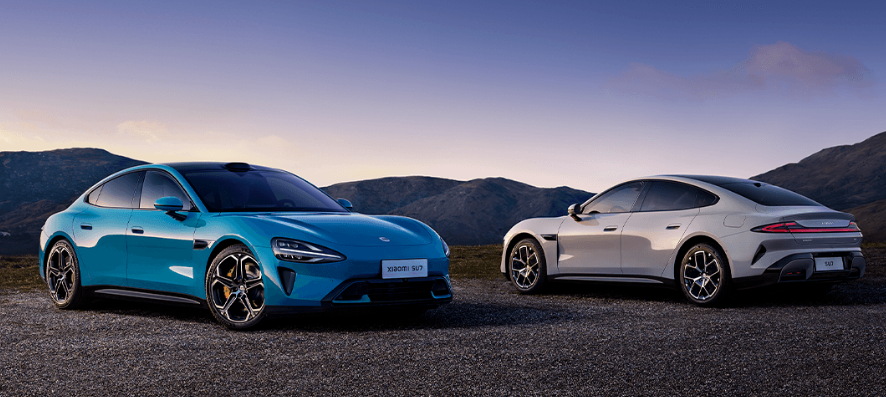
Image Source: Xiaomi Auto
Lei Jun proposed a three-point plan. First, accelerate the development of technical standards for vehicle intelligence and optimize motor vehicle driving assessment items. Led by authorities and industry bodies, automakers should coordinate to push forward technical standards for intelligent connected vehicles, systematically extending driving assessments to cover intelligent domains. The weight of intelligent connected vehicle content in driving tests should be steadily increased, clarifying usage boundaries, operational procedures, and safety requirements for intelligent systems. This will guide drivers to firmly establish a safety philosophy of "human-machine collaboration." Additionally, modern traffic safety education bases should be innovatively built during training, and new-generation driving simulation equipment integrating scenario cognition, complex road simulation, and hazard response should be developed and promoted. By optimizing the driving test and training system, driver capabilities can be elevated to match the development of vehicle intelligence.
Second, refine a multi-party collaborative governance system to jointly build a traffic safety framework for the smart vehicle era. Traffic regulations for the smart vehicle era should be proactively deployed; it is suggested that "hands-off, eyes-off" driving under L2 assisted driving be classified as a traffic violation, and safety guidelines for L3 and L4 intelligent driving be clarified as soon as possible. The primary responsibility of automakers must be defined, strengthening the implementation of duties regarding correct marketing guidance of assisted driving features and user training to jointly cultivate a safety management ecosystem for intelligent connected vehicles. Marketing self-discipline should be strengthened, assuming the obligation to actively inform consumers of usage boundaries. Automakers should be encouraged to conduct advanced driving training actively, enhancing user awareness of vehicle operating limits and improving drivers' ability to handle critical situations in extreme scenarios. At the same time, the intelligent adaptation of road infrastructure should be advanced to improve safety and efficiency.
Third, strengthen the dissemination of safety education and cultivate a new era of civilized driving. A comprehensive, multi-dimensional safety education system should be built, strengthening coordination between government, enterprises, society, and media. Online, precise science communication should be used to dispel misconceptions; offline, immersive and targeted guidance should be promoted to help the public establish a rational understanding of intelligent driving systems. At the same time, the core concept of civilized driving should be deeply rooted, warning education on traffic violations strengthened, and safety risk information sharing mechanisms improved. We should vigorously advocate safety driving norms for the "human-machine co-driving" era, promoting intelligent traffic safety standards to be deeply understood and practiced, accelerating the formation of a new civilized driving style that meets the requirements of the smart vehicle era.
Technological evolution may advance by leaps and bounds, but the maturation of the industrial ecosystem and the cultivation of public perception can never be achieved overnight.
In this marathon toward the endgame of autonomous driving, whether it is the marketing rhetoric of automakers or the mindset of users, everything must return to a simple truth: assisted driving can alleviate your fatigue, but it can never replace your responsibility for life.


