



Shanghai (Gasgoo)- On January 13, SVOLT unveiled the world's largest plug-in hybrid battery pack by capacity — the "Fortress 2.0" — at its sixth Battery Day, rated at 80 kWh and setting a new industry mark. Mass production is planned for March 2026, with the first batch tailored to D-segment PHEV models; multiple automakers have already awarded sourcing nominations.
Driven by tighter carbon rules and rising consumer expectations, this battery — slated to enter mass production in March 2026 — is both SVOLT's differentiated swing at the market and a sign that PHEV batteries are moving into a new arena of competition: higher capacity, stronger safety, and faster charging.
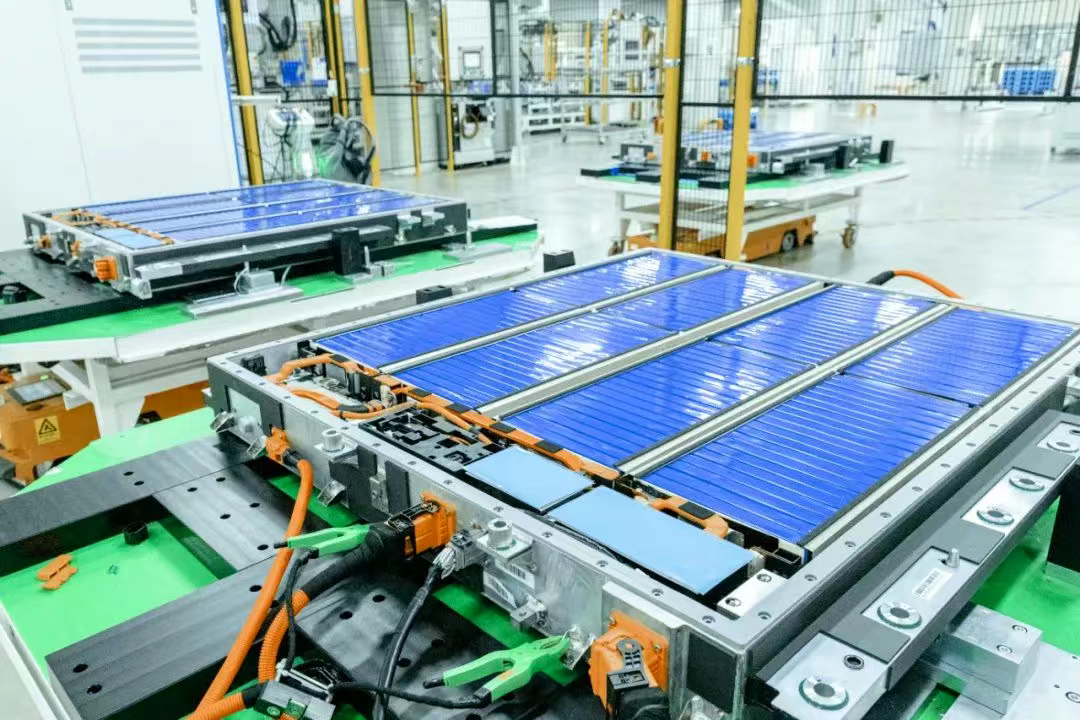
Image: SVOLT (not "Fortress 2.0" )
"Fortress 2.0": breakthroughs on multiple fronts and what they're worth
According to the company, "Fortress 2.0" adopts a highly integrated, system-level design, lifting volumetric utilization and system energy density by 6%. Its cells use ultra-fast-charge graphite technology, support 6C peak fast charging, and can recharge from 10% to 80% in 10 minutes — enabling D-segment PHEV sedans to top 400 km of pure-electric range. The pack delivers a cycle life of more than 5,000 cycles and is compatible with 800 V high-voltage platforms to sustain high-power output for the vehicle.
On safety, SVOLT is applying nano thermal-ceramic insulation to a mass-produced pack for the first time, maintaining insulating performance for 30 minutes at 1,000°C. The casing uses pultruded composite materials, giving the pack a torsional stiffness of 30,000 Nm/deg; bottom impact resistance is rated at 1,000 J. Waterproof sealing is four times the industry norm, with no leakage after 200 hours of immersion; side-impact crush resistance is more than twice China's national standard.
Chairman Yang Hongxin said the rapid rise of large five- and six-seat family vehicles and off-road use is creating hard demand for "high capacity, high safety, and fast charging." By using module-less CTP (cell-to-pack) technology to cut structural parts and a modular architecture that flexibly spans 60-80 kWh, "Fortress 2.0" helps automakers shorten development cycles and lower platform costs.
That same day, the company also introduced its "Fengxing Short Blade 2.0" battery series, which continues to use ionic oscillation charging technology and boosts fast-charging speed by 20% at flat cost. The first generation supports 6C fast charging, reaching 80% in 10 minutes; the second generation targets 12C, 80% in 8 minutes, and is now in the pre-research phase.
"High-capacity PHEVs" are set to become the fastest-growing niche
As more countries tighten carbon regulations and demand grows for long-distance commuting and outdoor camping, "high-capacity PHEVs" are poised to be the fastest-growing segment from 2026 to 2028. By moving first with an 80 kWh pack in mass production, SVOLT stands to cement its role in the premium hybrid supply chain and spur broader, scaled adoption of high-power cells, thermal-management materials, and 800 V components across the value chain.
The arrival of "Fortress 2.0" lands squarely at the inflection point of PHEV growth and shifting user needs. In recent years, PHEVs — offering no range anxiety and lower running costs — have become the fastest-growing slice of the new-energy vehicle market.
In 2024, plug-in hybrid sales accounted for 40% of China's NEV market, up 10.4 percentage points year on year. Exports jumped 190% from a year earlier, far outpacing the growth of pure EVs. Meanwhile, the rising popularity of large five- and six-seat family cars and off-road use is turning "high capacity, high safety, fast charging" into non-negotiables — pushing PHEV batteries to iterate toward higher capacity and higher power.
Against that backdrop, SVOLT's move to mass-produce an 80 kWh pack could deliver first-mover gains in the premium hybrid market and strengthen its industry standing. According to the latest data from South Korea's SNE Research, from January to August 2025 SVOLT's overseas power-battery installations reached 5.4 GWh, up 593.4% year on year — the fastest growth among major global cell makers — and it broke into the top ten by overseas installations.
The PHEV battery field has become a multi-player contest. CATL and BYD remain out front, while CALB and REPT Battero are also rolling out high-power, high-capacity products. With "Fortress 2.0," SVOLT is building a technical moat — and, through deep ties with Stellantis, MINI and Geely, combining technology and customer access for a double advantage.
Looking ahead, as more automakers launch high-capacity PHEVs, the pace of technology iteration and cost control will decide the winners. SVOLT's head start could lift its share in the fastest-growing niche and help push the PHEV market into a higher-quality growth phase.


