By 2026, "anti-involution" has evolved from a mere corporate survival tactic into a definitive policy directive for Chinese industry.
For a battery sector long mired in price wars and razor-thin margins, a profound, policy-driven shift is underway.
As measures like export tax rebate adjustments take effect, signals of a turnaround are emerging across the supply chain. This top-down "anti-involution" campaign is forcing the industry to abandon low-price competition and pivot toward a new phase of high-quality development centered on technological innovation and value creation.
Fighting "Involution": A Policy "Combo Punch"
By 2026, a tightly coordinated set of "policy punches" aimed at curbing involution was already quietly in motion.
The Ministry of Finance and the State Taxation Administration previously announced that the value-added tax (VAT) export rebate for battery products would be cut from 9% to 6% between April 1 and December 31, 2026. Starting January 1, 2027, that rebate will be eliminated entirely.
Data from the General Administration of Customs shows that in 2025, exports of the "new trio"—electric vehicles, solar products, and lithium batteries—totaled nearly 1.3 trillion yuan. That's a 3.5-fold increase from 2020. Specifically, exports of these "new trio" items and wind power turbines surged by 27.1% and 48.7%, respectively.
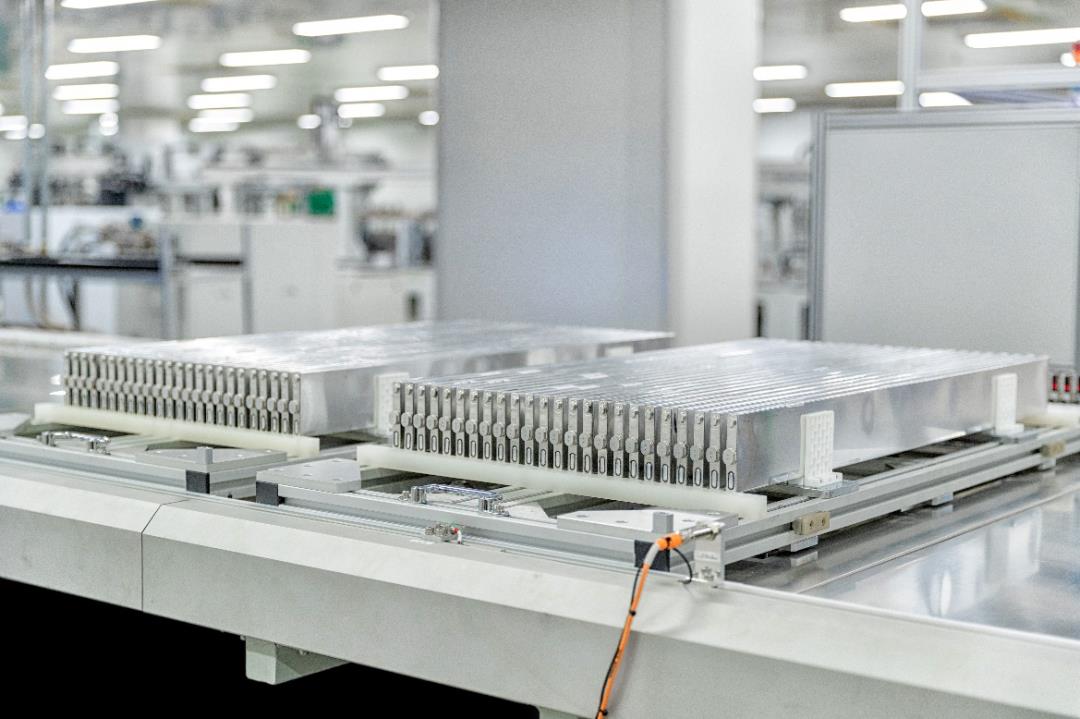
Image Source: FinDreams Battery
The intent behind this phased reduction—and eventual cancellation—is clear: to cut indirect public subsidies for low-price exports and force companies to shift their competitive focus from a "price war" to a "value war."
Addressing the rebate policy at a State Council press briefing, Li Xianzhong, director-general of the Ministry of Finance's Department of General Affairs, said the recent adjustments for solar and battery products are part of a broader plan tailored to China's green transition and the current stage of industrial development.
Li noted that China's economy has entered a new phase of accelerated green, low-carbon, and high-quality growth. The rebate adjustments will promote efficient resource use, cut pollution and carbon emissions, and guide industrial upgrading. Crucially, they aim to comprehensively rectify "involution-style" competition and drive higher-quality economic development.
In fact, as early as January 7, four key bodies—the Ministry of Industry and Information Technology (MIIT), the National Development and Reform Commission (NDRC), the State Administration for Market Regulation (SAMR), and the National Energy Administration (NEA)—jointly held a symposium on the power and energy storage battery sectors. It was the first clarion call to restore order to the industry.
The meeting targeted the pain points of "involution"—low-price dumping, blind capacity expansion, and severe product homogenization. It proposed comprehensive governance using market-oriented and legal tools, including capacity regulation, standard-setting, quality supervision, price enforcement, anti-monopoly measures, intellectual property protection, and the promotion of technological progress.
These back-to-back policies create a dual drive: "regulating order" and "weaning off subsidies." They mark a fundamental shift in how the government manages strategic emerging industries—moving away from a blind pursuit of scale and market share expansion, and toward a focus on supply chain resilience, technological autonomy, and pricing power in the global arena.
For years, export rebates—an internationally accepted practice—effectively boosted the competitiveness of Chinese manufacturing. Yet in highly mature sectors like batteries, full rebates have, to some extent, distorted market competition.
"In the past, export rebates acted as a catalyst for involution," one industry insider noted. "Chinese companies, fighting for overseas market share, would often pass that 9% rebate directly to foreign buyers." This created a distorted cycle: Chinese taxpayers subsidized production, Chinese firms consumed resources and labor, but overseas consumers enjoyed the low-price dividends. This "subsidy-exporting" involution not only depressed industry-wide profits and eroded the capacity for R&D but also trapped Chinese manufacturing in the middle and low end of the value chain.
Canceling the rebate is, in essence, the state proactively severing this cycle—a mandatory "strategic weaning." It sends an unequivocal signal to the industry: future overseas competition can no longer rely on state tax breaks as a bargaining chip. Companies must generate profits based on genuine product performance, technological barriers, brand value, and service capabilities.
Consequently, companies are being forced to rethink their globalization strategies, shifting from "trading price for volume" to "pricing based on quality." This shift offers the hope of retaining some of that previously surrendered profit within the domestic supply chain—funds that can be funneled back into reinvestment and technological iteration, gradually reclaiming initiative within the global value chain.
In fact, China's policy shift is unfolding against the broader backdrop of intensifying global competition in green industries and evolving trade policies.
In an interview with Gasgoo, Cao Guangping, a partner at Chēfū Consulting, framed the policy shift within a grander context. He argued that this isn't just a singular trade policy, but a holistic strategic adjustment encompassing trade, technology, resources, and security under the new international landscape. It is also an active response to the restructuring of the global lithium battery map and the rising tide of competitive barriers.
The Supply Chain's "Stress Response"
The clarity of the policy window has triggered a sharp "stress response" across every link of the battery supply chain, igniting a feverish "rush to export."
Under the new rules, exports cleared before April 1, 2026, still enjoy the 9% rebate, which then drops to 6% for the rest of the year. For battery manufacturers, whose net margins are generally compressed to single digits—or lower—that 3-percentage-point difference is far from trivial.
As one industry insider put it: "In an environment of extreme involution in new energy, a 3% profit difference is enough to decide a company's fate."

Image Source: CATL
Driven by this "profit imperative," battery makers have converged on the same strategic choice: adjusting production and logistics plans to pull overseas orders—originally slated for the second quarter of 2026 or later—forward into the first quarter to clear customs.
The result is an anomaly: the first quarter, traditionally an off-season, is seeing booming production and sales. Battery factory lines are running at full capacity, production schedules are "bursting," and logistics ports are bustling. This policy-driven, non-seasonal explosion of demand has completely upended the market's previous supply and demand forecasts.
Facing the same policy landscape, companies across different tiers and with different strategies are feeling the pressure—and making choices—in distinct ways:
Top-tier players, armed with stronger customer stickiness, brand premiums, and cost controls, have more room to negotiate with overseas clients to share the burden of rising costs. They are also more likely to view this adjustment as an opportunity to consolidate the market and increase industry concentration.
Cao argues that the original rebate policy objectively created disparities in export profits among battery companies, driven by differences in export volumes. Fundamentally, however, this reflected imbalances in product quality, technology levels, and customer bases.
Halving the rebate halves the advantage for top-tier battery makers, offering a breather for second-tier players, though the overall competitive landscape remains unchanged. Second-tier firms may see greater opportunities in overseas markets, but with lower profit margins. The broader trend of involution persists, even if its intensity and methods have shifted. Companies that seize the moment may find new growth, while others could lose ground. Some firms, squeezed by rising raw material costs and halved rebates, risk running out of cash if they lose customers. Conversely, those that can capture clients lost during price adjustments might open new markets and secure a larger share of customer resources.
The policy window has also spawned arbitrage opportunities for traders and speculators. Some have stockpiled battery products or raw materials in advance, hoping to profit from impending supply tightness—a move that has exacerbated market volatility to some degree.
Objectively, the "rush to export" is an inevitable short-term growing pain of this policy transition. It acts as a stress test, exposing the industry's hidden fragilities beneath years of rapid growth: a reliance on policy dividends, razor-thin margins, and a passive stance toward cost fluctuations. It also foreshadows a new reality: once subsidies vanish entirely, companies must build far more agile and resilient supply chains and cost management capabilities.
Industry Dawn: Emerging Through Profitability
Despite short-term policy disruptions and market volatility, the performance of China's battery supply chain throughout 2025 and early 2026 reveals strong underlying resilience and a structurally positive trend. The recovery in earnings is no longer driven by a simple rise in volume and prices, but by new momentum rooted in technological breakthroughs, structural optimization, and business model innovation.
In January 2026, more than 50 listed companies in the lithium battery chain released their 2025 earnings forecasts, painting a picture of prosperity marked by "surging net profits" and a "cyclical recovery." The value of this report card is evident on several levels:
Following a period of deep adjustment, the pressure of overcapacity in sectors like lithium iron phosphate (LFP), electrolytes, and anode materials has eased. Some backward capacity has been cleared, product prices have rationalized, and gross margins for leading companies have begun to rebound.
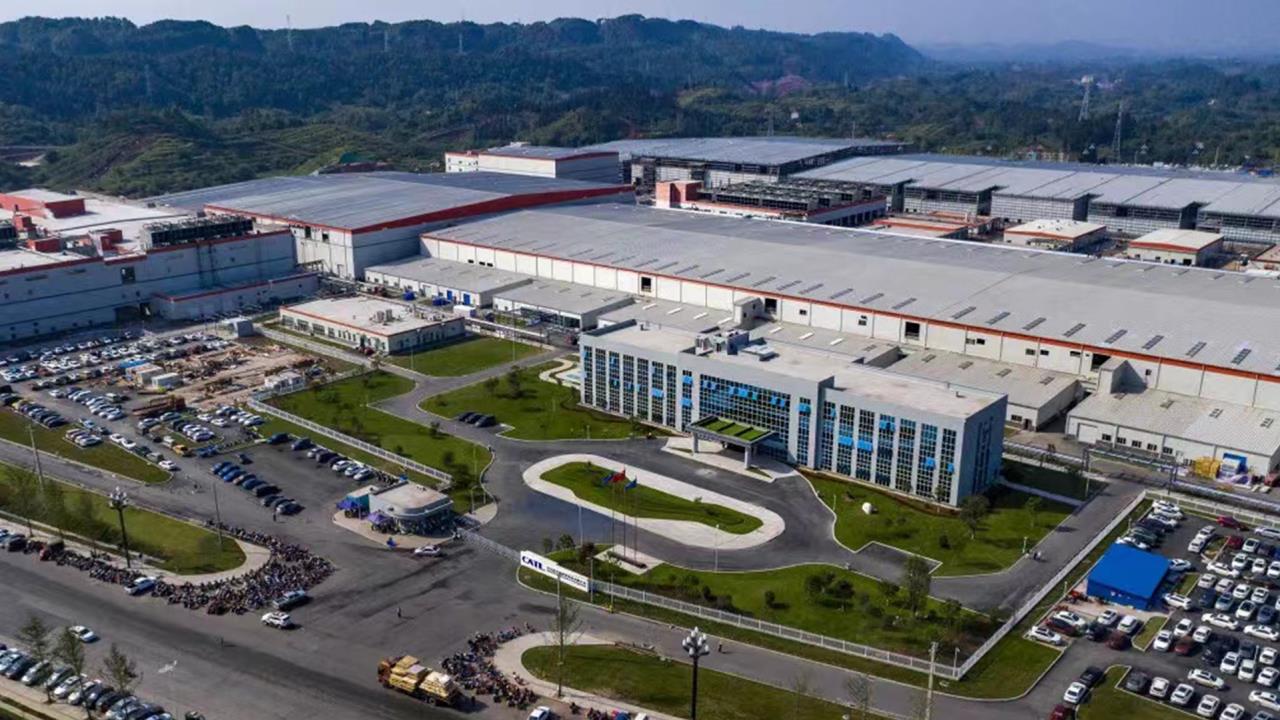
Image Source: CATL
As the global energy transition accelerates, the energy storage market is exploding. Orders for storage systems from numerous battery makers are "concentratedly releasing," significantly boosting their revenue share and effectively smoothing out the cyclical volatility of the power battery business. Since storage margins are generally higher than those for power batteries, the sector has become a key engine driving the overall profit recovery.
In high-end power battery segments—such as high-nickel ternary, Qilin batteries, and Shenxing supercharging batteries—companies with technological leadership have secured significant pricing power. Automakers' relentless pursuit of long range, fast charging, and safety has driven steady gains in market share and profitability for these premium products.
Notably, behind this improving performance lies a profound structural shift in the logic of industry competition.
Technology is iterating at breakneck speed. The development and industrialization of next-generation technologies—such as all-solid-state batteries, sodium-ion batteries, lithium manganese iron phosphate (LMFP), and condensed-state batteries—are accelerating significantly. Companies are ramping up R&D spending, aiming to build new competitive moats through technological leadership rather than getting bogged down in price wars over existing tech.
Global expansion strategies are also upgrading. A simple export of battery products is shifting toward a model of "technology export plus localized production." Leaders like CATL, BYD, and Gotion High-Tech are building production bases in Europe, Southeast Asia, and North America, deeply binding themselves to global clients through technology licensing and joint ventures. This approach not only helps dodge trade barriers but also elevates their position in the value chain and increases profit retention.
The circular economy is also on the rise. The battery recycling and regeneration industry has transformed from an "environmental burden" into a "resource gold mine." As prices for metals like lithium carbonate fluctuate, the economics of recycling have become increasingly attractive. Companies with complete recycling networks and technological capabilities are building a "production-use-recycle-reproduce" closed loop. This not only strengthens the security of raw material supplies but also opens up new revenue streams.
The positive changes emerging in the industry are the result of a combined force: proactive policy "anti-involution" and the market's inherent drive for "upgrading." The "high quality, high price" market pattern promoted by the MIIT aligns with the direction in which companies are spontaneously seeking technological breakthroughs and business model innovation amidst fierce competition.
By establishing new rules of the game—such as canceling rebates, issuing capacity warnings, and enforcing quality supervision—the policy has raised the barrier against low-level repetitive competition. Objectively, this creates a more favorable market environment for truly innovative, high-quality enterprises.
As the industry hopes, a virtuous cycle of "securing profits, increasing R&D, upgrading products, and securing higher profits" is gradually taking shape among leading companies. If this cycle spreads across the industry, it could propel the entire sector out of the "involution" trap and onto a new track of high-quality development driven by sustained innovation.
Conclusion:
Canceling the export rebate is merely the beginning of the battery industry's "coming of age." The road ahead remains fraught with challenges, but the direction of the transition is clear, and the roadmap for high-quality development is becoming increasingly distinct.
First, innovation will be the core driver. The future competition will be a battle of patents, standards, and platforms. Companies must sustain investment in basic research and cutting-edge technology to establish leading advantages across the board—from material systems and system integration to manufacturing processes and recycling technologies. Second, lean operations must span the entire value chain. From mining and materials to manufacturing and recycling, companies need to use digitalization and intelligence to achieve lean management and cost optimization across the chain, tapping into internal efficiency potential to offset rising external costs. Finally, companies are transforming from product suppliers into energy solution providers. Leaders are no longer just selling cells or packs; they are delivering comprehensive energy solutions that encompass storage systems, smart microgrids, battery swapping services, and battery banks, thereby creating higher added value.