The new energy vehicle industry kicked off 2026 with a spark. On February 5, Changan Automobile and CATL unveiled their global sodium-ion strategy in Yakeshi, marking the debut of the world's first mass-produced passenger car equipped with CATL's "Naxin (Sodium New)" battery.
The model has completed winter calibration, meeting user demands for range, low-temperature performance, safety, and discharge rates. It is expected to hit the market mid-year. Beyond this, Changan's brands—including AVATR, DEEPAL, NEVO, and UNI—will all feature Naxin batteries in the future. This signals the shift from the lab to mass production, officially starting the countdown to commercial deployment.
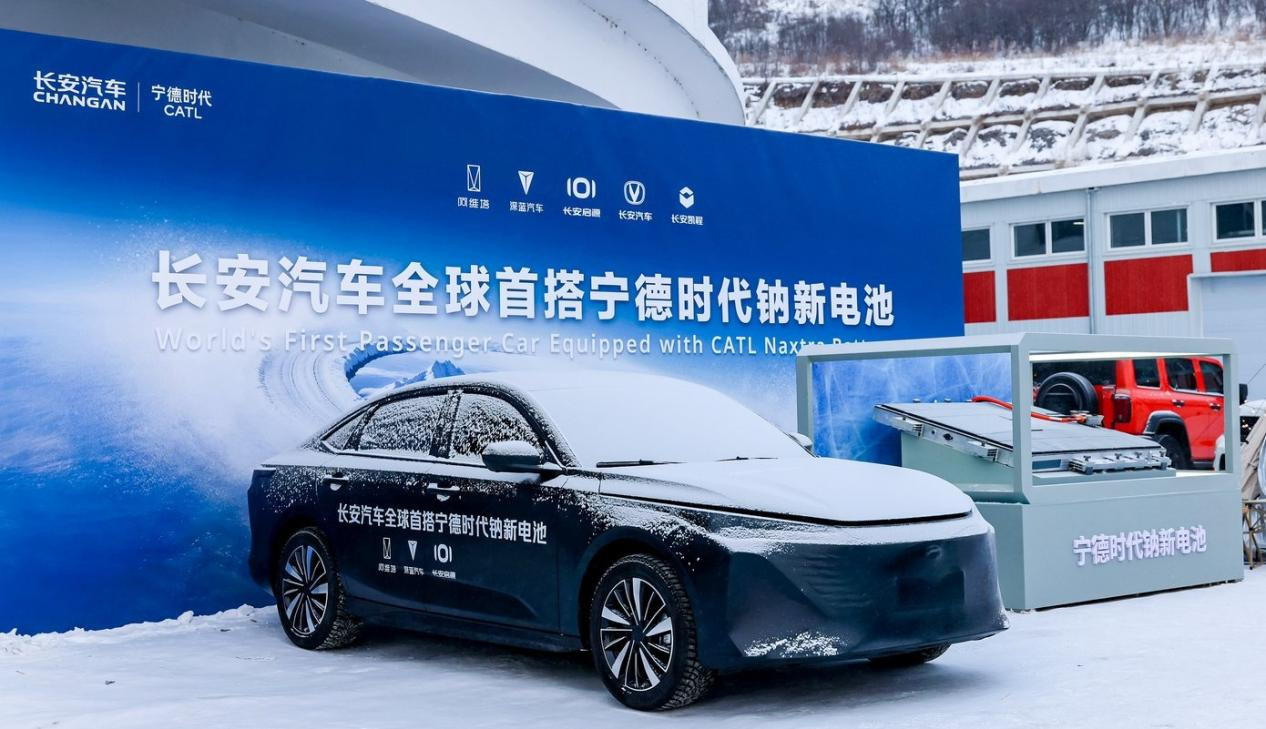
Image Source: CATL
The Forces Driving the Acceleration
Long viewed as a "backup" or supplement to lithium-ion, sodium-ion batteries faced hurdles due to lithium's cost and maturity. But since the second half of 2025, shifts in the market and technology have created a decisive tipping point for adoption.
The primary driver is the uncertainty of the "lithium cycle," which is tipping the cost balance.
Industry data shows lithium carbonate futures prices climbed throughout 2025, breaking key thresholds and driving up costs for cathodes and electrolytes. "The phone rings the moment I get to work—lithium prices are up again, and suddenly everyone is asking about sodium materials," one industry insider remarked. This volatility amplifies the cost advantage of sodium alternatives.
A report by Guotai Haitong Securities notes that sodium-ion cathodes can use cheap sodium carbonate, and current collectors can switch from copper to aluminum foil. Once industrialized, material costs could run 30% to 40% lower than lithium batteries. With lithium costs soaring, sodium's competitiveness has shifted from a "potential advantage" to a "practical choice"—the direct economic reason automakers and battery makers are rushing in.
Second, breakthroughs in core technology and a maturing supply chain have cleared the final barriers to scaling. Ultimately, adoption hinges on whether performance meets the auto industry's rigorous demands.
CATL's Naxin battery delivers a top-tier performance profile. According to Chief Technology Officer Gao Huan, the cell boasts an energy density of 175Wh/kg—the highest for mass production today—paired with third-generation CTP technology to achieve a pure electric range of over 400 kilometers. Crucially, it retains over 90% capacity at -40°C and can still discharge at -50°C, effectively solving the pain point of EV performance in extreme cold. It also passed extreme abuse tests—including crushing, drilling, and sawing—without smoking, catching fire, or exploding, marking a leap from "passive defense" to "intrinsic safety."
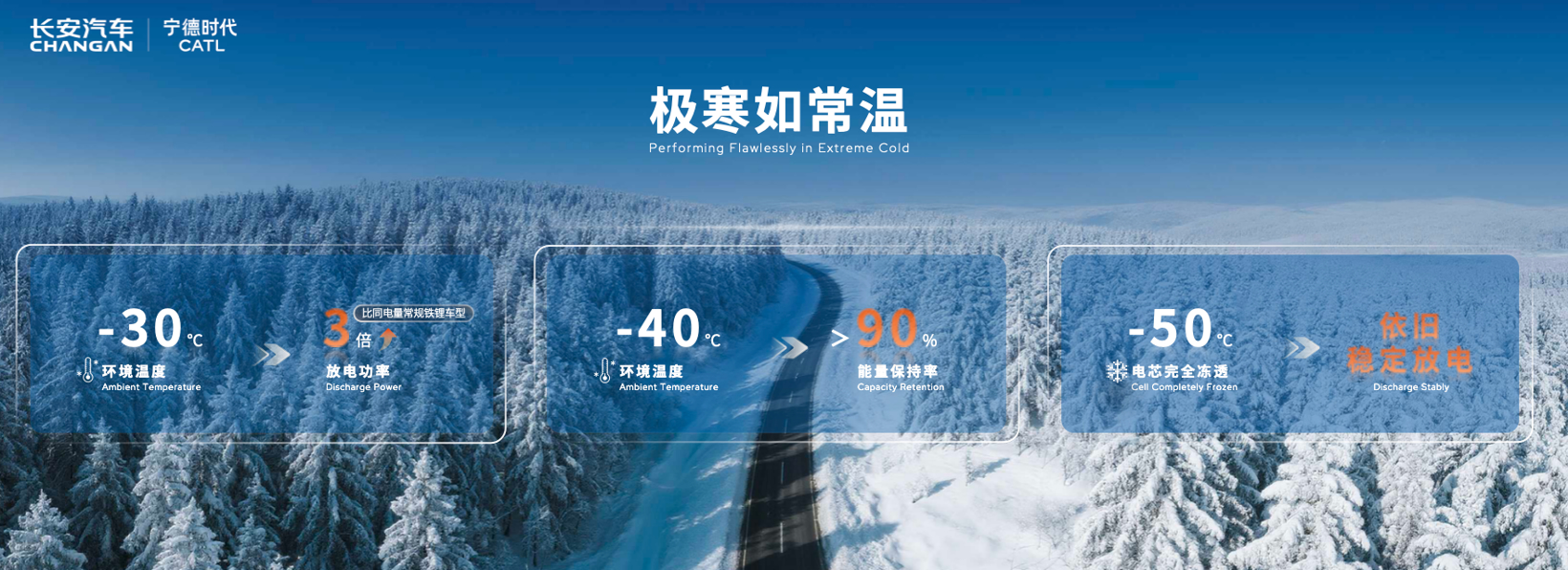
Image Source: CATL
These breakthroughs are the result of a decade of grinding. CATL began independent R&D in 2016, deploying over 300 researchers—including more than 20 PhDs. By 2025, the company had invested nearly 10 billion yuan, produced nearly 300,000 test cells, and conducted over 30,000 material-level analyses. This led to key innovations in multi-element fast ion de-intercalation, composite anti-freeze electrolytes, and high-safety electrolytes.
As Changan's sole partner, CATL effectively hit the accelerator on this "sodium revolution" with that decade-long, 10-billion-yuan investment and a team of hundreds.
Even more critical is the scaling of core material production, which provides the "ammunition" for the surge.
On January 17, 2026, Zhongna Energy launched the world's first 10,000-ton sodium iron sulfate cathode production base in Meishan, Sichuan. This marks the leap from pilot-scale to mass production for the most critical cathode material. Since cathodes account for nearly 40% of costs, scaling their production directly unlocks cost reductions across the entire supply chain.
Meanwhile, material firms like Ronbay, Meilion New Materials, and Taihe Technology have announced capacity builds or upgrades. Startpoint Institute (SPIR) predicts that installed cathode capacity will top 120,000 tons in 2026, with utilization rates rising significantly—offering downstream battery makers and automakers a stable supply outlook.
Policy and standards are paving the way for regulation. In March 2025, China led the publication of the first international standard for sodium-ion batteries, IEC 62933-5-4, setting global rules for safety design and testing. Over the past three years, government agencies have rolled out supportive policies, shifting from broad guidance to specific technical and industrialization pushes. This dual drive of policy and standards has injected confidence into large-scale commercialization.
Driven by the resonance of cost, technology, supply chain, and policy, the industry has moved from the "0 to 1" phase into "1 to N" scaling. The Changan-CATL partnership acts as a starting gun, signaling the official beginning of the race to put sodium batteries on the road.
A Differentiated Competitive Path
With unique technical traits, sodium batteries hold disruptive potential in specific segments.
In passenger vehicles, sodium will first dominate the mid-to-short range and cold-climate markets. Changan's debut model clearly targets the 400-kilometer range bracket.
"As the supply chain matures, pure electric range could upgrade to 500 or even 600 kilometers, while extended-range models could hit 300 to 400 kilometers," Gao noted. "That covers over 50% of market demand." That is sufficient for daily commuting and city driving.
More importantly, its unmatched cold-weather performance unlocks demand in frigid regions like Heilongjiang, Jilin, and Inner Mongolia, as well as high-altitude areas like the Qinghai-Tibet Plateau. It solves the chronic pain points of range anxiety and "winter shutdowns" for users there. Additionally, its high safety profile aligns with family buyers' focus on protection.
Energy storage will be the "main battlefield" for sodium, working in a new "collaborative mode" with lithium. Storage systems are highly sensitive to cost, safety, cycle life, and charge/discharge rates. Sodium's cost edge, intrinsic safety, and superior rate performance make it ideal for grid-scale storage, commercial and industrial use, and data center backup power.
Hithium's "Li-Na Synergy AIDC" solution, launched in December 2025, is a prime example. It uses sodium batteries to smooth millisecond-level grid fluctuations, while lithium handles long-term energy storage. This combo boosts performance while cutting costs by over 20% compared to traditional setups.
Demonstration projects using sodium or lithium-sodium hybrids are already running in Guangxi and Yunnan, proving their technical and economic viability. Industry forecasts peg the global energy storage market for sodium batteries at 580 GWh by 2030—a massive opportunity.
In light mobility and specialty vehicles, sodium's value proposition is strong. Two-wheelers, low-speed EVs, forklifts, and logistics vehicles don't need high energy density but demand low cost, safety, and long life—making them a natural fit. CATL has already supplied a 24V sodium start-stop battery for heavy trucks, successfully entering the commercial niche.
From a macro perspective, sodium's rise is key to national energy security. China's proven lithium reserves account for only about 5% of the global total, with roughly 80% of lithium ore imports creating a reliance on foreign sources. Sodium, however, is 1,200 times more abundant than lithium, widely distributed, and extractable from seawater. As the world's largest producer and consumer of sodium salts, China is self-sufficient, eliminating import dependency.
Developing sodium batteries creates a "second supply chain" for China's EV and storage industries—one free from lithium constraints—effectively providing a "double insurance" for resource security.
From "Substitution Battle" to "Twin-Star Symbiosis"
As sodium-ion industrialization accelerates, one question looms: what will the competitive relationship look like between sodium and lithium?
Analysis suggests the "replacement theory" is outdated. A consensus is forming around "complementary symbiosis and collaborative development"—a "sodium-lithium twin-star" dynamic.
Technologically, the two will coexist, each playing to its strengths. Lithium batteries—particularly LFP and ternary types—have built deep barriers in energy density and cycle life over a decade. They will continue to dominate high-end pure EVs, long-range plug-in hybrids, and premium consumer electronics where range and density are paramount.
Sodium batteries, leveraging advantages in cost, safety, cold tolerance, and rate performance, will secure mid-to-short-range passenger vehicles, storage, light mobility, and start-stop applications. Their value is unique, not a "downgrade substitute" for lithium. Their core edge—extreme cold resistance and safety—builds differentiated competitiveness in frigid, high-altitude, or safety-critical environments.
As CATL puts it: "Sodium isn't a flat replacement; it's another definitive route." The two form a gradient in technical specs, meeting diverse, refined market needs.
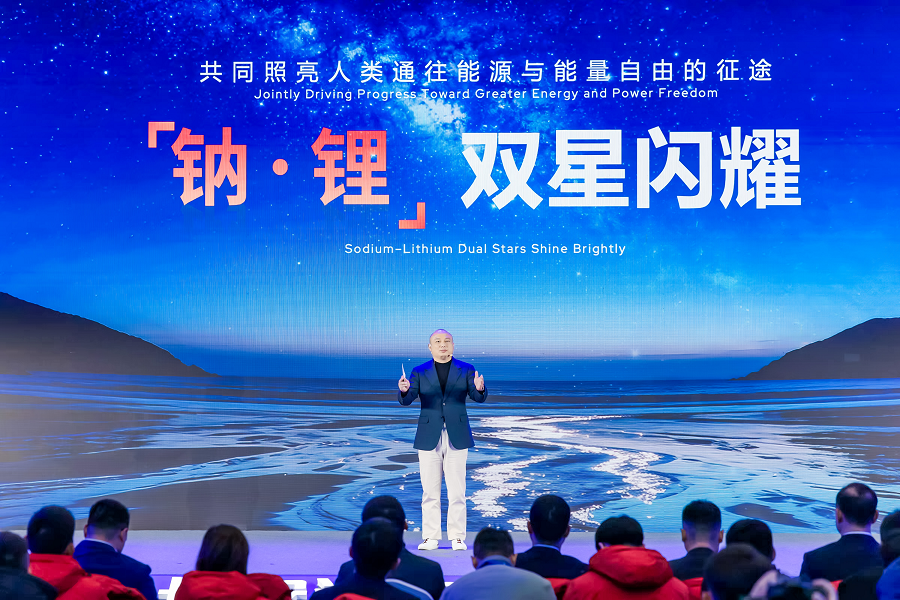
Image Source: CATL
In market competition, the focus is shifting from "replacement battles" to "ecological co-opetition." Leaders like CATL are already pursuing a "sodium-lithium parallel" strategy. While its Qilin and Shenxing lithium batteries consolidate leadership in the premium and fast-charging sectors, its decade-long, nearly 10-billion-yuan bet on sodium has yielded mass products first. This dual-line approach allows the company to flexibly allocate capacity and tech resources to offer full-scenario solutions.
For automakers, future platforms may offer both lithium and sodium versions, matching the best battery system to the vehicle's region and positioning. Competition will shift from betting on a single technology to the ability to integrate diverse tech ecosystems, define niche markets precisely, and manage the full lifecycle from R&D to recycling.
"The future of sodium batteries isn't about snatching market share from lithium," said Li Jinghong, an academician at the Chinese Academy of Sciences. "Its key space lies where lithium struggles to perform."
China also leads the supply chain landscape. From materials and cells to applications and standard-setting, China has built the world's most complete and active sodium-ion cluster. Even overseas giants like LG Energy Solution are setting up pilot lines in China to leverage local supply chains for commercialization. This means China holds the power to define products, steer technology, and set global standards from the outset—poised to replicate or even surpass its success in lithium batteries.
Yet, every coin has two sides. The sodium industry faces challenges alongside opportunities, including the need to further boost energy density, fully mature the supply chain for cost cuts, and build recycling systems. One thing is certain: achieving mass installation in 2026 is a milestone signal. It declares that a new energy technology path—independent, resource-secure, and with clear applications—is now viable.
In summary, Changan and CATL have unveiled not just a new car, but the prologue to a new era. The countdown to sodium-battery vehicles means more diverse powertrain choices and stronger industrial resilience, offering consumers safer, more affordable, and all-climate products. On the road to energy freedom and a green future, the "sodium-lithium twin stars" won't eclipse each other; they will shine together, illuminating a broader, deeper new energy world. The race on this trillion-yuan track has only just begun.