



Gasgoo Munich-LISHEN, a subsidiary of China FAW Group, has successfully integrated an ultra-high energy density lithium-rich manganese solid-liquid battery into a vehicle. This marks the industry's first installation of this battery type in a passenger car.
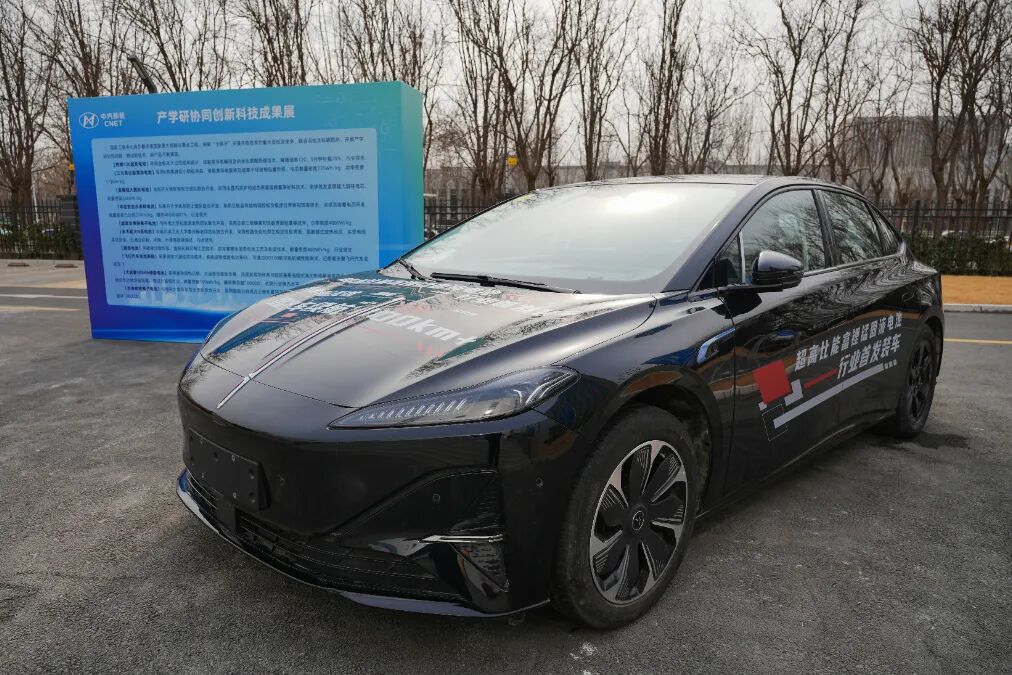
Image Credit: FAW
Developed jointly with a team led by Chen Jun, an academician at Nankai University, the battery features a cell energy density exceeding 500Wh/kg. That represents a 67% jump in pack capacity over comparable products, bringing total capacity to 142 kWh and delivering a driving range of over 1,000 kilometers.
Technically, the cathode specific capacity reaches 300mAh/g—more than double that of high-performance lithium iron phosphate (LFP) batteries. The team's proprietary ultra-wetting in-situ cured composite electrolyte technology delivers high ionic conductivity, excellent wettability, a wide electrochemical window, and strong interface affinity, all while being flame-retardant and cost-effective. Furthermore, an in-situ generated lithium anode replaces traditional metal lithium strips, cutting costs and simplifying production without compromising cycle life or safety.
The technology is still evolving. Future iterations aim to push system energy density beyond 340Wh/kg and pack capacity above 200 kWh, targeting a range of 1,600 kilometers. The team has also developed a "five-dimensional" protection system covering thermal, electrical, power, gas, and fire risks to prevent thermal propagation. Coupled with cloud-aided battery management, the system is slated for demonstration operations in 2026.


