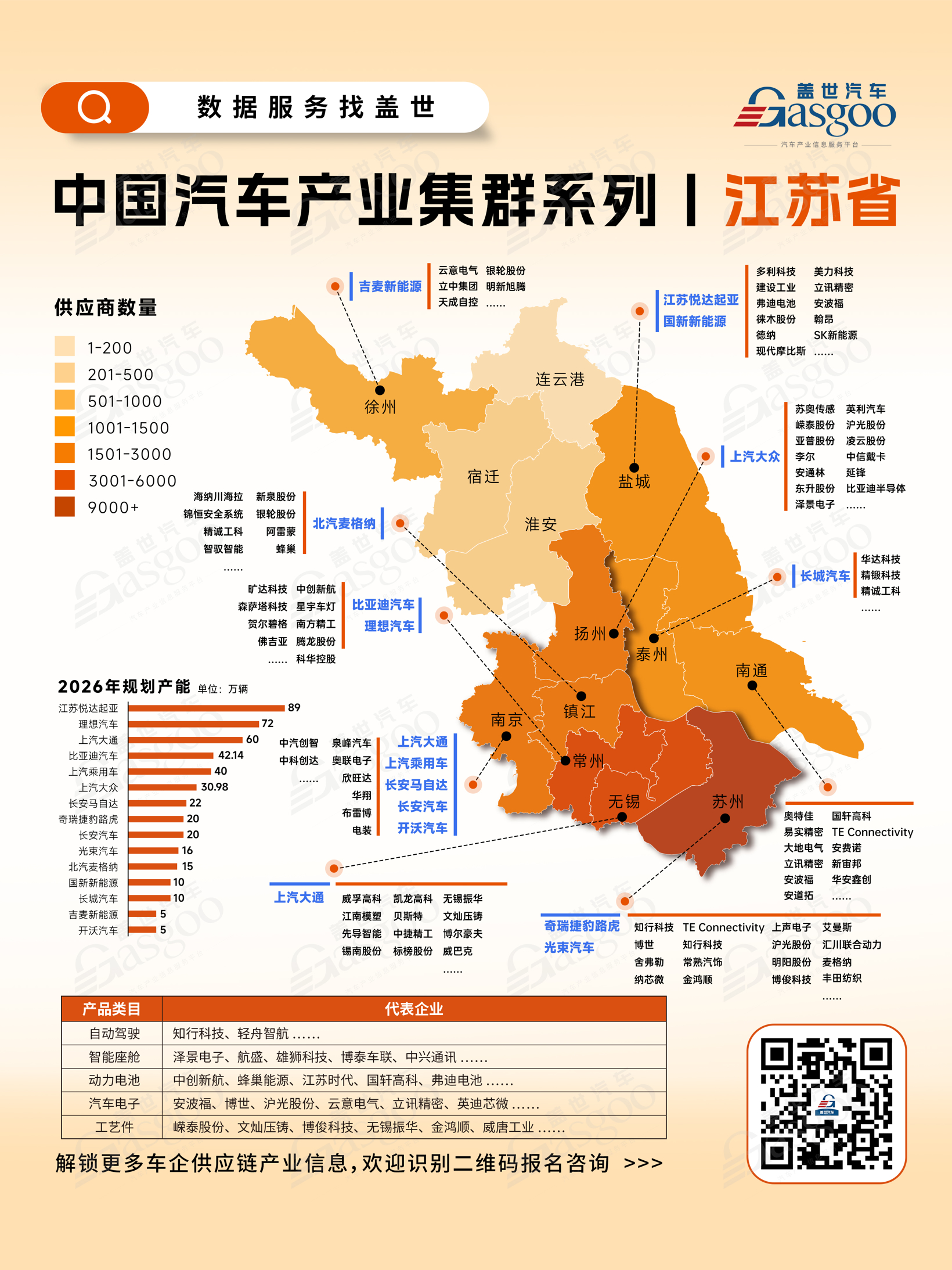
Gasgoo Munich- Drawing on the panoramic insights of Gasgoo Global Automotive Industry Big Data Center, Jiangsu’s automotive sector is mapping out a fully coordinated ecosystem. It is centered on a core model of "chain leaders + clusters."
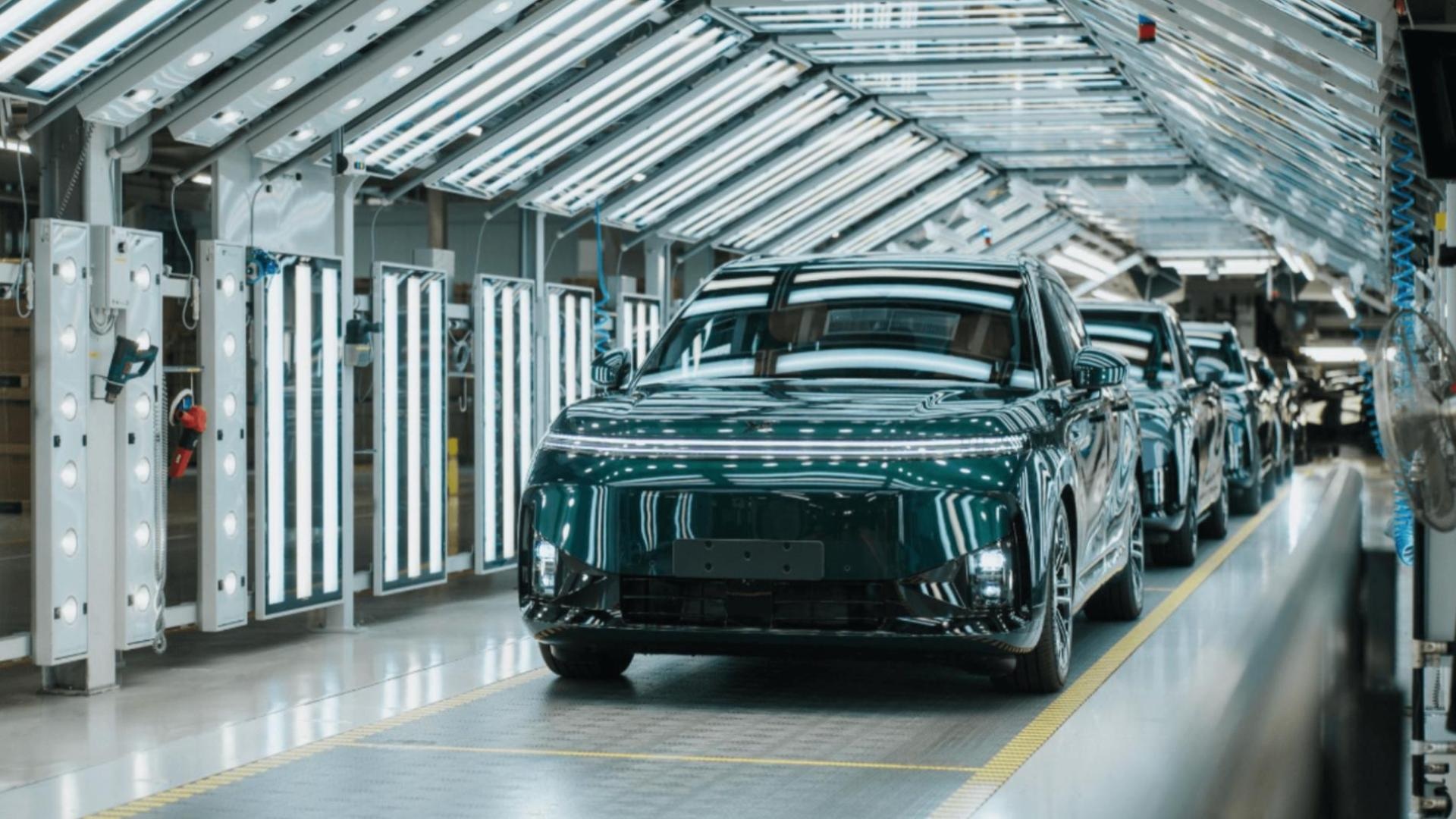
Vehicle manufacturing has evolved into a diversified landscape. It spans joint ventures like Jiangsu Yueda Kia, SAIC Volkswagen, and Chery Jaguar Land Rover. It also anchors domestic heavyweights such as Li Auto, BYD, and SAIC Motor Passenger Vehicle. Changzhou is home to a BYD production base with an annual capacity of 421,400 units and a Li Auto facility capable of 720,000. Nanjing, meanwhile, consolidates operations for SAIC Maxus, Changan Automobile, and SAIC Motor Passenger Vehicle, boasting a total capacity exceeding 1.3 million units. Together, these hubs form a multi-pillared manufacturing ecosystem where domestic and joint-venture brands run in parallel.
In the components sector, Jiangsu has established a mature, clustered support system. Suzhou and Changzhou alone host more than 13,000 auto parts companies, offering broad coverage from battery, motor, and electronic control systems to intelligent cockpits. Top-tier players like Bosch, Magna, Faurecia, Brembo, TE Connectivity, CALB, Huguang, and Tenglong aren't just supplying at scale. They are deeply embedded in the supply chain, engaging in joint R&D with OEMs.
On balance, Jiangsu’s automotive industry serves both the domestic shift toward new energy and intelligent technologies, while acting as a stabilizer within the global supply chain. As these layouts deepen, local OEMs and component makers are poised to integrate more tightly into global industrial networks. This boosts regional growth and propels the supply chain toward higher-value manufacturing.