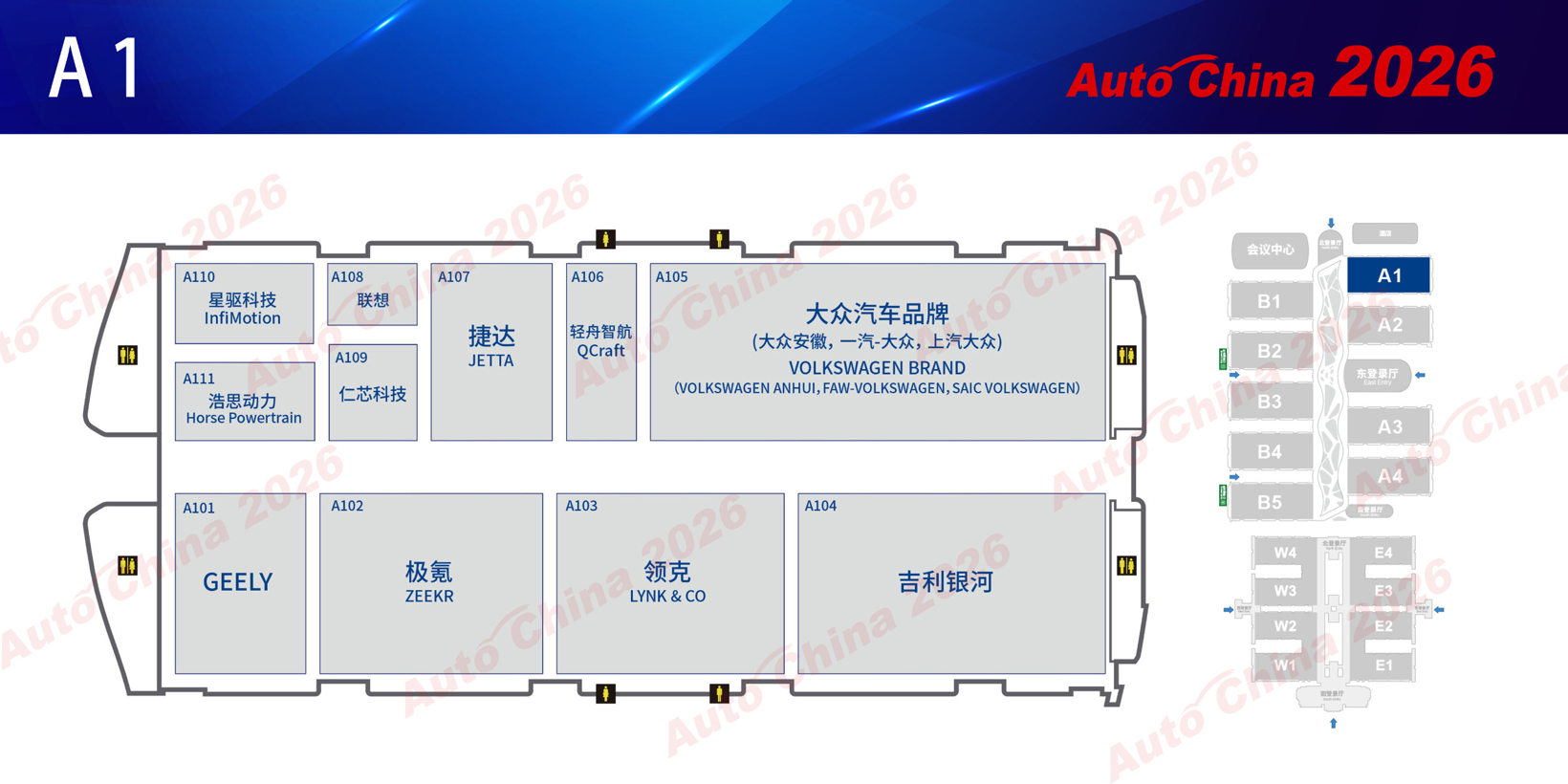
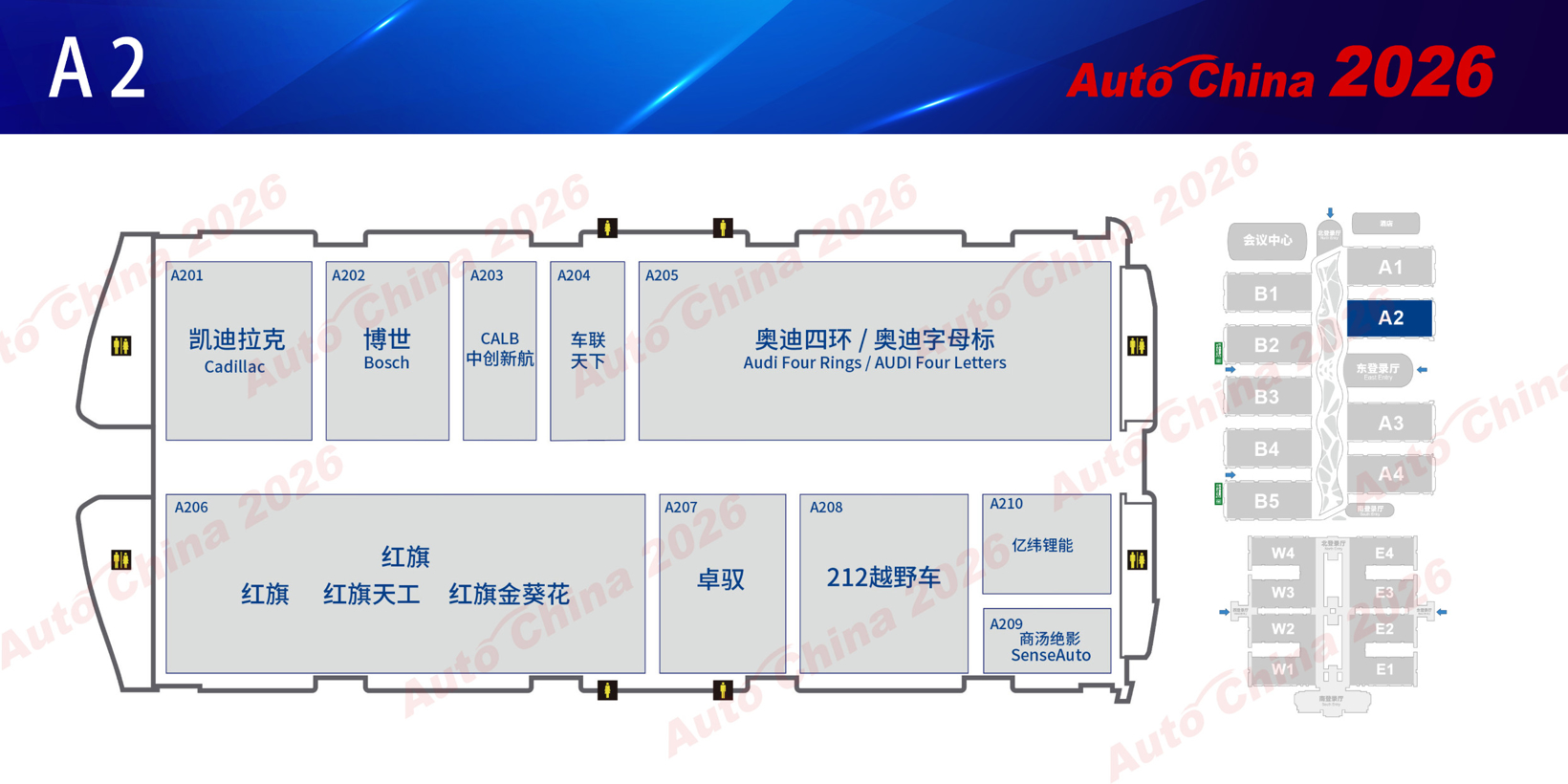
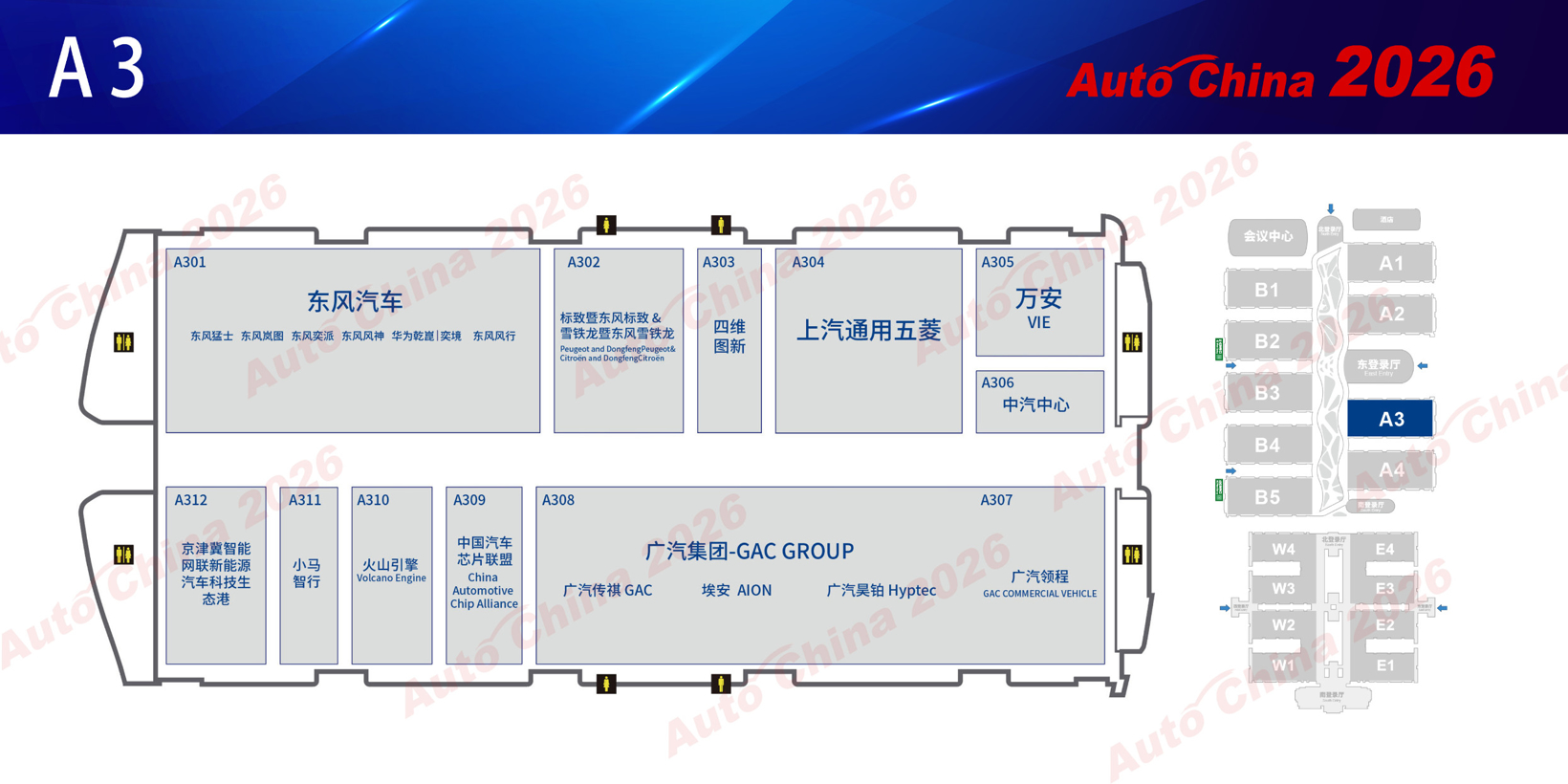
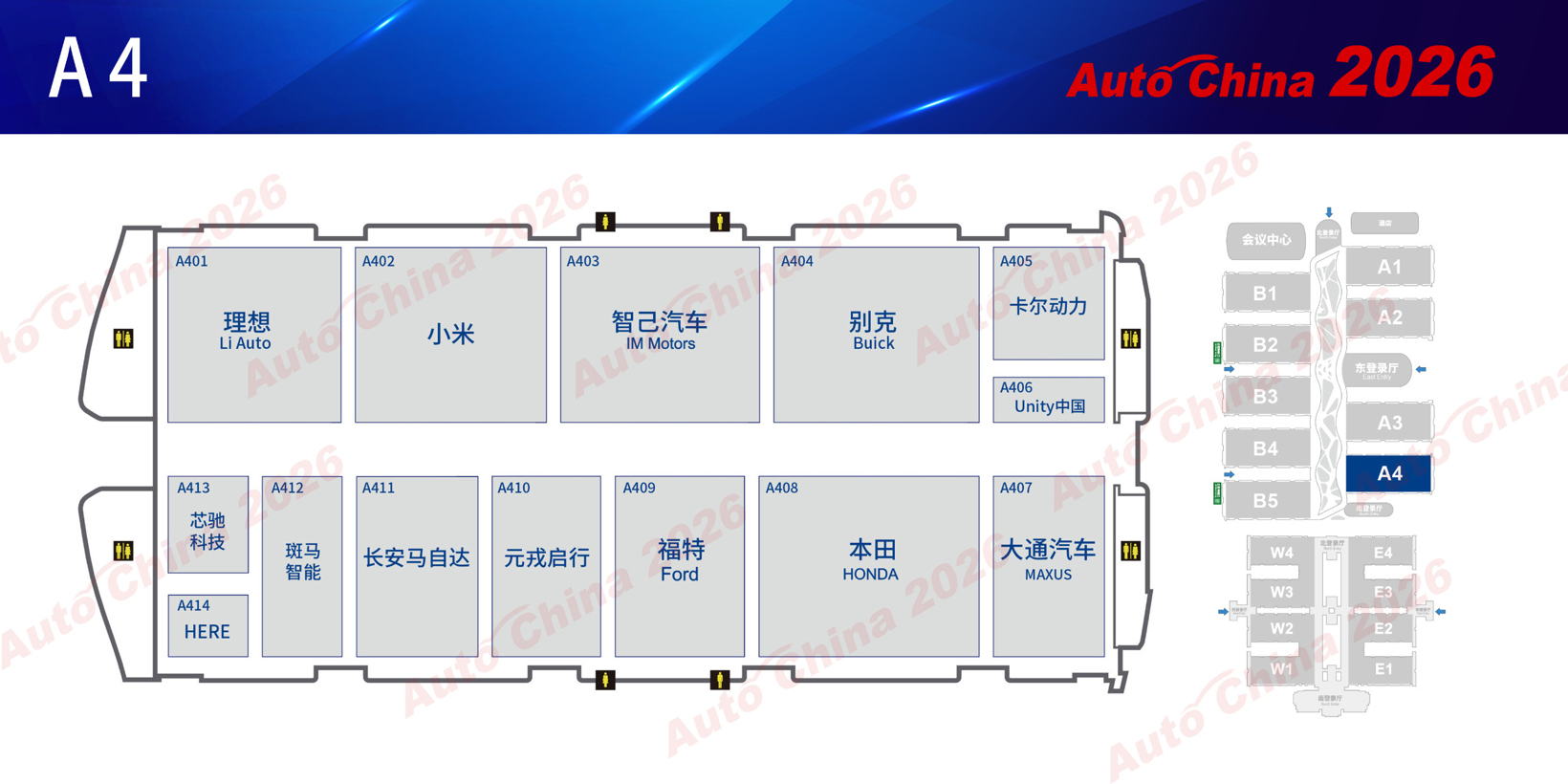
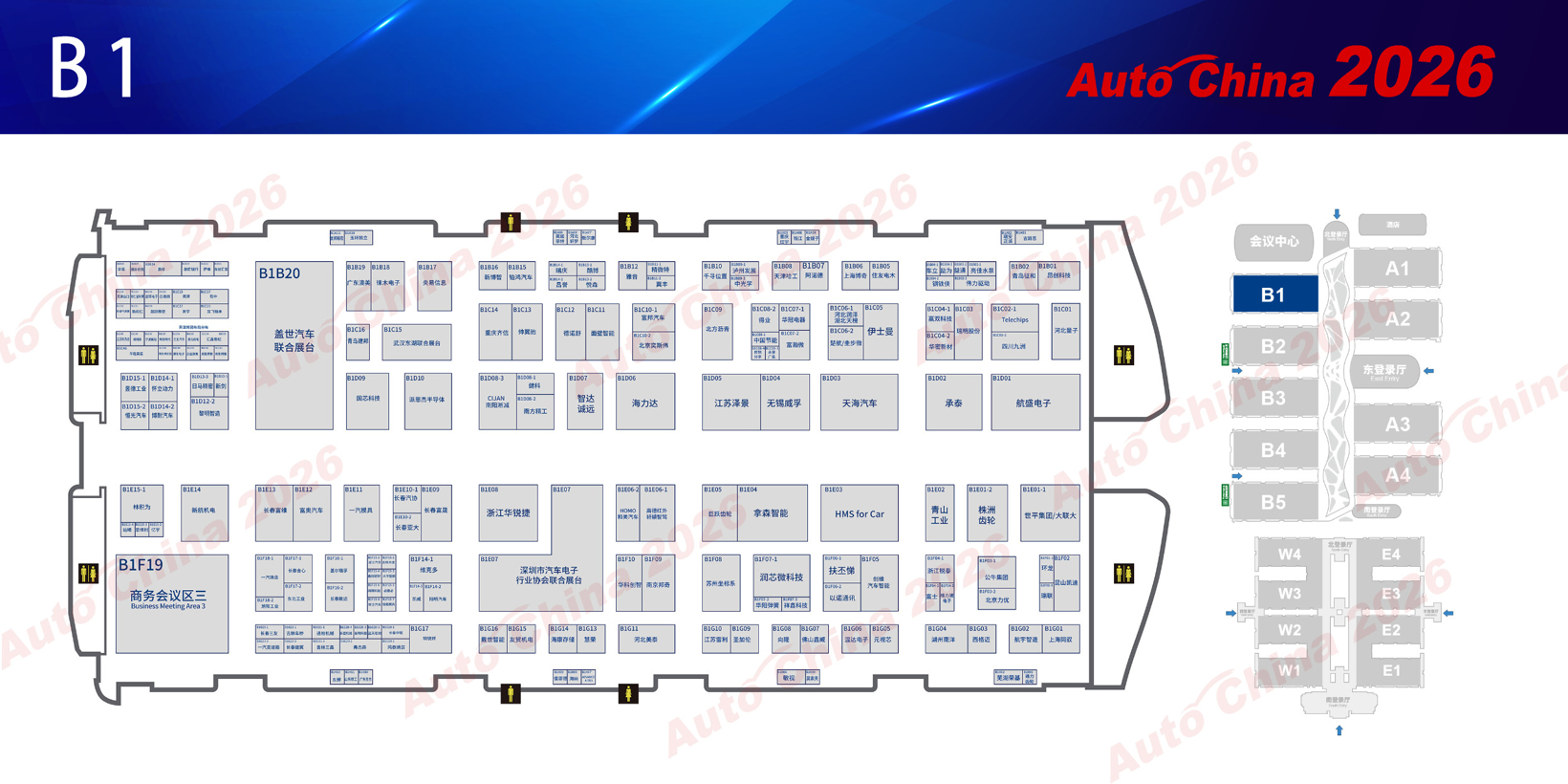
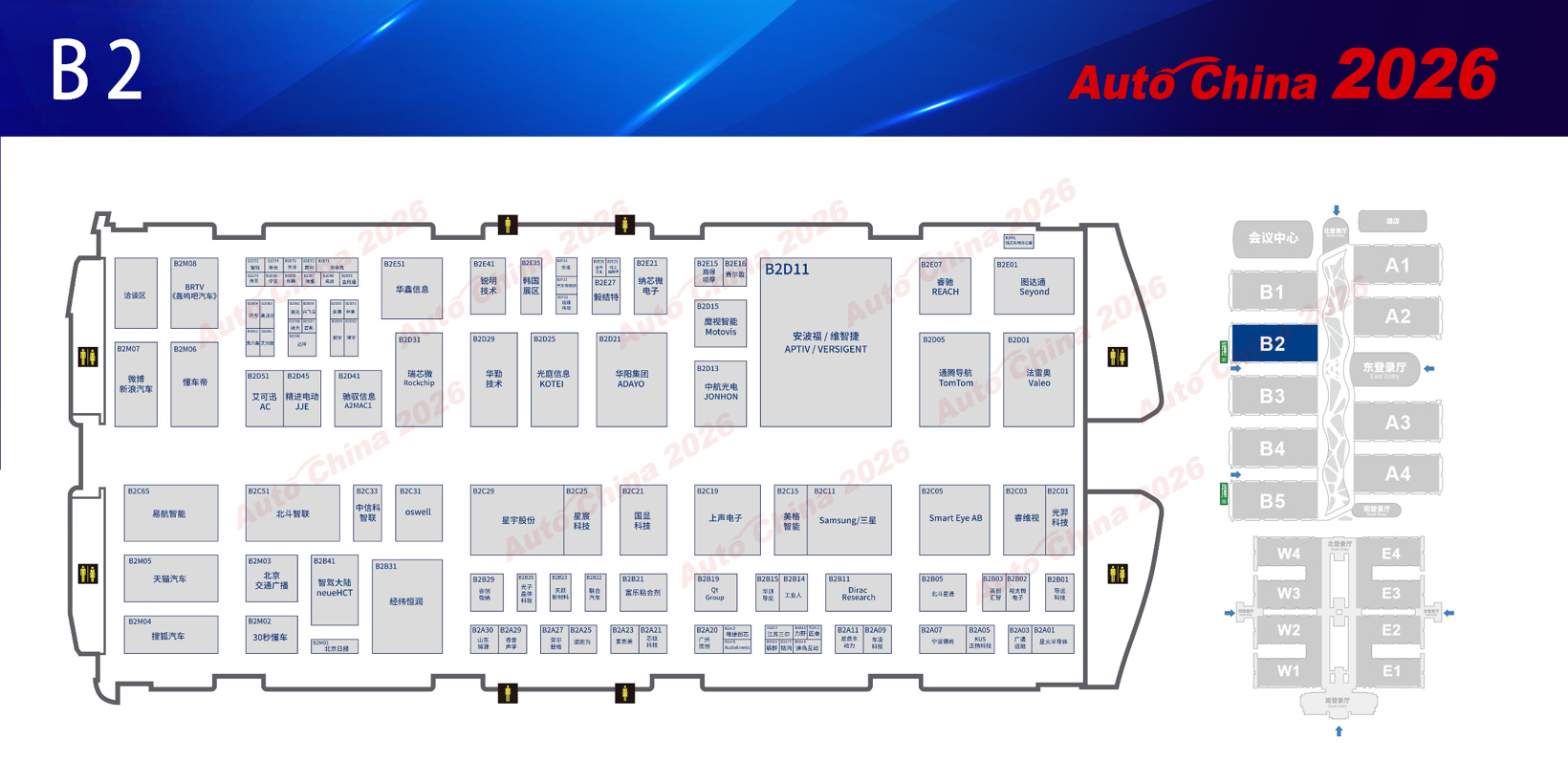
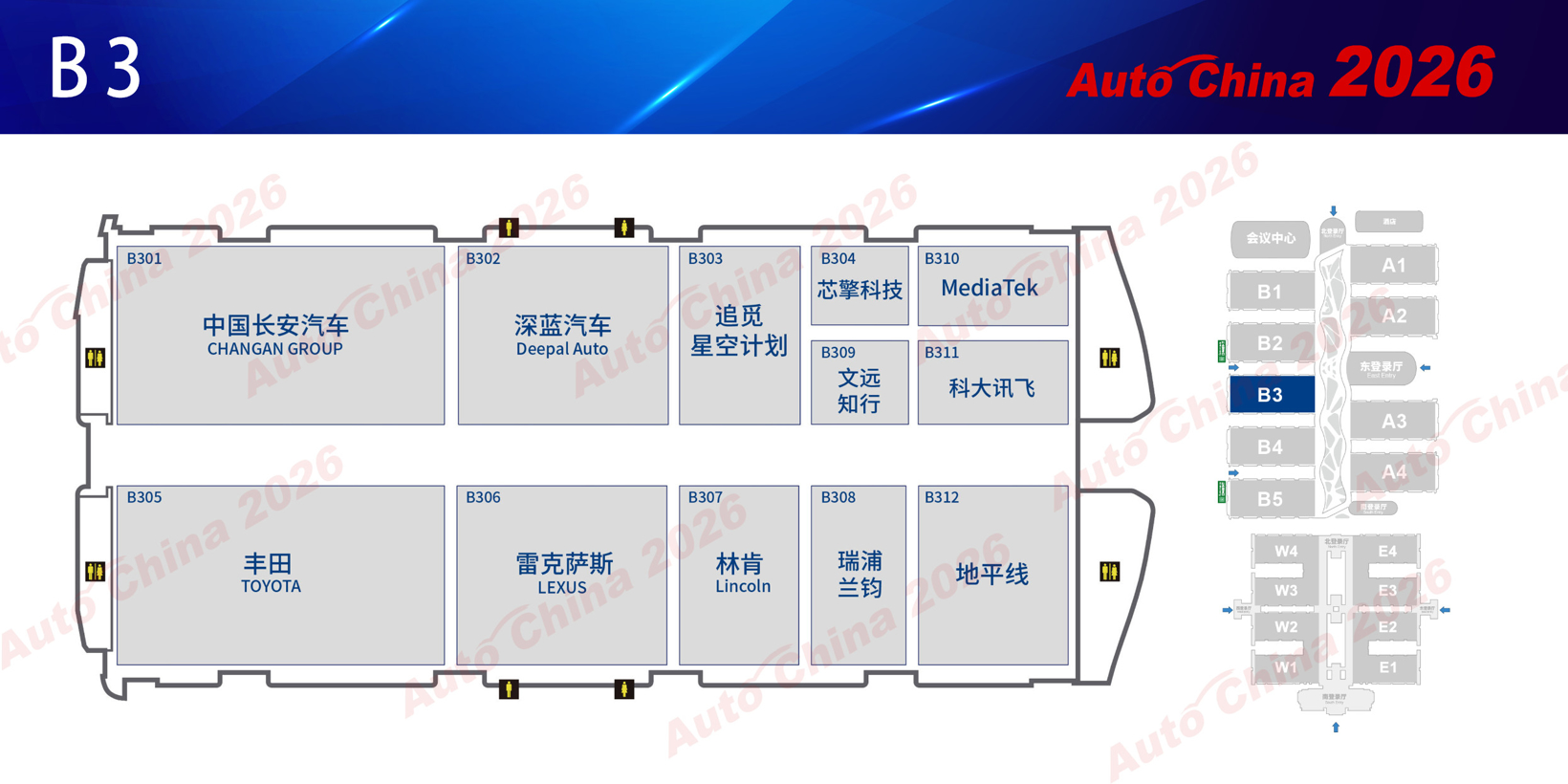
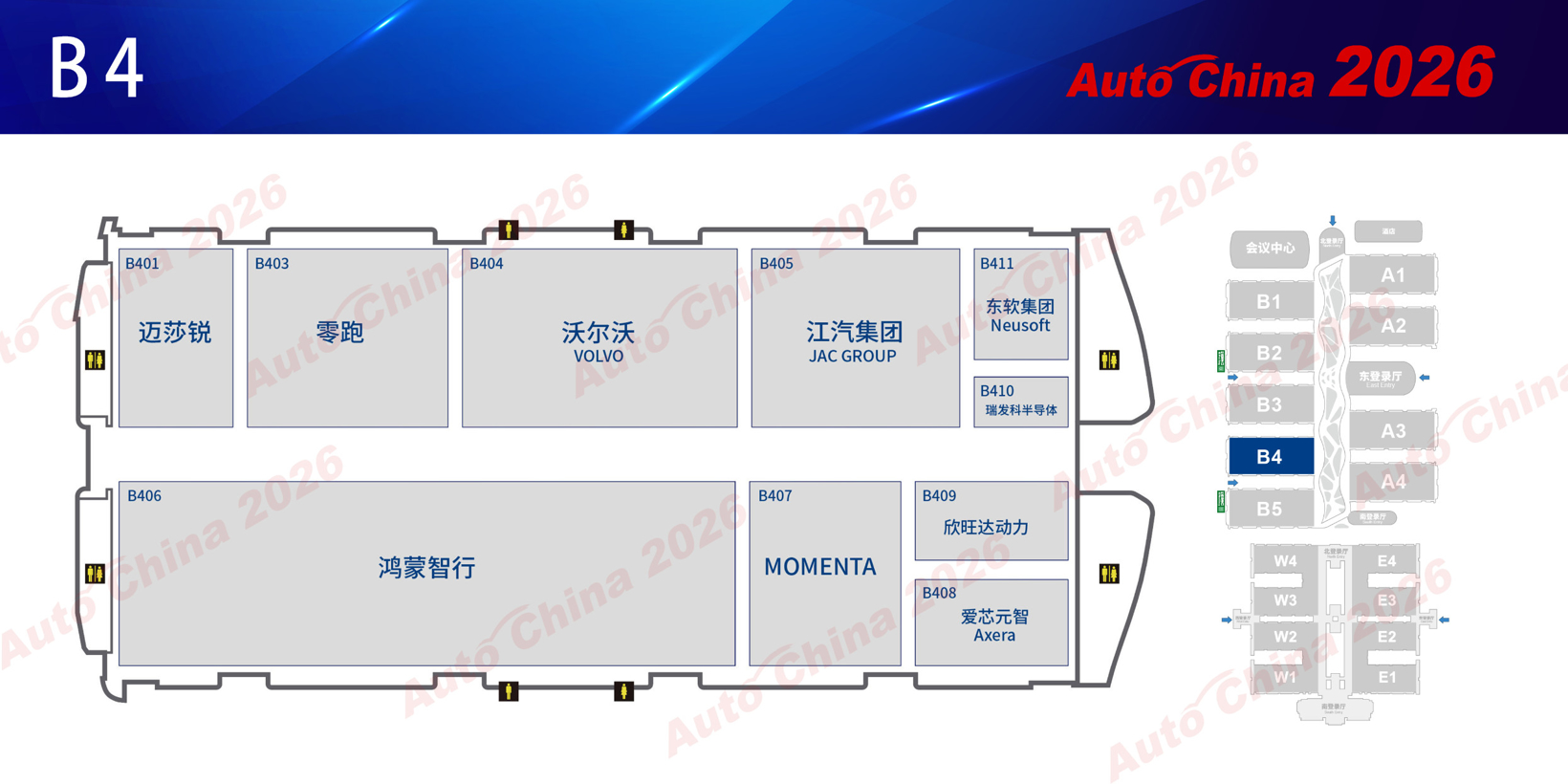
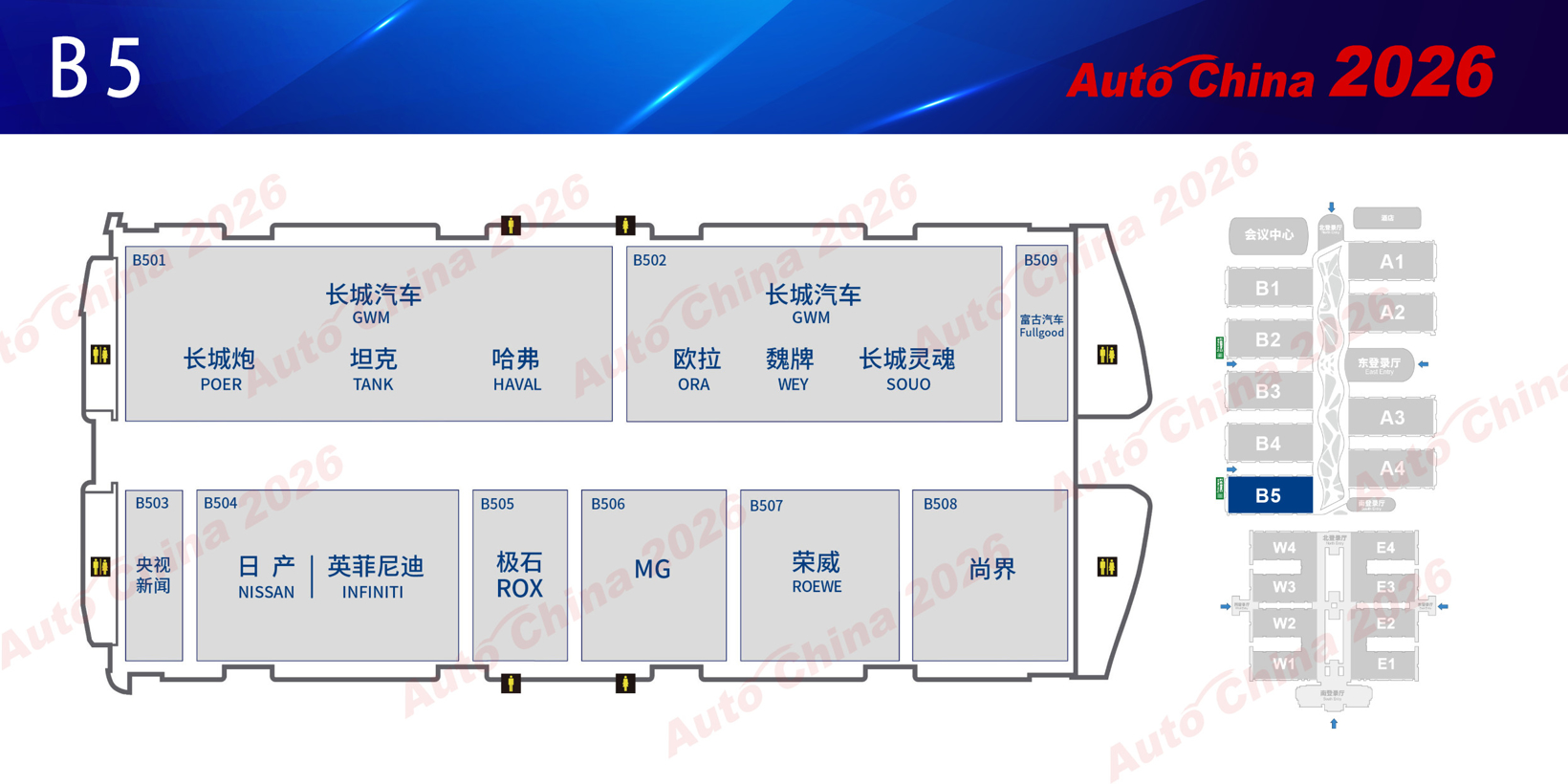
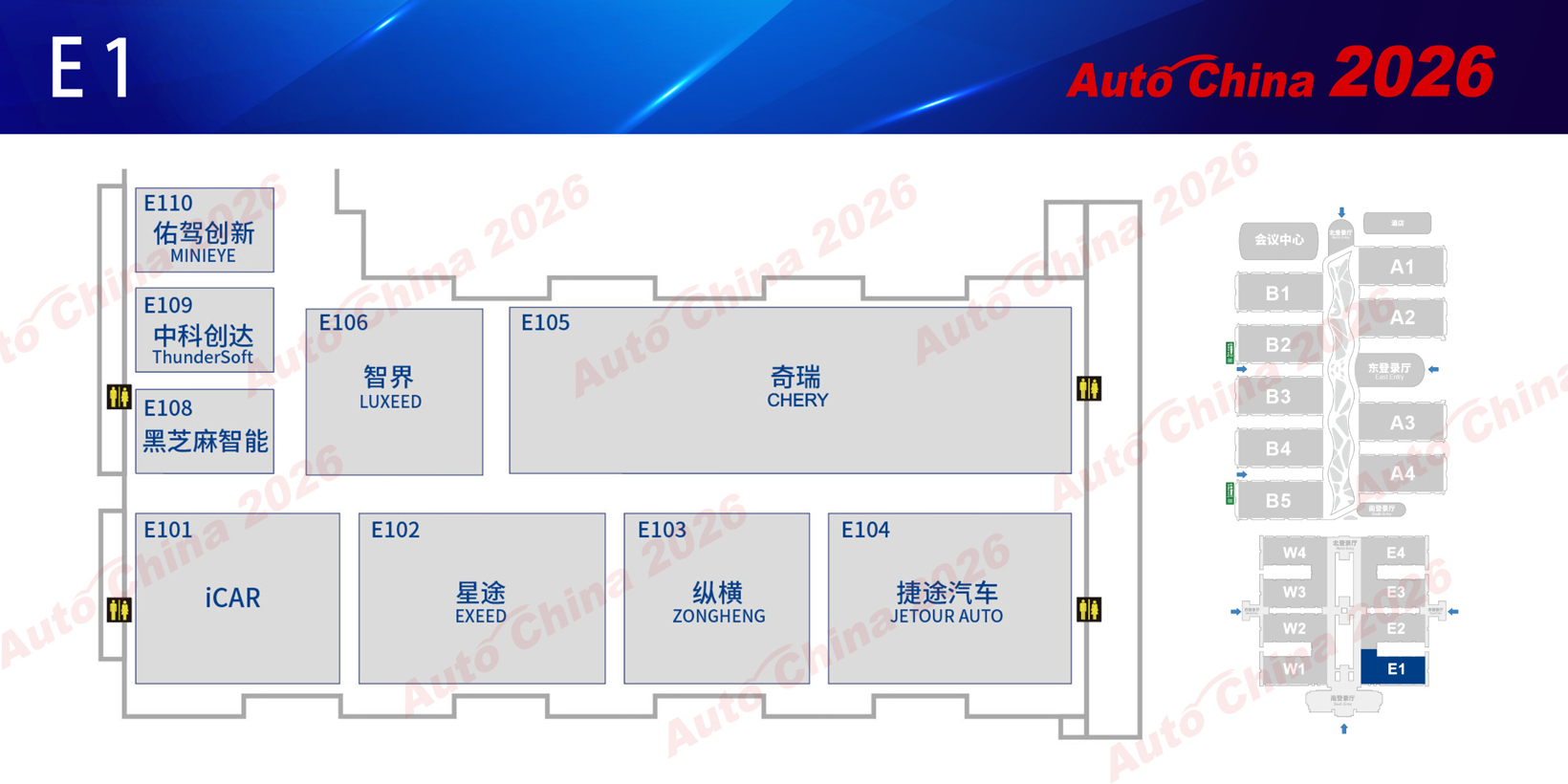
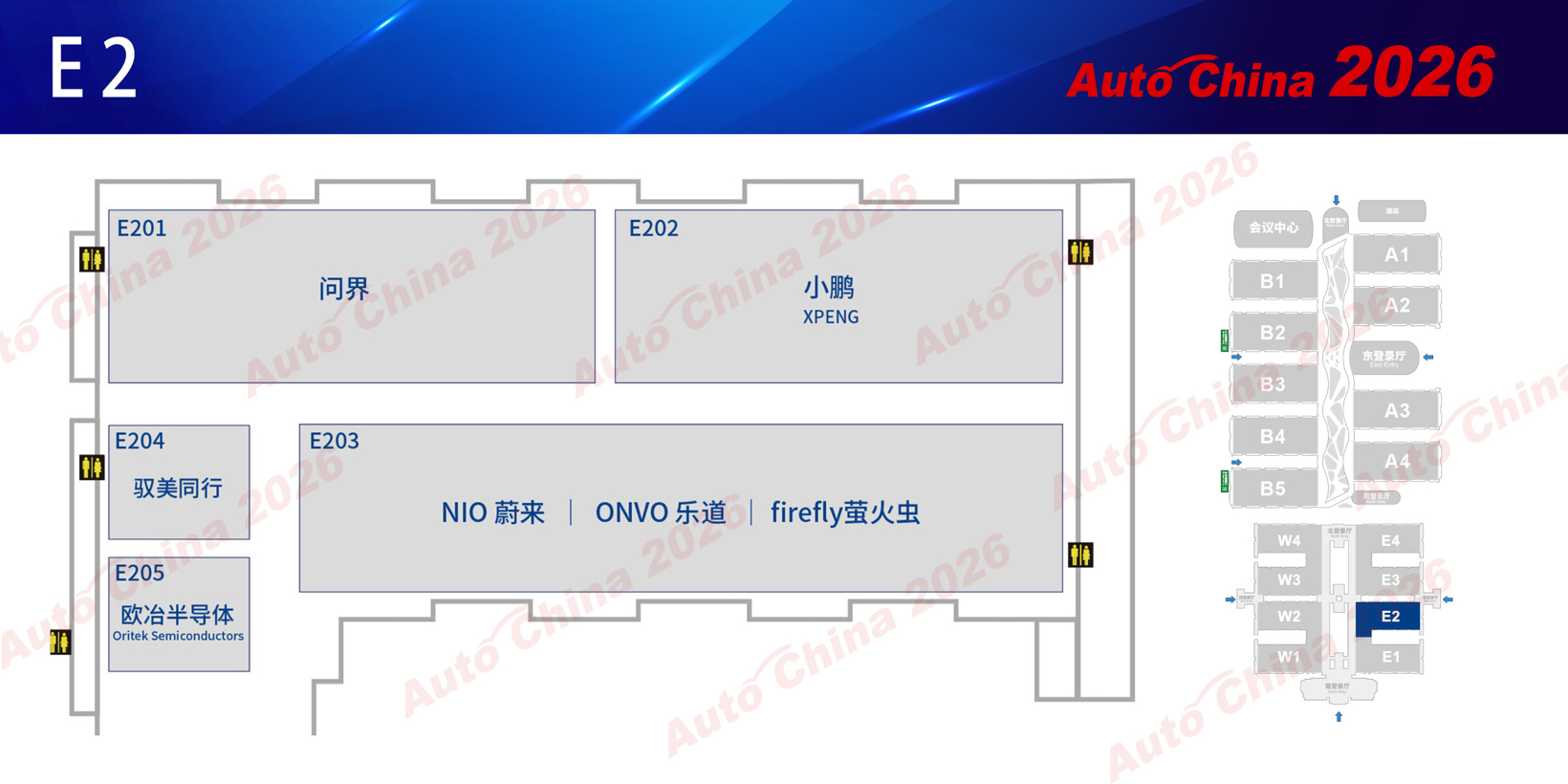
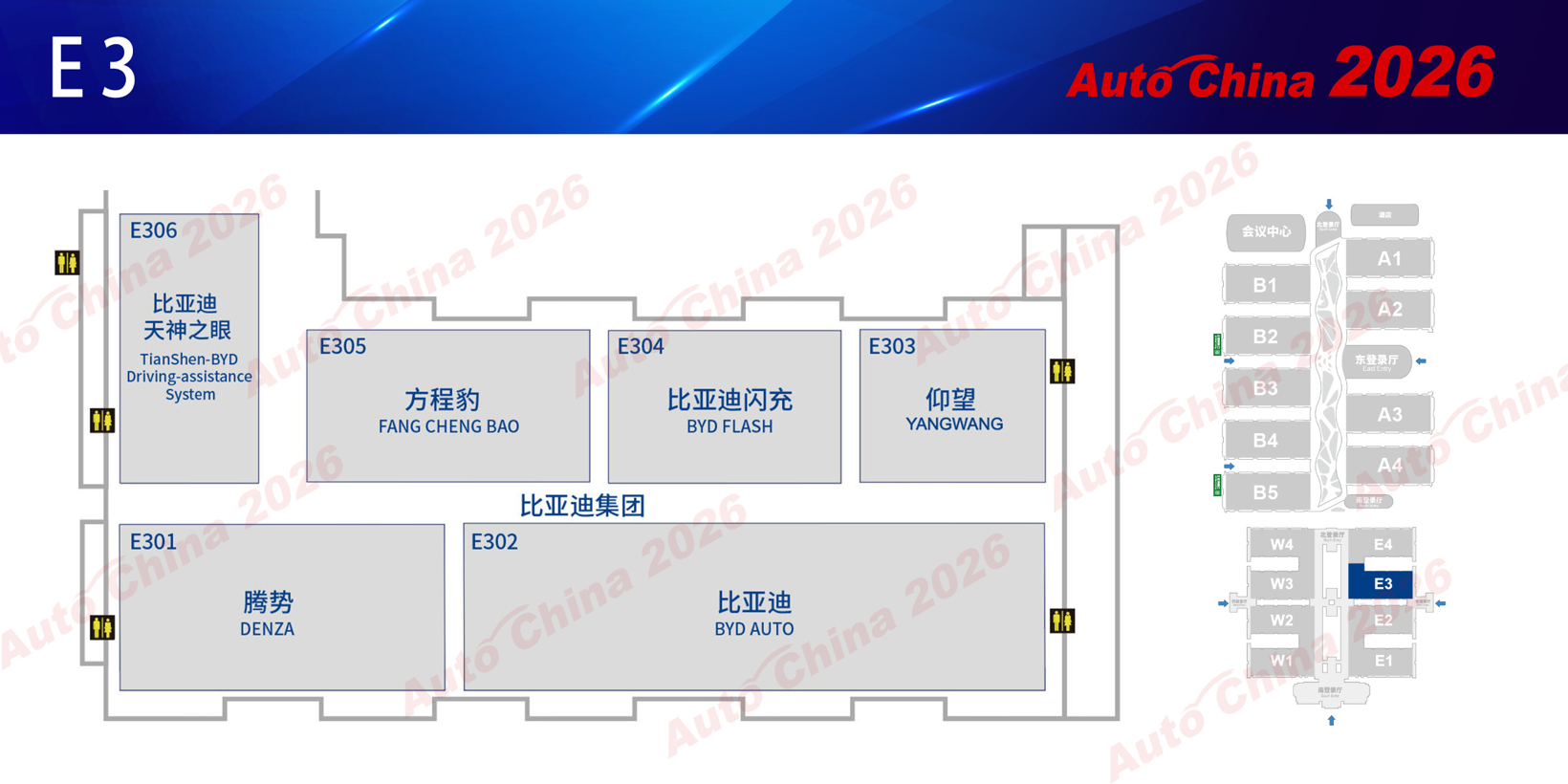
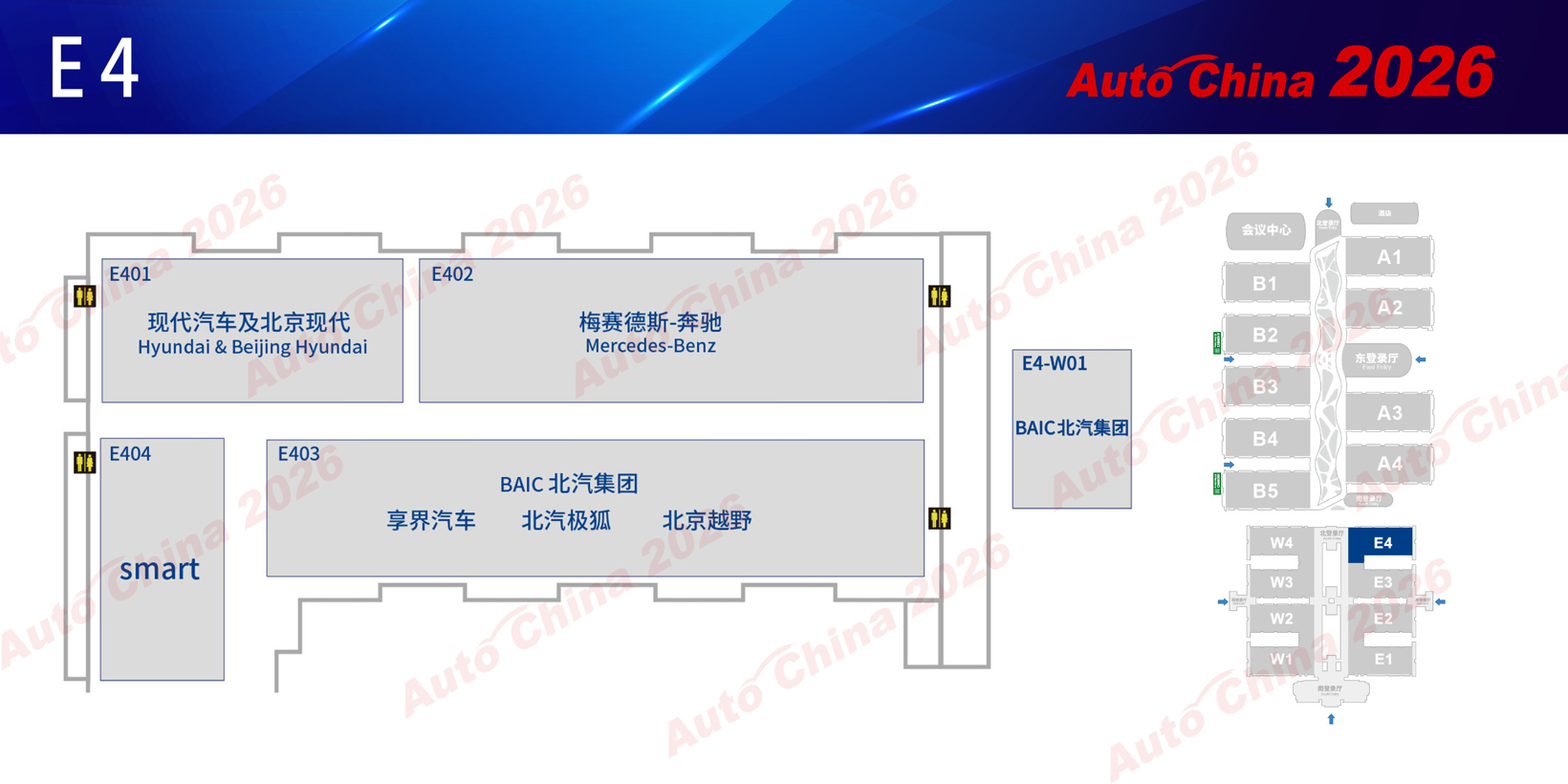
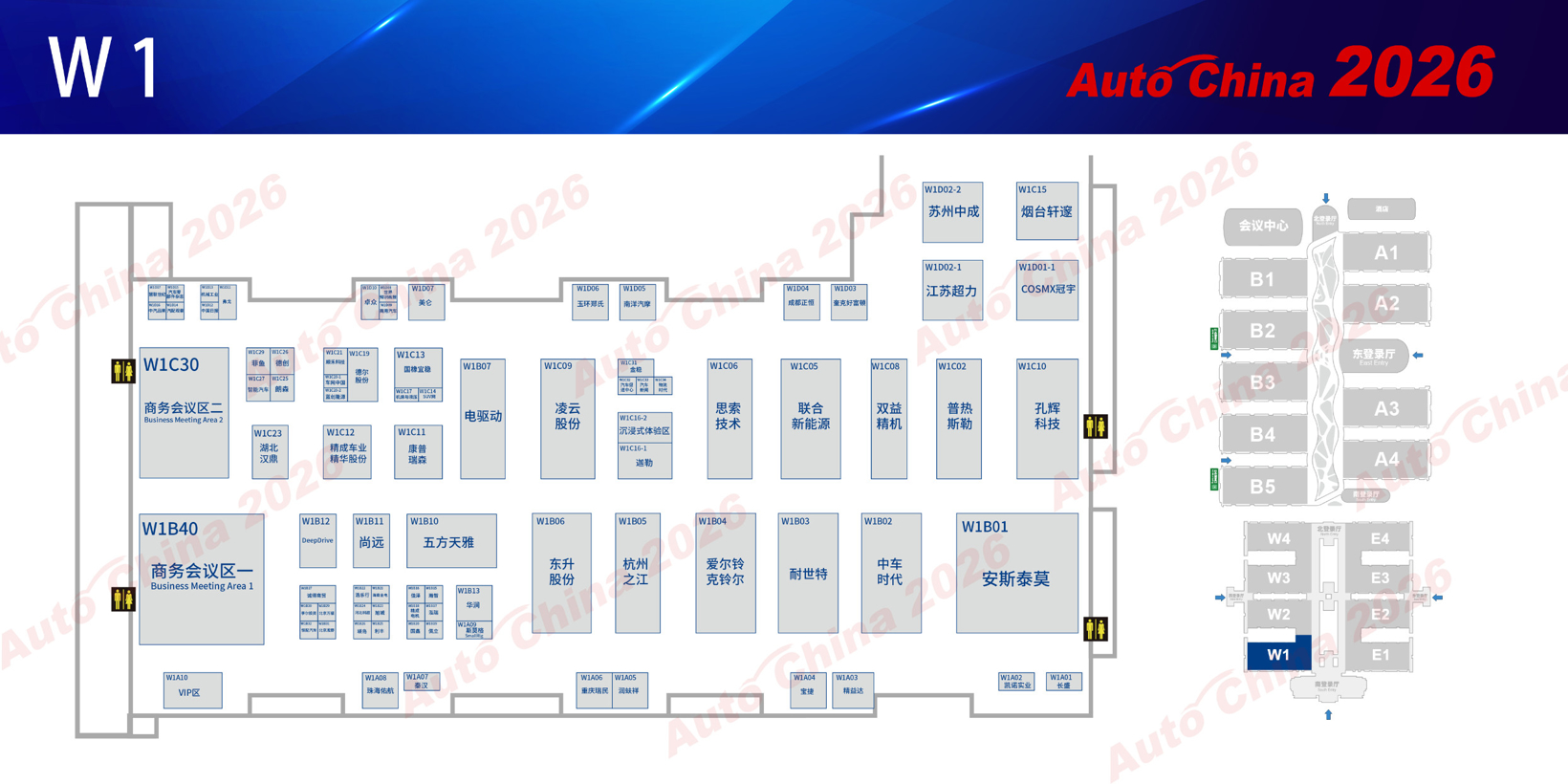
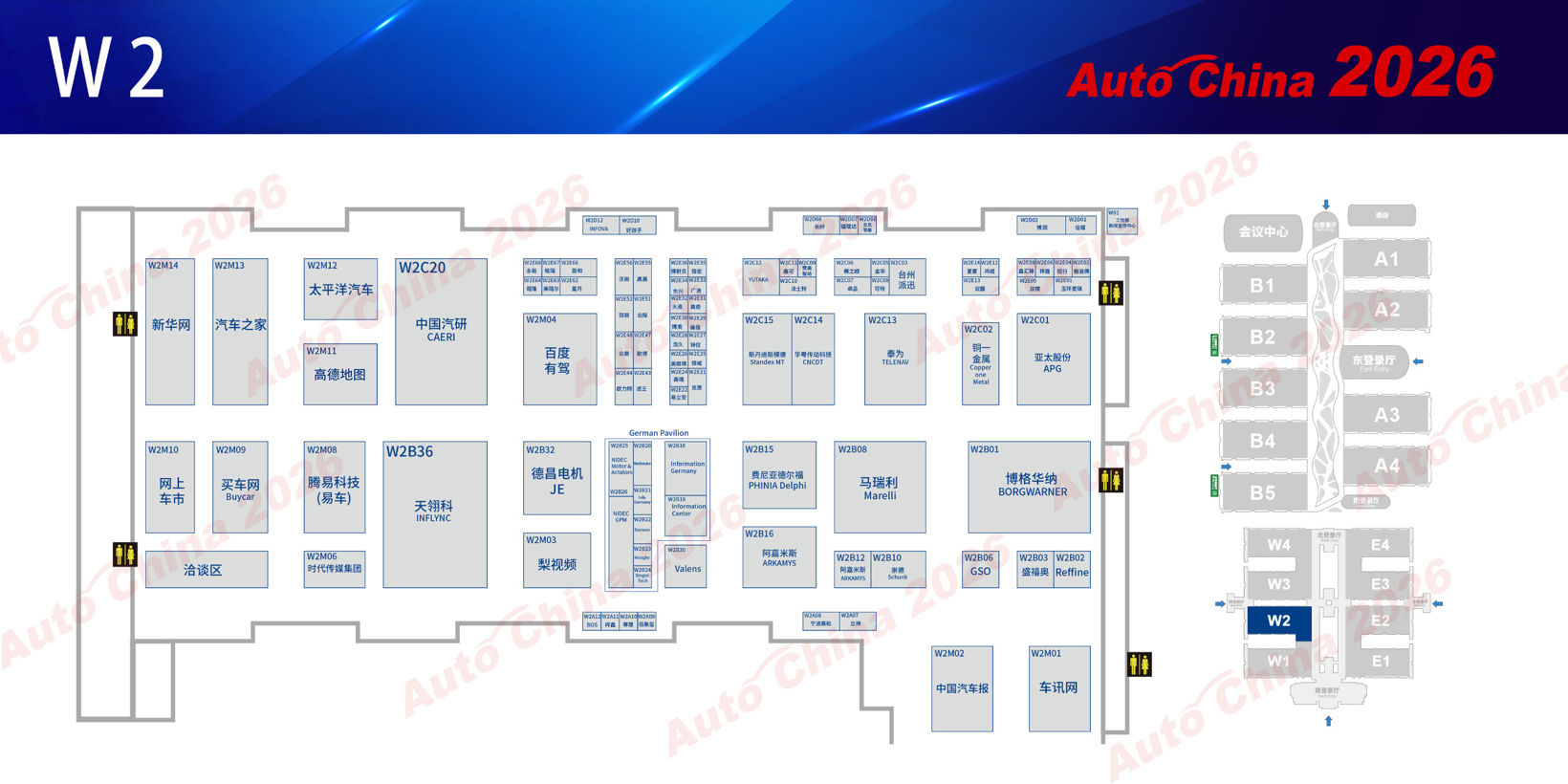
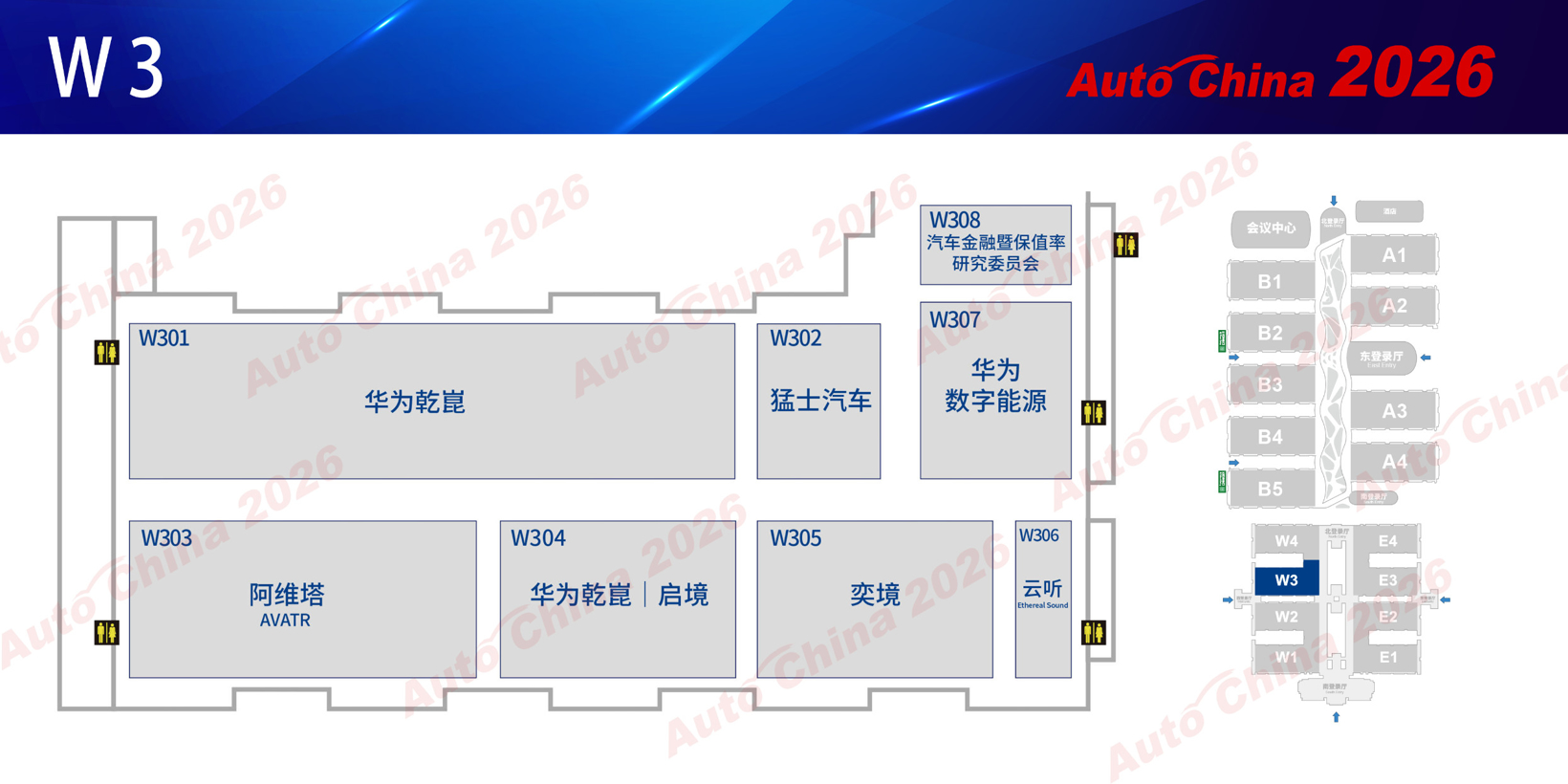
Gasgoo Munich- On April 19, the long-awaited floor plan for the Auto China 2026 finally dropped.
Official details confirm the show runs from April 24 to May 3, utilizing both the China International Exhibition Center (Shunyi) and the Capital International Exhibition & Convention Center.
Notably, the total exhibition area has surged to 380,000 square meters. With 1,451 vehicles on display—including 181 global debuts and 71 concept cars—the Beijing Auto Show has effectively become the largest in the world.
But the numbers only tell part of the story. Comparing the floor plans of the two shows reveals three significant shifts lurking behind the theme change from "New Era, New Cars" to "Future of Intelligence."
Two Halls Connected: What Fills the Extra 160,000 Square Meters?
In previous editions, the Auto China's layout was somewhat fragmented. Complete vehicles were housed in the Shunyi hall, while auto parts were relegated to the downtown Chaoyang hall.
2026 changes all that. To the north of the Shunyi complex stands the new Capital International Exhibition & Convention Center—also known as the New China Expo Phase 2. The two venues sit adjacent to one another, connected by a corridor that allows visitors to walk between them without leaving the grounds or hopping on a shuttle.
The Capital International Exhibition & Convention Center features nine halls, each spanning roughly 22,000 square meters, with 4,000 parking spaces tucked underground. Together, the two venues cover 380,000 square meters—a net increase of 160,000 square meters over the last edition.
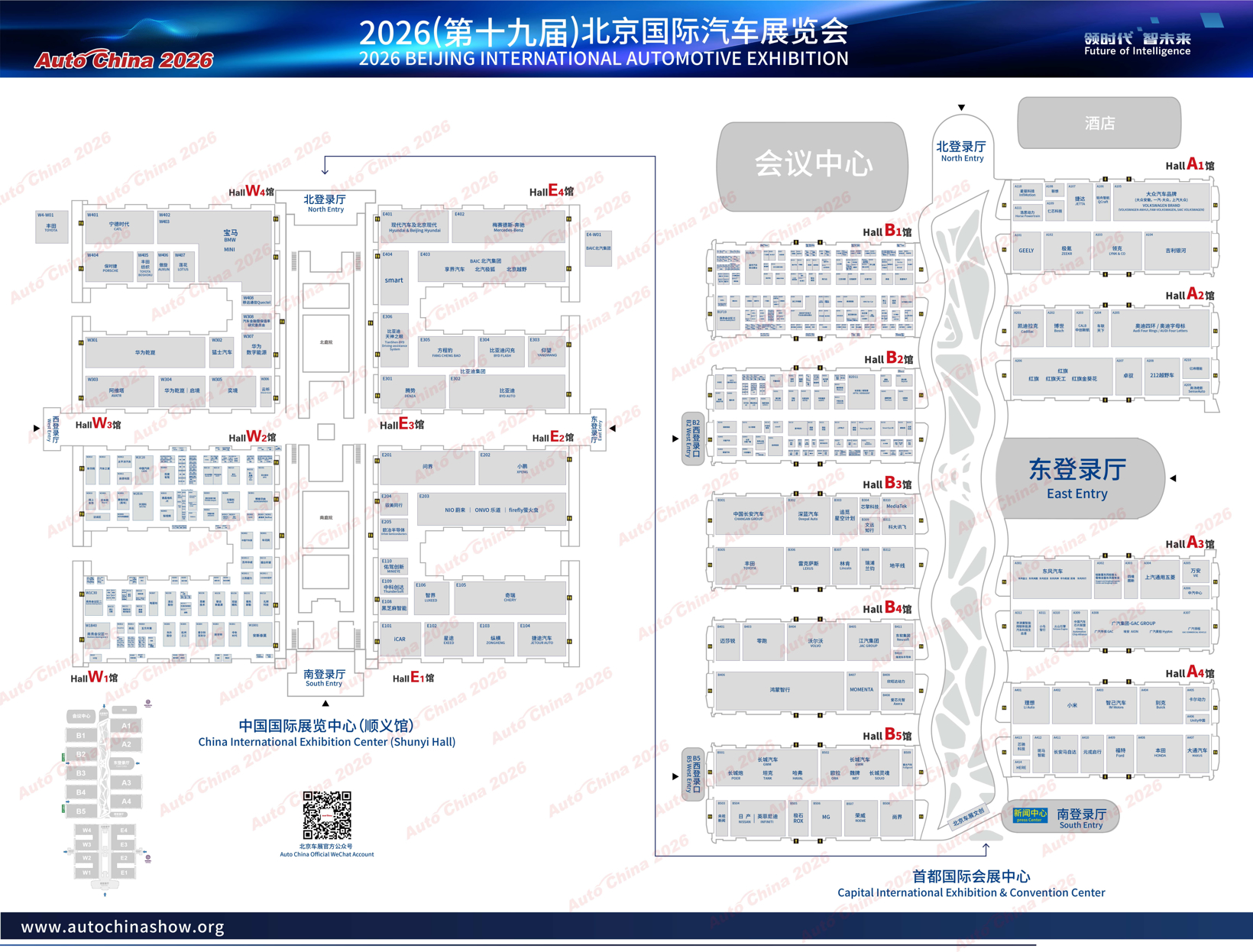
Image Credit: Auto China 2026's Organizing Committee
Where is all that extra space going? Two directions.
First, the vehicle exhibition area is no longer squeezed. The eight halls at Shunyi in 2024 were packed to the brim, forcing attendees to squeeze past displays. With the new venue relieving pressure in 2026, every brand enjoys significantly more breathing room.
Second, new entrants and cross-over brands have secured their own dedicated spaces. Li Auto, Harmony lntelligent Mobility Alliance, and Xiaomi were just making their debuts in 2024; by 2026, they've become mainstays. NIO has spun out its sub-brands Onvo and Firefly for separate displays, while Harmony lntelligent Mobility Alliance's AITO, Stelato, and Luxeed series now command exhibition space on par with traditional joint ventures.
As the space shifts, so does the pecking order.
Brand Roster Overhaul: Who's Out, Who's In
Comparing the exhibitor lists from the two editions is like playing a game of "spot the difference."
The keyword for 2024 was "reboot." Virtually all mainstream brands returned, contributing to 117 global debuts—30 of which came from multinational corporations. There were 278 new energy models on display, with Li Auto, Avatr, Deepal, and ZEEKR gracing the main stage for the first time.
In 2026, the total number of vehicles rose to 1,451, alongside 181 global debuts and 71 concept cars. Yet, the roster itself is more intriguing than the raw numbers.
The international heavyweights are all present. BMW, Mercedes-Benz, Audi, Volkswagen, Ford, Toyota, Honda, and Nissan all occupy substantial footprints. BMW is bringing the new long-wheelbase iX3, while Mercedes-Benz will showcase its all-electric G-Class and the new long-wheelbase CLA. Notably, Peugeot and Citroën have regrouped for a return, signaling French automakers' intent to take another swing at the market.
The shifts among Chinese brands are even more drastic. Some second- and third-tier brands that were struggling on the 2024 map have vanished two years later. They've been replaced by a fiercer cohort of niche players, such as 212 Off-road and Soulmotor, which are now taking the main stage. Harmony lntelligent Mobility Alliance's brand matrix has expanded rapidly, and NIO has carved out separate booths for its Onvo and Firefly sub-brands.
The luxury camp is also in flux. While Porsche and Lotus remain, customization and high-end tuning brands like Mansory, Aoxuan, Fugu, and Dreame are far more active. No longer content with small corners, they've seized prominent positions within the new venue.
The impression is clear: the Auto China is no longer just a marketplace for cars; it's a touchstone. The two-year cycle is just enough time for the market to cull the weak and crown the strong.
Suppliers Invade the Main Hall: The OEM-Supplier Relationship Is Redefined
This is the single most significant shift to watch.
Historically, the components zone was exiled to the Chaoyang hall. In 2024, organizers erected tents outside the Shunyi venue to bridge the gap, allowing visitors a closer look at China's latest automotive tech without a long trek.
But the public wasn't buying it. According to Gasgoo, some companies packed up and left early after seeing lackluster foot traffic.
In 2026, the dynamic has completely flipped.
The number of countries and regions represented by parts suppliers has risen from 13 to 21, covering the US, Germany, France, Italy, Sweden, Switzerland, the UK, Japan, and South Korea. But the numerical expansion is just the appetizer; the main course is the change in location.
Top-tier suppliers like Huawei, CATL, Bosch, Horizon Robotics, Black Sesame, and ECARX are no longer banished to a separate components hall. Huawei's Qiankun division has secured an independent booth in the Shunyi hall, separated from the automakers by just a single aisle. CATL has claimed an "Energy Technology Experience Zone" spanning over 1,500 square meters at the entrance of the Capital International Exhibition & Convention Center. Bosch went even further, placing its displays for smart driving and steer-by-wire chassis right next to the central corridor connecting the two halls—the busiest spot in the venue.
Co-locating OEMs and suppliers isn't just a logistical tweak. It sends a signal: the auto show is no longer just about displaying "cars," but about showcasing the entire "automotive ecosystem."
It makes sense. In a smart electric vehicle, the cost of chips, batteries, and intelligent driving systems accounts for more than half the total. Why shouldn't these core suppliers take center stage?
The 2026 components theme has also evolved, shifting from generic "Parts and Components" to three main threads: "Electrification, Intelligence, and Digitalization." Technologies previously discussed only behind closed doors at industry conferences are now being roadshowed to hundreds of thousands of visitors.
Even more striking is the influx of non-traditional suppliers. Chip companies, cloud service providers, high-definition mapping firms, and AI algorithm developers are flooding in—some in the components zone, others co-displaying directly with automakers.
The 2024 visitor route was "see the cars, then look at the parts." In 2026, the route has become "you must pass core suppliers' booths to see the cars." This physical integration makes the power shift within the supply chain undeniable: core technology suppliers are moving from backstage to center stage.
Two years. 220,000 to 380,000 square meters. 13 countries to 21. 117 global debuts to 1,451 vehicles. Behind these numbers lies the auto show's self-evolution—and an industry in overdrive.
The dual-venue setup solved the chronic space shortage. The brand reshuffle has drawn a realistic map of market competition. And the invasion of main halls by parts suppliers has turned the "OEM-supplier" dynamic from a subplot into a headline.
Being the world's largest at 380,000 square meters is an easy label to remember. But what's truly worth noting is this: within that vast space, the wall between automakers and suppliers has been demolished. The identities of tech giants and traditional carmakers are overlapping. And the competitive logic behind every booth has shifted from "whose car looks best" to "whose technology ecosystem is more complete."
The Auto China 2026 opens April 24 and runs through May 3. For the general public, it's the most worthwhile show in years to dedicate a full day to exploring. For industry insiders, it's a panoramic map that clarifies the new landscape of Chinese automotive.
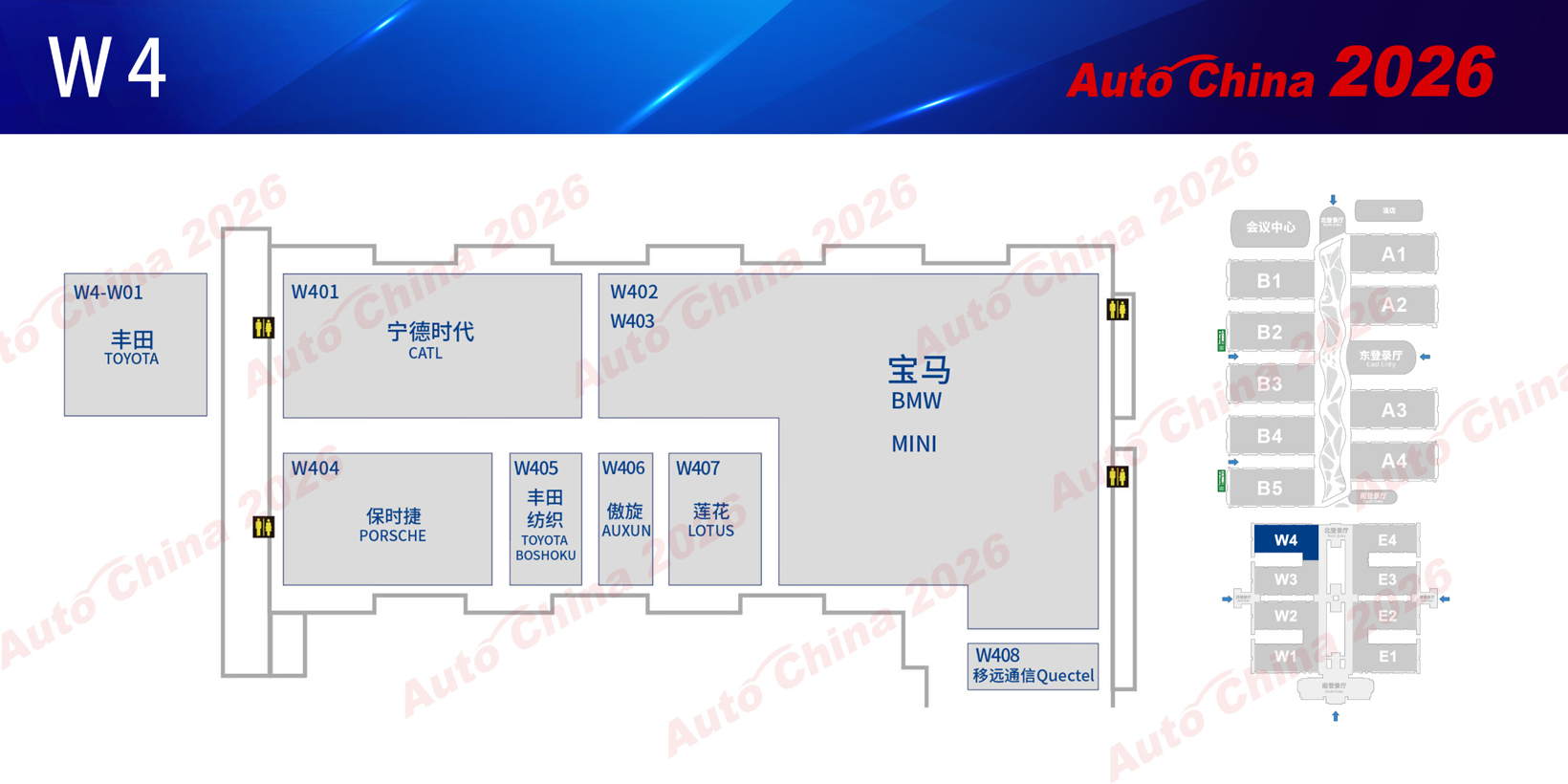
The floor plans for each venue are as follows: