



Gasgoo Munich- On February 26, GAC Group convened its 2026 High-Quality Development Conference at its Panyu headquarters. Chairman Feng Xingya recapped 2025 performance: full-year retail sales reached 1.8135 million units, with exports from proprietary brands nearing 130,000. A pilot line for all-solid-state batteries entered production, and the Hyper GT Climbing Edition—featuring 100% domestically produced chips—rolled off the assembly line. On the transformation front, the "2+3+X" framework was established, the IPD system was introduced, and the Hyper-Aion and Trumpchi business units began operating independently.
Looking ahead to 2026, GAC has set hard targets: return production and sales to the 2 million level, achieve positive output value growth, and improve profitability. Feng defined the year as a pivotal bridge between the start of the 15th Five-Year Plan and the "Panyu Action," outlining three strategic pillars: stabilize joint ventures, strengthen proprietary brands, and expand the ecosystem.
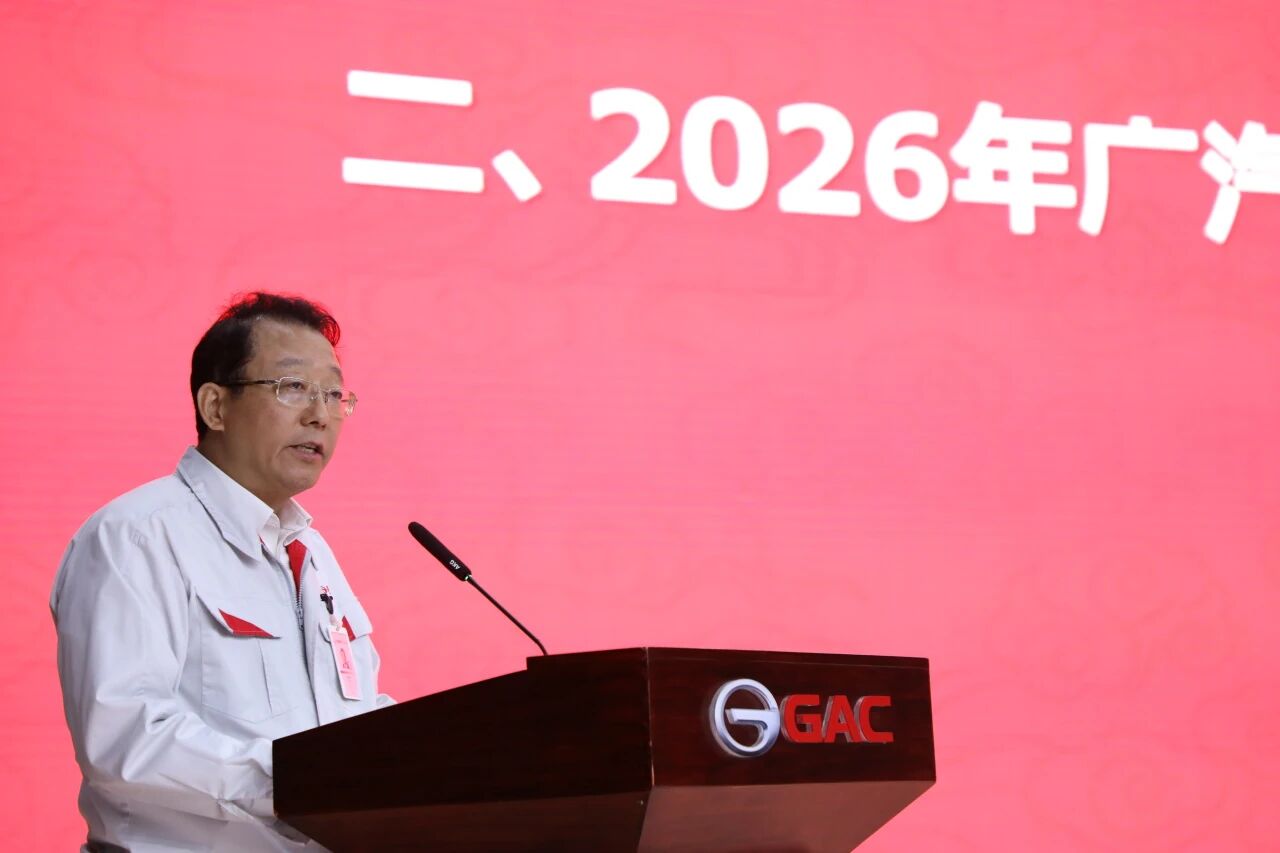
Image Source: GAC Group
The joint venture sector is pushing for change: GAC Toyota continues to promote "smart features for all powertrains," while GAC Honda aims to close the intelligence gap and cut costs through localized R&D. Proprietary brands have been tasked with fighting a "three-front war"—centered on user demand, product value, and service experience—with the core mission of reading the market and leveraging IPD to launch high-value hits. Overseas targets are explicit: reach an export volume of 200,000 units this year and accelerate the "Thousand Network Plan." Meanwhile, the highly anticipated Huawei collaboration brand "Qijing" has locked in a June launch for its debut model.
Systematically, GAC is demanding that transformation projects like IPD and DSTE shift from "form" to "substance," integrating data links from R&D to marketing and extending reforms across the entire group. Feng's confidence rests on a "strong start" to sales in January, a complete industrial chain foundation, and sustained local policy support for auto consumption.


