



Gasgoo Munich- As the U.S. and Europe impose tariffs on Chinese electric vehicles to keep out "low-priced Chinese cars," a more intriguing phenomenon is taking shape. The force truly capable of disrupting the global auto landscape isn't coming from an external offensive by Chinese domestic brands, but from an "internal choice" by multinational automakers themselves. They are actively shipping Chinese-made models to markets around the world.
Recently, Thomas Schäfer, CEO of the Volkswagen brand, said the company is "very seriously evaluating the possibility of using China as an export base." The plan is to push models developed and produced in China into markets including Southeast Asia, Mexico, North Africa, and South America.
This is no isolated case. Yueda Kia has already transformed its Yancheng plant into a global export hub, shipping more than 568,000 vehicles worth over $6.18 billion. The SAIC-GM Buick Envision has long been re-exported to the North American market, while the BMW Brilliance iX3 has been shipped to Europe in bulk.
More recently, a batch of new models from SAIC Volkswagen — including the Tiguan L Pro, Passat Pro, and Teramont Pro — departed for Uzbekistan via the China-Europe Railway Express.
Joint Venture Export Boom Arrives
A survey of the current export landscape reveals that nearly every mainstream brand has joined the push, targeting a wide array of markets.
Korean automakers were the earliest and most aggressive movers. Since launching its export business in 2018, Yueda Kia has built an export portfolio that includes the EV5 and Sportage, spanning both internal combustion and pure electric technologies. Its export markets cover the Middle East, ASEAN, South America, and Australia.
Data from Gasgoo Automotive Research Institute shows that Yueda Kia's export sales exceeded 170,000 units for two consecutive years in 2024 and 2025, firmly placing it among the top three joint venture exporters.
Beijing Hyundai, under the same group, is also accelerating its catch-up efforts. In 2025, it exported 82,000 vehicles — a 48.67% year-on-year increase — primarily targeting Southeast Asia, the Middle East, and South America.
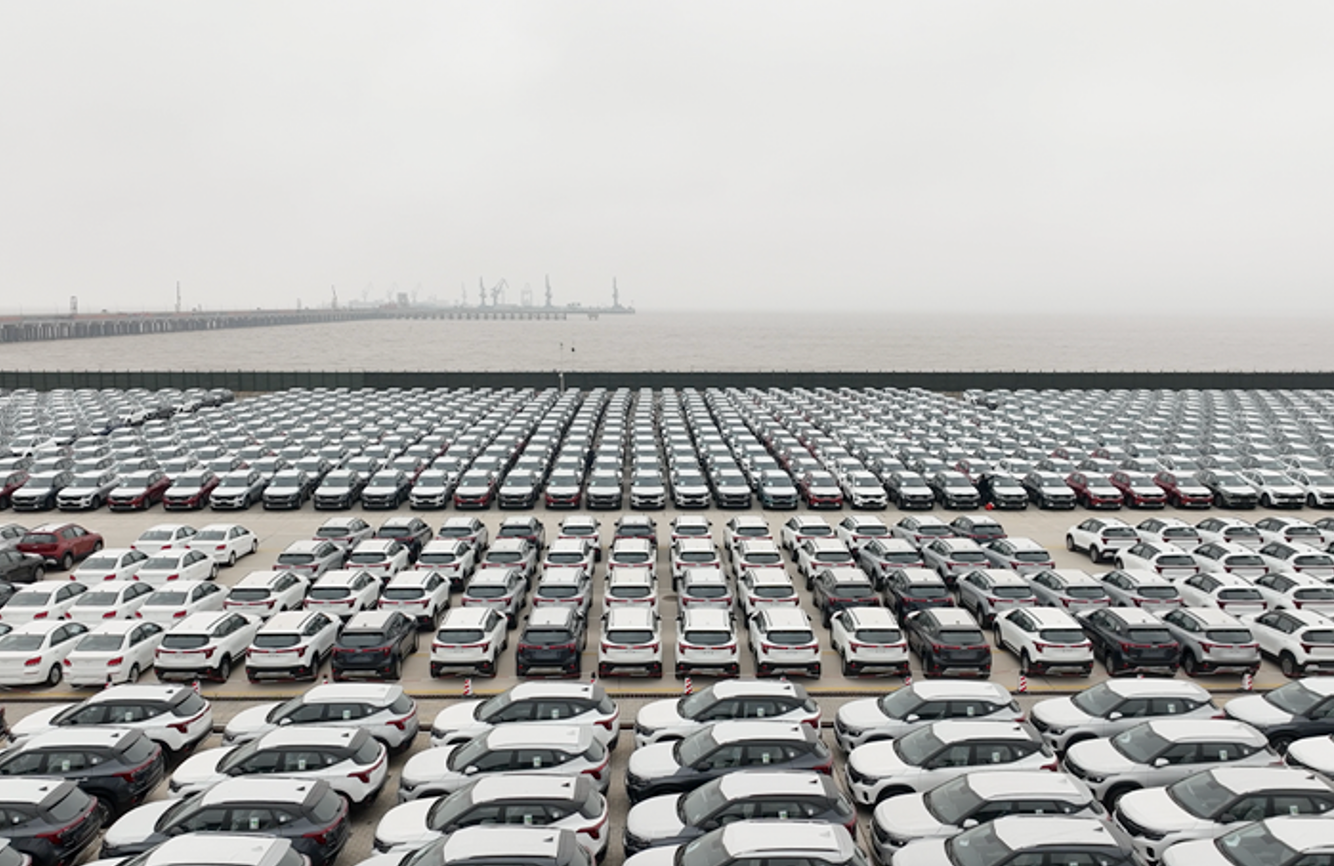
Image Source: Kia
In the German camp, SAIC Volkswagen is the latest entrant. The models shipped to Uzbekistan are all the latest generation of mainstream internal combustion vehicles. As the most populous nation in Central Asia, Uzbekistan has a weak automotive industrial base; local production focuses on economy models, while mid-to-high-end vehicles rely on imports. By laying stakes here, SAIC Volkswagen is carving a path into Central Asia — steering clear of a European market already saturated with Chinese electric vehicles and a Southeast Asian market dominated by Japanese and Korean brands.
BMW Brilliance and Mercedes-Benz are also making moves. The BMW Brilliance iX3 has been exported to Europe in bulk for some time. The new Mercedes-Benz CLA features the MB.OS architecture, led in development by the Mercedes China team, and is equipped with an assisted driving system from Chinese smart driving brand Momenta, along with batteries from Chinese suppliers. Since its launch, cumulative registrations of the electric CLA in Europe have surpassed 25,500 units.
In the American camp, the SAIC-GM Buick Envision has long been re-exported to North America, while Changan Ford's export sales exceeded 50,000 units in 2025.
Nissan presents a different export model. At the Japan Mobility Show in October 2025, a joint venture model led by a Chinese development team debuted on the Tokyo stage for the first time. Nissan's new CEO explicitly stated that the "key to Nissan's transformation lies in China," with the N7 set to be exported first to Latin America and Southeast Asia.
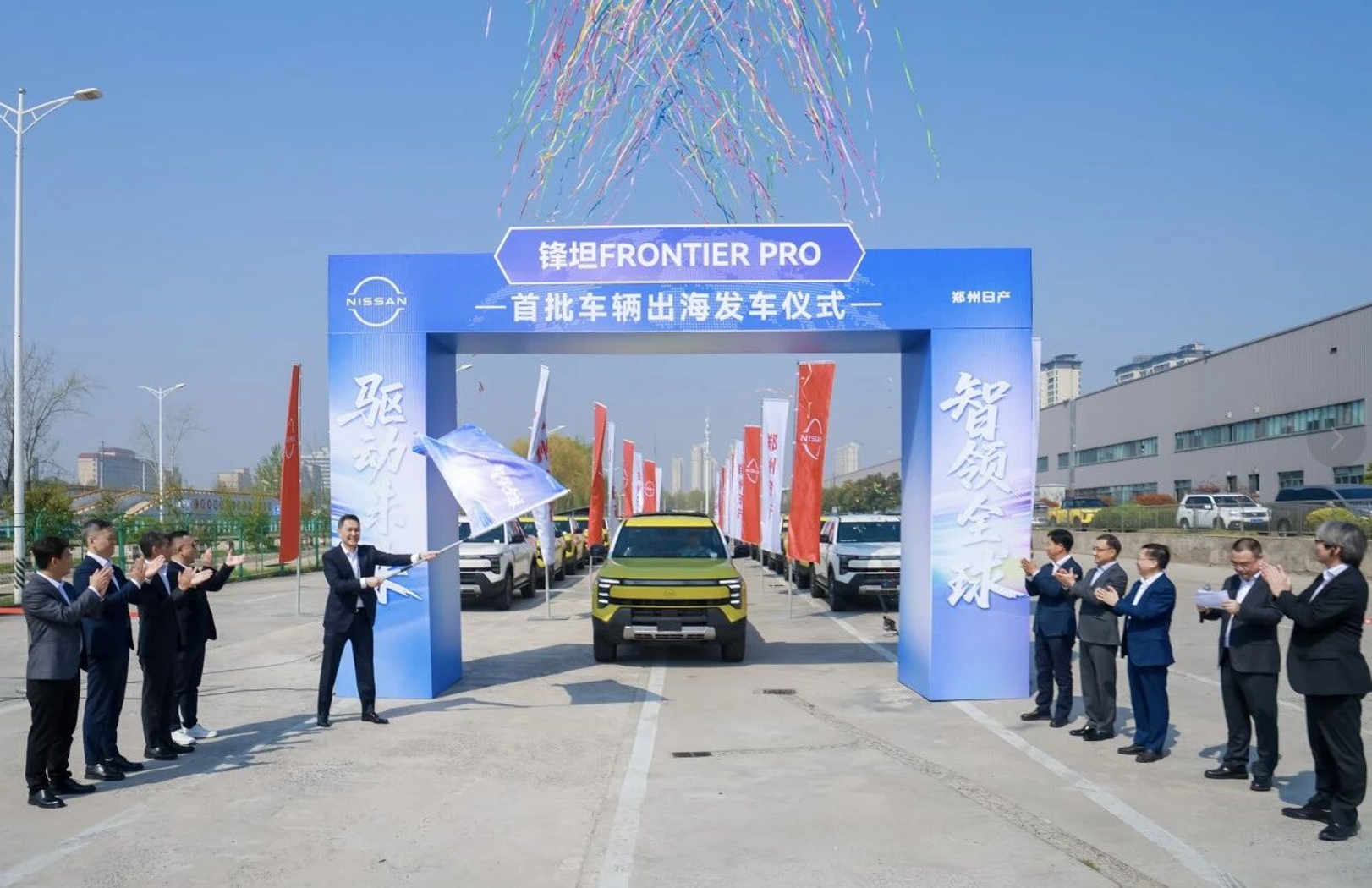
Image Source: Zhengzhou Nissan
On April 1, Zhengzhou Nissan began exporting the Frontier Pro. The vehicle's entire process — from design and development to production — was led by a Chinese team, with native adaptations for different regional markets worldwide.
Furthermore, newer joint ventures are also pushing into exports. Electric models produced by the smart-Geely joint venture were designed for global markets from the R&D stage, primarily targeting Europe. Similarly, electric MINI models produced by Spotlight Automotive — a joint venture between Great Wall Motor and BMW — are built for global sales.
Statistics from Gasgoo Automotive Research Institute indicate that in 2025, exports of foreign and joint venture brand passenger vehicles from China are approaching the 1 million mark.
China Is Becoming a Global Production Base
Why are multinational automakers accelerating the shift to position their Chinese factories as global export hubs?
The most direct driver is the brutal competition at home. As domestic brands continue to expand their share — leveraging their first-mover advantages in electrification and intelligence — the traditional strongholds of joint ventures are being steadily squeezed.
Sales data from Gasgoo Automotive Research Institute shows that the market share of domestic passenger vehicle brands climbed to 68.5% in 2025, while joint ventures saw their share slip from a peak of 60 or 70% to around 30%. Sliding sales have left vast amounts of capacity idle.
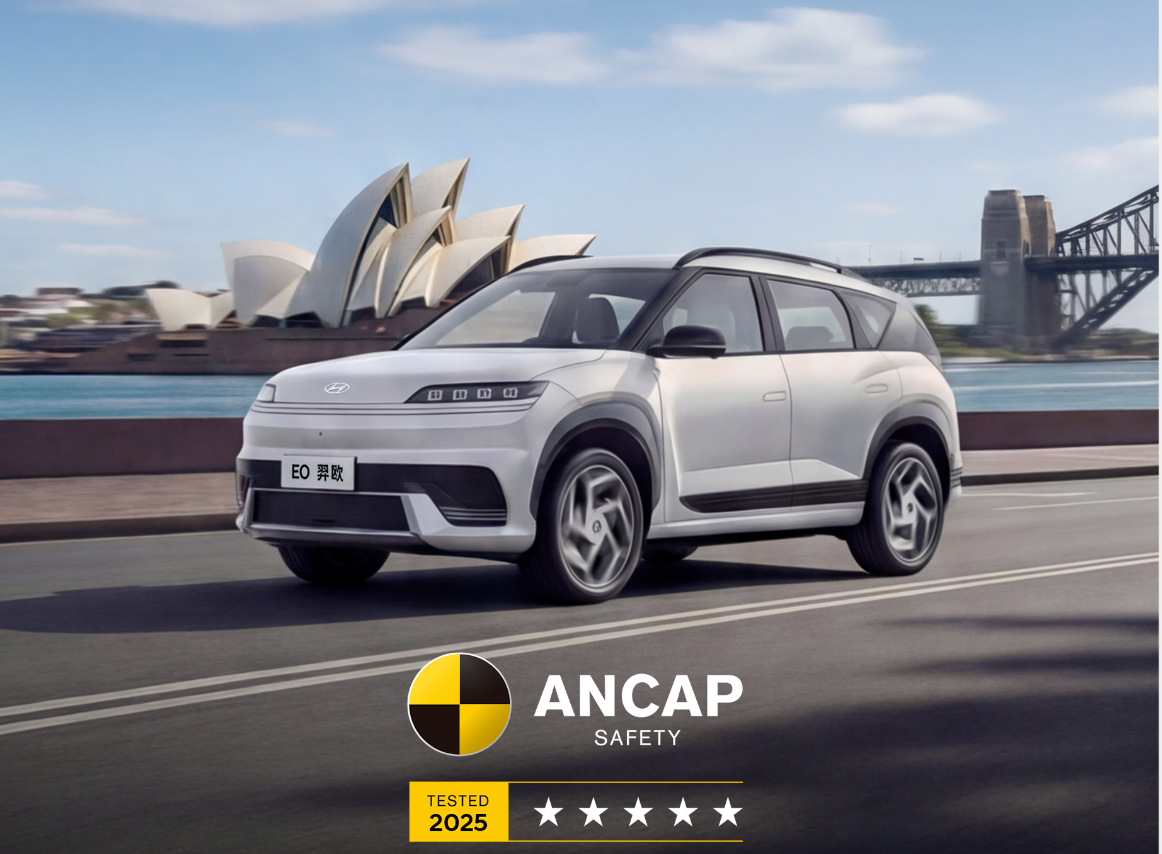
Image Source: Beijing Hyundai
Rather than fighting an endless price war at home, it makes sense to redirect that capacity overseas — where there are still plenty of markets hungry for German, American, and Korean brands but lacking sufficient local supply.
A second driver is the cost and efficiency advantage of manufacturing in China. The same German vehicle costs far less to produce in China than in Germany, with no compromise on quality. The completeness of China's automotive supply chain and its cost control capabilities offer significant competitive advantages on a global scale.
Joint venture factories in China can leverage local supply chains for low-cost production while tapping into the foreign partner's overseas distribution networks and after-sales systems. This combination of "foreign brand + Chinese manufacturing + overseas channels" is a potent formula in price-sensitive emerging markets.
A third, deeper driver involves the reverse export of technological capabilities. The business model of joint ventures in China is upgrading from the past four decades of "market for technology" to a comprehensive "export of Chinese automotive infrastructure capabilities." This infrastructure encompasses not just manufacturing capacity, but the entire industrial ecosystem — including supply chains, product development, and electrification and intelligent technologies.
For instance, the MB.OS architecture in the new Mercedes-Benz CLA was led by a Chinese team, the intelligent driving system comes from Chinese firm Momenta, and the battery supplier is a Chinese company.
Porsche established its first overseas comprehensive R&D center in Shanghai, where an entertainment screen developed by the center is set to go into mass production later this year. Ola Källenius, Chairman of the Board of Management of Mercedes-Benz Group AG, recently emphasized: "The Chinese R&D team has more or less full autonomy. The better approach is to leverage what we develop here — innovating in China to empower the world."
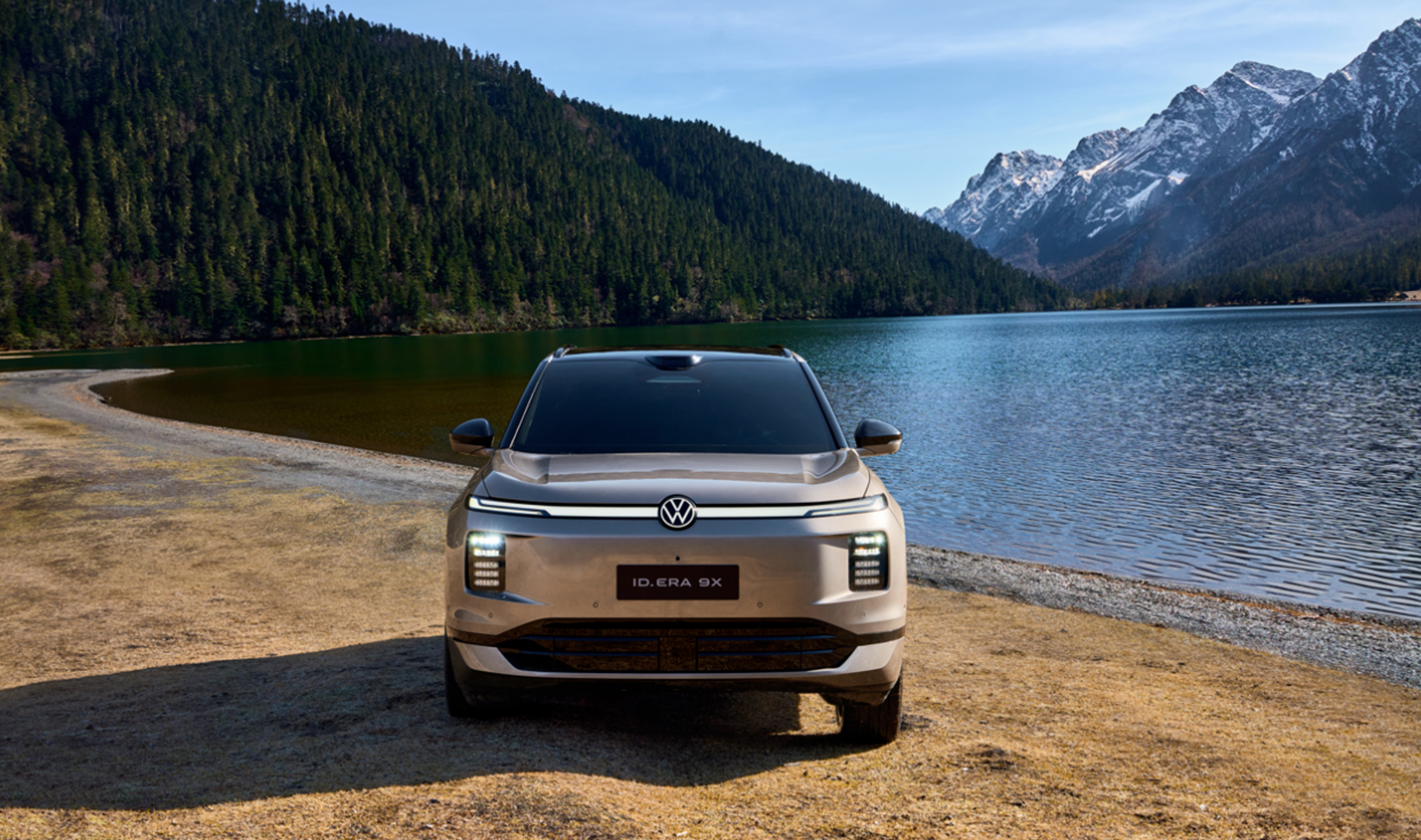
Image Source: SAIC Volkswagen
The SAIC Volkswagen ID.ERA 9X is also led by the Chinese development team. The company defines it as a landmark product for the "Joint Venture 2.0 era," with development already planned for right-hand-drive models targeting markets like Southeast Asia and Australia.
This implies that by exporting Chinese-made models globally, joint ventures are essentially exporting the quality standards, technological content, and cost competitiveness of Chinese manufacturing to overseas markets. This is no longer merely a transfer of capacity, but an export of capabilities and a reshaping of roles.
Of course, this path is not without challenges. Profit distribution and benefit coordination between Chinese and foreign partners are the primary hurdles: the Chinese side wants export business to maximize the amortization of fixed costs, while the foreign side worries about cannibalizing production bases in other regions. Entry standards, emissions regulations, safety certifications, and tariff policies vary wildly across countries, requiring joint ventures to navigate hundreds of different regulatory systems.
After-sales services — such as parts supply, maintenance, complaint handling, and recall management — also rely on the foreign parent company's global dealer network. However, it remains uncertain whether these dealers are willing to devote resources to selling and maintaining "Made in China" models. Additionally, joint venture brands face competitive pressure from domestic brands expanding abroad. If they cannot differentiate themselves on price from domestic brands, yet lack strong support from their foreign partners, they risk being caught in an awkward position of "falling between two stools."
Yet, from a macro perspective, the strategic shift toward exports by joint ventures appears irreversible. In the coming years, the market share of domestic brands will likely continue to climb, further compressing the space for joint ventures in the domestic market.
Without finding growth through exports, most joint ventures face a future of persistently low capacity utilization, operating losses, or even forced withdrawal. The export transition offers them a dignified and sustainable path forward — allowing them to be reintegrated as participants in the global allocation of resources.


