As 2026 begins, Russia's auto market is carrying over the adjustment trends seen late last year, with prices making the first noticeable move. Since January, most mainstream brands have implemented price hikes across their lineups to varying degrees.
Monitoring by Russian analytical agency Автостат shows the first half of January was the most intense period for this round of adjustments. While the pace of hikes slowed toward month-end, overall prices haven't retreated. Market feedback indicates this isn't a short-term move by isolated players, but a structural adjustment driven by overlapping costs and policy factors. Entering February, fewer brands publicly announced increases, yet the hikes implemented earlier are now filtering through to retail, influencing consumer decisions and market rhythm.
Widespread Price Hikes
The data reveals this price round is characterized by speed, precision, and breadth. In the first 15 days of January, more than 30 brands collectively raised prices, spanning everything from passenger cars to commercial vehicles. Even in the latter half of the month, although the number of adjusting brands dropped to eight, the upward trend showed no sign of reversing.
Chinese brands were particularly active in this round of increases. JAC raised prices across its entire Russian lineup—including sedans, crossovers, MPVs, and pickups—with most adjustments falling between 1.5% and 2.1%.
Representing the parallel import and high-end sectors, Li Auto saw significant price swings. The Li L6 crossover surged by as much as 360,000 rubles (roughly 4.3%), while the Li L7 saw an even steeper increase of 435,000 rubles.
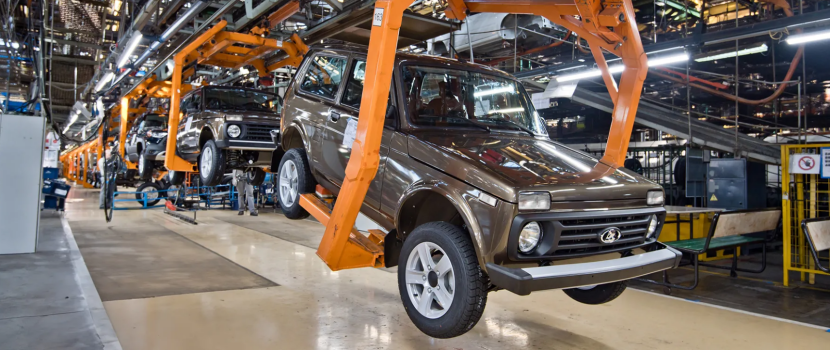
Image source: Avtovaz
FAW Hongqi also saw price increases across nearly its entire lineup. The H9 sedan jumped by as much as 21%, with the H9 Executive version rising by over 1 million rubles—a sign of the pricing flexibility premium brands wield when facing tax adjustments. Other brands implemented smaller adjustments ranging from 50,000 to 70,000 rubles to offset shrinking profit margins.
Beyond Chinese brands, certain local and joint-venture automakers also moved in sync, adjusting prices for light commercial vehicles, off-roaders, and new energy models. It is worth noting that these adjustments refer to the manufacturer's suggested retail price and do not account for dealer-level promotions or discounts.
The widespread price hikes stem from a convergence of factors. First is a surge in policy-related costs. In early 2026, Russia raised its recycling fee again, acting as a direct catalyst for higher retail prices. For brands that have not yet achieved large-scale localized production, this tax burden is almost entirely passed on to the consumer.
Additionally, currency volatility and ongoing supply chain recovery have yet to reach an ideal state. Fluctuating logistics costs are compelling automakers to raise prices as a hedge against potential foreign exchange losses.
Competition Will Intensify in 2026
Even as prices climb, the room to maneuver in Russia's auto market is narrowing in 2026.
Looking back at 2025, new passenger car sales across Russia totaled roughly 1.326 million units—a significant contraction from 1.571 million in 2024. That slump has extended into early 2026, with sales across all categories posting sharp year-on-year declines in January; heavy commercial vehicles alone saw a drop of 46%.
Against this backdrop, Chinese brands have maintained a strong presence, though their growth momentum has clearly slowed. Data shows Chinese automakers sold 685,000 new cars in Russia in 2025—a 25% annual drop. Their market share stood at 52%, down 6 percentage points from the previous year. As 2026 unfolds, competition in the Russian market is set to intensify.
The first challenge comes from a resurgence by local brands. Russian officials have stated that factories left vacant by departing foreign firms will resume full production by late summer 2026. Currently, 80% of these idle facilities have been retrofitted and production lines launched. Local giant LADA, which holds a leading 24% market share, has set a sales target of 400,000 units for 2026.
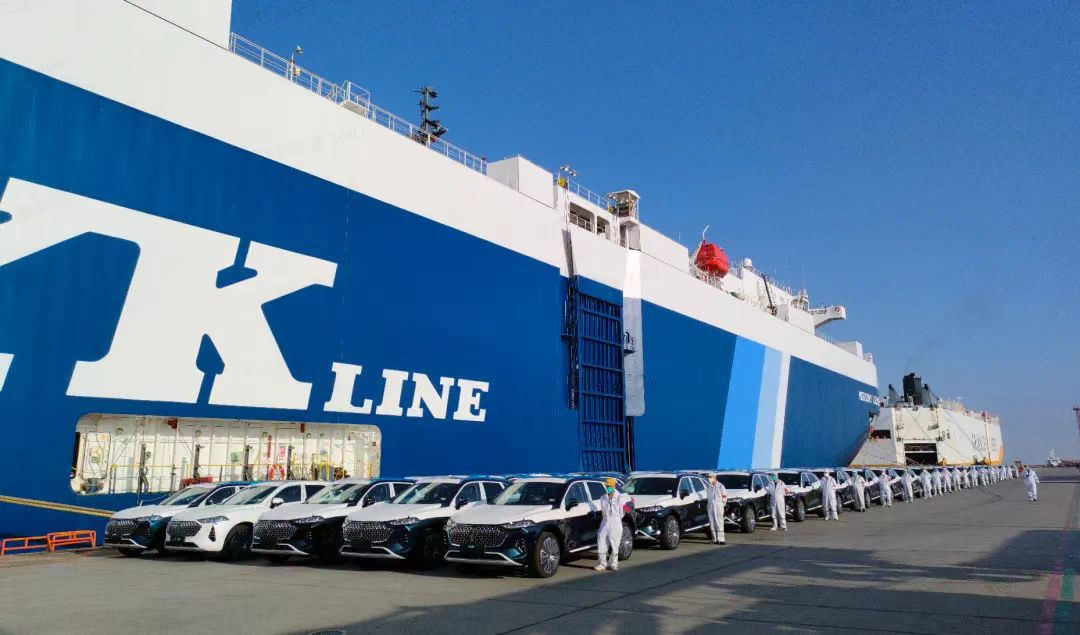
Image source: Great Wall Motor
As Russian policy shifts to favor localized production, models built domestically that qualify for government recycling fee subsidies will gain a competitive defensive barrier in the price war.
At the same time, multinational automakers are staging a comeback through "joint R&D" initiatives. Official disclosures indicate that remaining production facilities are being reactivated in cooperation with "friendly foreign partners" and allies from Southeast Asia, who are executing policies centered on jointly developed common platforms.
Reports suggest the Chevrolet Tracker is testing the waters with "small batch" returns to the Russian market, while the Mitsubishi ASX is re-entering via an order-based model.
Furthermore, the policy environment itself is reshaping the rules of competition. Tiered increases in Russia's value-added tax and recycling fees in 2026 are further squeezing the survival space for purely imported vehicles. The European Business Association (AEB) forecasts a modest 2.5% growth in Russian auto sales for 2026 (to 1.4 million units), but that incremental volume will primarily flow to brands possessing local factories and unified component bases.
For Chinese brands, the "vacuum-filling" era is over. While they held roughly 52% of the market in 2025, the recovery of LADA's capacity and government support for localized enterprises mean that failure to swiftly pivot strategy from "whole vehicle export" to "deep local production" could leave Chinese brands facing turbulent market share in the second half of 2026.