



Hydrogen energy is entering a new phase of accelerated global development as a key track in the clean energy sector. China has elevated hydrogen to the level of a national energy strategy, listing it as a strategic emerging industry and a priority for future industrial development. As the "15th Five-Year Plan" rolls out intensively across provinces and cities, incomplete statistics from Gasgoo indicate that nearly 20 regions have incorporated hydrogen into their development blueprints.
A Policy Tailwind
Unlike the "14th Five-Year Plan" period, which focused on pilot projects and localized breakthroughs, the "15th Five-Year Plan" era highlights a more systematic, forward-looking, and strategic approach to hydrogen deployment. A review of recent regional policies reveals that provinces such as Shaanxi, Guangdong, Henan, and Guangxi have explicitly placed the hydrogen industry alongside frontier technologies like artificial intelligence, biomanufacturing, sixth-generation mobile communications, and nuclear fusion. They position it as a core engine for optimizing regional economic structures, cultivating "new quality productive forces," and creating new economic growth points—underscoring hydrogen's critical role in the future regional development landscape.
In terms of specific directions, regions are aligning with the laws of industrial development by focusing on the entire supply chain—from core technology R&D and diverse application scenarios to ecosystem construction—creating a comprehensive, multi-layered push. For instance, Jilin is leveraging its industrial characteristics to build a "Hydrogen+" diversified ecosystem, prioritizing scenarios like hydrogen-powered intercity trains and logistics vehicles to deepen integration with the transportation sector. Chongqing is addressing infrastructure gaps by accelerating the layout of hydrogen refueling stations and speeding up the construction of a "convenient super-charging city" to lay a solid foundation for large-scale hydrogen applications. Meanwhile, energy-rich provinces like Shanxi and Shandong are utilizing their resource advantages to combine hydrogen with geothermal and green liquid fuels, promoting a diversified energy transition to help meet "dual carbon" goals.
At the same time, regions are carving out distinct development paths based on their industrial foundations, resource endowments, and strategic positioning, effectively avoiding blind imitation and homogeneous competition. Anhui focuses on core energy replacement needs, promoting the orderly substitution of new energy sources such as hydrogen, ammonia, and methanol in industry and transport to reduce reliance on traditional fossil fuels. Beijing, leveraging its strength in technological innovation, concentrates on hydrogen as a supplement to terminal electrification to aid low-carbon urban development and improve air quality. Hebei centers on the green hydrogen industry, aiming to build a full-chain system covering production, storage, transport, and usage, while establishing high-level incubation platforms to attract upstream and downstream enterprises.
From a spatial perspective, hydrogen industry development shows a clear pattern of "national coordination with regional characteristics." From the economically developed eastern coastal provinces of Shandong, Jiangsu, and Zhejiang to the inland central and western provinces of Sichuan, Chongqing, and Hubei, and the old industrial bases of Jilin and Liaoning in the northeast, all regions are incorporating hydrogen into key development plans. This has formed a pattern of cross-regional synergy. Such coordinated layout not only effectively avoids homogeneous competition and resource waste but also breaks down regional barriers along the hydrogen supply chain, promoting the free flow and optimal allocation of technology, capital, talent, and resources nationwide.
The intense regional focus on hydrogen is no accident; it is a calculated choice based on industrial development, energy transition, and national strategic security. Guided by "dual carbon" goals, hydrogen serves as a clean, efficient zero-carbon secondary energy source. With advantages like high energy density, flexible storage and transport, and broad application scenarios, it is widely applicable in transportation, industry, power generation, and construction. It is a key pathway to breaking dependence on fossil fuels and achieving a low-carbon energy transition. Its role is particularly vital in sectors like heavy-duty trucks, shipping, and chemicals, where traditional electrification is difficult, making hydrogen a core solution for green transformation.
Furthermore, the hydrogen industry chain is long and extensive, covering production, storage, transport, refueling, and fuel cells. It involves materials, equipment, electronics, and chemicals, capable of effectively driving the development of clusters in high-end manufacturing, new materials, and new energy. Crucially, hydrogen can be produced using renewable energy like wind, solar, and hydro, reducing reliance on imported fossil fuels and achieving energy independence. By integrating deeply with the existing energy system, it enhances supply stability, providing solid support for national energy security.
Accelerating Synergy in the Automotive Chain
Sustained policy dividends are injecting strong momentum into automakers' hydrogen strategies. Leading Chinese automakers have fully shifted from early-stage technology reserves to scenario validation and large-scale promotion. They are advancing in tandem across both commercial and passenger vehicle sectors, creating a landscape of diversified and deep development.
The commercial vehicle sector has become a primary battleground for hydrogen application, with several automakers recently reporting impressive industrialization milestones. On January 4, the Hubei Provincial Science and Technology Innovation Conference released "61020" full-chain research achievements. A 400kW hydrogen fuel cell stack, independently developed by Dongfeng Motor Group, was named among the province's 20 landmark innovative products. Additionally, a hydrogen fuel cell commercial vehicle developed in partnership with Honda began demonstration operations on existing logistics routes in Wuhan, with plans to expand to Guangzhou and Shanghai.
On January 6, Zhizi Automobile Technology disclosed at a partner conference that hydrogen vehicle sales reached 760 units in 2025, doubling both sales volume and revenue—a significant result from its "hydrogen plus electricity" dual-tech strategy. On January 10, GAC Commercial Vehicle held a delivery ceremony for 340 hydrogen fuel cell vehicles. This event marked a major milestone in the company's push for commercialization and injected strong momentum into the green transport system of the Guangdong-Hong Kong-Macao Greater Bay Area.
In the passenger vehicle sector, hydrogen deployment is proceeding steadily. On January 16, Great Wall Motor launched its new-generation "Guiyuan" platform. This flexible architecture achieves "one vehicle, multiple powertrains; one vehicle, multiple segments; one vehicle, multiple postures; one vehicle, multiple markets," catering to diverse global needs. The platform is a full-architecture solution compatible with five power forms: plug-in hybrid, electric hybrid, pure electric, efficient internal combustion, and hydrogen fuel.
Similarly, Haima Auto, a leader in domestic hydrogen passenger vehicles, continues to deepen its work in technical verification and demonstration operations. On January 21, the company revealed on an investor interaction platform that it had deployed 50 units of its 7X-H hydrogen vehicle for demonstration operations in Hainan, with cumulative mileage exceeding 1.5 million kilometers. This achievement not only validates the product's reliability and safety but also accumulates valuable experience for future large-scale promotion.
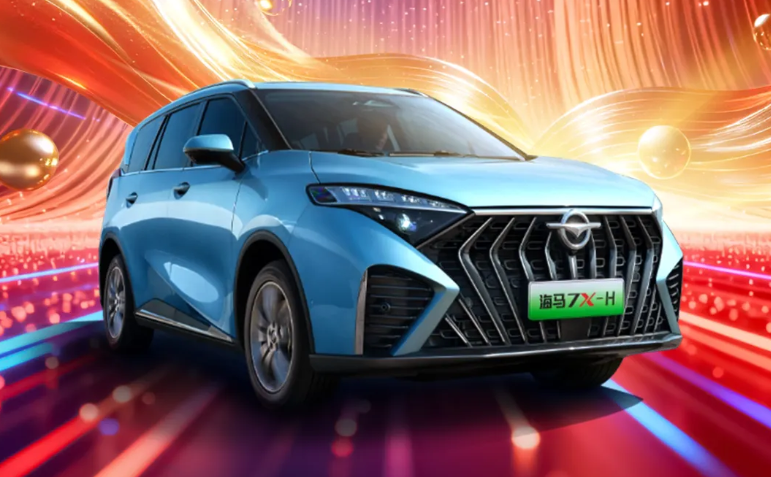
Image Source: Haima Auto
The rapid growth of the hydrogen industry relies not only on automakers but also on the collaborative efforts of upstream and downstream partners. Recently, automotive supply chain companies have been active, continuously expanding their hydrogen business and perfecting the ecosystem. On January 9, FORVIA announced that Sinopec Capital, the investment arm of Sinopec, had made a strategic investment of 300 million yuan (approximately 40 million euros) in Faurecia (Shanghai) Hydrogen Investment via the Chaoyang Hydrogen New Kinetic Energy Venture Capital Fund managed by Sinopec Private Equity Fund Management.
On January 16, Schaeffler reported that Schaeffler Hydrogen Technology (Shanghai) had secured back-to-back supply contracts for PEM electrolyzers and fuel cell bipolar plate coatings. This marks a further entry into the water electrolysis sector and a significant breakthrough in fuel cell coating business. The signed PEM electrolyzer contract will see products applied to the on-site hydrogen production segment of integrated "production, storage, and usage" projects.
Conclusion
As a clean, efficient zero-carbon energy source, hydrogen aligns closely with China's "dual carbon" strategy and energy security requirements. It is currently entering a golden period driven by both policy guidance and market demand. On the policy front, the "15th Five-Year Plan" has established a system featuring "national coordination with regional characteristics." Through top-level planning of the entire supply chain and the exploration of differentiated paths, regions are building a solid policy and ecological foundation for high-quality development, positioning hydrogen as a core engine for cultivating new quality productive forces and upgrading the economic structure.
On the market level, leading automakers have fully entered the race. The domestic market has formed a pattern where commercial vehicles lead the breakthrough while passenger vehicles advance steadily, pushing the industry from the technical verification phase toward large-scale promotion. Looking ahead, as core technologies mature, infrastructure networks improve, and supply chain efficiency rises, hydrogen will deeply integrate into core sectors like transport and industry. It will not only become a key force in breaking fossil fuel dependence and driving a green energy transition but will also spur the cluster development of the entire hydrogen supply chain, injecting sustained, strong momentum into China's high-quality economic growth.


