



Gasgoo Munich- The Fourth Session of the 14th National People's Congress is set to open soon. But in the auto sector, the real "pre-meeting skirmishes" have already begun.
Feng Xingya, Lei Jun, He Xiaopeng, Li Shufu, Hu Chengzhong... these familiar names have successively revealed this year's suggestions and proposals. A rough count shows over 30 items directly involving automobiles and related future industries, covering more than a dozen niche areas including autonomous driving legislation, the rollout of humanoid robots, low-altitude airspace management, composite talent cultivation, mobility for the elderly, green freight, and solid-state battery standards.
The most immediate feeling is: What auto bosses are discussing this year goes beyond just "cars" themselves.
As cars are redefined as "mobile intelligent terminals," as large AI models begin to grow physical bodies, and as road transport extends from a two-dimensional plane to three-dimensional space—the boundaries of the automotive industry are collapsing at an unprecedented speed. The proposals from the "Two Sessions" representatives are effectively drawing the first boundary lines for this new territory.
A deeper question remains: Can the speed of institutional innovation keep pace with the breakneck rhythm of technology?
Autonomous Driving: Step-by-Step, or a Direct Leap?
Autonomous driving is undoubtedly one of the hottest topics this year, but a closer look at the representatives' suggestions reveals a subtle tension over "how to proceed."
He Xiaopeng's proposal is the most radical.
The Chairman of XPENG stated bluntly: He recommends pushing autonomous driving policy to leap from Level 2 to Level 4, simplifying the intermediate Level 3 steps.

Image Source: XPENG
The reasoning is hard-core. From a liability perspective, both L2 and L3 place responsibility on the driver; the only difference is whether hands can leave the wheel. But at L4, the responsibility shifts to the system. Rather than getting stuck in the "neither here nor there" L3 stage, it is better to aim directly for the endgame. Let L4 run first in low-risk scenarios to accumulate data and identify problems, then refine regulations retroactively.
He suggests granting local pilot powers, allowing cities with mature conditions to test first, gradually forming replicable and scalable experience.
In other words: Don't let the system become the ceiling for technology—let the cars run first, talk later.
But Feng Xingya and Lei Jun offer a perspective that leans more toward "alignment" and "laying the foundation."
Feng Xingya, a deputy to the National People's Congress and Party Secretary and Chairman of GAC Group, emphasized in his proposal "accelerating the improvement of laws and regulations related to autonomous driving and building a unified national standard and evaluation system." He is concerned with the rigor and unity of the system. If standards vary by region, how can automakers adapt? If the evaluation system is chaotic, how can consumers trust it?
This difference in perspective actually reflects two logics: Companies want to "break the ice," while the industry needs to "pave the road."
Lei Jun, a deputy to the National People's Congress and founder of Xiaomi Group, takes a more grounded approach. He noticed a dangerous signal: the penetration rate of L2 driver assistance has exceeded 60%, yet many owners have no idea where the technology's boundaries lie.
His suggestion is specific: Include "hands-off, eyes-off" use of L2 driver assistance in traffic violation penalties, while starting from driver training to implant the safety concept of "human-machine co-driving" into the muscle memory of every new driver.
Behind this lies a problem often overlooked: technology has proliferated, but user education hasn't kept up. Intelligent driving isn't about being smarter, but more "predictable." Drivers need to know what the car will do, and what it won't do.
One wants to "skip a grade," one wants to "align," and one wants to "lay the foundation."
This isn't a question of who is right or wrong, but of roles: the automaker CEO is thinking about how to monetize technology faster; industry leaders are considering how to keep the entire ecosystem running stably; cross-sector new forces see the massive cognitive gap on the user end. Only when these three perspectives are pieced together do we get the full puzzle of autonomous driving deployment.
The "Apprentice Dilemma" of Humanoid Robots
At this year's Spring Festival Gala, humanoid robots doing the Yangge dance went viral. But Lei Jun and He Xiaopeng are both reminding everyone of one thing: don't be fooled by the performance; they are still far from doing real work.
Lei Jun provided some data: relevant institutions predict that by 2035, China's humanoid robot shipments are expected to exceed 2.6 million units, with a market size exceeding 140 billion yuan, potentially reaching the trillion-yuan scale in the long term. It sounds beautiful, but he quickly shifted his tone to point out the reality: humanoid robots are currently just "apprentice workers" and haven't become regulars yet.
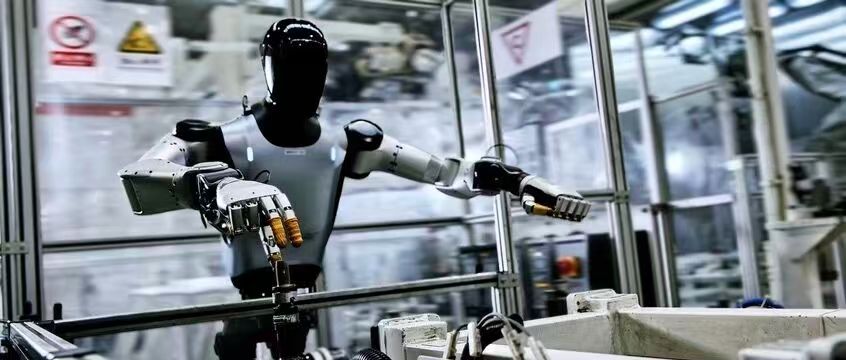
Image Source: Xiaomi
Why? Poor process stability, high unit costs, and a lack of adaptation to workshop stations. They run well in the laboratory but suffer from "acclimatization issues" once they enter the factory.
He proposed a very specific KPI: By 2027, the MTBF (Mean Time Between Failures) of humanoid robots in specific industrial scenarios must exceed 10,000 hours. He suggested expanding smart manufacturing application scenarios to increase utilization rates, supporting this with industrial subsidies and policy preferences, and strengthening the construction of a safety standard system.
What does 10,000 hours mean? If working 20 hours a day, it means running continuously for 500 days without failure. For manufacturing, this is the entry threshold for a "regular worker." And if a fully robotic production line can truly be realized, it will be a genuine milestone for China's smart manufacturing.
He Xiaopeng's perspective is even more "intense."
He worries that most of China's humanoid robots are still stuck in the stage of "strong motion control, weak brain." They can walk, run, and flip, but they "freeze" when encountering unseen scenarios. Without a breakthrough in the "edge-side local brain"—giving robots autonomous perception, decision-making, and execution capabilities—China risks falling a generation behind the United States.
He suggested issuing special R&D incentive policies and establishing a national-level special fund to support the architecture R&D and training of edge-side large models. At the same time, referencing the autonomous driving grading standards of the auto industry, he called for establishing an intelligence standard system for humanoid robots, clarifying core indicators such as computing power, data, and scenario generalization capabilities.
One is emphasizing engineering implementation, the other is warning about technical route risks.
Put together, the two form the two core propositions of the humanoid robot industry: it must be buildable and usable; it must be able to dance and think.
There is another easily overlooked point: why are auto bosses all fixated on humanoid robots? Because auto factories are the perfect landing scenarios. Handling, assembly, spraying, patrolling—these repetitive, high-intensity tasks are exactly where humanoid robots shine. The automotive industry is not just a potential buyer of humanoid robots, but also their best "training ground."
Who Will Unbundle the Flying Car?
The proposal for the "15th Five-Year Plan" explicitly identified the low-altitude economy as a strategic emerging industry for the first time, making this year's discussion on flying cars and the low-altitude economy particularly lively.
Feng Xingya's suggestion is macro-oriented: formulate a "15th Five-Year Plan" for low-altitude economic development, compile a low-altitude digital airspace map, and build low-altitude corridors for city clusters like the Yangtze River Delta and the Guangdong-Hong Kong-Macao Greater Bay Area. This is paving the way at the top-level design stage—without a plan, there is no direction; without an airspace map, planes in the sky are "flying blind."
He Xiaopeng's suggestion points directly to the pain point: airspace approval powers are too concentrated; local governments want to act but lack the leverage.
The current reality is that any aircraft taking to the sky must undergo layers of approval, from military aviation to civil aviation, from central to local authorities. The process involves many steps and long cycles. For traditional aircraft, this process has been running for decades and barely functions; but for "new species" like flying cars, it is too slow, too rigid, and too unfriendly.
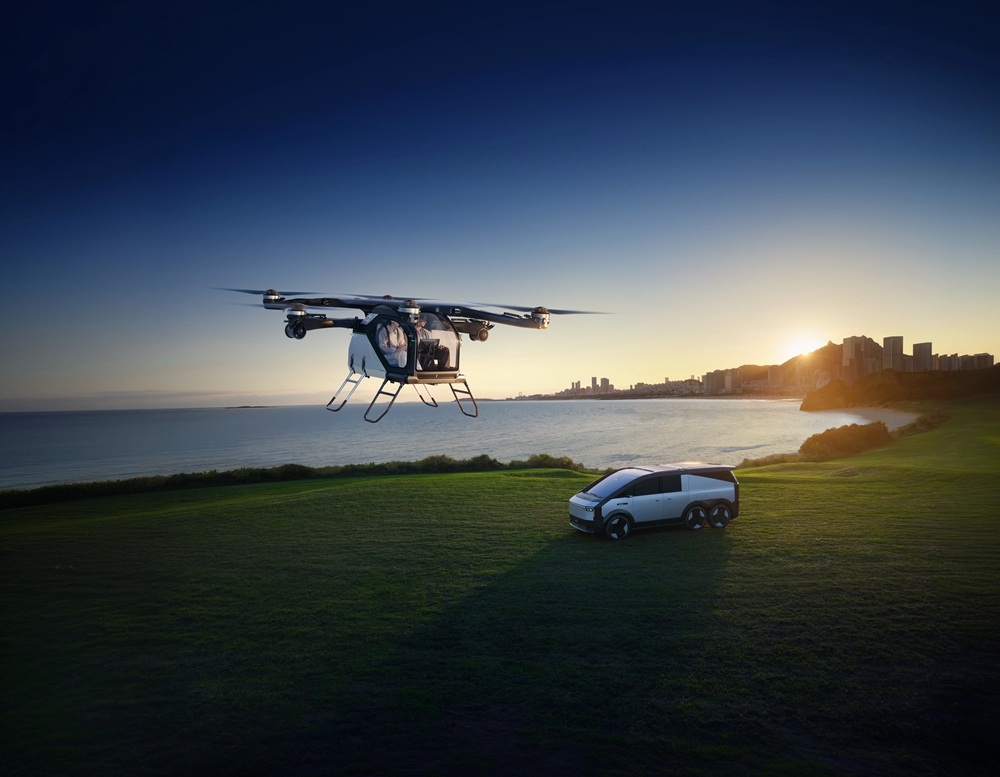
Image Source: XPENG
He Xiaopeng proposed delegating airspace management authority to local governments at the sub-provincial level and above, and establishing a "military-civilian-local" coordination mechanism. At the same time, the tax classification of flying cars must be clarified. Is it taxed as a car or as a plane? The tax rates differ vastly; if unclear, companies can't even calculate their costs.
Behind these words lies a very realistic contradiction: for flying cars to commercialize, they must first take to the sky; but to fly, they must pass the airspace approval hurdle. The current approval mechanism was designed for traditional aviation. For flying cars, it's like making an F1 car run on a country lane—it's not that it can't run, but it can't run fast.
Li Shufu, a member of the 14th National Committee of the CPPCC and Chairman of Geely Holding Group, didn't mention low-altitude directly, but his proposal on methanol electric trucks actually answers another question: Ground traffic is saturated, and pollution pressure is high—do we have other choices?
Road transport accounts for 73.6% of China's total freight volume, and the traditional transport mode dominated by diesel internal combustion engines brings high energy consumption and emissions. He strongly supports methanol electric trucks, believing this route has advantages in terms of economy, refueling convenience, and adaptability to cold northern regions. Although this is about the ground, it points to the same proposition: the diversification of the transport system is an irreversible trend.
How to Fill the 1 Million Talent Gap?
Lei Jun and Li Shufu "crossed paths" this year.
Both suggested: establishing "Intelligent Electric Vehicles" as a first-level interdisciplinary subject.
Why the urgency? Lei Jun provided a number: the talent gap for composite professionals in intelligent connected new energy vehicles has reached 1 million.
What does 1 million mean? It is equivalent to several times the total number of graduates in automotive-related majors each year, and this gap is still widening.
Li Shufu dissected the problem more thoroughly: the knowledge system of traditional disciplines simply cannot cover the cross-disciplinary capabilities required by the modern automotive industry. Mechanics, electronics, computer science, control engineering, materials science, artificial intelligence... none can be missing, but current disciplinary settings are fragmented. Those who study mechanics don't understand code; those who study code don't understand cars; those who study cars don't understand batteries.
The result is that companies have to "retrain" recruits after hiring them—ranging from six months to a year, at huge cost. Even worse, many frontier technologies have no corresponding courses at all; what students learn by graduation may already be 3 to 5 years behind the industry.
What they want is not a patchwork, but a talent training system rebuilt from the roots.
Although Feng Xingya didn't mention discipline construction directly, his suggestion points in the same direction: he called for "accelerating the construction of a unified national standard and regulation system" and for "standards going global." Standards and talent are two sides of the same coin. Without people who understand standards, standards are just paper; without top-tier talent who can participate in international standard-setting, Chinese automakers will forever be rule-takers, not rule-makers.
If this suggestion lands, it will affect not just university curricula, but the innovation capacity ceiling of China's auto industry for the next five to ten years. The gap of 1 million will take a generation to fill. If we don't move now, we'll just be anxious in five years.
Underlying Game, The War Over Solid-State Battery Standards
If autonomous driving, humanoid robots, and the low-altitude economy are "looking up at the stars," then solid-state batteries are "feet on the ground"—they are the energy base for all future industries.
Hu Chengzhong, a deputy to the National People's Congress and Chairman of Delixi Group, focused on this field this year. He pointed out an awkward reality: solid-state batteries are regarded as the core technology for next-generation power batteries, offering potential for higher safety and energy density, but China's industry is still in the early stages of development and faces multiple challenges.
The most core problem is: there are no standards.
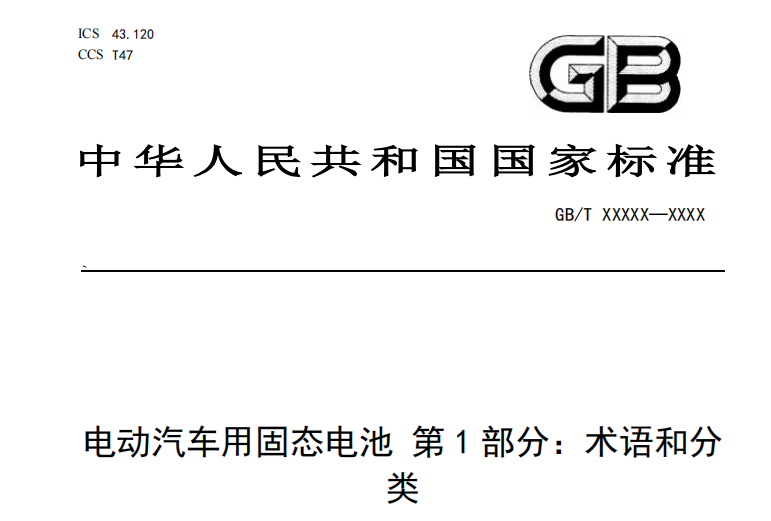
First national standard for solid-state batteries was only officially released late last year; Image Source: Screenshot of National Standards of the People's Republic of China
How is performance tested? How is safety evaluated? How is life calculated? These key specifications are all missing. Companies are fighting alone, with diverse technical routes. Laboratory data looks beautiful, but they fall apart upon mass production.
He suggested accelerating the release of a series of national standards for automotive solid-state batteries to unify technical requirements and test methods. At the same time, focusing on tackling core technologies—key links like solid-state electrolyte mass preparation, interface modification, and dry electrodes—he proposed organizing enterprises and research institutions to form innovation consortiums to accelerate the move from lab results to mass production. In addition, through policies like government guidance funds, special subsidies, and tax incentives, cultivate leading enterprises in the industrial chain, and promote long-term strategic cooperation between battery companies, material companies, equipment companies, and automakers to build a synergistically developing industrial ecosystem.
This suggestion looks very technical, but behind it lies a bigger proposition: if there aren't even standards, how can we talk about industrial competitiveness?
Feng Xingya raised a similar issue this year. In his suggestion on the battery swapping mode, he called for "accelerating the construction of unified national standards." The advantage of battery swapping is efficient replenishment, but if battery specs, interfaces, and communication protocols vary by manufacturer, swapping stations can only serve one type of car, and scale effects simply won't kick in.
The war over standards is essentially a war over discourse power. Whose standard becomes the industry standard controls the initiative of the industrial chain. This is particularly evident in the context of automotive exports.
Going Global: Are Standards a Moat or a Stumbling Block?
China's auto exports have been number one globally for three consecutive years, with 2025 exports exceeding 7 million vehicles. But in his proposal, Feng Xingya cautioned: don't just stare at the numbers; the real test is just beginning.
His keyword is: standards going global.
What does that mean? Simply put, it is getting Chinese automotive standards, testing standards, and certification standards accepted and recognized by the international market. The current situation is that cars are sold, but compliance certification has to be run country by country. Standards aren't mutually recognized, testing isn't mutually recognized—costs are high, efficiency is low.
He suggested accelerating the construction of an export compliance service system, promoting the alignment of China's independent standards with international ones, and strengthening the coordination of domestic enterprise standards. Instead of fighting alone, it is better to go global as a group.
This points to a deeper problem: although China's auto exports are large in volume, it still plays a "follower" role in standard setting. Others make the rules, we follow. In the short term, it's fine, but in the long term, the rules themselves are the biggest moat—whoever controls the standards controls the pricing power.
Lei Jun mentioned a similar issue when discussing humanoid robots: "promote the alignment of domestic and international standards to help Chinese humanoid robots go global." He Xiaopeng also emphasized "standard leadership" when discussing the low-altitude economy.
This is no coincidence. As Chinese manufacturing moves from "product export" to "system export," standards are the hardest currency.
Focusing on the Overlooked "People"
Amidst the high-tech topics, a few suggestions this year are particularly "soft."
Feng Xingya is concerned about the elderly. 323 million—that is the scale of China's population aged 60 and above. Many of them are barred by the "digital divide."
Inability to use apps to hail cars, inability to read complex dashboard screens, inability to hear navigation prompts clearly... for young people, these details are just "a bit annoying," but for the elderly, they can mean "unable to leave the house."
Feng Xingya's suggestion is specific: implement a "digital inclusion + manual backup" mobility service model. Apps need an "elderly mode"—large text, loud audio, simple operations. At the same time, manual services must not be cut; traditional methods like phone booking and on-site ticket purchasing must be retained. Public spaces need age-friendly renovations; bus stops need seats, subways need barrier-free elevators.
The end goal of technology should be human convenience, not leaving people behind.
Li Shufu is concerned with people with disabilities and those with limited mobility. The shortage of accessible taxis and operational difficulties is a long-neglected problem. In many domestic cities, the number of accessible taxis can be counted on one hand. Booking one requires days in advance, and even then, it's not guaranteed.
He suggested establishing a special fund for accessible transportation shared by the central and local governments, used for vehicle purchase subsidies, operation rewards, and maintenance center construction. At the same time, support automakers in developing low-cost, high-performance, new energy accessible taxis. We can't rely solely on retrofitting; accessibility needs must be considered from the design source.
Amidst the clamorous narrative of technology, these two suggestions seem somewhat "uncool." But think about it: whether an industry has warmth is precisely reflected in whether it is willing to spend a little extra thought on those easily forgotten by technological progress.
Smart cars aren't just made for young people, and the low-altitude economy isn't just for business people. When technology is sufficiently advanced, the standard for judging a good society is often how it treats those who run slowly.
Conclusion:
After reviewing these dozens of proposals, one feeling is particularly strong:
The current automotive industry is no longer in a stage of "technology waiting for the system," but rather "technology chasing the system."
Level 4 autonomous driving needs laws to grant it an "identity." Humanoid robots need standards to draw safety lines before entering factories. The low-altitude economy needs airspace management to be unbundled before taking off. Composite talent needs the discipline system to be reconstructed for cultivation.
Behind every proposal lies a link currently stuck in reality.
Feng Xingya speaks of "empowering auto export quality and efficiency through standards going global," Lei Jun of "letting humanoid robots go from apprentices to regular workers," He Xiaopeng of "truly letting sci-tech innovation achievements walk out of the laboratory." Ultimately, these words are all calling for the same thing: Can the capacity for institutional innovation keep up with the capacity for technological innovation?
In the coming days, these proposals will be reviewed, debated, and amended in group discussions. Some may enter final policy documents, others may be temporarily shelved. But regardless, the list of problems has been clearly laid out.
Now, we wait to see if answers can be provided.


