



Gasgoo Munich- On Feb 27, Schaeffler Group's supervisory board revealed a series of executive shake-ups. The standout appointment: Dr. Chen Xiangbin, 44, will take the helm as CEO of the China region on Jan 1, 2027.
That means by early 2027, a locally trained PhD born in the 1980s will officially command Schaeffler China. It comes on the heels of a busy 2025 for the company—from offloading its turbocharger unit to doubling down on humanoid robots, the German giant is executing a profound structural overhaul in China.
Nineteen Years from Test Engineer to the Top
Chen Xiangbin's career didn't start in a Shanghai office. It began in Bühl, Germany.
He joined Schaeffler in 2006 as a test engineer in the clutch business unit in Bühl. At the time, Schaeffler had only been in China for a little over a decade, and its local management team was still in its infancy. Chen's first posting was at the German headquarters, working from the ground up in a technical role.
That stint gave him a solid foundation in product engineering. After returning to China, he gradually transitioned into management. His tenure in the transmission systems and engine & transmission business units gave him comprehensive exposure to traditional powertrain operations.
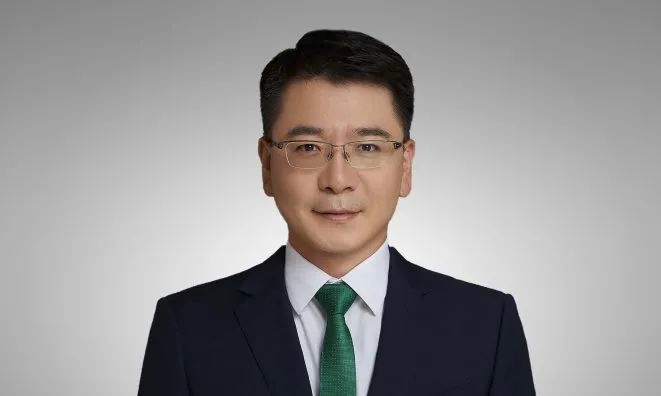
Dr. Chen Xiangbin; Image Source: Schaeffler
In January 2022, Chen was named President of Automotive Technologies China, marking his entry into the core decision-making circle. By November 2024, his responsibilities expanded further as he took on the role of President of the E-Mobility division in the Greater China region and the Global Key Account Management in that region.
It means that before officially stepping into the CEO role, he already held the reins of Schaeffler's core future business: e-mobility.
Chen holds a PhD in mechanical engineering from Tongji University, a school with deep ties to German industry that has supplied countless engineering talents to German automakers. Internally, he is regarded as a versatile leader who understands both technology and the market.
From the test benches in Bühl to the top office in Shanghai, it's a journey that took him nineteen years.
The Industry Logic Behind Putting a Post-80s Generation in Charge
Schaeffler's personnel shake-up comes at a critical juncture, with the group's China operations under pressure.
In the first half of 2025, sales in Schaeffler's China region fell 6.4% year on year. For the first three quarters, revenue from internal combustion engine related businesses in China slid 5.5%. Meanwhile, the group as a whole slipped into a net loss—posting a quarterly net loss of 287 million euros in Q3 and a cumulative deficit of 244 million euros for the first nine months. Massive investments in e-mobility contrasted sharply with the shrinking ICE business, creating a stark divide between growth and decline.
Facing this landscape, Schaeffler took a series of decisive actions in China throughout 2025.
In November, Schaeffler signed an agreement to sell the former Vitesco Technologies' turbocharger business in China to Chengdu Xiling Power for a nominal base payment of just 1 yuan. The unit generated about 100 million euros in revenue in 2024 but was mired in losses, with its net loss for the first three quarters of this year soaring to 46.0638 million yuan. Schaeffler CEO Klaus Rosenfeld explicitly stated the move was "an important step in optimizing the business structure following the acquisition of Vitesco Technologies."
Also in November, Schaeffler signed a deal to establish a humanoid robot digital intelligence factory in Taicang, Suzhou. Focusing on core systems for humanoid robots, the project will include centers for parts coverage, production, testing, and AI training. Chairman of the Supervisory Board of Schaeffler AG, Georg F. W. Schaeffler, attended the signing in person, reaffirming the "In China, for China" philosophy.
Divesting loss-making ICE assets while betting on the new frontier of humanoid robots—Schaeffler China in 2025 is actively redefining its business boundaries. And the execution of these moves will land on the desk of the incoming CEO, Chen Xiangbin.
Over the past two years, major German Tier 1 suppliers—from Bosch and ZF to Continental—have increasingly turned to local talent born in the late 1970s or 1980s to lead their China operations. The profile of this generation is clear: STEM backgrounds, careers starting in R&D or technical roles at foreign firms, a transition from technical to management roles during the golden decade of China's auto market post-2008, and experience navigating the complete technological shift from internal combustion to electrification and intelligence.
Chen Xiangbin's resume fits this profile to a T.
Who Else Is Involved in This Shake-up
Beyond Chen's appointment, Schaeffler announced several other executive changes.
At its meeting, the Supervisory Board of Schaeffler AG appointed Dr. Jochen Schröder (54) as Chief Operating Officer and a member of the Board of Managing Directors of Schaeffler AG effective April 1, 2026. He succeeds Andreas Schick (55), who, as communicated on September 28, 2025, is departing the company at his own request effective March 31, 2026. The Supervisory Board also decided to look at combining the Chief Technology Officer function with the Chief Operating Officer function to reduce the size of the Board of Managing Directors and achieve efficiencies.
Dr. Jochen Schröder will be succeeded as Regional CEO Europe by Rémy Triouleyre (48), who currently heads the subregion France as CEO of Schaeffler France and is Schaeffler's Global Key Account Manager for the Stellantis Group.
The supervisory board also revealed it is considering merging the roles of Chief Technology Officer and Chief Operating Officer to streamline the board's structure.
Notably, current China CEO Dr. Zhang Yilin will retire at the end of 2026. The veteran, who has served Schaeffler for many years, will complete his tenure and pass the baton to an internally cultivated successor born in the 1980s.
Closing Note
At first glance, Schaeffler's appointment for China looks like a routine personnel change. In reality, it serves as a microcosm of the shifting survival logic for multinational parts giants in China.
As China's auto market moves from its introduction phase into a period of deep competition, the person in the China driver's seat needs technical depth, management breadth, and a keen sense of the local innovation rhythm. Dr. Chen's appointment signals that Schaeffler is placing more of its chips on locally trained, technically minded managers.
This is not a choice made by Schaeffler alone; it is a reflection of the entire German automotive supply chain entering an era of deep localization in China. As the post-80s generation transitions from executors to decision-makers, how they lead century-old German enterprises to maintain momentum in this white-hot market will be worth watching closely.


